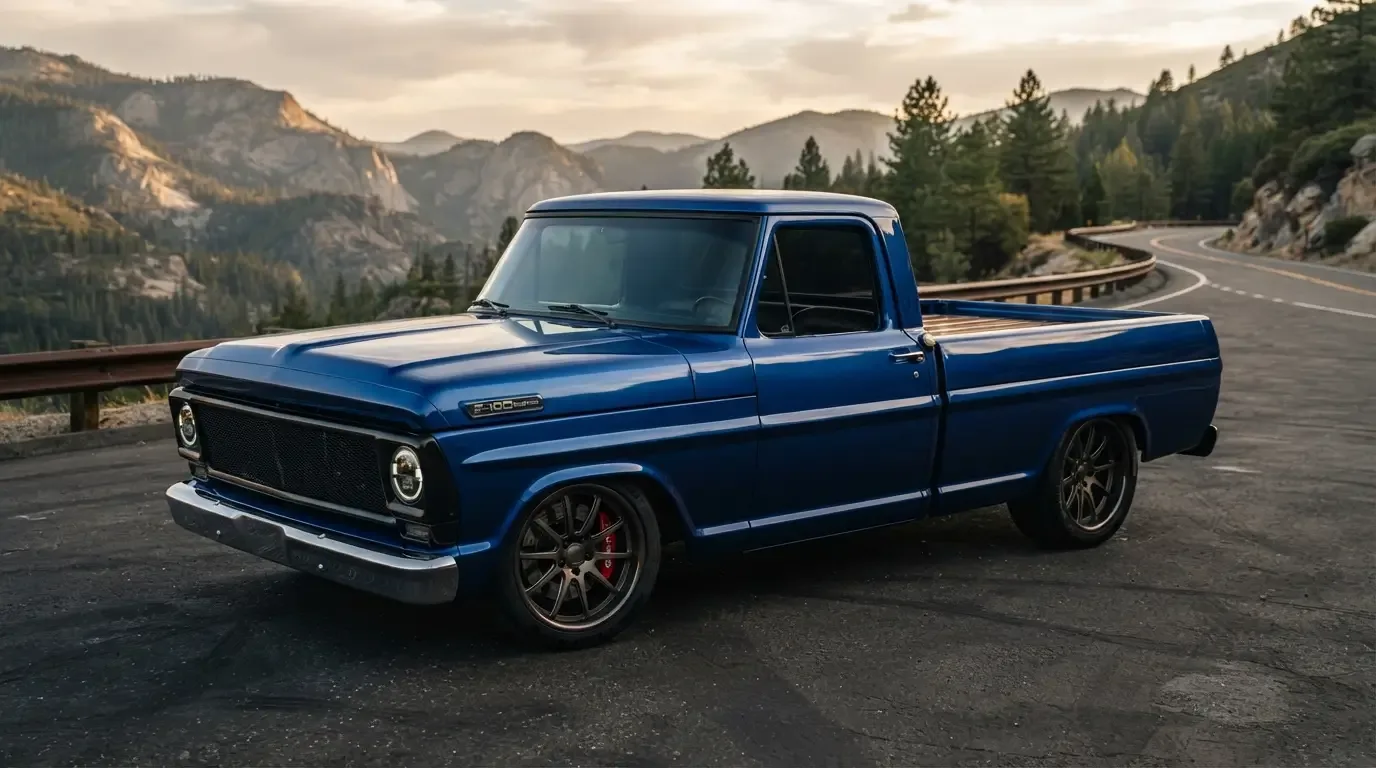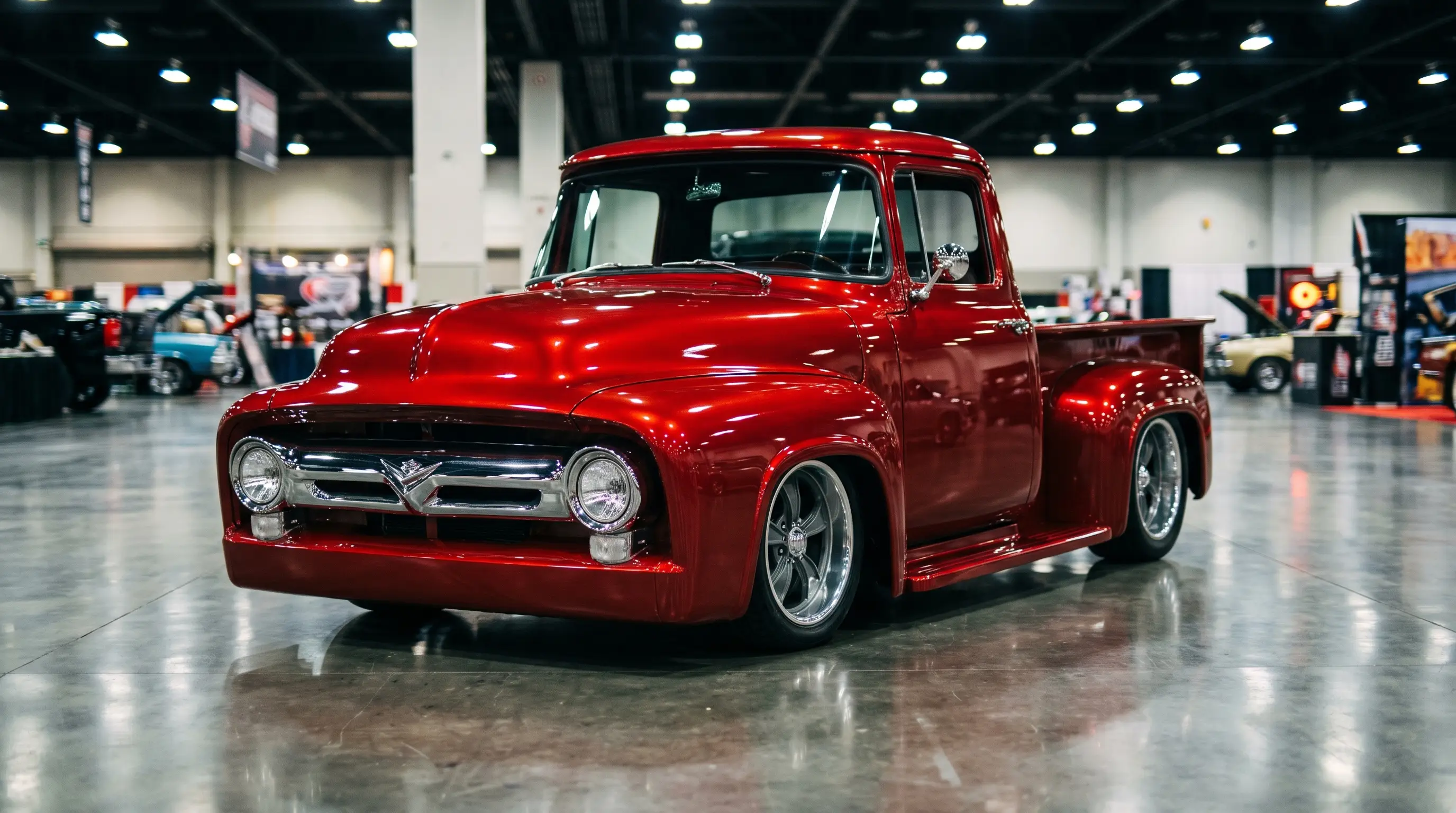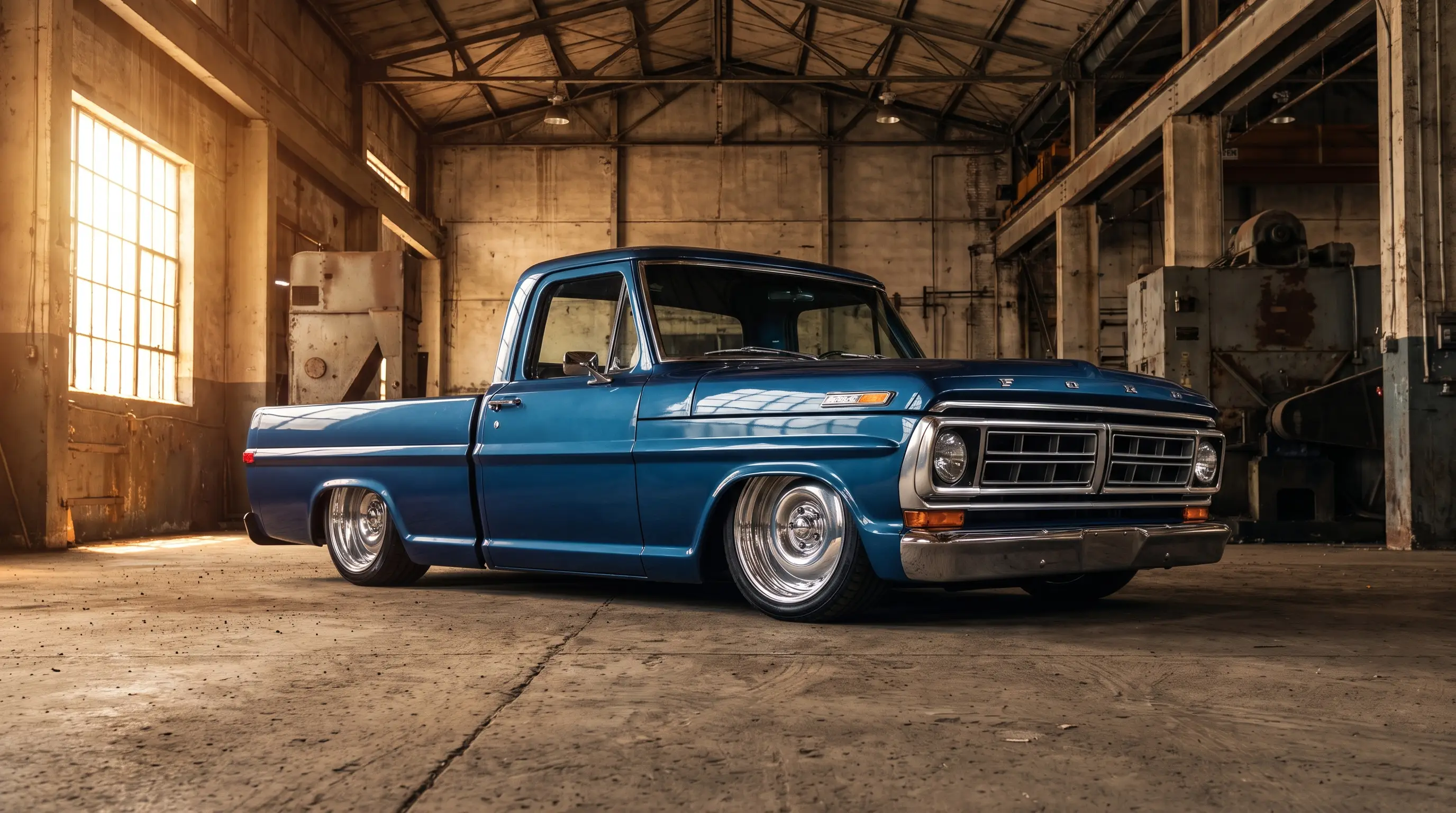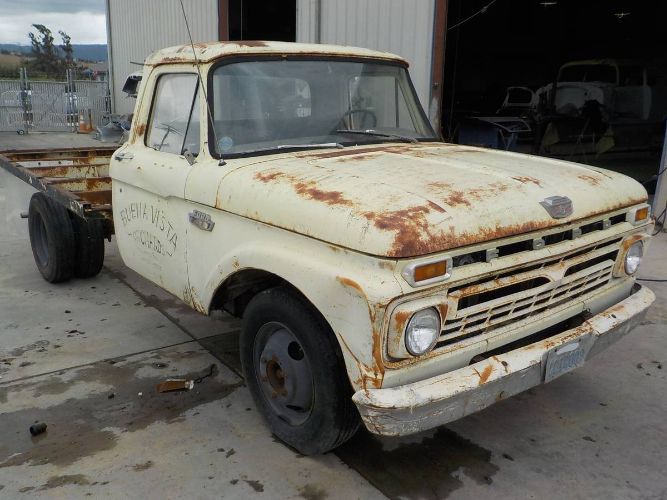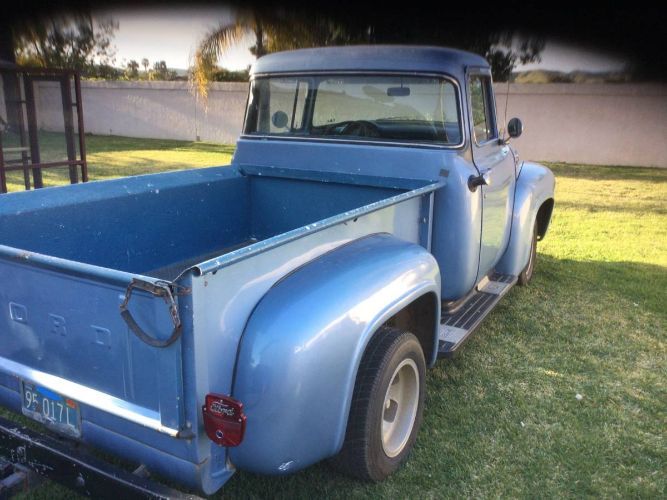
Long before pro-touring chassis or SEMA lighting rigs existed, a kid with a torch and a junkyard small-block was already cutting a stock front bumper off an F-100 and dropping the nose two inches for no reason other than it looked better that way. The ford f100 hot rod tradition did not start with a magazine feature. It started in driveways, and it is older than most people realize.
Trucks were never supposed to be hot rods
Hot rodding in its earliest form was built around cars, mostly Fords, stripped down and hopped up for speed on dry lakes and back roads. Trucks sat outside that world for years, treated purely as work equipment. That started to shift once the F-100 arrived in 1953 with a shape clean enough to invite the same kind of attention a coupe got. The truck's simple lines, upright grille, and unbroken beltline gave hot rodders a canvas that did not need much correcting to look aggressive. Drop the stance, pull the bumpers, and the truck already looked like it wanted to move.
The engine swaps that defined the era
Early hot rod F-100s leaned on whatever Ford or Chevy small-block a builder could get running reliably, often pulled straight out of a wrecked passenger car. Flathead V8s gave way to overhead-valve small-blocks through the 1950s and 1960s, and each swap pushed the trucks further from their working-class roots. None of that history is a how-to. It is culture, the same way a specific paint color or wheel style becomes shorthand for an era. What mattered to the builders doing these swaps was not the spec sheet, it was the sound and the stance, and both of those became part of what a hot rod truck was supposed to deliver.
From dry lakes culture to the show circuit
By the 1970s, hot rod trucks had moved from purely functional speed projects to show-circuit builds, chasing paint and chrome as much as quarter-mile times. That shift tracks the broader arc covered in the ford f100 restomod story, where the same platform kept getting reinterpreted by each new generation of builders. What stayed constant through every era was the willingness to cut, drop, and rebuild a factory truck into something the factory never intended.
"There's a straight line from a guy dropping a flathead into a '54 in 1959 to a guy dropping an LS into a '56 today. Different decade, same impulse. Nobody was ever satisfied with stock, not on these trucks."
- Patrick Walsh
What has changed is the scale of ambition behind each swap. A driveway builder in 1959 was limited by whatever engine he could pull out of a wrecked car and afford to rebuild, while a builder today has access to crate engines engineered from the factory for exactly this kind of transplant, complete with documented power figures and warranty support that would have been unthinkable to the original hot rodders. The impulse driving both eras is identical even as the tools available to satisfy it have grown dramatically more capable.
Clubs kept the tradition alive
Regional truck clubs did more to preserve hot rod F-100 culture than any single builder. Through decades when the platform was unfashionable and cheap, club members kept swapping parts, sharing driveway know-how, and showing up at small local events that never made a magazine cover. That grassroots continuity is why the tradition survived long enough to become fashionable again. Anyone wanting the full arc of how the F-100 moved from Ford's assembly line to a hot rod fixture can find the full story of the truck's production history for context on just how far these builds strayed from the original.
Magazines turned local builders into names
Hot rod magazines through the 1960s and 1970s gave regional truck builders a national audience for the first time, and a well-photographed F-100 could turn an unknown garage builder into someone whose work was recognized at shows across the country. That exposure changed the incentives for how these trucks got built. A truck constructed knowing it might end up on a magazine cover received a different level of attention to detail than one built purely for a builder's own driveway satisfaction, and the two approaches produced noticeably different results even when the underlying mechanical work was similar. Some of the most influential hot rod F-100s of the era owe as much of their reputation to a well-timed photo spread as to the actual build quality underneath the paint.
Drag strips gave the trucks a proving ground
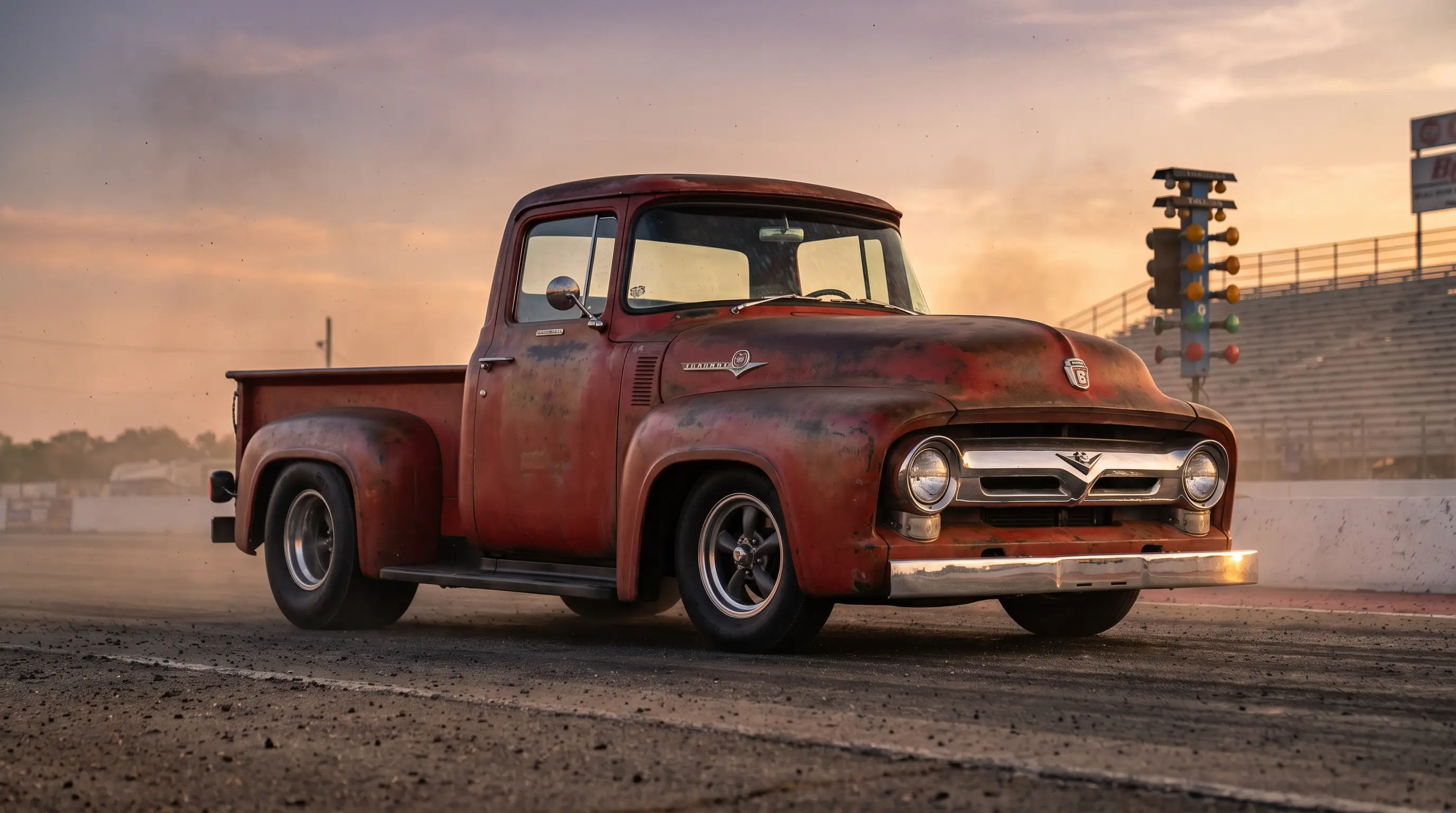
Local drag strips through the 1960s and 1970s gave hot rod F-100 owners somewhere to test their swaps against the clock instead of just against each other's opinions in a driveway. A truck's box bed made it easy to add weight over the rear axle for traction, and its relatively light body compared to a full-size sedan made it a genuinely competitive platform once a builder got the combination right. Truck classes were not always taken as seriously as car classes at these events, but the owners who showed up week after week built real credibility, and their trucks earned reputations that spread through word of mouth long before any of it reached a magazine page.
That drag strip proving ground also forced a kind of honesty into the hot rod tradition that show culture alone never would have. A truck that looked fast but was not actually fast got exposed in front of a crowd every single weekend, and builders who cared about their reputation learned quickly that bravado without results did not last. This is part of why so many of the era's respected hot rod F-100s carried both a strong look and a genuine performance pedigree, rather than one without the other.
Where the tradition stands today
Hot rod F-100s never really went away, they just got more expensive to build well. What used to be a driveway project with junkyard parts is now, in its top form, a serious financial commitment with a waiting list at a respected shop. That has not erased the tradition's roots, though. The trucks that carry the most respect at shows today are still judged by the same instincts that guided builders in 1959: does the stance look right, does the engine sound like it belongs, and does the whole truck feel like an honest extension of what a hot rodder would have wanted. Buyers chasing that lineage can browse classic F-100s on the market and see how many current listings still lean directly on that decades-old hot rod formula.