
He kept both cars in the same garage for eleven years before he could bring himself to sell either one. A 1969 Firebird his father had bought new, and a 1969 Camaro he had bought himself the summer he turned twenty-two, parked nose to nose like two old friends who had stopped speaking but never quite left the room. He told me once that visitors always asked which one he loved more, and he never had a real answer. The question itself was the point. Some rivalries are not really about winning.
Car Features
6 min read
Why the Rivalry Still Matters
The Firebird and Camaro rivalry outlived both cars' production runs, inherited by generations of owners who never bought either car new but still choose sides.
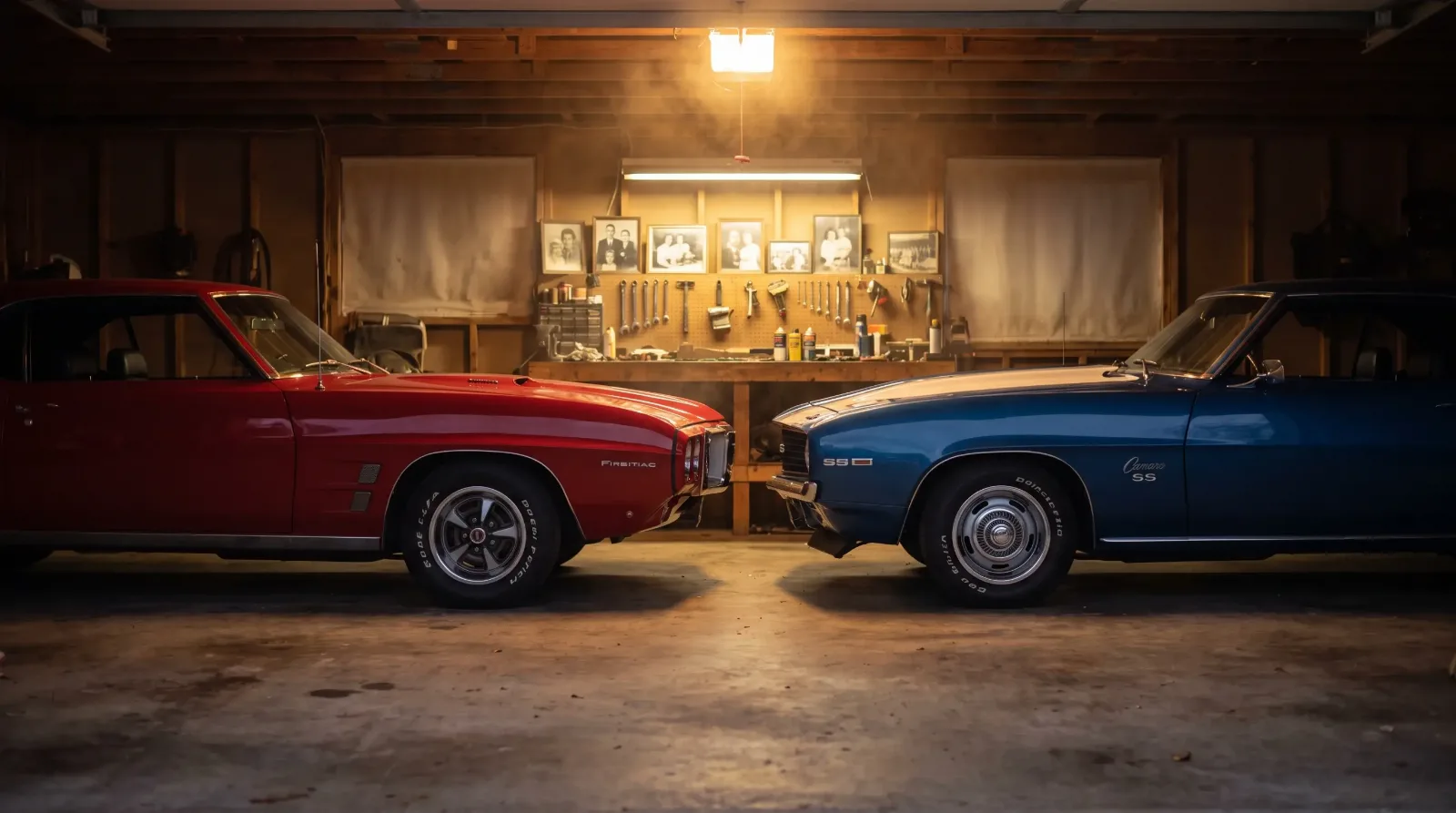
That is the strange gravity of the Firebird and Camaro story. Two cars built on the same bones, sold by two divisions of the same company, competing for the same buyer in the same showroom parking lot, and somehow that closeness produced one of the most durable loyalties in American car culture rather than dissolving it. Nearly six decades later, people still choose sides, and the choosing still matters to them in a way that a purely mechanical comparison could never explain.
A rivalry built by design, not by accident
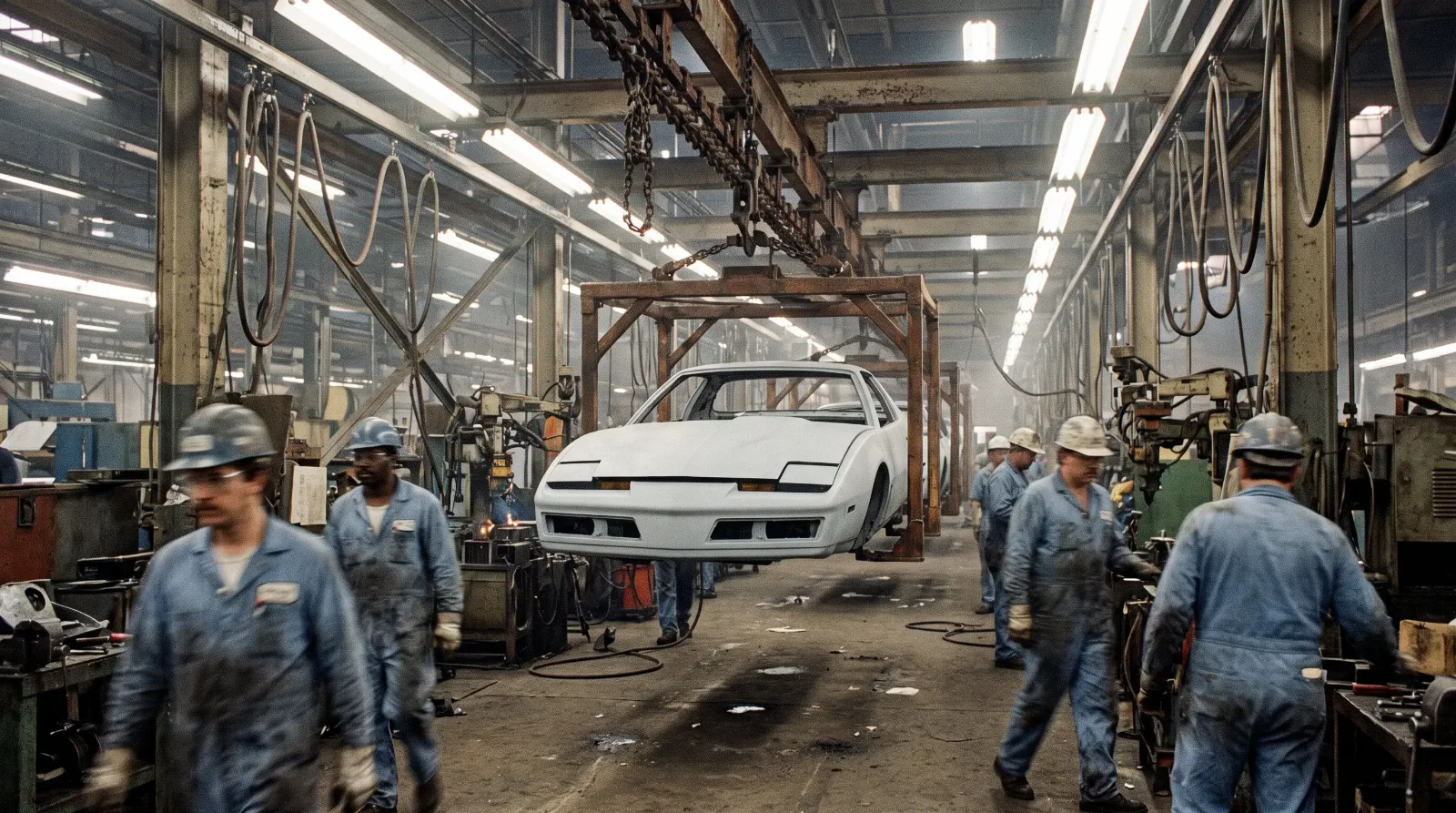
General Motors did not stumble into this competition. The F-body platform underneath both cars was engineered to be shared, and the differentiation between Firebird and Camaro was handled deliberately through styling, marketing, and the personality each division wanted its version to carry. Pontiac leaned into a more aggressive, performance-forward identity for the Firebird, especially once the Trans Am became the flagship, while Chevrolet built the Camaro as a broader, more accessible ponycar with its own high-performance Z28 variant sitting alongside more everyday versions.
The result was two cars that could share a parts bin and still feel like they came from different families. Owners noticed. Dealers noticed. And by the time the second generation arrived in the seventies, the rivalry had become self-sustaining, passed down from one owner to the next less as a marketing artifact and more as an inherited allegiance, the kind of thing a father hands to a son along with the keys.
What the rivalry actually protected
It would be easy to dismiss all of this as brand loyalty dressed up in chrome, but something more specific was at stake. The Firebird and Camaro rivalry gave two generations of GM engineers and designers permission to keep refining the same basic idea from two directions at once, testing which details actually mattered to a buyer and which were just noise. Every styling tweak on one car got measured against the other. Every performance package invited a direct answer from across the hall. That competitive pressure, sustained internally rather than against an outside brand, is part of why both cars kept improving long after their original ponycar rivals from Ford and Chrysler had moved on to other things.
A closer look at how that pressure actually played out, model by model, lives in Firebird vs Camaro, which traces the two cars side by side rather than treating the rivalry as an abstract idea. It is worth reading alongside this piece, because the emotional pull described here only makes sense once you see how close the engineering competition actually was.
What the collector market says about loyalty
Auction results and asking prices tend to track the two cars closely across most comparable years and trims, which on paper should have flattened out any real reason to prefer one over the other. It has not. Buyers with a family history in one camp will often pay a premium to stay in it, passing up a comparable Camaro at a better price because the Firebird is the car their father drove, or the reverse. Dealers who handle both nameplates regularly describe a customer base that self-sorts almost immediately, arriving already committed before a single question gets asked about options or condition. That kind of loyalty rarely shows up cleanly in a valuation guide, but anyone who has sold both cars side by side knows it is real.
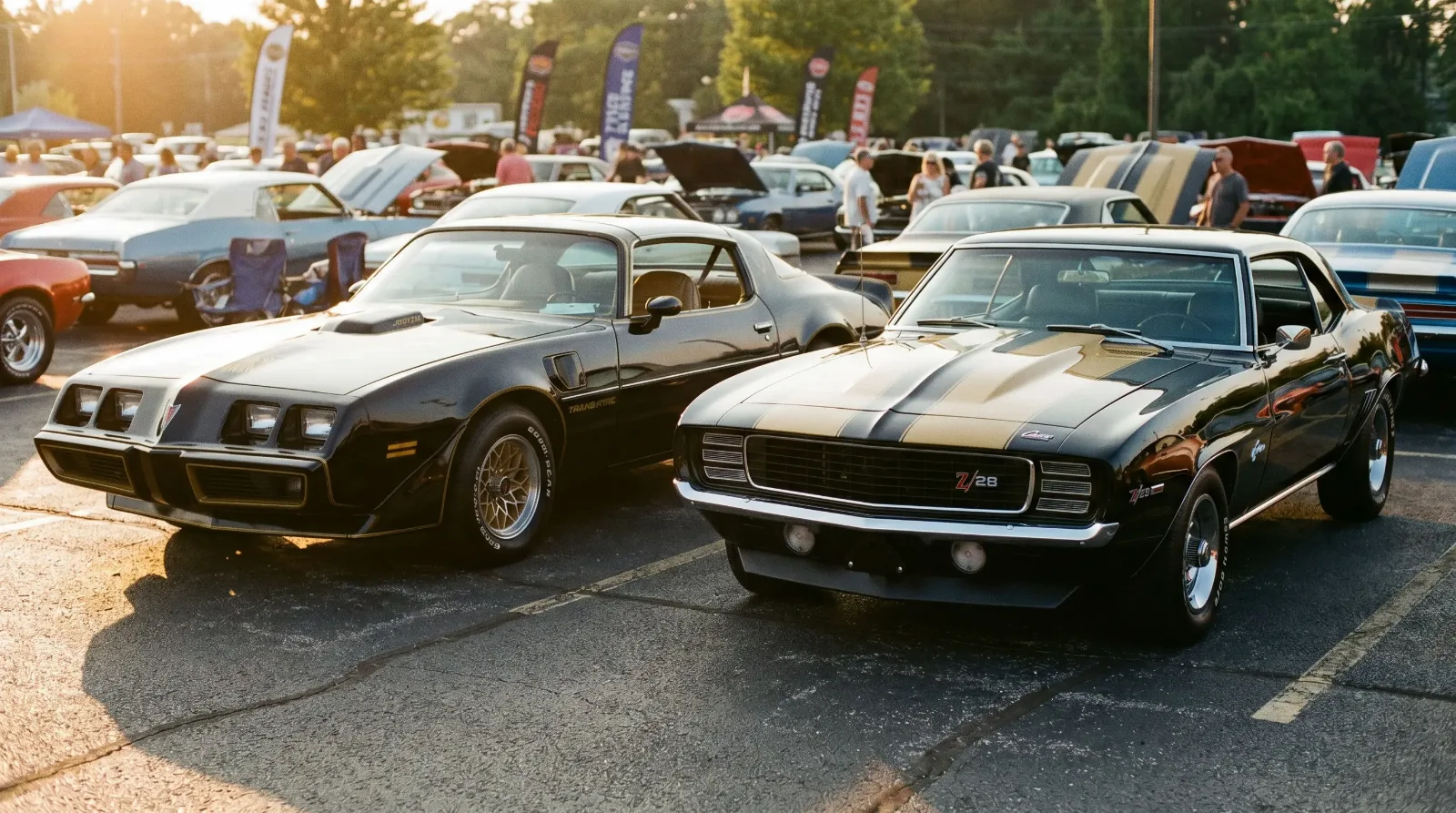
It also means the rivalry has quietly shaped restoration priorities. Firebird owners chasing correct Trans Am details and Camaro owners chasing correct Z28 details are, in a sense, still competing with each other decades after either car left a showroom floor, each side determined to present their nameplate at its absolute best whenever the two end up parked next to each other.
Why it still matters to people who never bought either car new
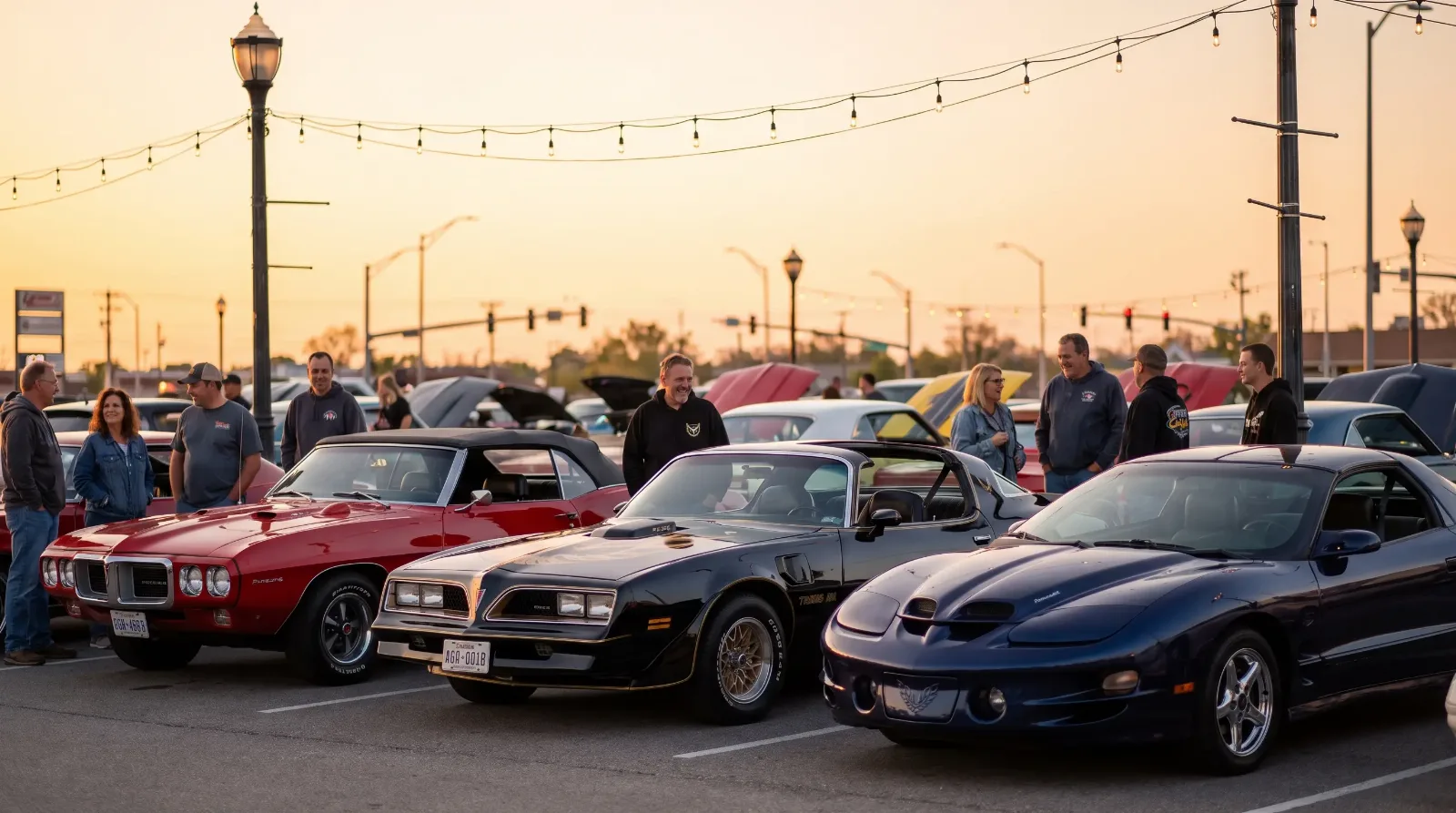
Most people arguing about Firebird versus Camaro today were not alive for the original showroom competition. They inherited the argument the way my friend inherited his father's car, through family, through car shows, through the simple fact that picking a side gives a person something to belong to. That inheritance is the real legacy, more than any single production number or quarter-mile time. The rivalry survived the end of both cars' production runs in the early 2000s and outlived the platform itself, carried forward by people who simply refuse to let the argument settle.
There is something quietly moving about that persistence. Two cars built by the same company, sharing the same floor pans and often the same suppliers, managed to convince generations of owners that the difference between them was worth defending. Maybe it never really was, in any way an engineer could measure. But the feeling was real, and feelings like that are exactly what keep an old car culture alive long after the cars themselves stopped being new.
"He never sold the Firebird, in the end. He sold the Camaro instead, and I think that told me everything I needed to know about which one he'd actually been protecting all along."
Nora Beckett
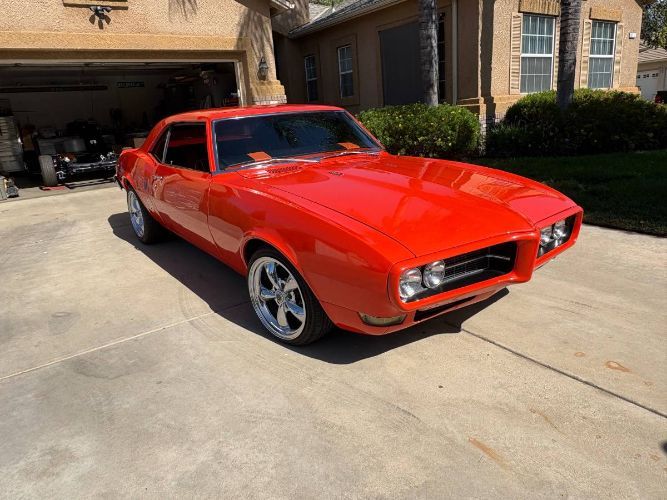
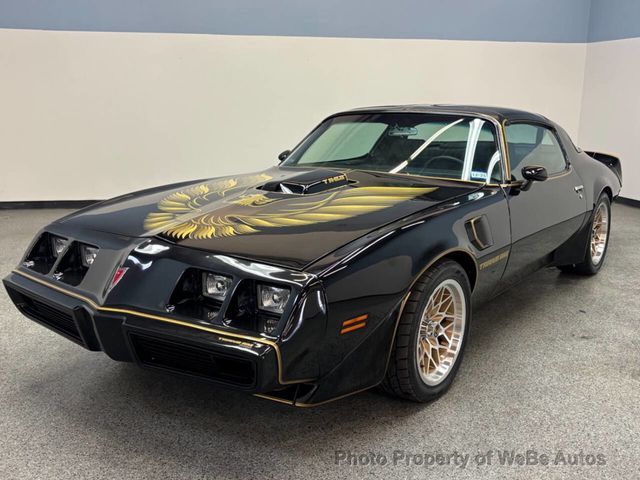
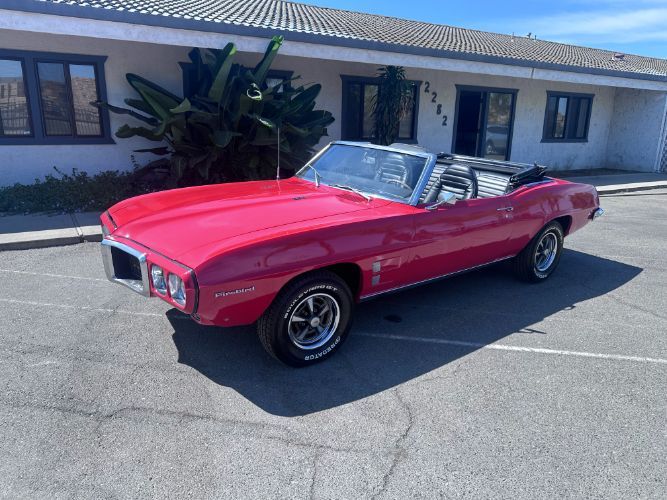
Anyone drawn into this rivalry for the first time owes it to themselves to start with the full Firebird guide, which lays out the full arc of the car the rivalry was built around. And for readers who want to see how the argument looks from a different angle entirely, another angle on these shared-platform siblings is worth the detour. For those closer to actually buying into one side of this story, a look through current classic Firebirds for sale is usually where the argument stops being theoretical.
Sources and notes
Related Reading
Have a
Pontiac Firebird
for Sale?
Reach thousands of serious classic car collectors across the US.
Sell It Here →
Are You a Classic Car Dealer?
List your full inventory and connect with targeted classic car buyers.
Join as a Dealer →

About the author
Nora Beckett
Automotive features writer and photographer who tells the human stories behind the cars, from show fields to cross-country road trips.
Related Listings - Pontiac Firebird




Comments
Be the first to comment on this article.