
Walk a swap meet long enough and you will hear the same argument break out at least once: some guy in a faded Pontiac shirt insisting his Firebird is "basically hand built" next to a guy in a Camaro shirt laughing into his coffee. Both of them are a little right and a little wrong, and the truth sits in the sheet metal stampings and parts bins of General Motors' F-body program, the platform that gave the world the Firebird and the Camaro as fraternal twins rather than identical ones. Understanding f-body shared parts is really understanding how a corporation built two personalities off one skeleton, and why that skeleton still shapes what these cars are worth and how they drive today.
Car Features
6 min read
Shared Parts, Unique Identities
The Firebird and Camaro shared a unibody, a deadline, and a parts bin, but Pontiac's engineers spent twenty five years making that shared skeleton feel like a different car.
One platform, two nameplates, one deadline
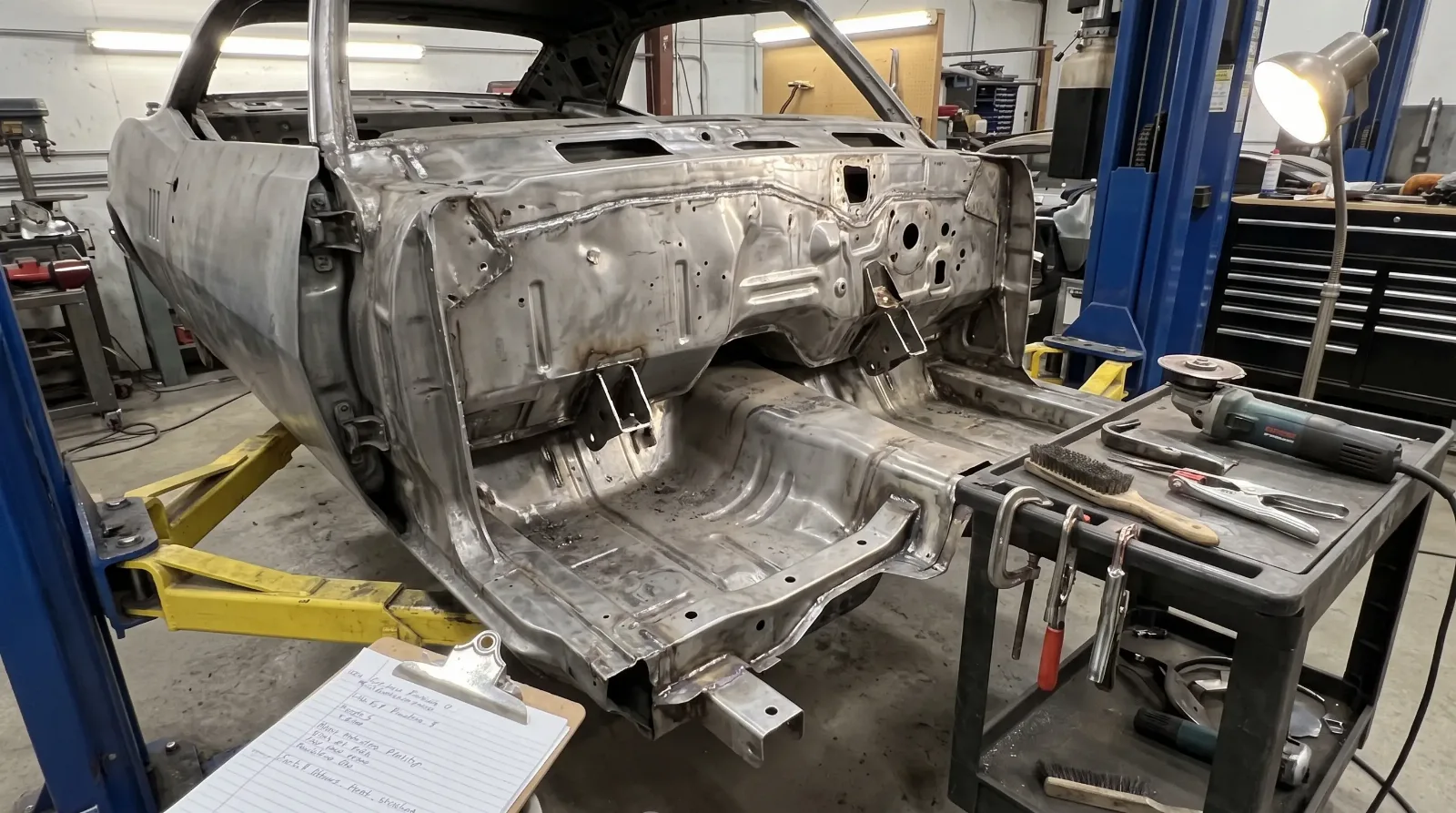
The F-body was Chevrolet's answer to the Ford Mustang, rushed into production for 1967 with Pontiac riding along almost as an afterthought. Pontiac wanted its own pony car and did not get one from scratch; it got the Camaro's unibody, floor pans, firewall, and cowl, delivered five months after the Camaro had already gone on sale. That timeline explains almost everything that followed. Pontiac's engineers did not have the budget or the calendar to redesign the car's structure, so the Firebird inherited the core architecture wholesale and spent the next twenty five years finding ways to make that shared shell feel like a Pontiac from behind the wheel.
This was not unusual for GM in that era. Corporate platform sharing kept tooling costs down across divisions, and the F-body was one of the more successful examples because the two cars diverged just enough to keep loyalists on both sides convinced they had bought something different. They had, but not where most people assume.
What actually interchanged between the two
The unibody structure is the biggest shared piece, full stop. Floor pans, firewalls, cowls, door skins on many years, and the basic subframe geometry came off the same tooling for both cars across the first three generations. Glass was often shared or nearly identical in dimension. Suspension mounting points, front subframe design, and much of the interior structure underneath the trim followed the same blueprint, which is why a Camaro convertible top mechanism or a firewall patch panel will frequently bolt into a Firebird of the same model year without drama.
Where things get more interesting is the running gear. Through the 1970s Pontiac used its own family of engines, the 326, 350, 400, and 455, built at Pontiac's own engine plant and sharing almost nothing internally with Chevrolet's small blocks apart from bolt pattern conventions. By the time the third generation Firebird arrived for 1982, GM had consolidated engine production hard enough that Firebirds increasingly ran Chevrolet-sourced V8s, a shift that still needles purists who remember when a Pontiac badge meant a Pontiac engine underneath it.
Where Pontiac drew the line and made it its own
Sheet metal above the beltline is almost entirely Firebird specific. The split-bumper nose, the shaker hood scoop on Trans Am models, the quarter panel creases, and the taillight treatment were Pontiac's design language layered onto a shared skeleton, and it worked well enough that most casual observers never clock the family resemblance underneath. The dashboard and instrument cluster were also unique to Pontiac in most years, reflecting the division's habit of building a more driver-focused cockpit than Chevrolet bothered with in the base Camaro.
Suspension tuning diverged too, and this is the part enthusiasts argue about most. Pontiac's chassis engineers ran different spring rates, different bushings, and in some years different anti-roll bar dimensions than their Chevrolet counterparts, chasing a ride and handling balance that Pontiac marketing loved to call more "European." Whether you buy that framing or not, period road tests did note real differences in how a Firebird and a same-year Camaro behaved on a winding road, differences that came entirely from the tuning of shared hard points rather than any change to the hard points themselves.
| Component area | Typically shared | Typically Firebird specific |
|---|---|---|
| Unibody structure | Floor pans, firewall, cowl | Front/rear sheet metal skins |
| Glass | Windshield, backlight dimensions | Trim moldings, shaker scoop cutout |
| Powertrain (pre-1982) | Transmissions, some driveline parts | Pontiac 326/350/400/455 engine family |
| Powertrain (1982 on) | Chevrolet-sourced V8s, TPI/LT1 later | Unique badging, exhaust tuning |
| Suspension | Subframe geometry, mounting points | Spring rates, bushing durometer |
| Cabin | Seat frames, some HVAC hardware | Instrument cluster, dash architecture |
Why the parts story still matters to owners and buyers
None of this is trivia for its own sake. If you are restoring a Firebird today, knowing what came off shared tooling tells you where the Camaro parts market can bail you out and where it absolutely cannot. Floor pan sections, some glass, and certain suspension bushings can often be sourced from Camaro specific suppliers at a lower price than chasing Pontiac-only reproduction parts. But the moment you need a shaker hood, a Pontiac dash pad, or period correct 400 cubic inch internals, you are back in Pontiac-only territory, and the supply is thinner and the prices reflect it.
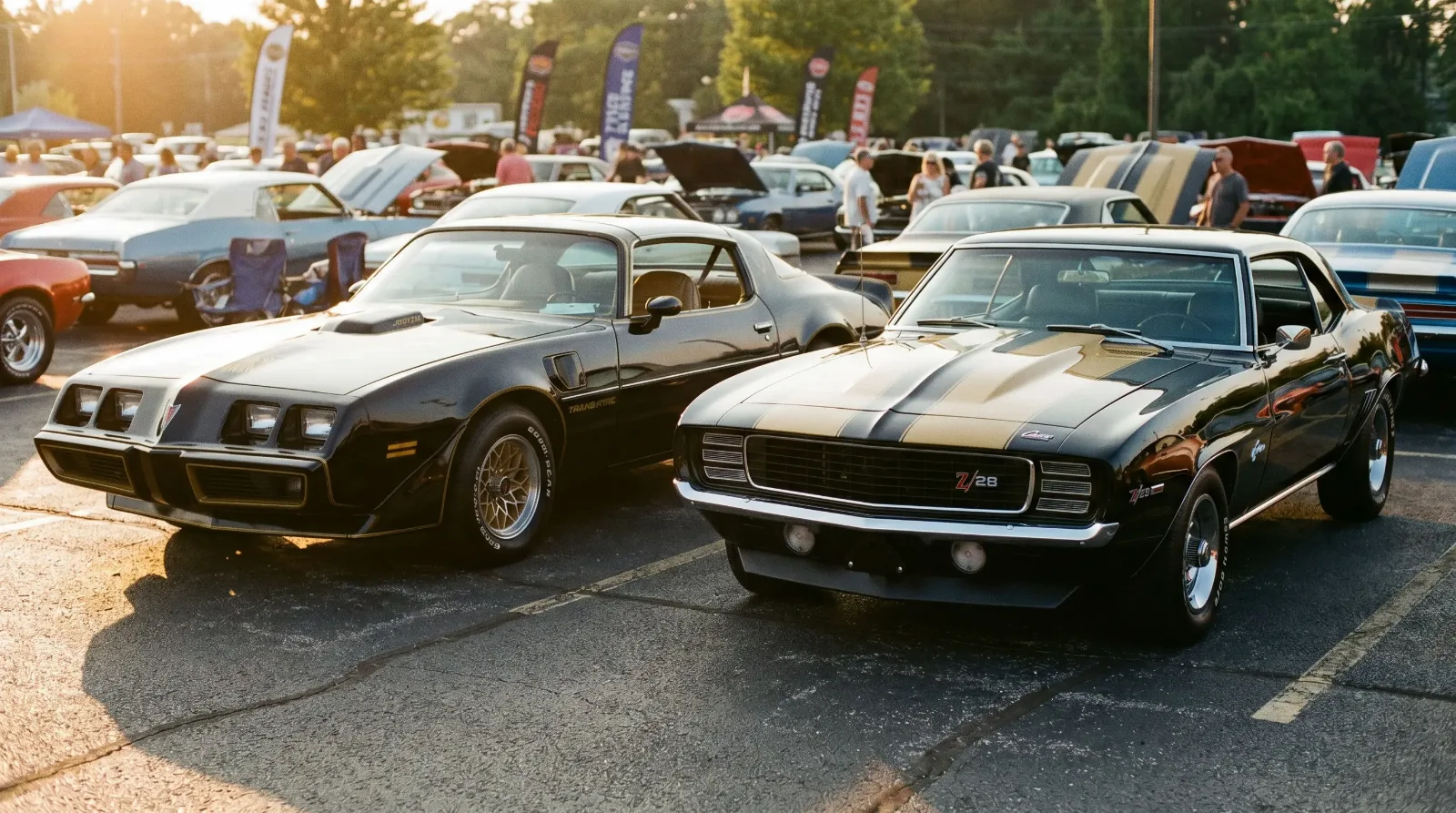
It also explains a persistent quirk of the collector market: two cars that are mechanically closer than their fans want to admit can still command noticeably different money depending on trim and rarity, a dynamic covered from another angle in the sibling rivalry between these two nameplates. The platform sharing did not flatten the hobby into one undifferentiated pool of parts and prices; if anything it sharpened the lines between what counts as a "real" Pontiac component and what is simply GM hardware wearing a Pontiac badge.
"People want the Firebird to be its own car from the ground up, and in the ways that matter to how it drives and looks, it is. But pop the carpet and you're standing on the same floor pan Chevrolet was stamping out for Camaros that same week. That's not a scandal, that's how GM built cars in 1967."
Patrick Walsh
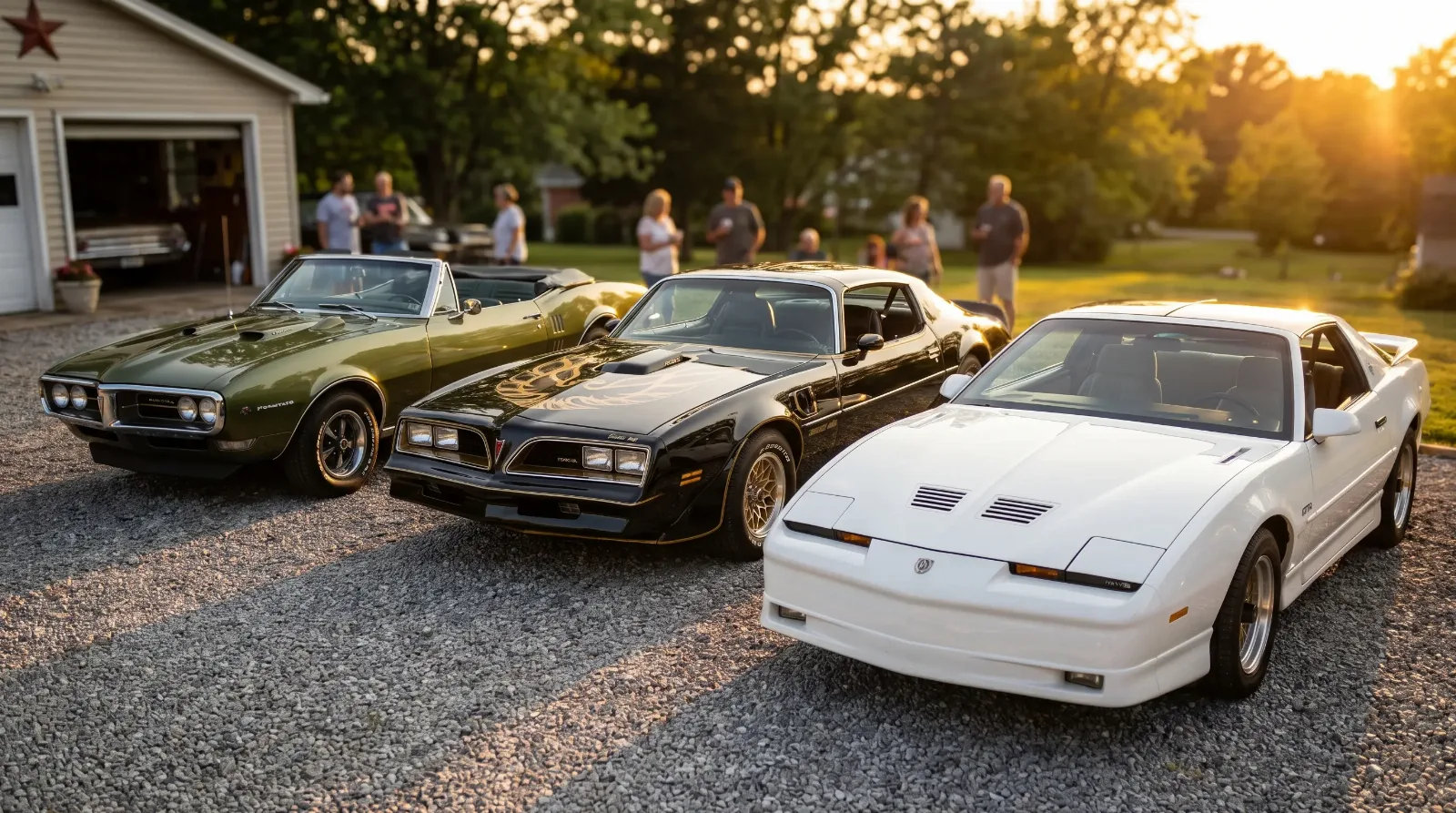
The F-body's shared bones are not a footnote to the Firebird's story, they are the reason the Firebird could exist on Pontiac's budget and timeline at all. What Pontiac did with that shared platform over three generations, tuning it, restyling it, and eventually watching its own engine family get absorbed into Chevrolet's, is the next story in this set, and it closes out the arc that begins right here with two divisions sharing one unibody and spending twenty five years arguing about what that meant. For the fuller sweep of the car's history, from 1967 through the final classic-era cars, see our Firebird retrospective.
Sources and notes
Related Reading
Have a
Pontiac Firebird
for Sale?
Reach thousands of serious classic car collectors across the US.
Sell It Here →
Are You a Classic Car Dealer?
List your full inventory and connect with targeted classic car buyers.
Join as a Dealer →

About the author
Patrick Walsh
Automotive journalist covering classic car shows, events, and the enthusiast community across North America.
Related Listings - Pontiac Firebird




Comments
Be the first to comment on this article.