
I get asked about the Formula hood more than almost any other single part on these cars. Not the engine, not the rear end gears, the hood. Makes sense once you think about it. It's the first thing anybody sees in a parking lot, and it's also one of the easiest things on a Firebird Formula to get wrong, either by accident from thirty years of parts swapping or on purpose from somebody trying to dress up a plain car. Here's what that hood actually is, what it does, and how to tell a right one from a wrong one.
Car Features
7 min read
The Twin-Scoop Formula Hood
The Formula's twin-scoop hood is the car's signature feature and one of its easiest details to get wrong. Here's how to tell a right one from a wrong one.
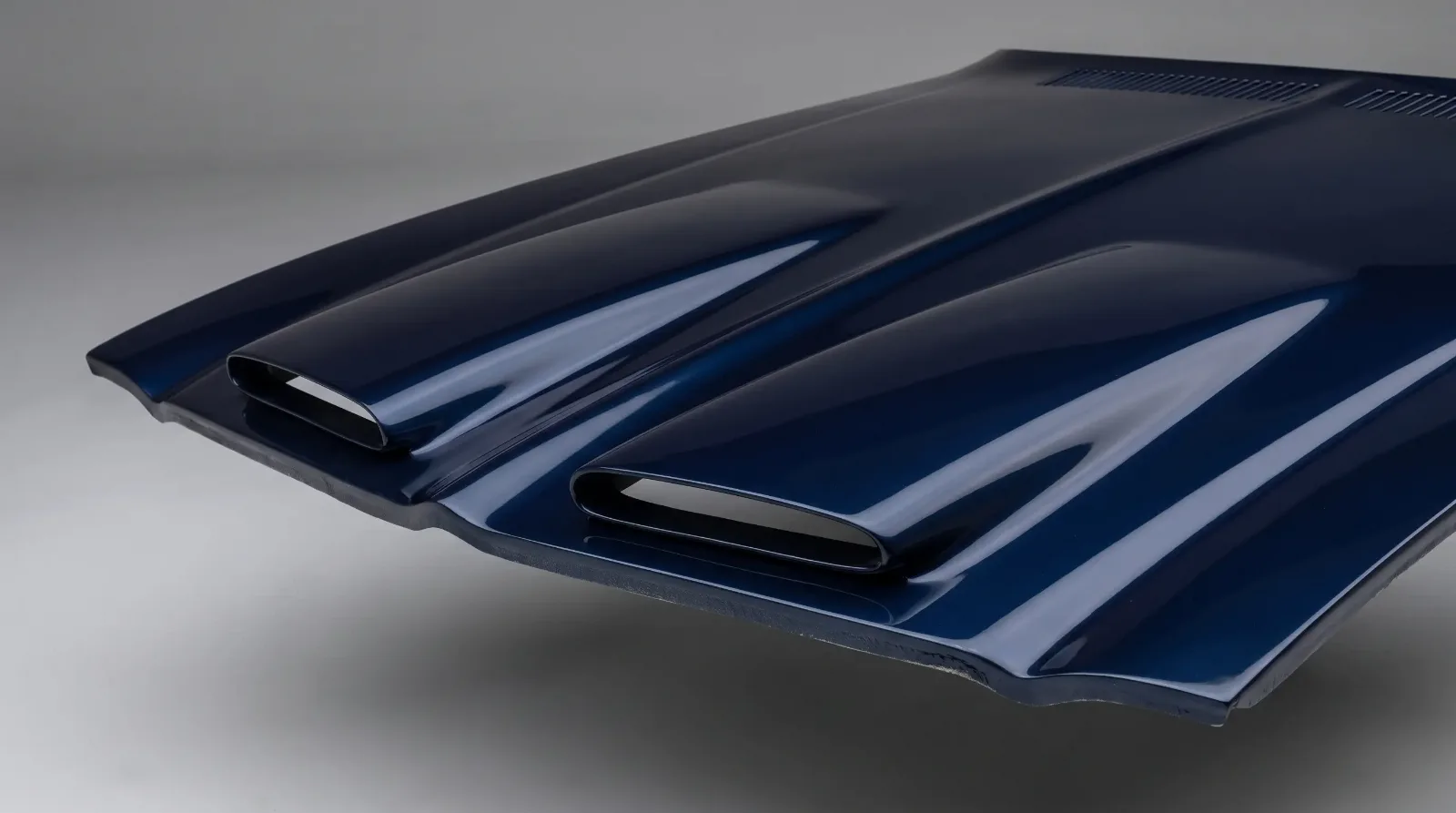
Two scoops, one job, and it's not what people assume
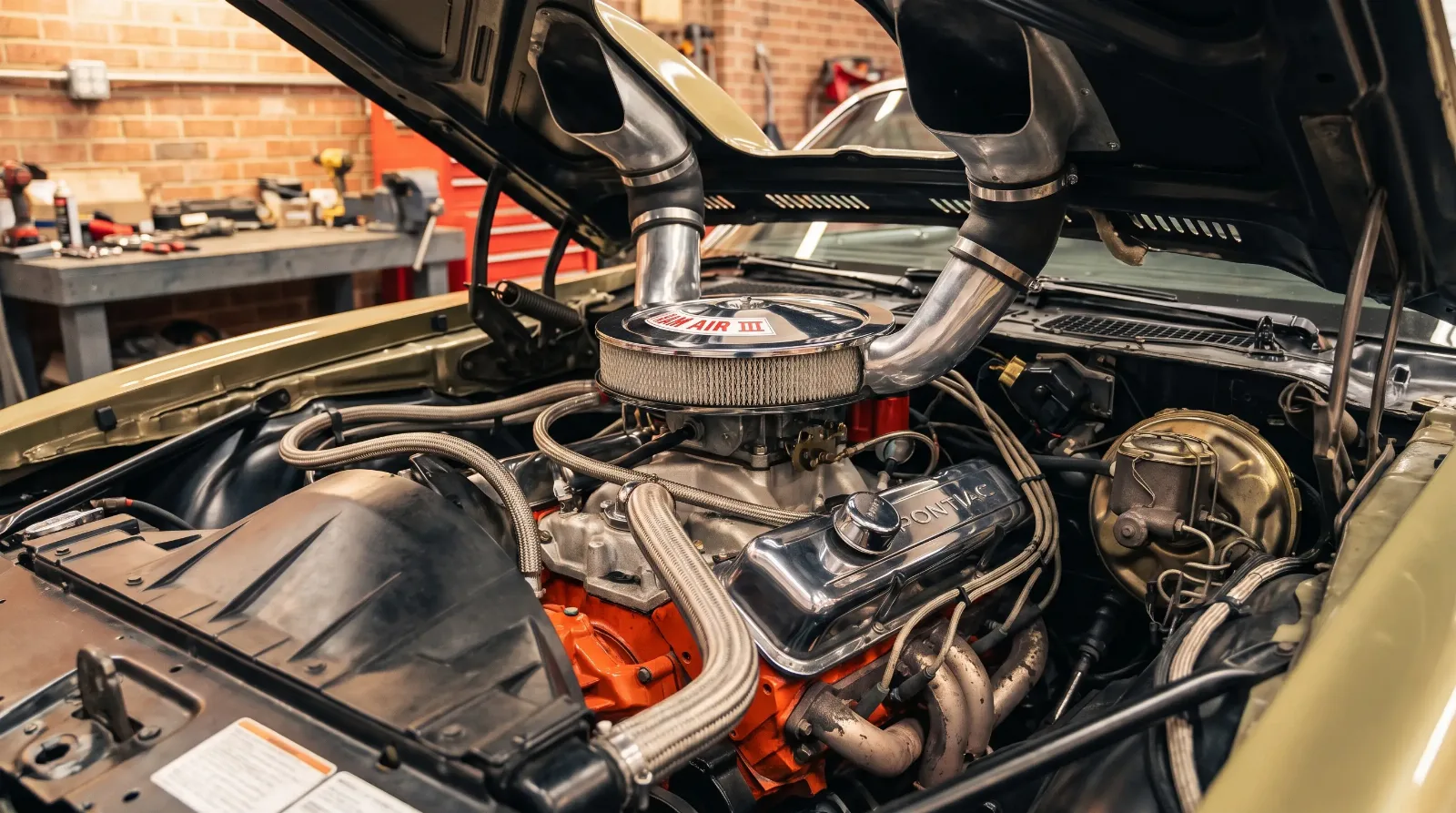
The twin-scoop hood is the Formula's signature visual, two raised humps running front to back instead of the Trans Am's single shaker scoop poking through a hole in the hood surface. The shaker is functional theater, it's bolted to the air cleaner and moves with the engine, which is where the name comes from. The Formula hood is a fixed panel, no moving parts. With the strongest available engines, most notably the Ram Air III, the twin scoops were functional and fed cooler outside air into the engine bay rather than just looking the part. On lower-output engine combinations the same scoops were often non-functional, styling only, with no ductwork behind them.
That distinction matters to buyers because it gets misrepresented constantly. Some Formula hoods over the production run were functional Ram Air setups with actual ductwork routing air to the carburetor. Others, especially on lower-output engine combinations, were the same visual shape without the internal plumbing behind it. A hood that looks identical from ten feet away can be doing completely different jobs underneath, and that's exactly the kind of detail that gets flattened out by a seller who either doesn't know or doesn't want to say.
Why so many of these hoods aren't original
Fiberglass and sheet metal hoods take abuse. Parking lot dings, hail, a rock off the highway, thirty-plus years of sun baking whatever finish was on top of it. A lot of Formulas on the road today are wearing a reproduction hood, and that's not automatically bad, a good reproduction properly fitted and painted can look right and function right. The problem is when a reproduction hood gets sold as original, or worse, when a twin-scoop hood gets bolted onto a Firebird that never came with the Formula package at all, dressing up a base car to look like something it isn't.
I've walked around plenty of cars at swap meets where the panel gaps around the hood didn't match the rest of the body, where the scoop edges had that slightly-too-crisp look of new fiberglass next to forty-year-old steel fenders. It's not hard to spot once you know what you're looking for, but it's easy to miss if you're focused on the engine bay and forget to actually look at the hood as its own component.
Fit, finish, and the mistakes that cost buyers money
The most common mistake I see isn't fraud, it's just bad bodywork from a prior owner trying to save money on a repaint. The scoop edges are where a rushed paint job shows fastest, because the contours are tighter and harder to mask than a flat hood surface. Orange peel and overspray collect right in that transition where the scoop rises off the main hood line. If you're looking at a car with a fresh-looking paint job, put your eyes right there before anywhere else. It's the tell.
The other mistake is hardware. Factory hood pins, hinges, and the underhood insulation pad all have a correct look for a given model year, and mismatched hardware from a parts-bin rebuild is common enough that it shouldn't surprise you. None of it is a dealbreaker on a driver-quality car. It absolutely matters if somebody is asking numbers-matching money for a car wearing a mixed bag of reproduction and salvage parts.
What a correct hood is actually worth to you
On a car you're planning to drive and enjoy, a well-fitted reproduction hood in the right style is a completely reasonable thing to own, and honestly a smart move if the factory piece is damaged beyond a sensible repair budget. On a car being sold as an original numbers-matching example, the hood's authenticity should move the price, and it's worth having someone who knows this specific model walk the car with you before you commit. A twin-scoop hood is not an expensive part to replace in isolation. It's an expensive detail to get wrong if it changes what you thought you were buying.
Insurance and appraisal paperwork is where this catches up with people years later. A hood swap that seemed like a harmless upgrade at the time can become a real problem if a claim adjuster or a future buyer's inspector flags it against the trim tag. Keep receipts for any hood work done, reproduction or otherwise, and keep photos of the underside stampings before any repaint covers them up. That paper trail is worth more than people think until the day they actually need it, either for an insurance claim or for a buyer asking hard questions before they write a check.
The same goes for anyone doing the swap themselves. If you're pulling a damaged factory hood off a Formula to send it out for repair, photograph everything before it leaves your garage, the date codes, the hinge mounting points, the condition of the underside pad. Restoration shops are generally careful, but a hood is a big awkward panel and things get bumped, and having your own record protects you either way.
"The hood is the first thing you see and usually the last thing people actually check. That backwards order costs buyers money every single week."
Mike Sullivan
For the broader context on where this hood fits in the model's history, there's the Formula story covering the full car, and if you're weighing this against the Trans Am's competing hood design, a companion piece lays out that comparison in more detail.
Sources and notes
- SlashGear: What Makes A Pontiac Firebird A Formula Different From A Trans Am
- Firebird Nation forum: Ram Air vs shaker hood discussion
- Hagerty: Original Owner, 1971 Pontiac Firebird Formula
- CarBuzz: The Firebird Formula 400 history
- Wikipedia: Pontiac Firebird
- Hagerty Valuation Tools: Pontiac Firebird
Related Reading
Have a
Pontiac Firebird
for Sale?
Reach thousands of serious classic car collectors across the US.
Sell It Here →
Are You a Classic Car Dealer?
List your full inventory and connect with targeted classic car buyers.
Join as a Dealer →
#pontiac firebird
#Ram Air
#muscle car buying guide
#classic pontiac
#Firebird Formula
#Formula hood

About the author
Mike Sullivan
Detroit-area muscle car enthusiast and restoration specialist with three decades of hands-on experience working on American iron.
Related Listings - Pontiac Firebird




Comments
Be the first to comment on this article.