
The firebird 455 1970s story is really two stories jammed together: what the engine could do on paper, and what emissions rules did to that number every single year after 1971. I have pulled more of these big blocks apart than I care to count, and the pattern is always the same. Guys show up expecting a monster and leave disappointed, or they show up expecting a strangled emissions motor and get surprised by how much low-end grunt is still in there. Neither reaction is wrong. It depends entirely on which year you are talking about.
Car Features
7 min read
The 400 and 455 Through the 1970s
The firebird 455 1970s story is about more than one big number on a spec sheet. Here is what the 400 and 455 actually delivered year to year, and what to check before you buy one.
The 400 was the real workhorse, not the 455
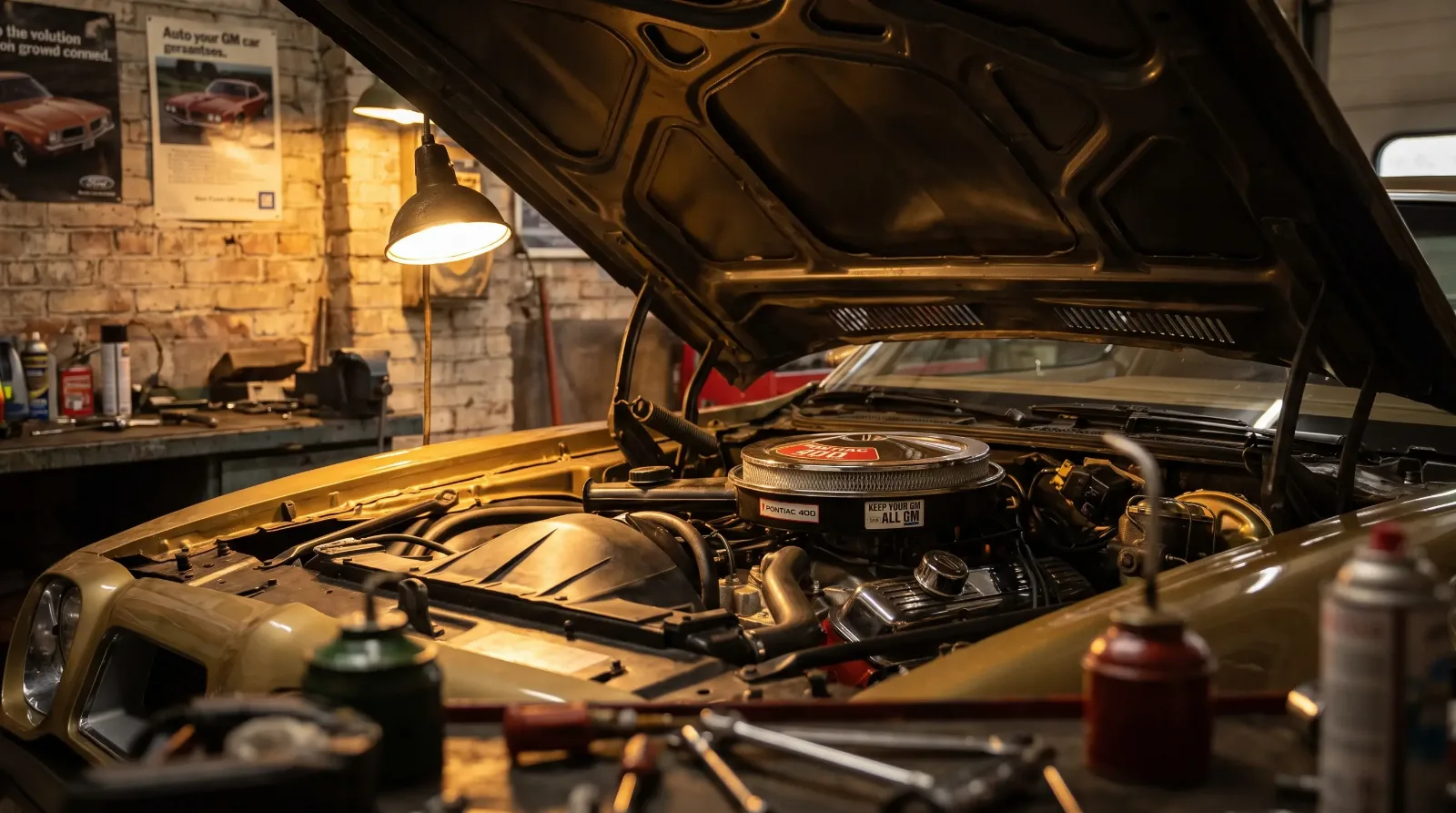
People hear "big block Firebird" and jump straight to the 455, but the 400 cubic inch V8 is the engine that actually carried the second-gen Firebird through most of the decade. It was standard or available on Esprit, Formula, and Trans Am trims across multiple years. In 1970, the Esprit's standard engine was a 350 V8, with the 400 offered as a two-barrel option, while the Formula 400 and Trans Am both came standard with a 400. Pontiac kept building the 400 through 1978, several years after the 455 was dropped from the lineup, and it was cheaper to insure than either big block. If you are shopping a 1970s Firebird and the seller acts like the 400 is a consolation prize, walk them through the production numbers. The 455 was always the exception car, not the rule.
That does not mean the 400 was slow. Even in its detuned mid-decade form it made real torque, the kind that pulls a heavy F-body off the line without needing to be wound out. Where it falls short of the 455 is peak output and the sound of the thing under load, which is a real factor for guys buying with their ears as much as their wallet.
What the 455 actually offered, year by year
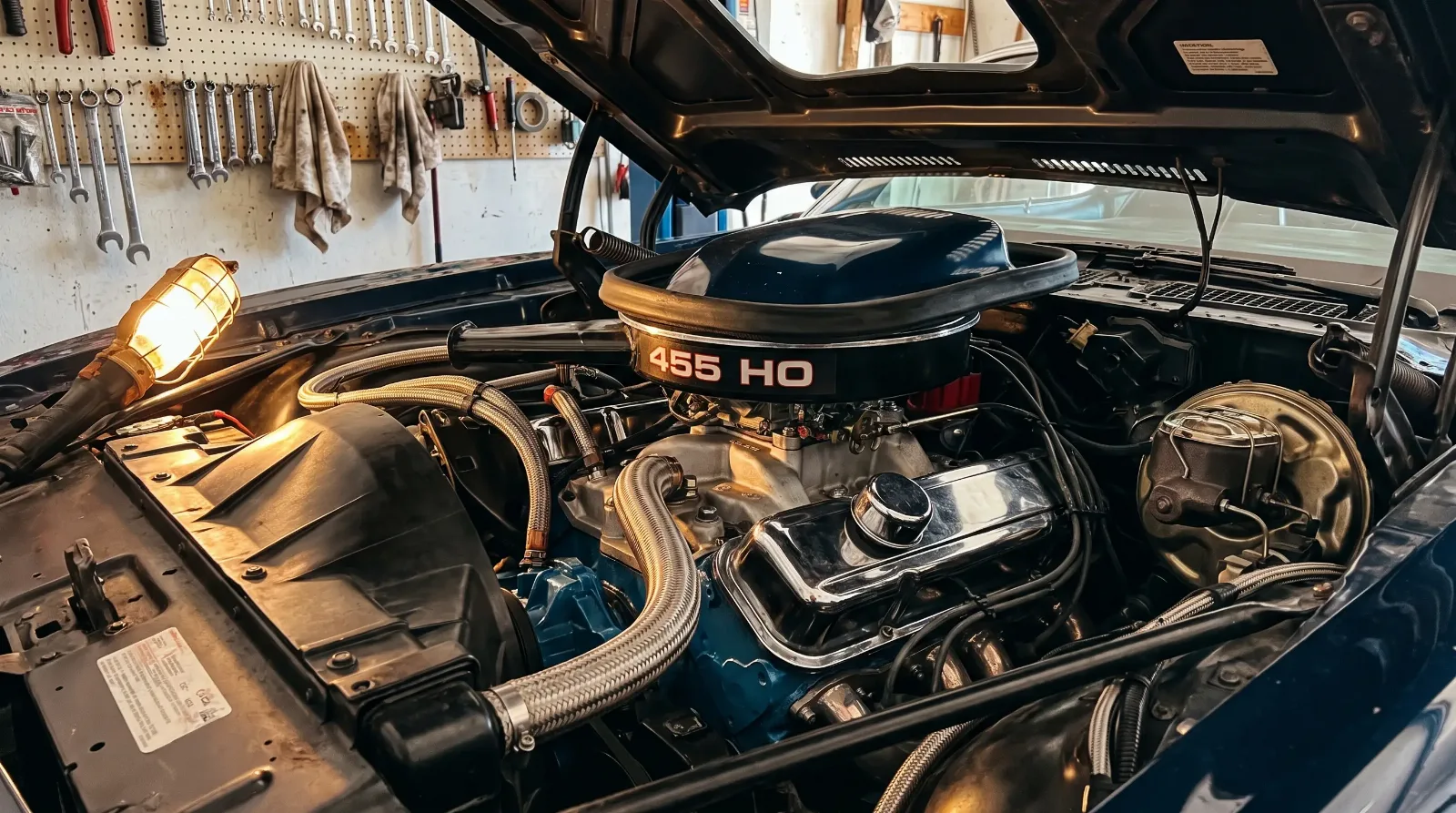
The 455 was Pontiac's biggest displacement option through the middle of the decade, and it came in more than one state of tune. The base 455 was a torque motor, tuned for a broad curve rather than a screaming top end, which suited a car that most owners drove on the street rather than a strip. The 455 HO pushed compression and cam timing further for more usable power, and the Super Duty 455, built for just the 1973 and 1974 model years and rated at 290 net horsepower, was the closest thing Pontiac had left to a factory race motor once the muscle car era's insurance and emissions pressure had already killed most of the competition.
Here is what nobody tells you when they quote a horsepower number off a spec sheet: the rating method changed mid-decade. Gross horsepower numbers from the start of the era and net horsepower numbers from later years are not measuring the same thing the same way, and comparing them directly makes engines look like they lost more power than they actually did on the dyno. Some of that drop is real, emissions equipment and lower compression took a genuine bite. Some of it is just honest accounting replacing an optimistic one.
| Engine | Character | What to check when buying |
|---|---|---|
| 400 (standard tune) | Broad torque, easiest to live with daily | Timing chain wear, correct carb for the year |
| 400 HO / Ram Air variants | More aggressive cam, better breathing | Confirm heads and cam match the build sheet |
| 455 (standard) | Low-rev torque, unhurried power delivery | Rod knock on tired examples, oil pressure at idle |
| 455 HO | Firmer top end, more usable power overall | Verify against PHS or factory documentation, these get faked |
| 455 Super Duty | Closest to a factory race motor from this era | Numbers-matching documentation is everything here, do not trust a tag alone |
How to actually tell these engines apart in the driveway
Casting numbers on the block and heads are the starting point, but they only tell you what the part was originally cast as, not what is currently bolted together in front of you. I always tell guys to pull the air cleaner and look at the carburetor and intake combination before trusting anything printed on paper. A 400 wearing a 455's intake, or the reverse, happens more than owners admit, usually because a rebuild years ago used whatever was on the shelf rather than what came out of the car.
Exhaust note is a decent secondary clue but not a reliable one on its own, since header swaps and different mufflers change the sound more than displacement does. What is reliable is a compression test across all eight cylinders. Big blocks that have sat unused for long stretches often show uneven compression from stuck rings or varnished valves, and that is a cheaper problem to catch before purchase than after.
Buyer mistakes I see over and over
The single most common mistake is trusting a fender tag or a casting number without checking it against factory documentation. Big block swaps into lesser cars happened decades ago and some of those swaps are old enough now that a buyer three owners removed genuinely does not know the engine is not original. That is not always a scam, sometimes it is just history nobody wrote down, but it changes the price you should pay.
The second mistake is ignoring oil pressure at idle on a hot engine. These big blocks tolerate a lot of neglect, but low idle oil pressure on a warmed-up motor is the first sign of bearing wear, and a rod knock on a 455 is not a cheap fix. Have it checked before you hand over money, not after.
The third mistake is assuming any big block Firebird from this decade drives like the muscle car era version from a few years earlier. It does not, and pretending otherwise sets buyers up for disappointment. Compression ratios came down, cam timing got milder, and emissions equipment added restriction that was not there on earlier years. None of that makes these engines bad. It makes them a different animal than what came before, and buyers who understand that going in tend to enjoy the car a lot more than buyers chasing a number from a different era entirely.
Where this fits in the bigger Firebird story
None of this makes sense without the context of the second-gen Firebird as a whole, since the engine options were only ever half the equation next to trim, suspension, and what Pontiac was allowed to build under tightening federal rules. If you want to keep reading the series, keep reading the series covers the Formula 400 specifically, which is where a lot of smart buyers land once they realize the Trans Am premium is not always worth paying.
"A 400 in good tune will out-drive a tired 455 every single time. Guys pay for the bigger number on the fender and then wonder why the car with the smaller motor pulls harder off the line."
Mike Sullivan
Buy the condition, not the displacement badge. A well-maintained 400 beats a neglected 455 in every way that matters once you are actually driving the thing.
Sources and notes
- CarBuzz: Pontiac's 455 Super Duty, The Muscle Car Era's Final Powerhouse
- Horsepower Memories: 1973-1974 Pontiac Firebird and Trans Am Super Duty
- Street Muscle: Muscle Cars You Should Know, Pontiac Firebird SD-455
- Heacock Classic: 1970 Pontiac Formula 400, The Other Performance Firebird
- Wikipedia: Pontiac Firebird
- Hagerty Valuation Tools: Pontiac Firebird
Related Reading
Have a
Pontiac Firebird
for Sale?
Reach thousands of serious classic car collectors across the US.
Sell It Here →
Are You a Classic Car Dealer?
List your full inventory and connect with targeted classic car buyers.
Join as a Dealer →

About the author
Mike Sullivan
Detroit-area muscle car enthusiast and restoration specialist with three decades of hands-on experience working on American iron.
Related Listings - Pontiac Firebird




Comments
Be the first to comment on this article.