
Numbers matching on a Pontiac Firebird sounds simple until you actually try to prove it. The block, the heads, the carburetor, the transmission, and the rear end all carry codes, and every one of those codes has to trace back to the same build sheet before you can say the word "matching" without a lawyer's asterisk attached. Most Firebirds on the market right now do not clear that bar. That is not an opinion. That is what happens when you pull the trim tag and start checking casting numbers against a car that has been through four owners and two engine swaps since 1974.
Car Features
8 min read
Numbers-Matching Pontiac Firebirds
Documentation, not looks, decides what a numbers-matching Firebird is really worth. Here is what actually gets checked before the money moves.
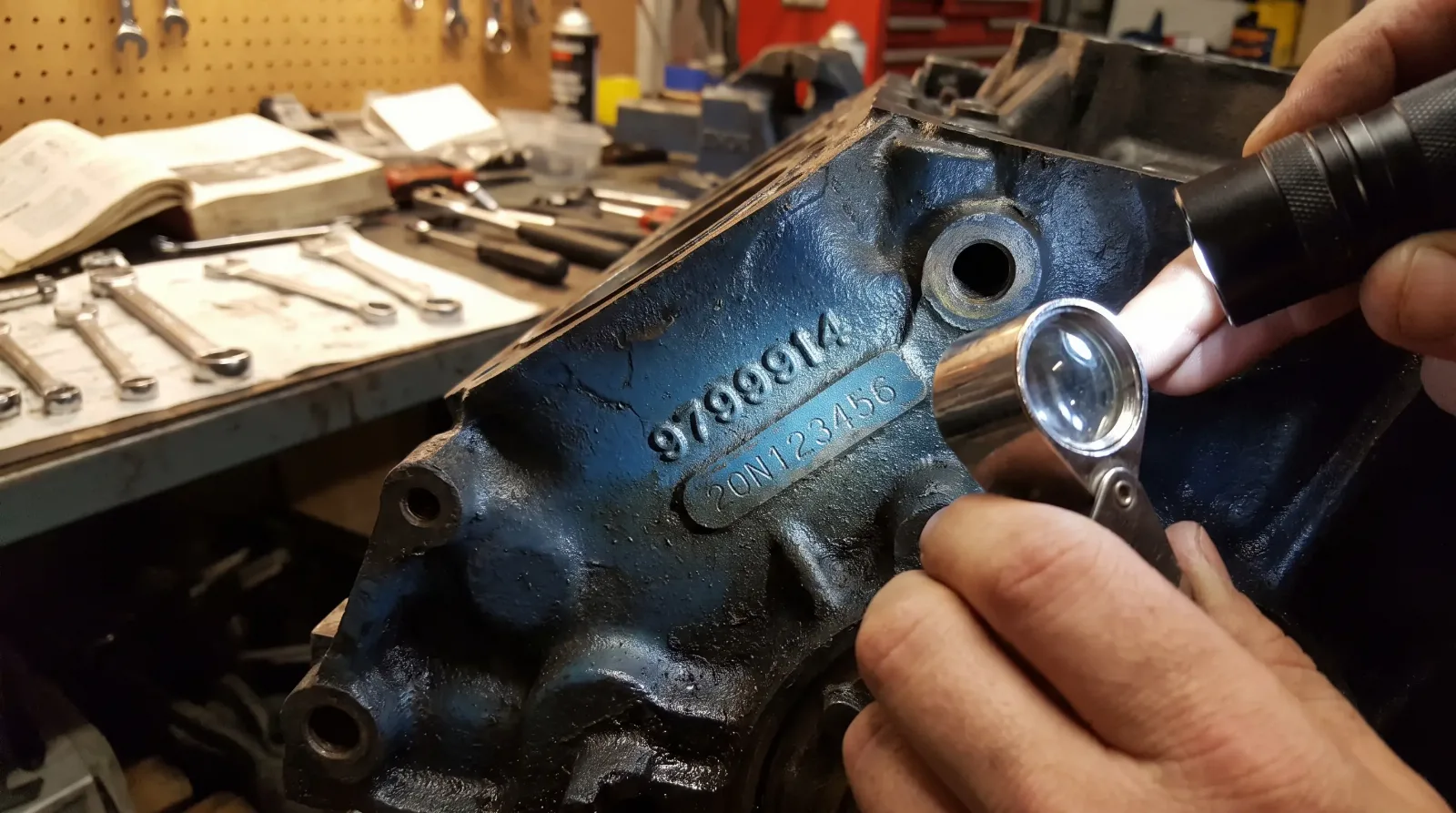
The premium for a numbers-matching car is real, and it is bigger than most sellers want to admit when they list one without documentation. A 1970 Trans Am with a verified Ram Air IV block brings a different number than the same car with a date-code-correct but unverified 400. The gap is not five percent. On a good day it is thirty, and on a bad day, when the seller is asking concours money for a car with a replacement block, it is the whole deal falling apart at the PPI.
What actually gets checked
Start with the engine block casting number, stamped into the block near the distributor or on the block deck depending on the year. That number tells you the engine family and, cross-referenced against Pontiac's casting date, whether the block could physically have been built in time to go into your car. Then there is the engine unit number, a separate stamp on the front of the block that ties the engine to a specific VIN. This is the one people fake, and it is the one that actually matters. A correct casting number with a mismatched or re-stamped unit number is a car with the right engine family and the wrong actual engine.
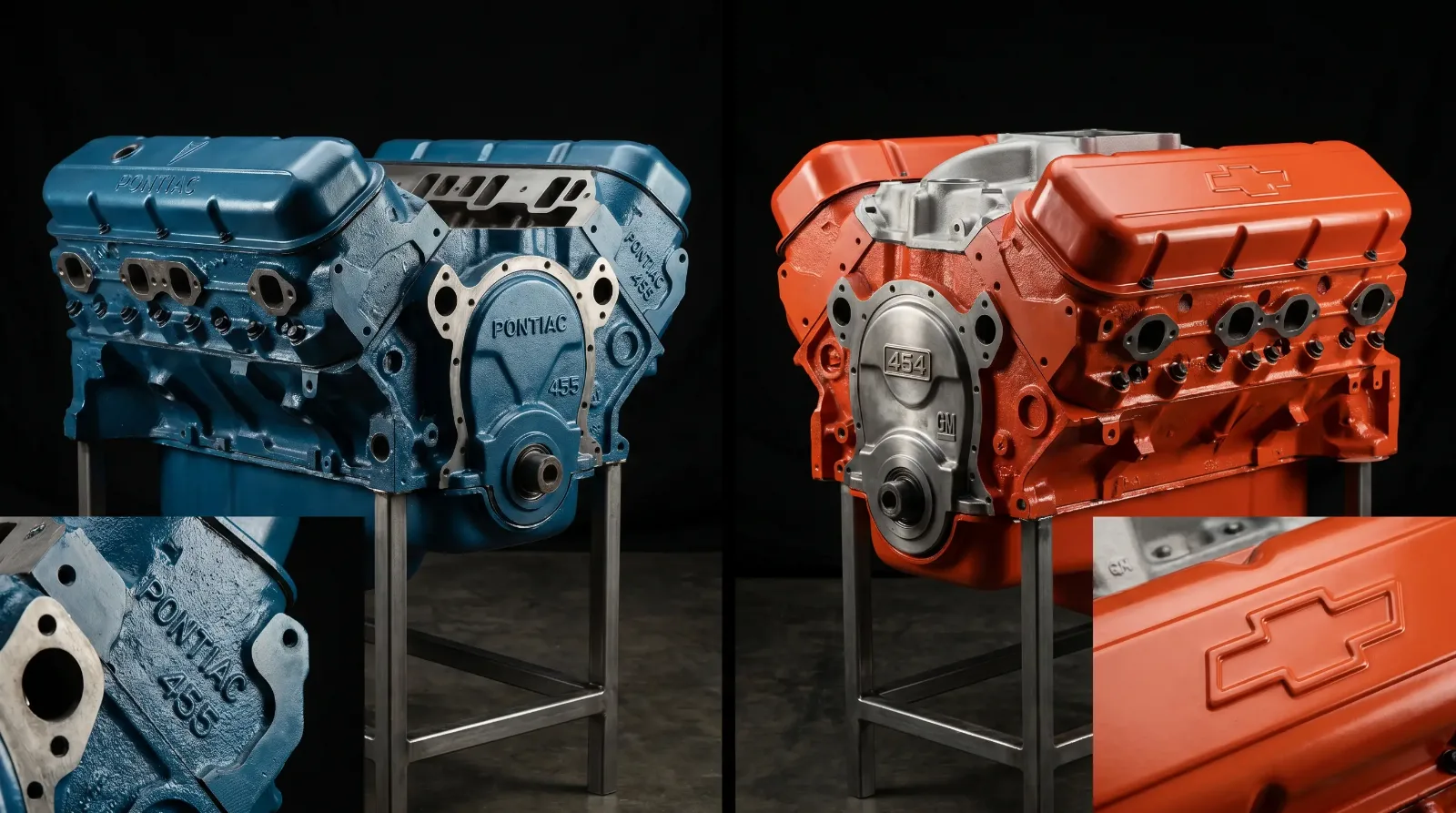
Heads carry their own casting numbers too, and Pontiac ran enough head variations across a single model year that a heads swap is easy to miss unless you know what casting number belongs with what compression ratio and what exhaust port shape. The intake manifold, carburetor date code, and distributor all have their own paper trail as well, though buyers weight these less heavily than the block itself. Pontiac reused the same casting numbers across more than one model year, and starting with the 1970 model year the foundry began stamping the displacement (350, 400, 455) directly on the block, something 1969 and earlier blocks do not carry, so a casting number correct for a 1969 400 is not automatically correct for a 1971 400 even though the displacement reads the same on paper. That is exactly why a buyer cross-references the casting number against a published Pontiac casting log for the specific year rather than trusting the number alone.
| Documentation item | What it proves | How buyers verify it |
|---|---|---|
| Block casting number | Engine family and casting date | Cross-reference against published Pontiac casting logs |
| Engine unit number stamp | Ties engine to specific VIN | Compare stamp to VIN derivative, check for re-stamp signs |
| PHS documentation | Original factory build sheet data | Order directly from Pontiac Historic Services |
| Trim tag | Body style, paint code, trim code, build date | Physical inspection, check for tampering or replacement |
| Broadcast sheet (if surviving) | Line-build sequence, options as installed | Rare survival, treat as a bonus, not a requirement |
PHS, Pontiac Historic Services, is the closest thing this hobby has to a paternity test. They hold microfilm records of the original assembly line paperwork, and for a modest fee they will pull the build sheet for a given VIN and tell you exactly what left the factory. A PHS package that matches the car in front of you is worth more than any seller's word, and a PHS package that does not match is worth exactly as much as knowing the truth before you write the check. I have seen guys skip this step because the car "felt right." Feelings do not show up on a certificate.
"A numbers-matching claim without paperwork is just an opinion with a price tag attached. I have watched two identical-looking Trans Ams sell for a 40 percent spread because one had a PHS package and the other had a story."
Dan Reeves
Why the market pays for this
The math is straightforward once you separate the emotional argument from the financial one. A documented numbers-matching car has a known history and a known ceiling. An undocumented car has an unknown history and a soft ceiling that moves depending on who is buying that week. Buyers who plan to hold long term want the first kind. Buyers who plan to drive and enjoy the car without ever selling it can reasonably take the second kind at a discount and come out ahead, provided the discount actually reflects the risk.
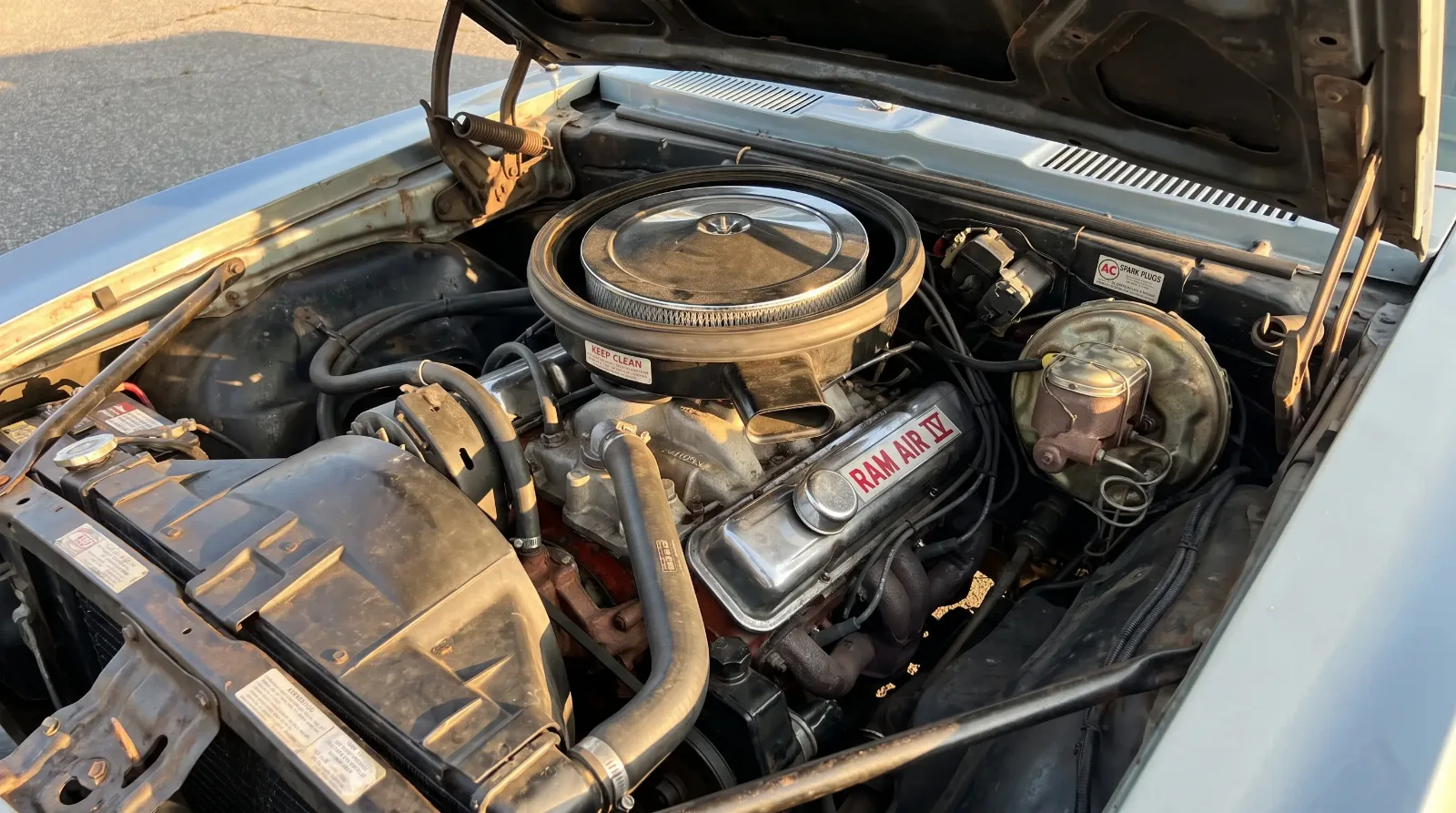
Where this gets interesting is a car like the 1969 Trans Am with the Ram Air IV option, of which only about 55 were built that year, because the smaller the original population of a specific engine option, the harder documentation works and the more it costs to skip it. A common 350 two-barrel car with a mismatched engine barely moves the price. A rare Ram Air option with a mismatched engine can lose half its value overnight, because the entire point of buying that car was the rare engine, and a rare engine you cannot prove is functionally just a common engine with a good story.
Re-stamping and how to spot it
Re-stamped numbers are the fraud that keeps this whole documentation industry in business. Somebody takes a period-correct but wrong-VIN block, restamps the unit number to match a different car, and sells it as original. Done well, this fools a casual buyer completely. Done poorly, it leaves tool marks, inconsistent stamp depth, or spacing that does not match factory jigs. This is exactly why a physical inspection by someone who has looked at hundreds of genuine stamps matters more than a photo posted in a forum thread. A photo can hide a lot. A loupe and a flashlight held at the right angle cannot.
The stamping pad itself tells a story too. Factory stamps sit in a specific location with a specific character spacing, and the pad surrounding them has a particular finish from the factory tooling. A re-stamp job disturbs that surface in ways that are subtle in a photo and obvious in person. If you are buying a car sight unseen based on a numbers-matching claim, you are buying based on faith, not documentation, no matter what the listing says.
None of this means an undocumented Firebird is a bad car. Plenty of great drivers, project cars, and honest budget builds have replacement engines and nobody is trying to hide it. The problem only shows up when a seller charges numbers-matching money for a car that cannot back up the claim. Read the Pontiac engine story for the full breakdown of what these blocks were rated at across the model years, because knowing what an engine should be capable of is half the battle in spotting one that does not add up.
The bottom line for buyers
If numbers matching is the reason you are paying a premium, get the documentation before the money moves, not after. PHS paperwork, a physical stamp inspection, and a casting number cross-reference cost a few hundred dollars and a little patience. Skipping that step to save time costs a lot more when it turns out the block under the hood left a different factory floor entirely. There is another angle on why these engines carry the weight they do in the collector market, and it comes down to the same thing every time: scarcity plus proof equals price. Take away the proof and you are left with scarcity alone, which the market prices a lot more cautiously.
Sources and notes
Related Reading
Have a
Pontiac Firebird
for Sale?
Reach thousands of serious classic car collectors across the US.
Sell It Here →
Are You a Classic Car Dealer?
List your full inventory and connect with targeted classic car buyers.
Join as a Dealer →
#trans-am
#numbers matching
#pontiac firebird
#classic car values
#PHS documentation
#muscle car authentication

About the author
Dan Reeves
Performance engine builder from North Carolina's motorsports corridor, focused on swaps, forced induction and making real, repeatable power.
Related Listings - Pontiac Firebird




Comments (1)
N
Norm Delgado
1 month ago
Seller said it was all original when I asked about the engine. VIN tag told a different story. Always check the details.