
Pop the hood on a Pontiac-powered Firebird next to a small-block Chevy and you will hear the same question every time: why does this thing look different than every other GM V8 sitting on the next lift over. The answer is that Pontiac built its own engine family from the ground up, and it never shared a block, a head casting, or a bolt pattern with the Chevrolet small-block that ended up in half the other GM cars from the same era. That is not a footnote. That is the whole reason Pontiac V8s have their own reputation, their own parts network, and their own headaches.
Car Features
6 min read
Why Pontiac V8s Are Their Own World
Pontiac's V8 family never shared a block with Chevrolet, and that changes everything about parts, rebuilds, and buying a Firebird today.
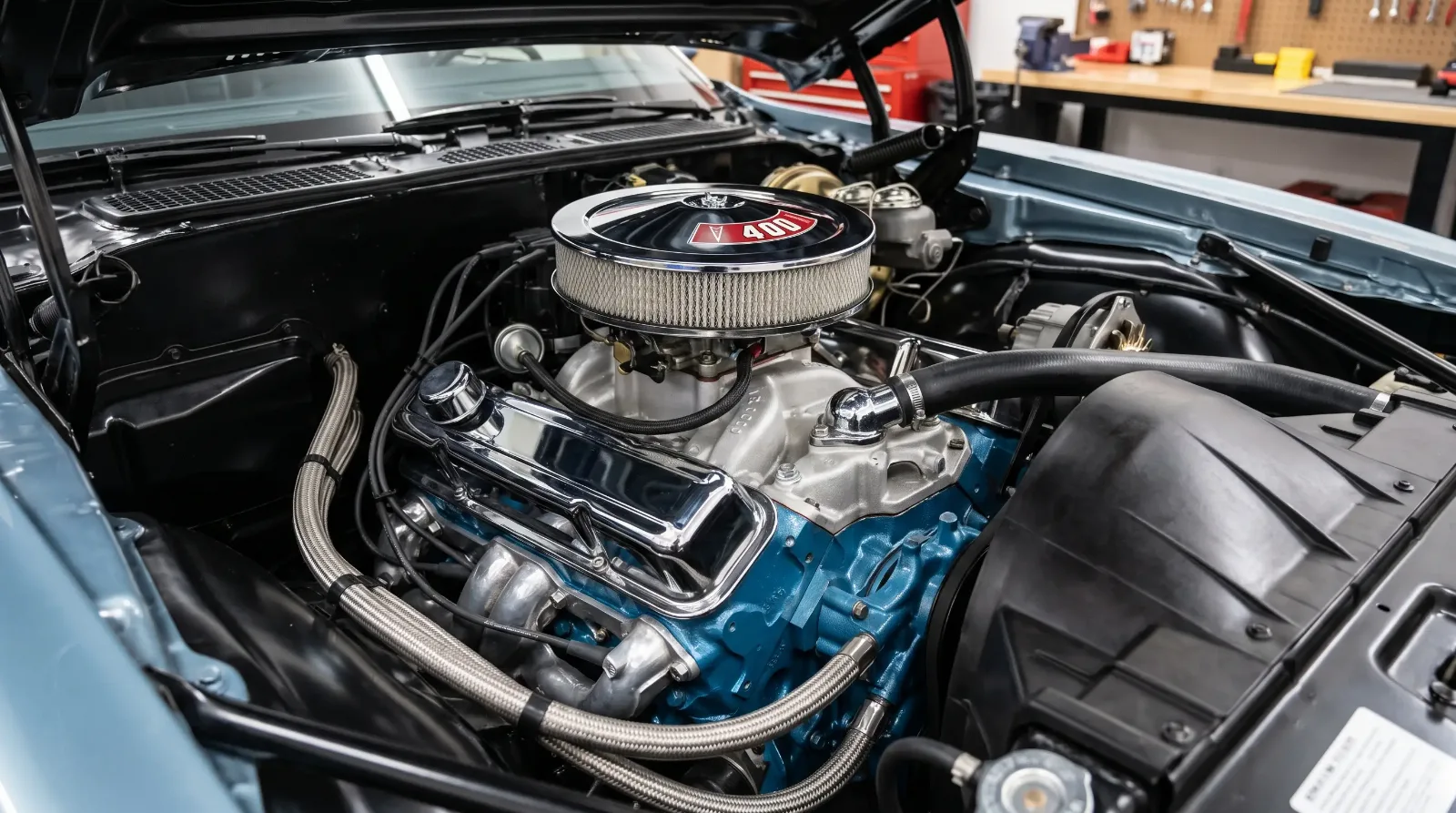
I have had guys bring me a Firebird with a "Chevy 400" story and I have to break the news that Pontiac ran its own 400, its own bore spacing, its own everything. Pontiac's V8 program started in 1955 and ran clear through the early 1980s, all built around one basic architecture that grew from 287 cubic inches up past 455. Same family, same DNA, scaled up over two decades. That kind of continuity is unusual in Detroit, where engine families usually got replaced every ten years or so.
One engine family, one architecture
The key detail here is that every Pontiac V8, from the smallest 326 to the largest 455, used the same basic external dimensions. Same bell housing pattern, same motor mount locations, same general block architecture. That is why a Pontiac 400 swaps into a car built for a Pontiac 326 without reinventing the mounts, and it is also why parts guys who only know Chevy get confused fast. A Pontiac head does not interchange with a Chevy head. A Pontiac water pump does not bolt to a Chevy block. None of it crosses over, and the guy at the counter who tells you otherwise has never actually worked on one.
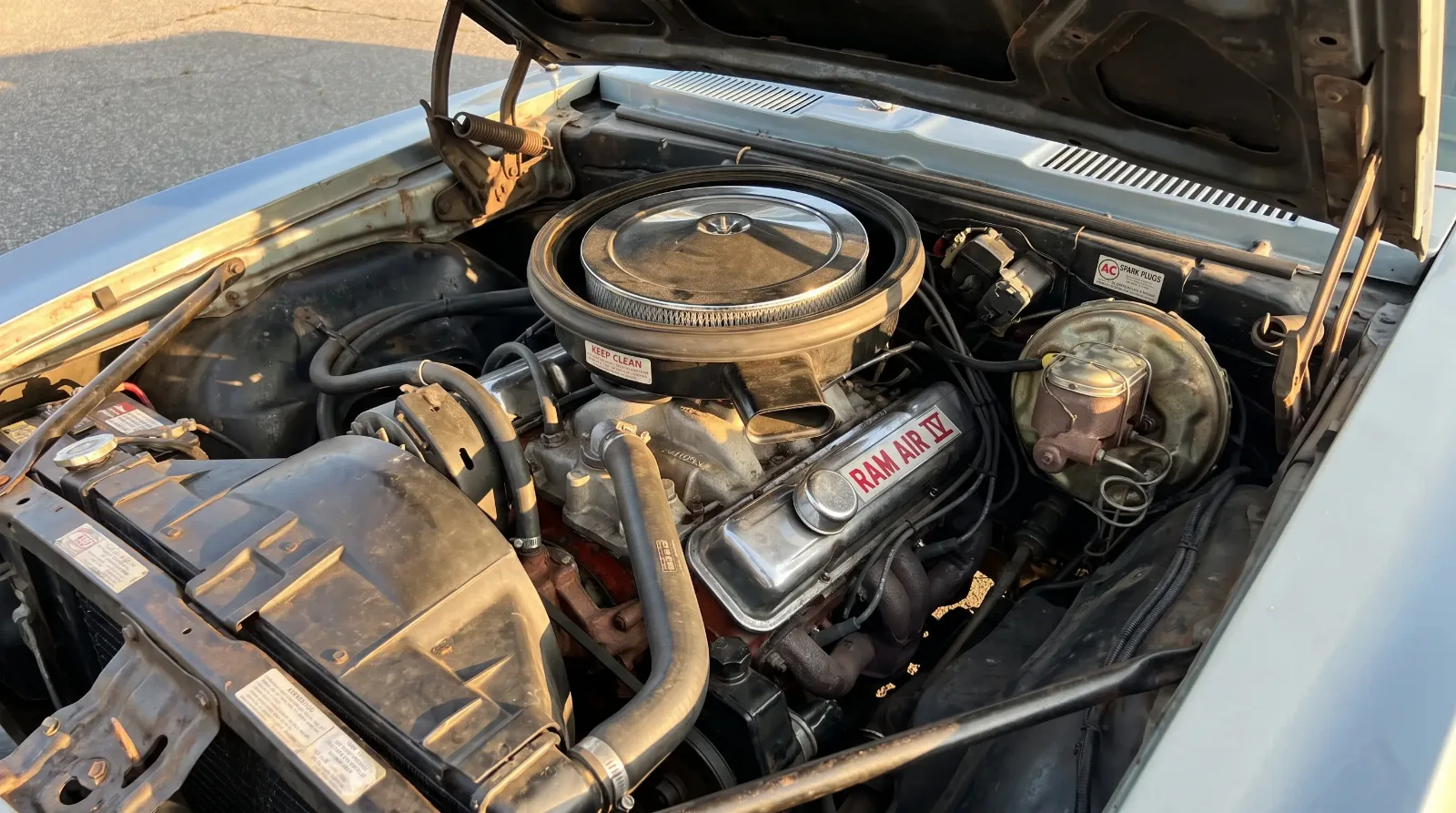
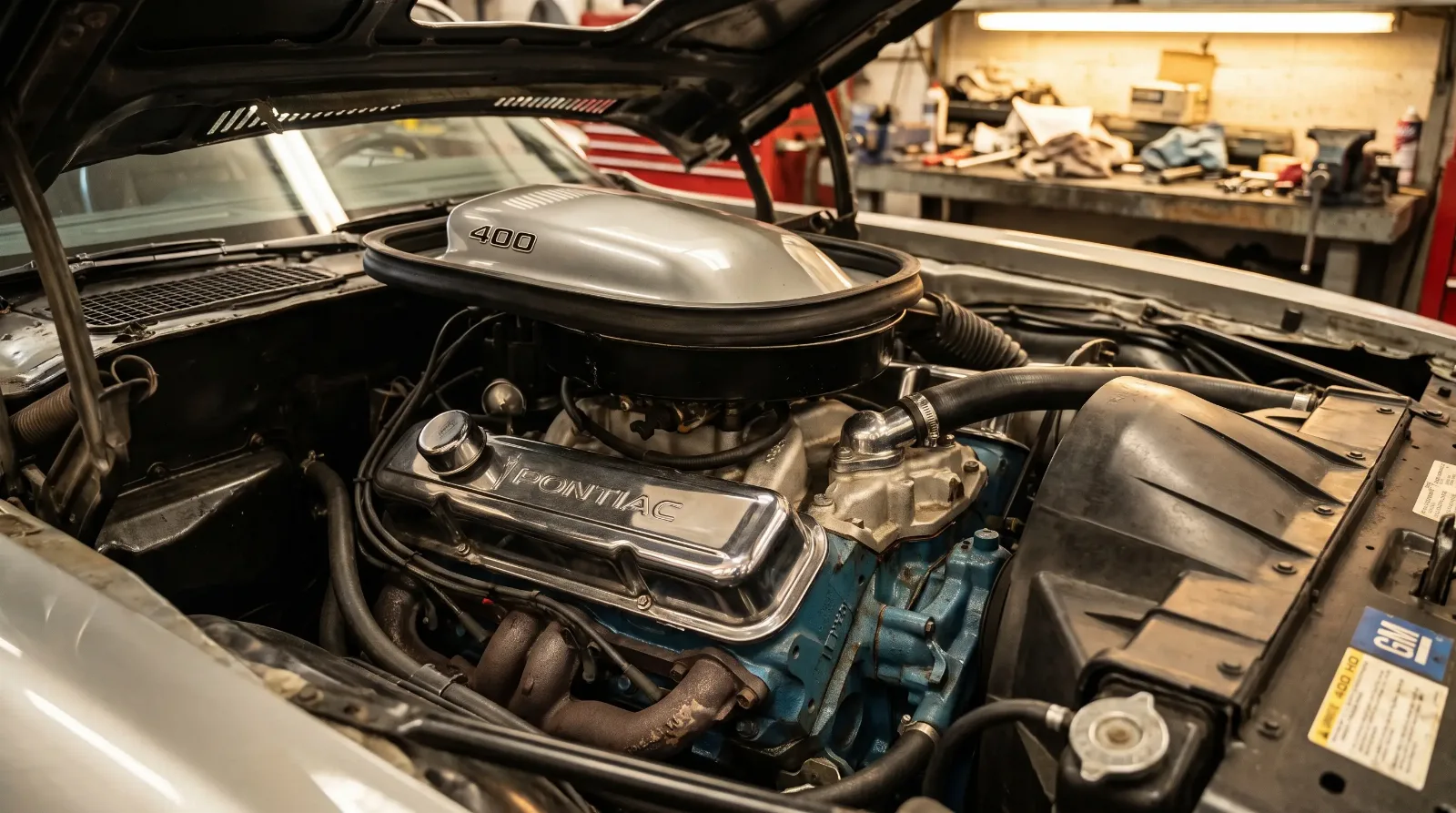
This matters for the 400 and 455 engines specifically because those two displacements are what most Firebird buyers actually deal with day to day. The 400 showed up across a huge range of Firebird trims through the 1970s, and the 455 came in as the big-inch option for buyers who wanted the largest factory Pontiac V8 available. Ratings on both engines swung widely by year and trim, from a 335 horsepower 455 HO in 1971 down to a 250 horsepower detuned 455 by 1973, because Pontiac's factory numbers shifted with compression changes, emissions gear, and the move to net ratings in 1972, and carrying a gross-rated number from an early car onto a later one will get you an argument at a car show.
| Displacement | Introduced | Common Firebird application |
|---|---|---|
| 326 cid | Early Firebird years | Base and mid-tier trims |
| 350 cid | Late 1960s | Mid-tier performance trims |
| 400 cid | Late 1960s onward | Formula and Trans Am, plus many standard trims |
| 455 cid | Early 1970s | Top performance Trans Am and Formula option |
Why parts are its own puzzle
Because Pontiac's V8 never shared tooling with Chevrolet's small-block, the aftermarket support split down a different path too. Chevy small-block parts are everywhere, cheap, and interchangeable across four decades of production. Pontiac parts are a smaller world. Fewer manufacturers tool up for Pontiac heads, fewer machine shops keep Pontiac-specific specs on hand, and a guy who only wrenches on Chevys will hand you the wrong gasket set with total confidence. I tell every customer with a Pontiac-powered car the same thing: find a machinist who has actually built Pontiac V8s before, not one who assumes it is close enough to a Chevy to wing it.
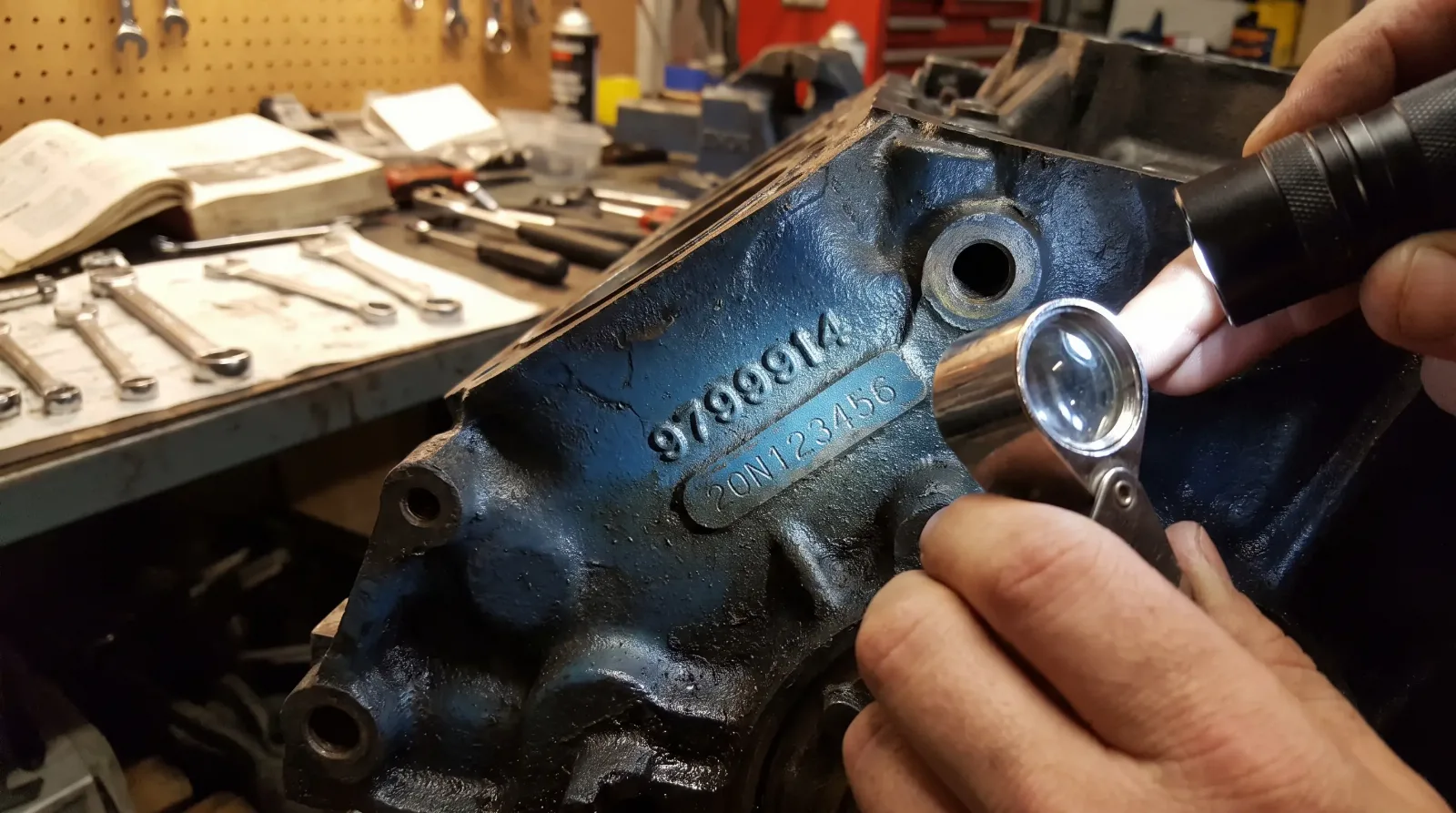
The head casting situation alone trips up more restorations than anything else under the hood. Pontiac ran multiple head castings across the 400 and 455 with different chamber volumes and port shapes, and swapping in the wrong casting changes your compression ratio and your power curve without anybody realizing it until the car runs wrong on the dyno. Know your casting number before you buy heads off a shelf. Guessing costs you a rebuild you did not need.
"I've pulled apart enough of these to tell you Pontiac guys and Chevy guys speak different languages under the hood, and the parts counter doesn't always know the difference."
Mike Sullivan
What this means when you are buying
If you are shopping for a Pontiac-powered Firebird, factor parts availability into your decision the same way you would factor in rust or paint condition. A 400 or 455 car with a documented rebuild history and a machinist's paper trail is worth more to me than a bigger-number engine with an unknown rebuild past, because the unknown means you are the one who eventually pays to sort it out. Ask what shop did the last rebuild. Ask if they specialize in Pontiac work. If the answer is vague, budget accordingly.
None of this is a knock on the engine. A well-sorted Pontiac 400 or 455 is a strong, torquey engine that does exactly what it was built to do, and the limited parts network is a manageable problem once you know where to look. It just is not the same problem as owning a small-block Chevy, and pretending otherwise is how good engines end up rebuilt wrong. If you want to keep reading the series, the deeper technical breakdown covers exactly where these blocks came from and how they evolved through the model years.
Buying one today
The market for these cars has been steady, and buyers who understand what they are getting tend to hold onto Pontiac-powered Firebirds longer than the flippers who expect Chevy-cheap parts and get surprised at the counter. Read the full Firebird guide for the full model history before you commit to a purchase, and if you are actively shopping, take a look at big-block Firebirds for sale to see what the current market actually looks like for 400 and 455 cars in real inspection-ready condition.
Sources and notes
Related Reading
Have a
Pontiac Firebird
for Sale?
Reach thousands of serious classic car collectors across the US.
Sell It Here →
Are You a Classic Car Dealer?
List your full inventory and connect with targeted classic car buyers.
Join as a Dealer →

About the author
Mike Sullivan
Detroit-area muscle car enthusiast and restoration specialist with three decades of hands-on experience working on American iron.
Related Listings - Pontiac Firebird




Comments
Be the first to comment on this article.