
The Ford Bronco arrived in dealer showrooms in August 1965 as an early 1966 model, and it did not look like anything else Ford had built before. The ford bronco 1966 debut was a deliberate shot at a market Ford had watched from the sidelines for years, the small, rugged, go-anywhere utility segment that International Harvester and Jeep had largely owned. Ford wanted a piece of it, and the Bronco was the answer.
Car Features
7 min read
How the 1966 Ford Bronco Arrived and Changed the 4x4 Game
The 1966 Ford Bronco debut gave buyers three body styles off one purpose-built chassis, and it put Ford into a market it had never seriously competed in before.
A market Ford had ignored too long
Through the early 1960s, Ford's product planners kept running into the same complaint from dealers in rural territories: customers wanted a compact, functional off-roader, and Ford had nothing to sell them. The Jeep CJ-5 and the International Harvester Scout had that market largely to themselves. Ford's own trucks were either full-size haulers or passenger cars, with nothing in between built for genuine off-pavement duty on a tight budget.
The pressure to close that gap built steadily. Ford had the engineering bench and the dealer network. What it lacked was a vehicle small enough to be nimble, simple enough to be affordable, and tough enough to earn trust with ranchers, foresters, and weekend explorers alike. That gap defined the brief for what became the Bronco, and you can read 1966 ford bronco history for the fuller account of how that brief turned into a finished truck.
Built on a chassis nobody else was using
Rather than adapt an existing platform, Ford engineered a dedicated chassis for the new model, a short 92 inch wheelbase frame that belonged to no other vehicle in the lineup. That decision alone separated the Bronco from most of its rivals, which tended to borrow bones from cars or larger trucks. The Bronco's frame was boxed, its suspension used coil springs up front with radius arms, a layout unusual for a 4x4 of that era and one that gave the truck a noticeably better ride than the leaf-sprung competition.
Under the hood sat a 170 cubic inch inline six, a modest engine by the standards of Ford's V8 lineup but well suited to the truck's mission. Power was never the point. Predictability was. The six was easy to service, easy to live with, and reliable enough that early buyers rarely had complaints about it.
Three bodies, one idea
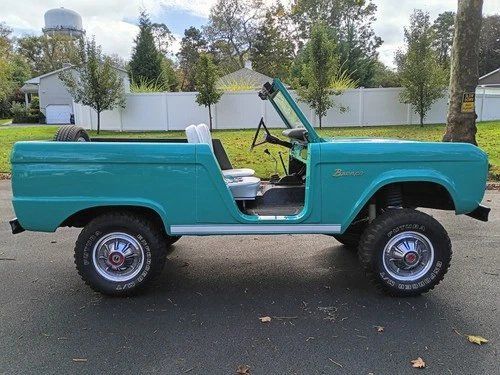
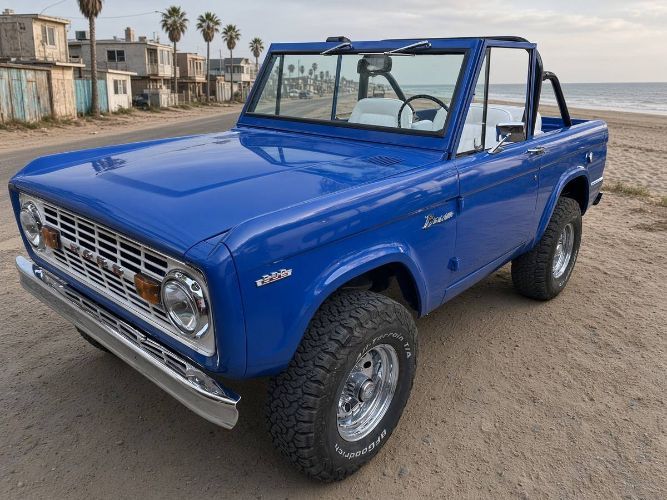
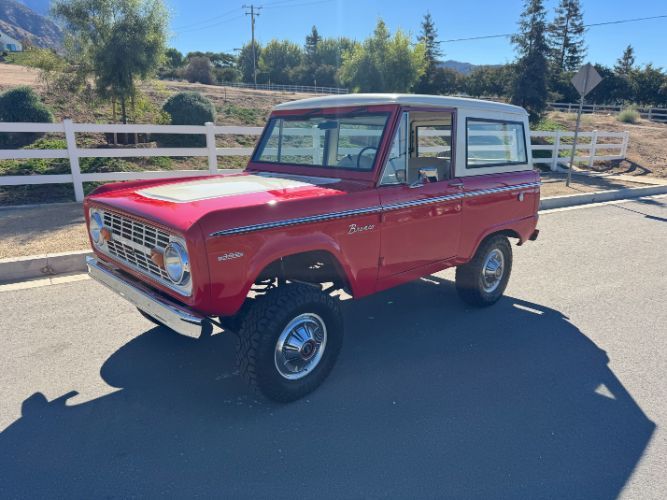
Ford launched the Bronco with three configurations available simultaneously, something almost no competitor attempted. The U15 wagon offered a fully enclosed cabin and became the volume seller almost immediately. The U14 half-cab paired a small pickup bed with a front cab roof, splitting the difference between hauler and passenger vehicle. The U13 roadster stripped things down further still, with no doors and no top standard, aimed squarely at buyers who wanted the rawest possible off-road experience.
That range mattered because it let Ford court more than one customer with a single engineering investment. A rancher who wanted a simple field truck could buy the roadster. A family that wanted something they could drive to town and take camping could buy the wagon. Dealers liked having three answers to give instead of one.
"Ford did not just build a Jeep competitor in 1966. It built three different trucks off one frame and let the market sort out which one it wanted, and the wagon won that argument fast."
- Tom Ramirez
How the market actually responded
Reception in that first year was solid rather than explosive. Ford moved a respectable number of units through 1966, with the wagon body pulling ahead of the half-cab and roadster in sales almost immediately, a trend that held for the rest of the first generation's production run. Buyers valued the enclosed cabin and the versatility it offered over the raw, stripped-down character of the roadster, which would go on to become the rarest and most collectible of the three original body styles decades later.
Reviewers of the period noted the Bronco's tight turning radius, its comfortable ride for a vehicle in this class, and its genuine off-road capability, praise that helped build word of mouth even before advertising caught up. Ford had entered a category it had never competed in directly, and within its first season the Bronco had already established itself as a legitimate rival to the established players rather than a late imitator.
What dealers had to learn on the fly
Selling the Bronco in its first year required Ford's dealer network to adjust its approach in ways the passenger car side of the business rarely demanded. Salespeople accustomed to talking up trim levels and interior options now had to speak fluently about ground clearance, axle articulation, and low-range gearing to customers who cared far more about what a vehicle could do off the pavement than how it looked parked in front of a house. Some dealers leaned into this shift quickly, setting up small off-road demonstration areas near their lots so prospective buyers could feel the coil-spring front end absorb a rut before signing paperwork. Others struggled, treating the Bronco as a slow-moving oddity next to the faster-selling Mustang and full-size trucks that dominated most showroom floors that same year.
That unevenness in dealer readiness shaped early regional sales patterns more than most retrospective accounts acknowledge. Territories with dealers who understood the rural, working customer moved Broncos steadily from the first weeks of availability. Territories where dealers treated it as a secondary product sat on inventory longer, regardless of how well the truck itself performed once it was actually driven. Ford's regional sales offices took note of this gap and began circulating training material specifically aimed at helping dealers pitch the Bronco to the customer it was actually built for, rather than trying to sell it with the same script used for passenger cars.
Why the debut still matters
The 1966 launch set a template that Ford would return to again and again: identify a gap, build a purpose-made platform instead of adapting an existing one, and offer buyers real choice within that platform. It is part of a related story about how the Bronco got its identity, from its name to its early marketing, and it is worth understanding both threads together if you want the complete picture of how this truck came to be.
Today, original 1966 Broncos in any of the three body styles are sought after by collectors precisely because that first year represents the purest expression of Ford's original idea, before running changes and later generations added complexity. Every change Ford made in subsequent model years, larger engine options, added trim levels, refined interiors, built outward from what the 1966 launch established, which is part of why so much attention still circles back to that first debut season specifically rather than to any later refinement of the formula.
If you are hunting for one, Broncos for sale now is a good place to start, since early examples in solid condition do not sit on the market long. Buyers who understand what made the 1966 debut significant tend to move fast when a genuine first-year example surfaces, because the combination of historical importance and dwindling surviving numbers only gets tighter with each passing year.
Sources and notes
Related Reading

About the author
Tom Ramirez
Corvette researcher and historian based in Bowling Green, Kentucky. Two decades documenting Corvette production history from original factory records.
Related Listings - Ford Bronco




Comments (1)
S
squarebody_steve
1 day ago
so the roadster was the rarest one? how many they build fr, never seen a clean one in person
Steve, the 1966 figure usually given for the U13 roadster is a little over 4,000, against roughly 12,700 wagons, and Ford dropped the roadster after 1968, so the total pool is small. Fewer survive stock, because a doorless truck was the one people cut up first. I would treat any production claim made for a specific truck as unverified until it matches Ford's records.
D
deuce_coupe_dwayne
6 hours ago
Roadsters got cut into buggies and race trucks early, Steve. Finding one with stock sheet metal is luck.