
The 1966 Ford Bronco went on sale in August 1965, and almost nothing about it was carried over from another Ford. That is the detail most people miss. In an era when Detroit built new models by borrowing a floorpan here and a front clip there, Ford drew the Bronco a frame of its own, a body of its own, and a 92-inch wheelbase that matched nothing else in the catalog. The company had watched Jeep sell CJ-5s and International sell Scouts for years without a real answer. When the answer came, it came complete.
Car Features
10 min read
The 1966 Ford Bronco: The First Year of an Icon
Three body styles, one inline six, and a V8 that did not arrive until March. The first-year Bronco is the one collectors chase, and the factory record explains why.
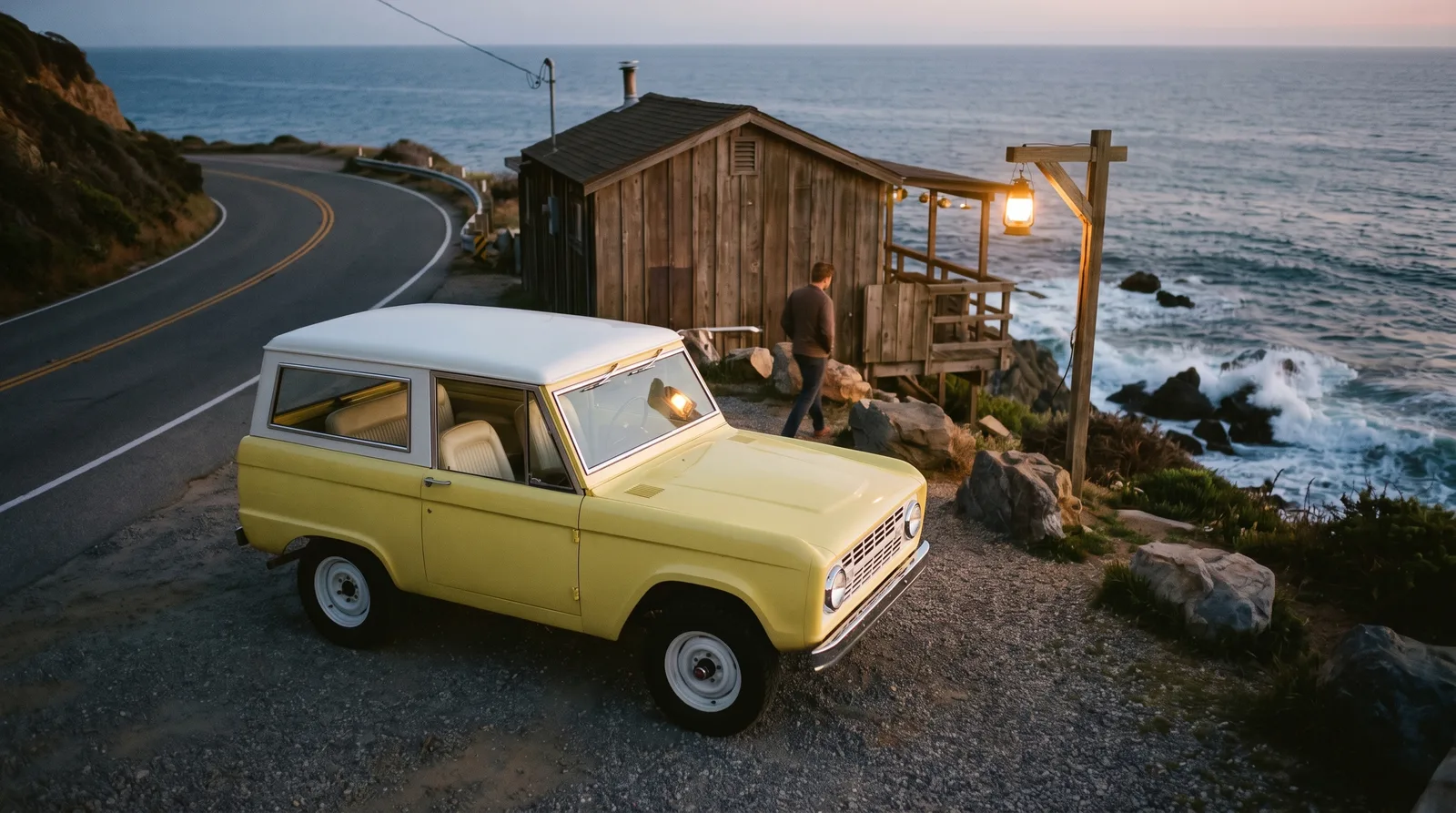
What follows is a look at the first model year as the factory documented it: the three body styles, the two engines, the option sheet, and the paint codes. The 1966 cars are the ones collectors chase hardest, and the reasons are specific rather than sentimental.
Why Ford built a small four-wheel-drive in the first place
The Bronco program grew out of a simple sales problem. Through the early 1960s the compact four-wheel-drive market in the United States belonged to two vehicles: the Willys and later Kaiser CJ-5, and the International Harvester Scout 80, which had landed in 1961 and sold better than anyone at Ford expected. Ford dealers had nothing to put against either one. The F-Series was a truck. The Falcon was a car. There was no middle.
Product planning under Donald N. Frey pushed the idea forward, and Lee Iacocca signed off on it. The engineering and design work fell to Paul G. Axelrad, whose name deserves more circulation than it gets. Axelrad's brief was unusual for the period: build something that rides better than a Jeep, hauls more than a Scout, and still fits a trail. The answer was a boxed frame with a coil-sprung front axle located by radius arms, leaf springs at the rear, and a body with almost no compound curves in it. Flat glass. Flat panels. Straight edges everywhere.
That last decision was cost engineering, not styling, and it is the single biggest reason early Broncos are still restorable sixty years on. Flat steel is cheap to stamp and cheap to reproduce. Ford's accountants and today's parts suppliers ended up on the same side of that argument. For the longer arc of how this vehicle grew from one idea into a thirty-year nameplate, our ford bronco history covers the full run.
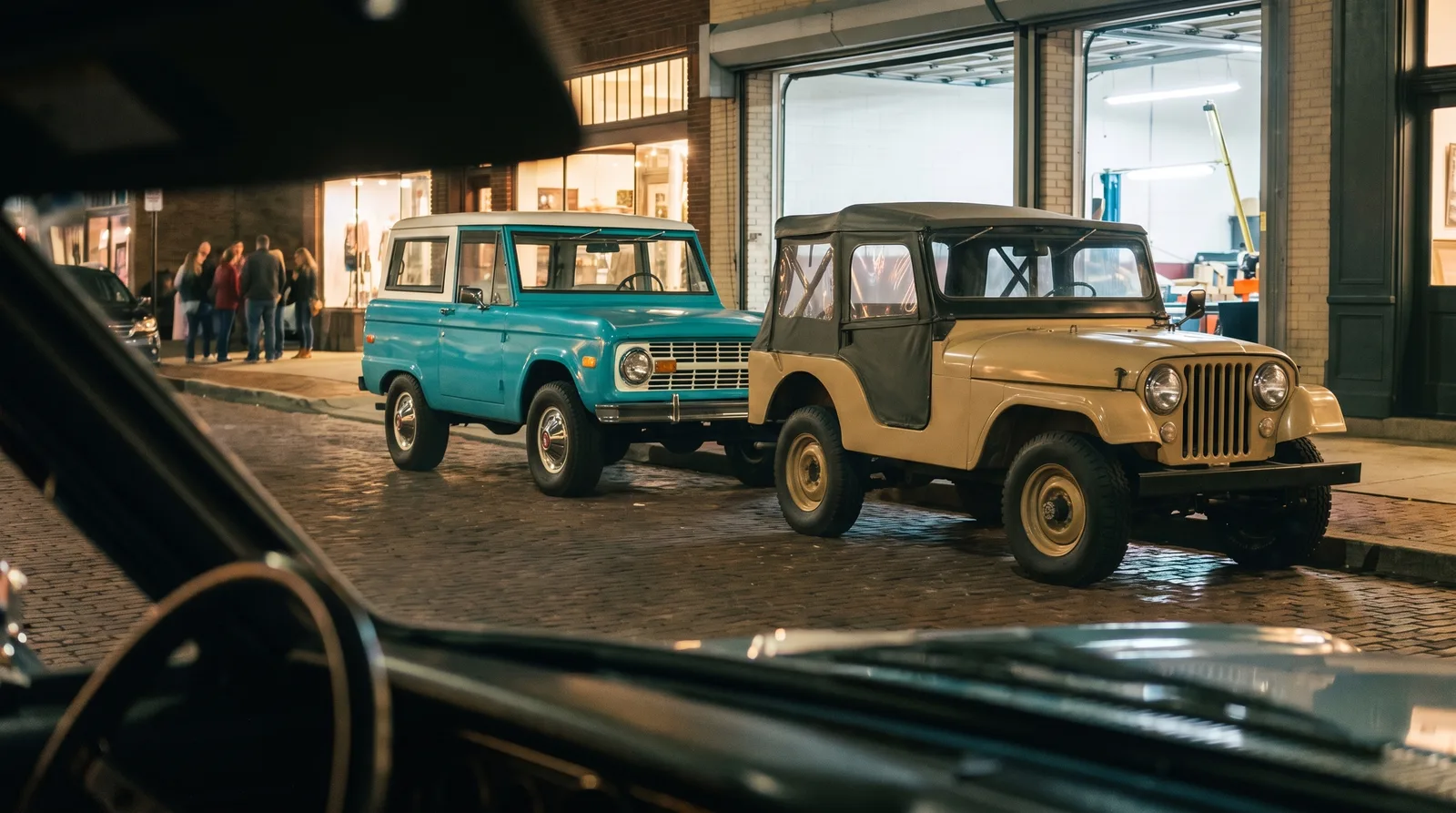
It is worth being precise about what the Bronco was measured against, because period road tests set the terms that collectors still use. The CJ-5 rode on an 81-inch wheelbase and made no apology for its harshness. The Scout 80 was longer and squarer and offered more cab room, but its four-cylinder engine and its ride quality drew consistent complaints. Ford split the difference on purpose. The extra eleven inches of wheelbase over the Jeep bought a calmer ride without costing much in approach angle, and the coil-sprung front end was the genuine engineering advance of the group. Contemporary testers noticed immediately, and several of them described the Bronco as the first vehicle in the class you could drive to work without regretting it.
Three body styles, and only one of them lasted
The 1966 line was split into three separate models, each with its own body code, and buyers treated them very differently.
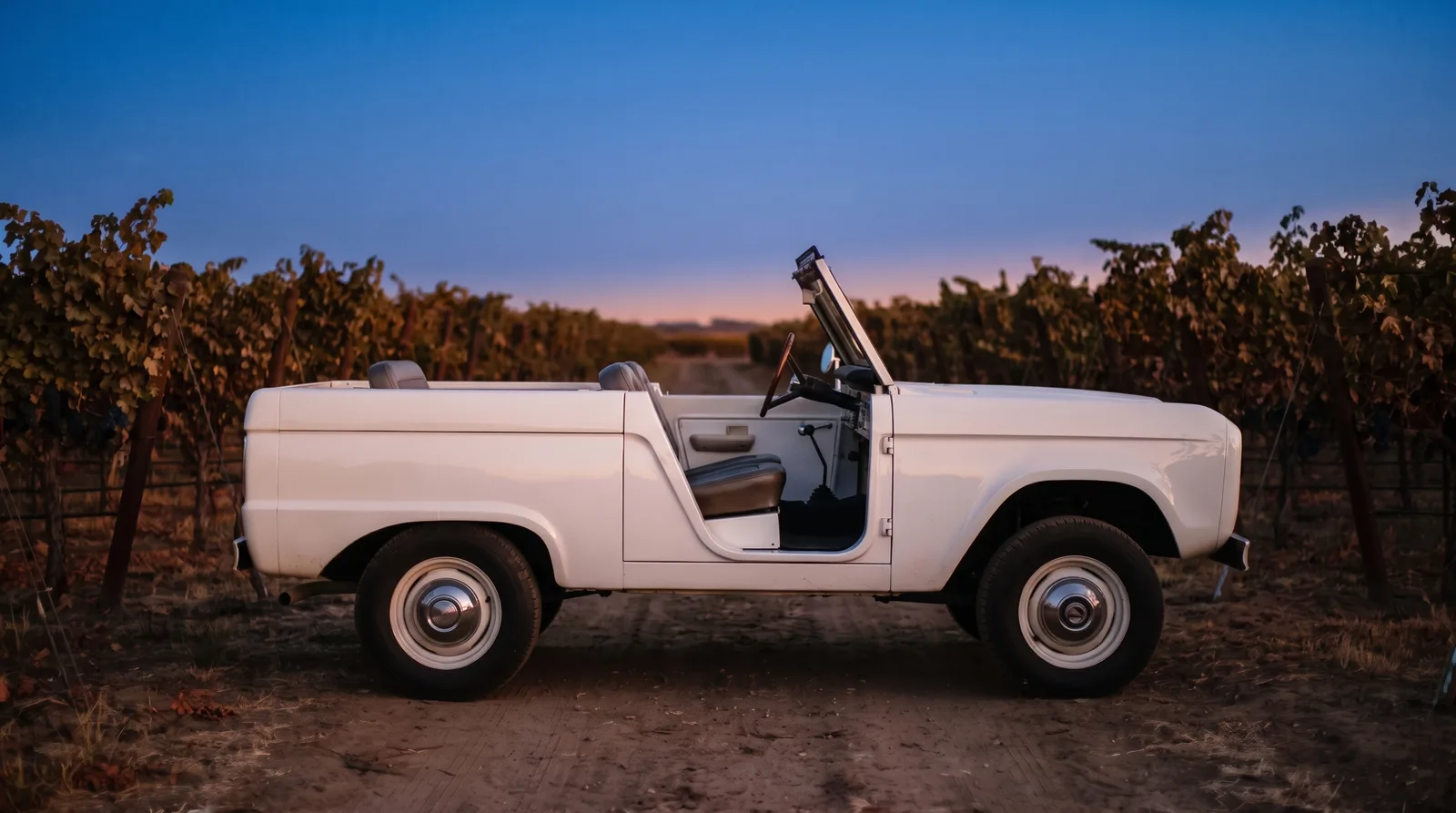
The U13 Roadster was the purist's version and the strangest thing on any Ford lot that year. It came with no doors, no top, and no exterior door handles, because there were no doors to handle. A folding soft top and doors were dealer or factory options, but the base car was open to the weather in every direction. Ford imagined it as a beach and ranch vehicle. Buyers largely did not, and the Roadster was quietly dropped after 1968.
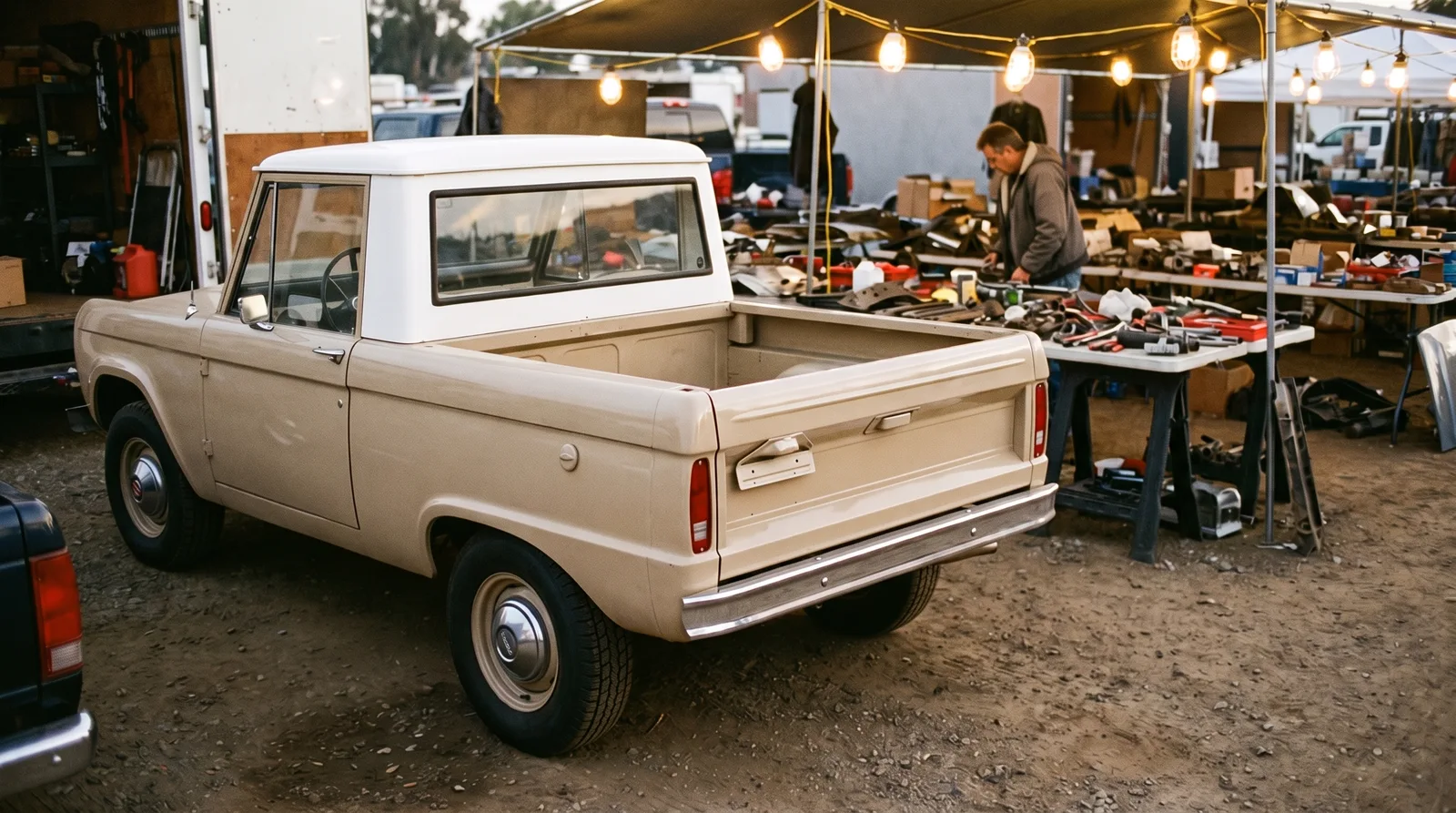
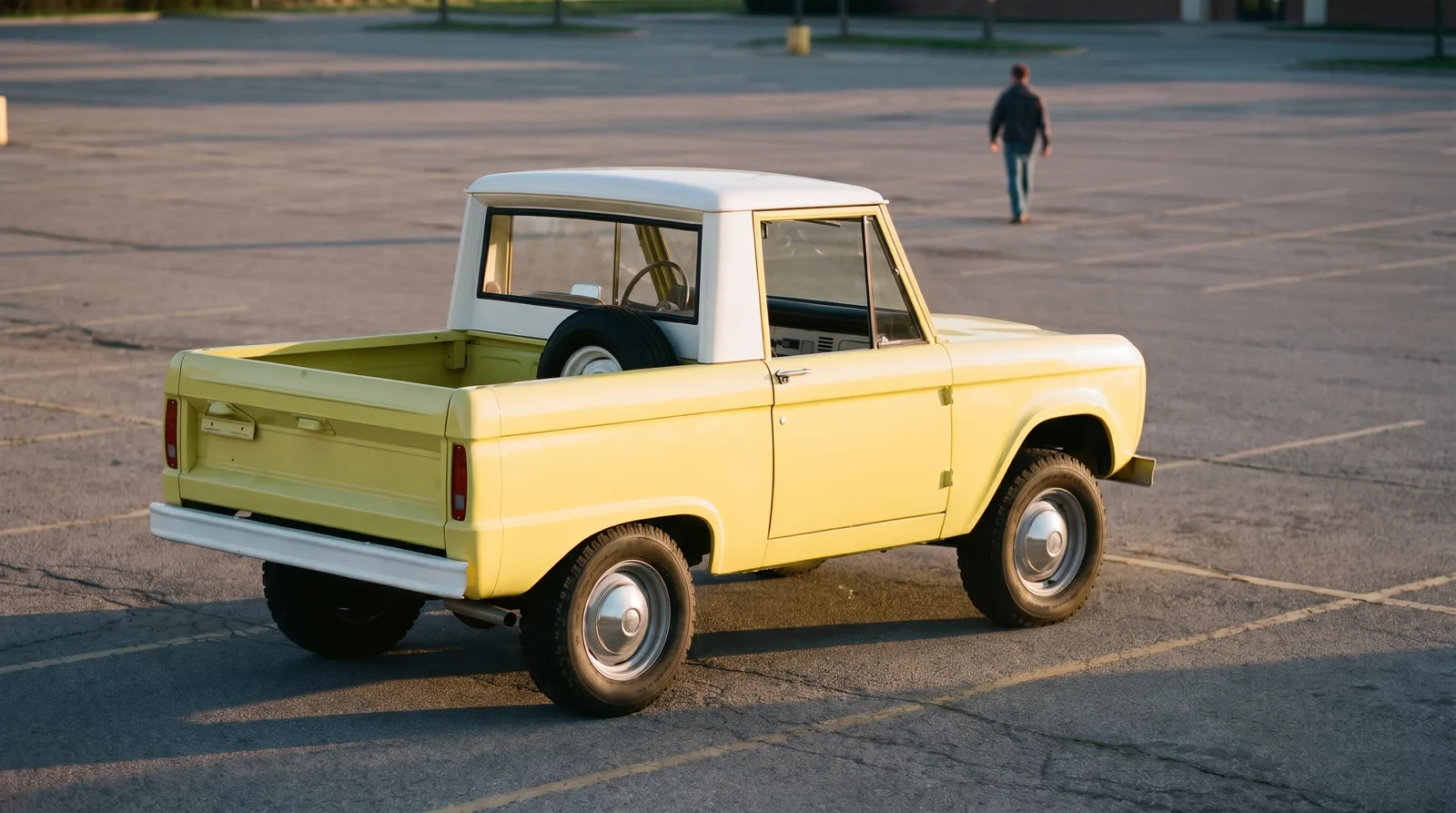
The U14 Sports Utility was the half-cab: a proper closed cab with a short open bed behind it. It made sense to municipalities, utility companies, and anyone who needed to throw tools in the back and lock the cab. It sold steadily but never in volume.
The U15 Wagon was the full-roof version, and it is the one that carried the nameplate. The wagon's removable hardtop, the rear seat, and the tailgate with a lift-up glass gave it a usefulness the other two lacked. By the end of the first generation the wagon accounted for the overwhelming majority of Bronco sales, and today it accounts for nearly all the survivors people actually pay money for.
The 170 six, and the V8 that showed up mid-year
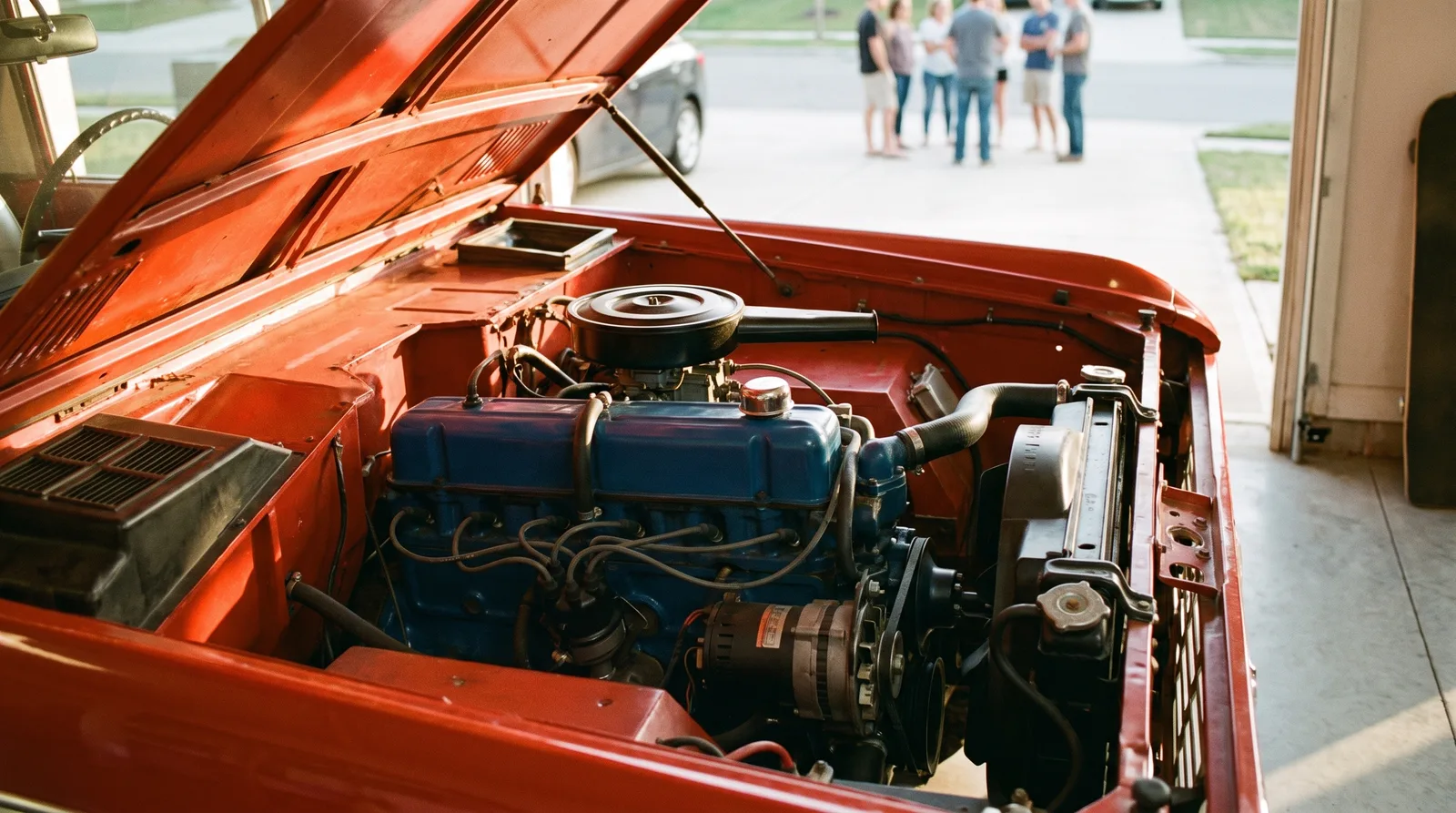
Every Bronco built at the start of the 1966 model year came with the 170 cubic inch inline six, rated at 105 horsepower (SAE gross). It was a Falcon engine adapted for the job with a heavier oil pan, a different oil pickup, and a solid-lifter valvetrain in some applications. Nobody bought a Bronco in 1966 for acceleration. The six did what it was asked to do at low speed and in low range, and it did it for a very long time.
Then in March 1966, Ford released the 289 cubic inch V8 as an option, rated at 200 horsepower (SAE gross). That mid-year introduction matters enormously to anyone reading a build sheet today. A Bronco assembled in September 1965 cannot have left Wayne, Michigan with a factory V8. One assembled in May 1966 can. The number of "original 289 cars" claimed on the market comfortably exceeds the number that can possibly exist, and the build date is the first thing that settles the argument.
Both engines fed a three-speed manual transmission with a non-synchronized first gear and a Dana 20 transfer case. There was no automatic. There was no power steering. There was no power brake booster. Those omissions were deliberate, and they stayed in place far longer than most buyers wanted.
| 1966 Ford Bronco | Detail |
|---|---|
| Body styles | U13 Roadster, U14 Sports Utility (half cab), U15 Wagon |
| Wheelbase | 92 inches |
| Standard engine | 170 cu in inline six, 105 hp (SAE gross) |
| Optional engine | 289 cu in V8, approx. 200 hp, from March 1966 |
| Transmission | Three-speed manual, column or floor shift |
| Transfer case | Dana 20, two-speed |
| Front suspension | Coil springs, radius arms, solid front axle |
| Rear suspension | Semi-elliptic leaf springs |
| Brakes | Drums front and rear, no power assist |
| Base price, Roadster | $2,194 |
What a 1966 Bronco actually cost
Ford priced the Roadster lowest, the Sports Utility in the middle, and the Wagon at the top, but the spread between the three was narrow enough that most buyers went straight to the wagon. The interesting money was in the options.
The 1966 option list reads like a catalog of things that are now taken for granted. A heater was extra. A passenger sun visor was extra. A rear seat in the wagon was extra. Tow hooks, a front bumper guard, a limited-slip rear axle, a snowplow package, a winch, a power take-off, an auxiliary fuel tank, a tachometer, and a CB radio bracket all appeared on dealer sheets. Ford also offered a factory-approved list of accessories through its parts network that blurred the line between option and add-on.
The consequence for collectors is that no two documented 1966 cars look quite alike, and a car with a thin option list is not necessarily a stripped car. It may simply be a working vehicle bought by someone who did not want to pay for a heater.
Ford's own marketing was unsure which buyer it was addressing, and the brochures show it. One page pitched the Bronco to ranchers and county road crews with photographs of snowplows and post-hole diggers. The next pitched it to families with a wagon parked at a lakeshore. A third leaned on the word "sports" and showed the Roadster on sand. That scattergun approach looks unfocused now, but it reflected genuine uncertainty inside Dearborn about whether this was a truck with recreational uses or a recreational vehicle with truck ability. The answer took a decade to settle, and by the time it did, the market Ford was half-guessing at in 1966 had become one of the largest in the industry.
"The 1966 build records are the most useful document in early Bronco collecting, because they settle in one line what forum arguments never settle: whether that V8 was born there or arrived later."
- Tom Ramirez
Paint, trim, and the details that date a first-year car
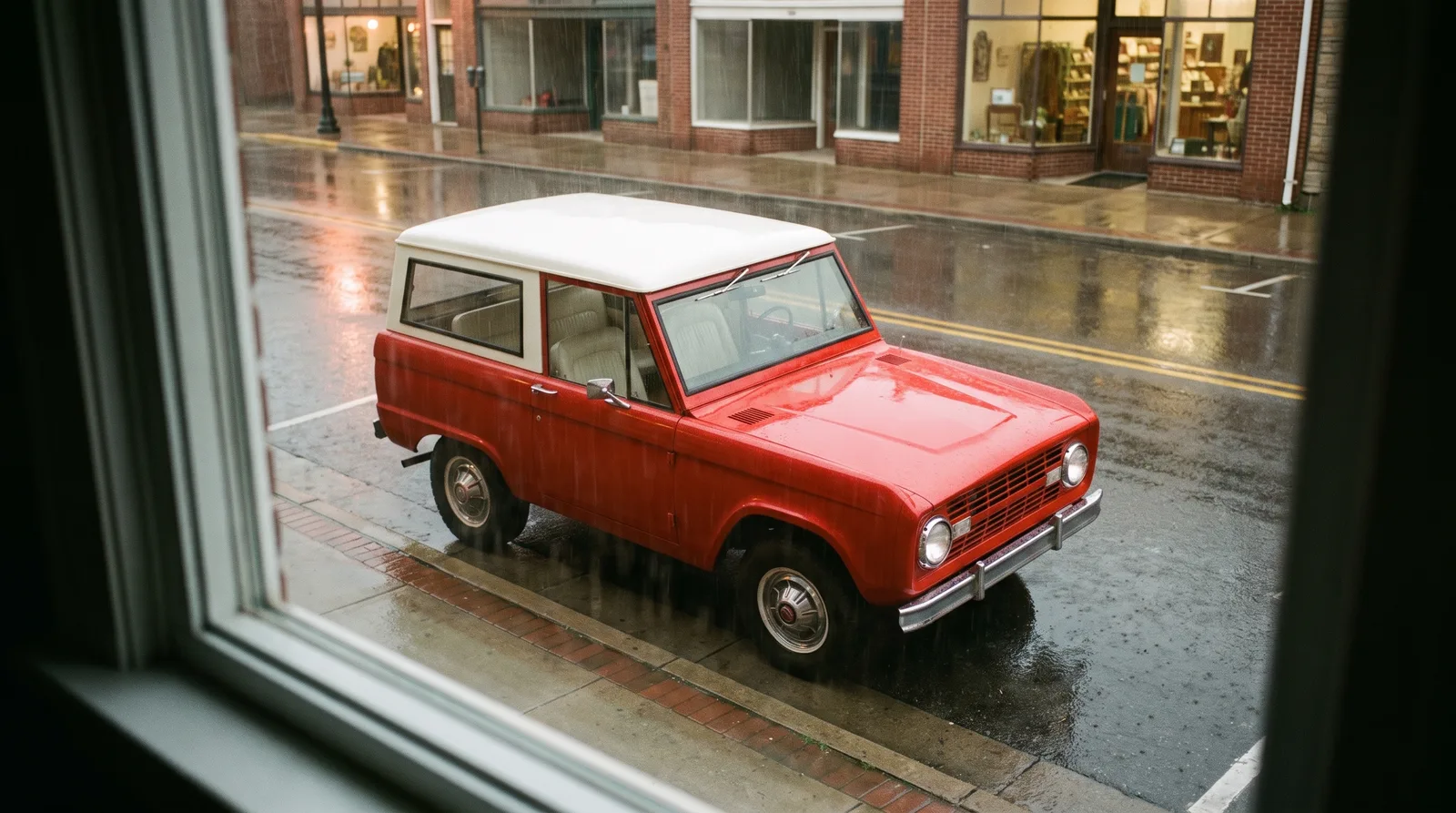
Ford painted 1966 Broncos in a palette borrowed largely from the passenger car line, which is why the colors feel brighter than the vehicle's purpose suggests. Wimbledon White and Rangoon Red are the two most commonly seen today. Caribbean Turquoise, Holly Green, Peacock Blue, and Poppy Red all appear on original data plates and all look startling on a truck with no carpet in it.
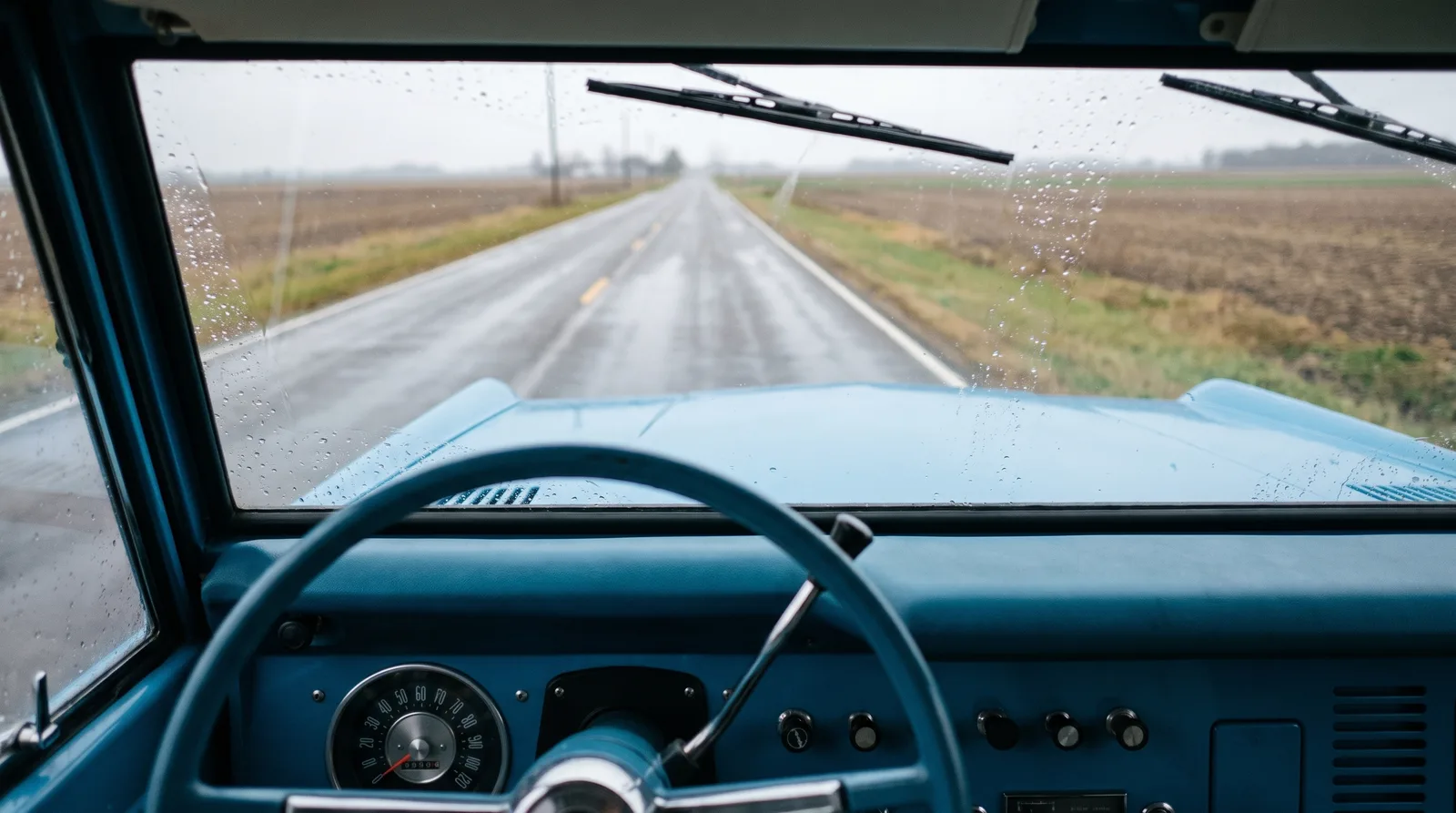
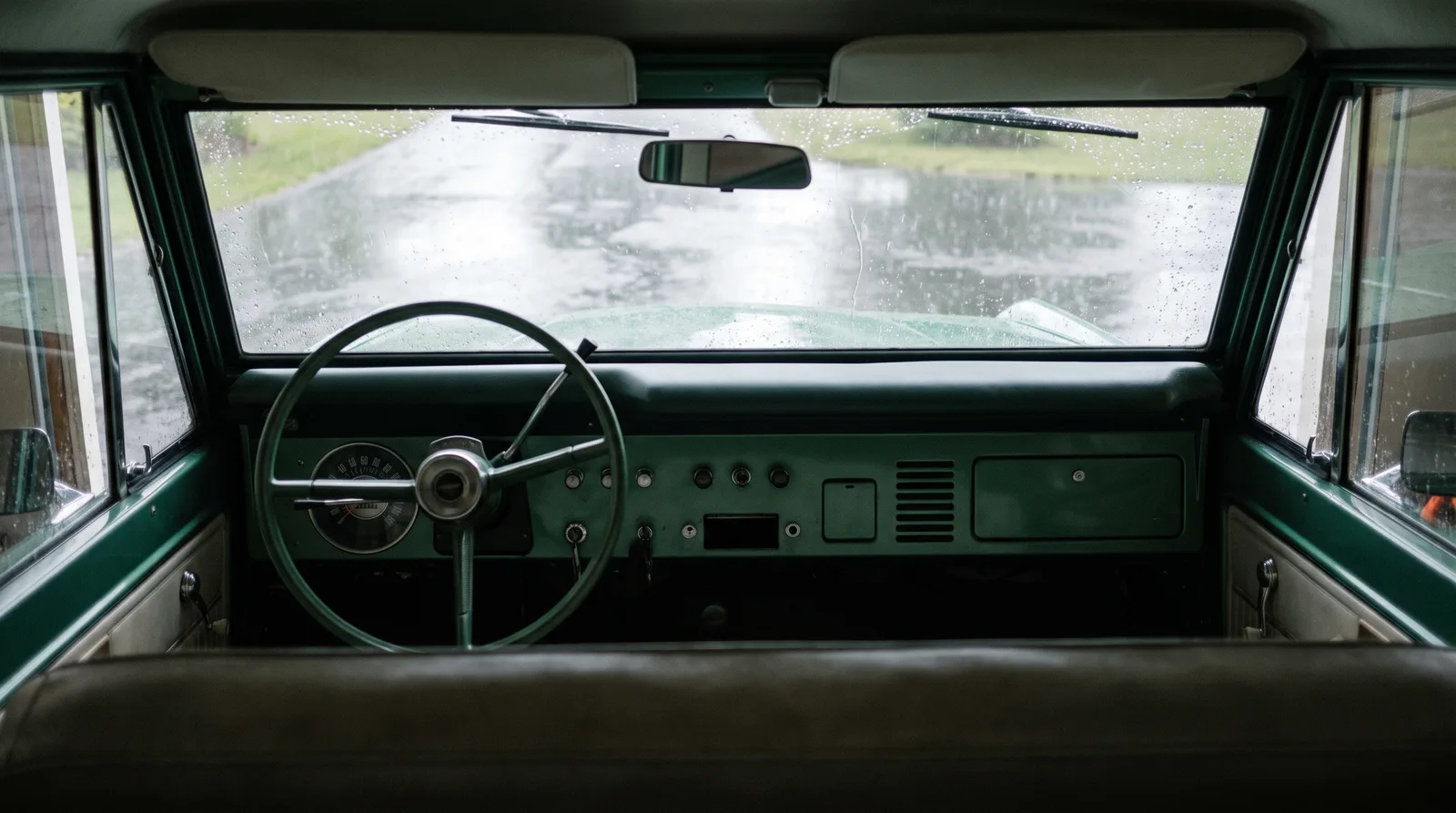
Interiors were vinyl, rubber, and painted metal. The dash was a flat panel with a horizontal speedometer and a row of small round gauges or warning lights depending on the option package. There was no headliner in the base wagon. The floor was a rubber mat over bare steel with drain plugs in it, which tells you exactly what Ford expected owners to do with the thing.
A handful of small details separate 1966 from 1967. The earliest cars used a different wiper setup, different door latch hardware on the wagon, and a data plate layout that changed for the following year when federal safety requirements added dual-circuit brakes and a padded dash. Purists can spot a first-year car across a field. Everyone else needs the plate.
Production, survival, and where the first year sits today
Ford built 23,776 Broncos for the 1966 model year, a strong opening figure that the nameplate would not consistently beat for years afterward. The wagon dominated. The Roadster made up a small slice of that total and shrank in each of the two years that followed.
Survival is the harder number, and nobody has a credible one. These were used vehicles in snow states and salt states, sold cheap through the 1970s and 1980s, and cut up freely once the restomod market discovered that an early Bronco body will sit on almost anything. What remains breaks into three groups: unrestored survivors, correct restorations, and the enormous and still growing population of pro-built resto-mods with modern drivetrains under original sheet metal.
Values track that split. A documented, correct, first-year wagon with the mid-year V8 sits at the top of the original-car market. A tidy six-cylinder wagon with honest paint is the entry point. The resto-mod market runs on a separate track entirely and answers to different buyers. Anyone shopping a classic Bronco for sale should decide which of those three markets they are in before they look at a single listing, because the same asking price buys wildly different things.
The first year set the shape, the proportions, and the attitude that everything after it inherited. The 1969 cars refined the formula with a bigger V8 and better hardware, and if you want the next chapter, keep exploring. The 1966 Ford Bronco is where the argument starts.
Sources and notes
Related Reading
Article
The Ford Bronco Story: How an American 4x4 Became an Icon
Article
The 1969 Ford Bronco: The Early Bronco Hits Its Stride
Article
Ford Bronco Body Styles and Engines: Roadster, Half-Cab, Wagon and V8s
Article
How the 1966 Ford Bronco Arrived and Changed the 4x4 Game
Article
Where the Bronco Name Came From at Ford
Article
Donald Frey, Lee Iacocca and the Bronco Green Light
Article
The 1966 Bronco U13 Roadster, the Doorless Original
Article
The 1966 Bronco U14 Half-Cab and Its Pickup Charm
Article
The 1966 Bronco U15 Wagon That Buyers Loved Most
Article
The 170 Cubic Inch Six That Powered the First Broncos
Article
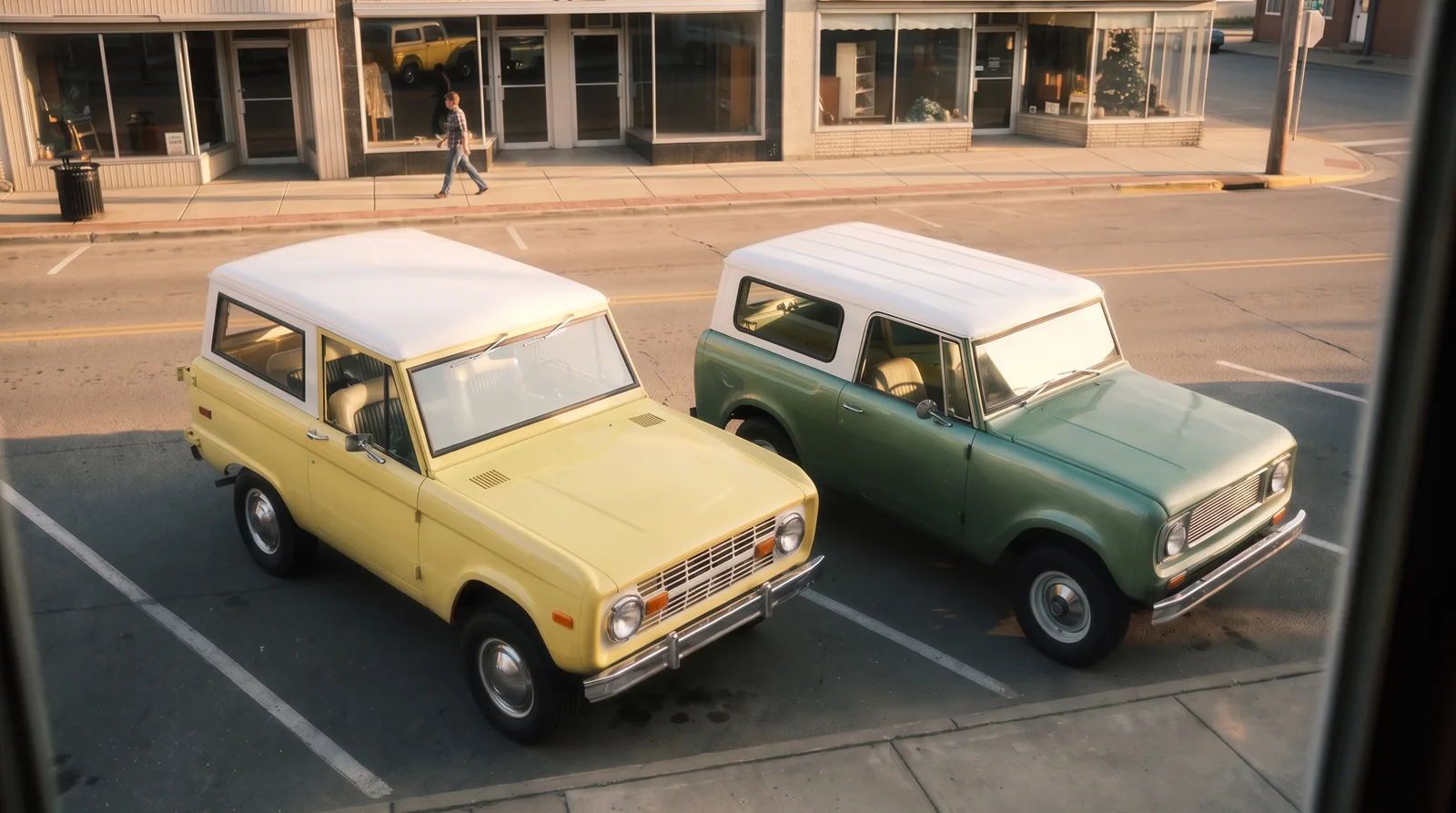
1966 Bronco vs Jeep CJ-5, the Rivalry Begins
Article
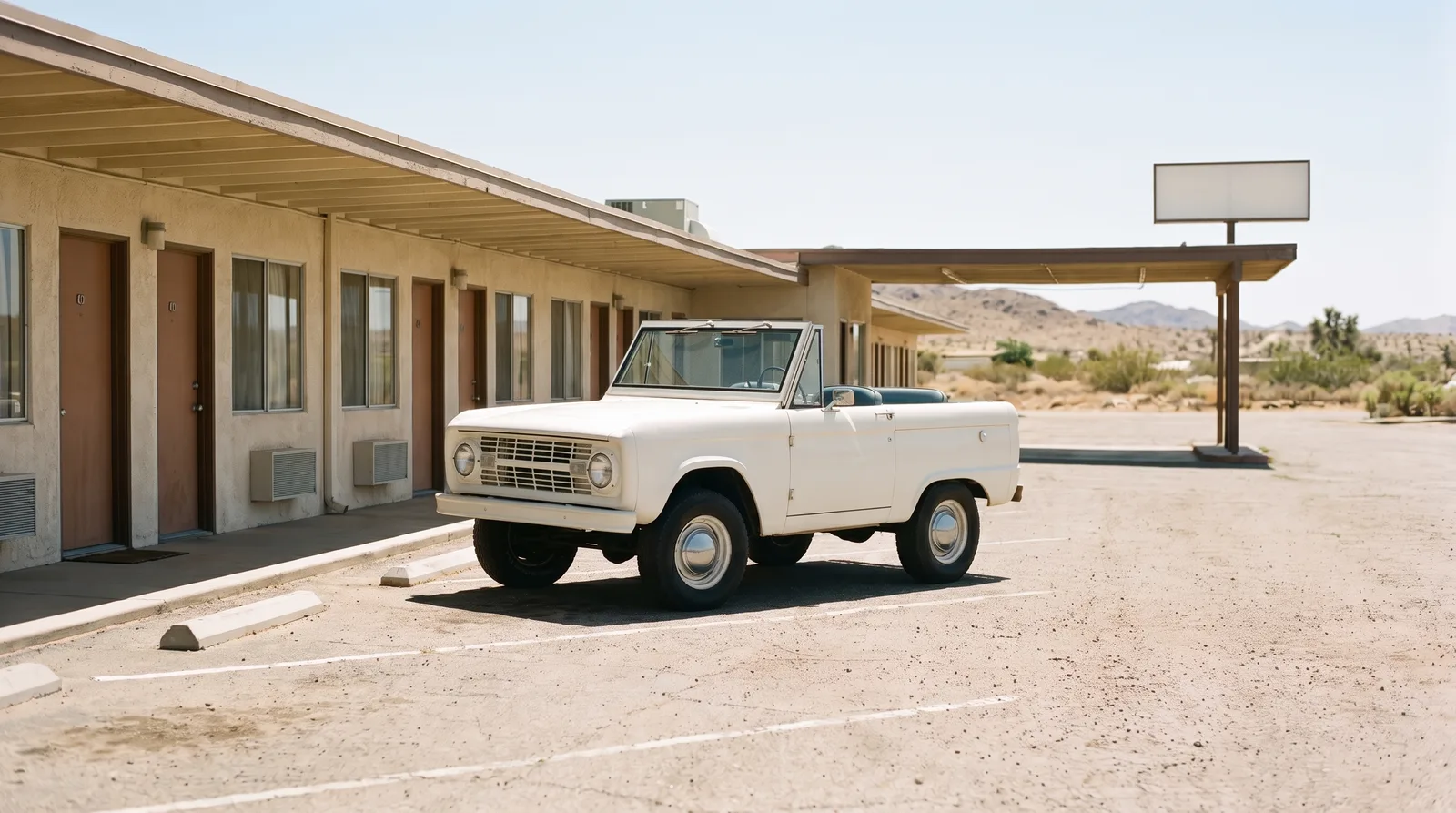
1966 Bronco vs International Scout, the Segment Fight
Article
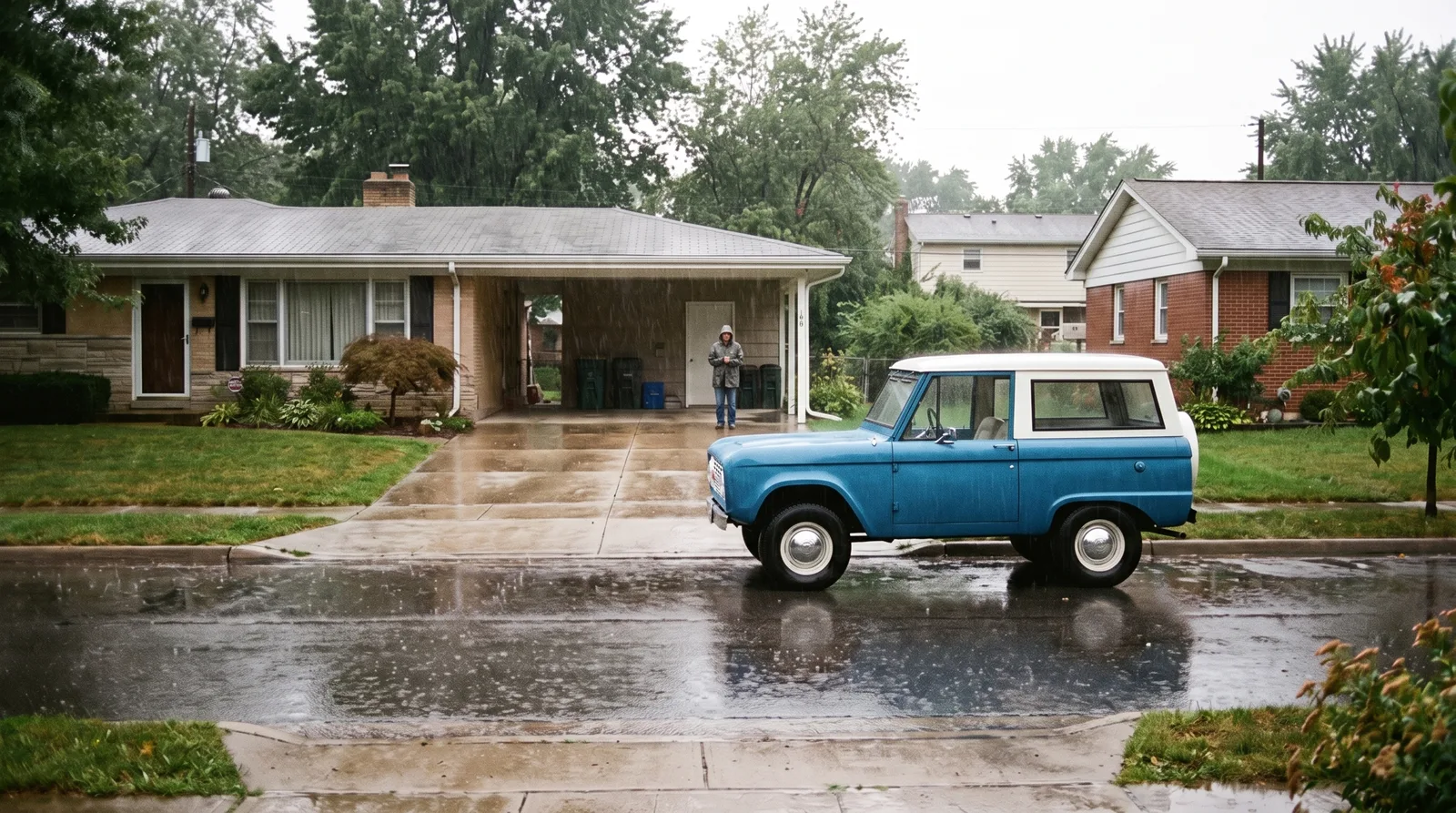
Selling the 1966 Bronco, Ford's First Ad Campaign
Article
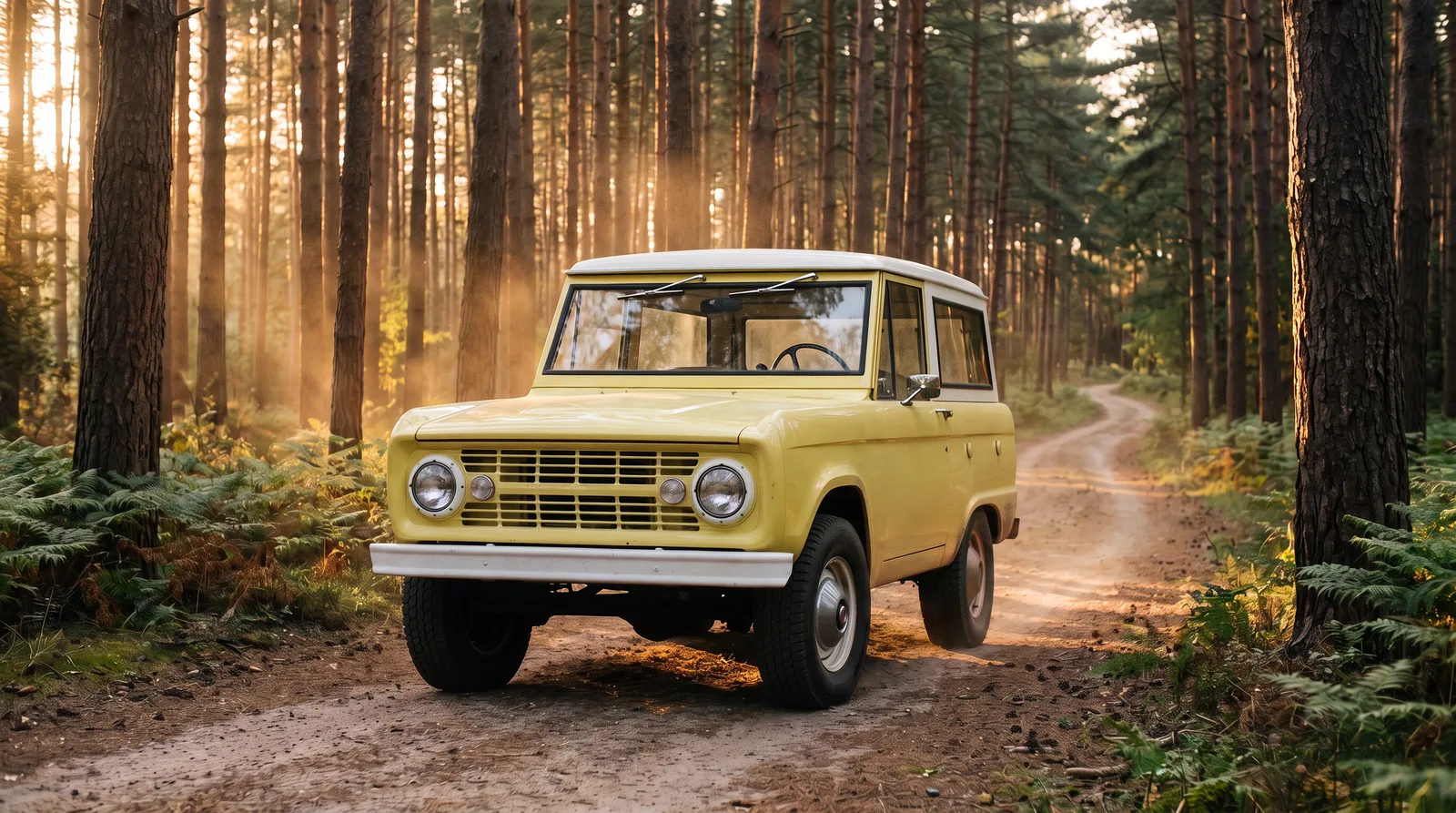
What a 1966 Bronco Cost and How Buyers Optioned It
Article
The Original 1966 Bronco Color Palette
Article
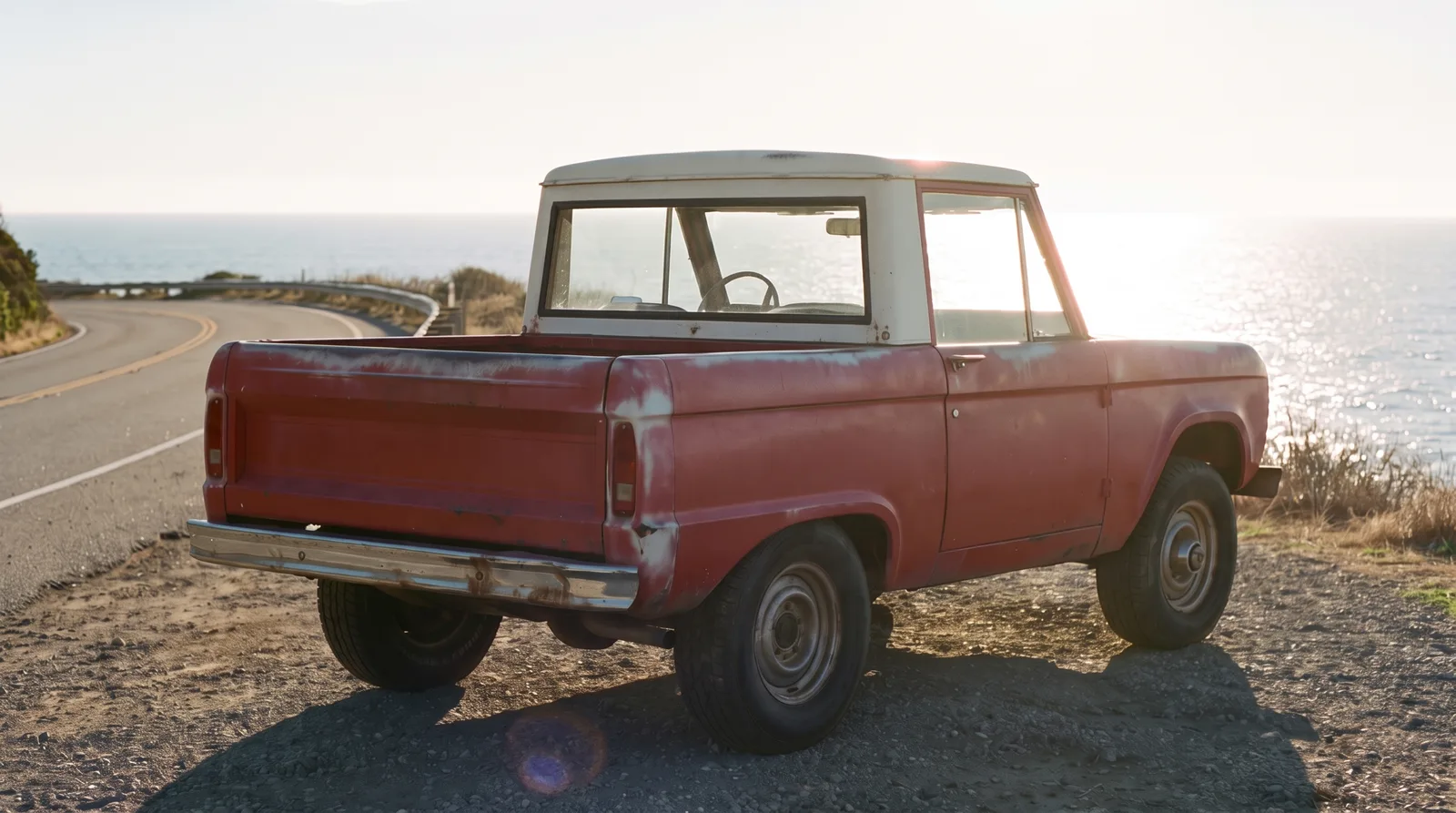
Chasing an Unrestored 1966 Bronco Survivor
Article
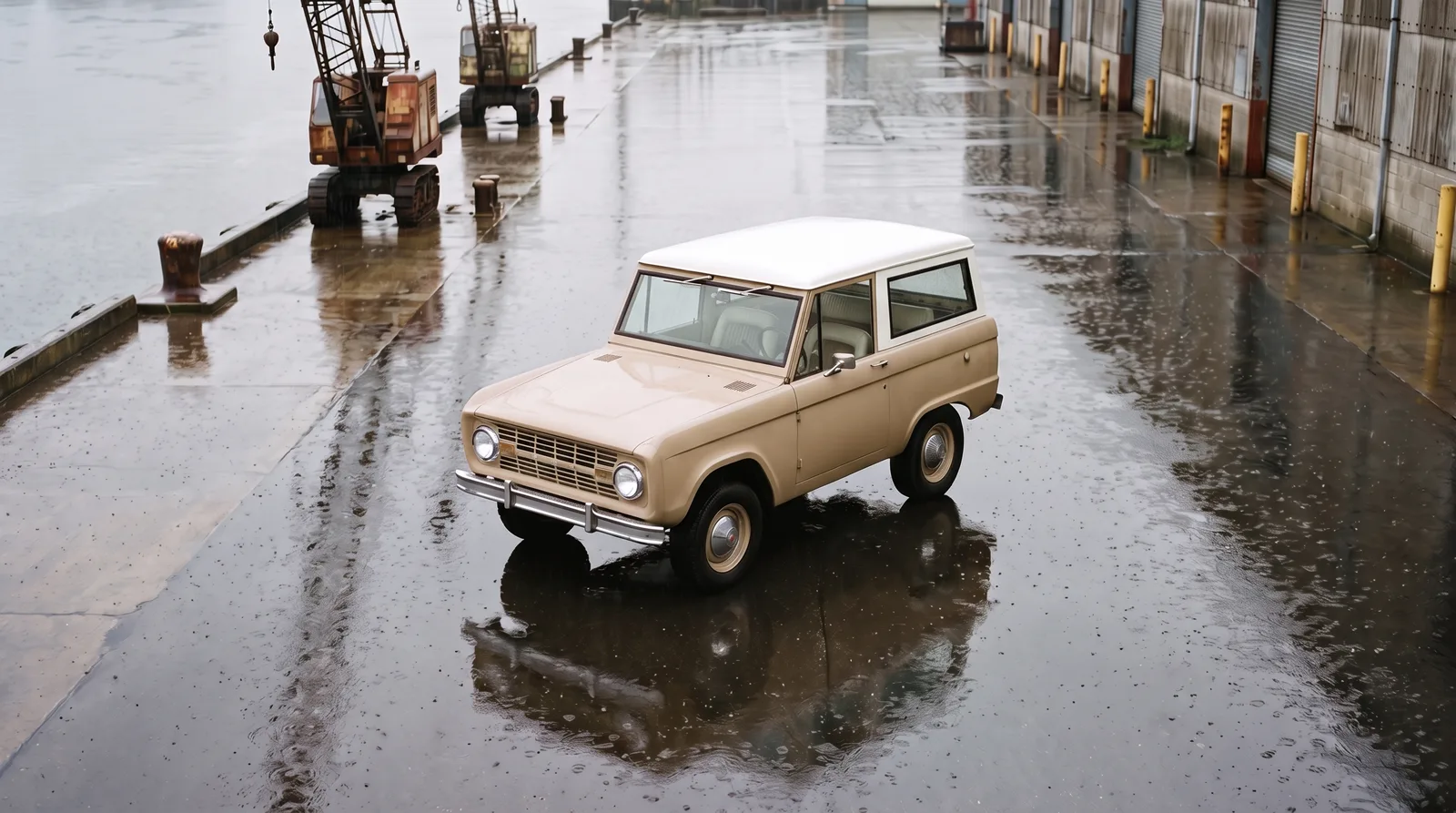
Why 1966 Broncos Lead the Collector Market Today
Article
The Boxy Simplicity Behind the 1966 Bronco Design
Article
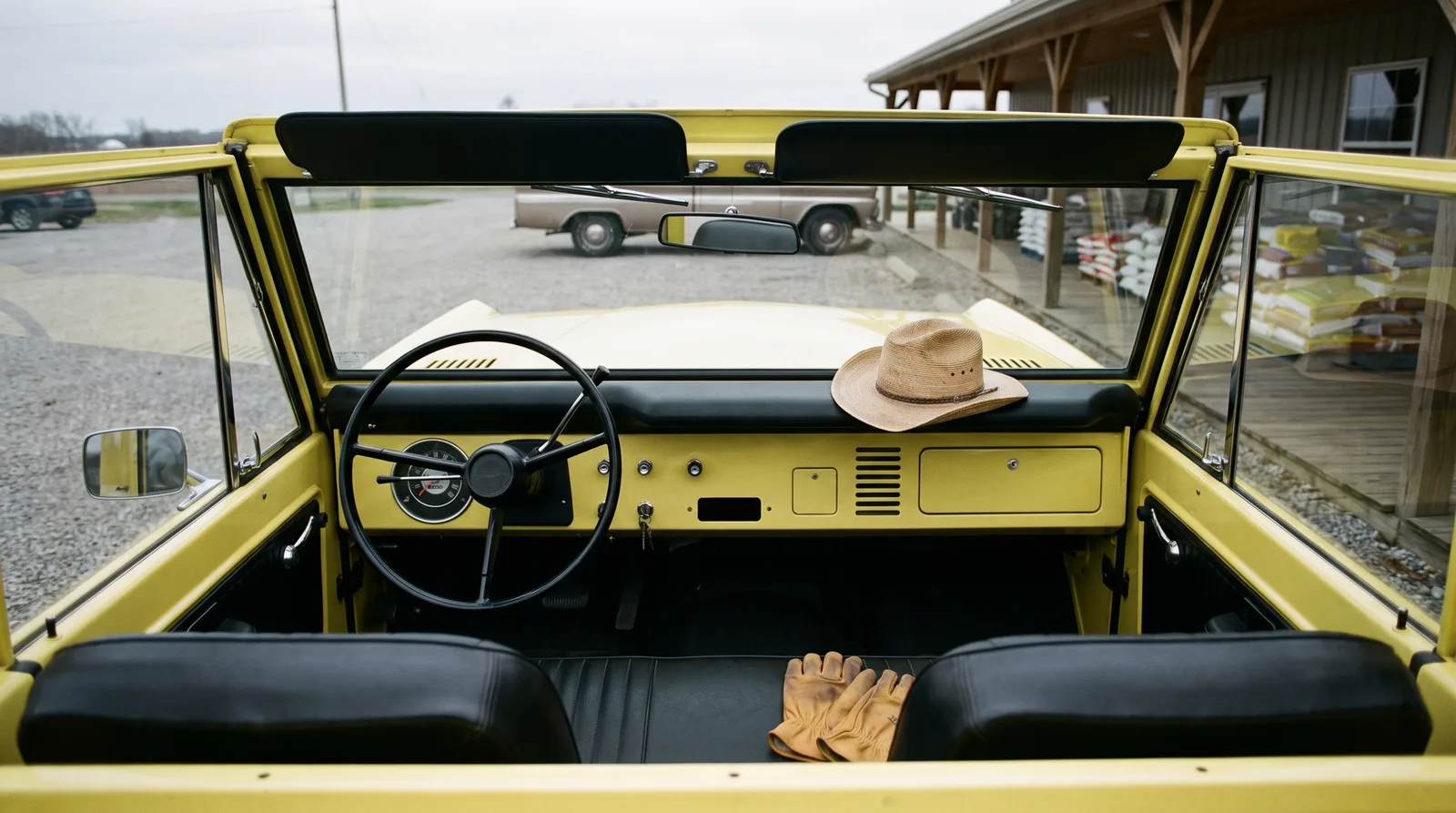
The First 1966 Bronco Owners and How They Used Them
Article
The G.O.A.T. Code: The Bronco's Goes-Over-Any-Terrain Name Story

About the author
Tom Ramirez
Corvette researcher and historian based in Bowling Green, Kentucky. Two decades documenting Corvette production history from original factory records.
Related Listings - Ford Bronco




Comments
Be the first to comment on this article.