
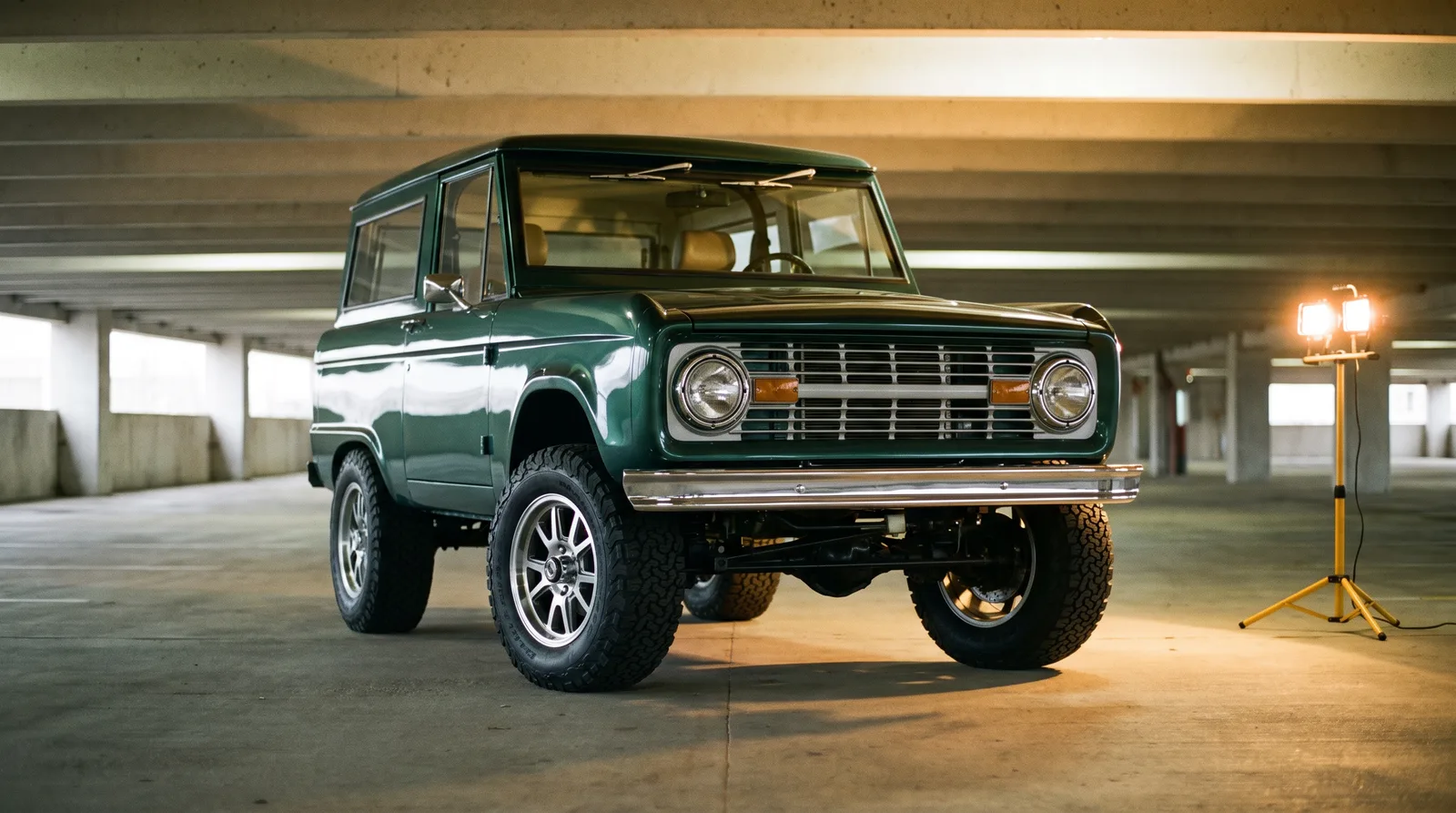
Park an Icon-built 1973 Ford Bronco next to a stock example from the same model year and the family resemblance is obvious. So is everything else. One truck rides on leaf springs and drum brakes with a modest V8 underneath a hood that has not been touched in five decades. The other is built to a standard closer to a modern luxury SUV, with a price tag that can eclipse six figures. Both wear the same badge. Understanding why buyers pay that premium says a lot about where the classic Bronco market has traveled.
Car Features
7 min read
Icon and the Six-Figure 1973 Bronco Restomod
Builder Icon turned the 1973 Ford Bronco into a six-figure ground-up rebuild, setting a reference point that reshaped how the entire restomod segment gets valued.
Who Icon actually is
Icon built its reputation on the idea that a vintage body and chassis could be reengineered from the ground up rather than simply refreshed. The company's founder, Jonathan Ward, developed a process that starts with a donor truck, strips it to bare metal, and rebuilds it around a modern drivetrain, upgraded suspension, and a level of fit and finish that a factory assembly line in 1973 was never designed to deliver. The result reads as a Bronco to anyone glancing at it from across a parking lot, but functions closer to a contemporary vehicle underneath. Icon markets its Bronco-based builds under its BR series, and exact specification and pricing for any given commission vary by client, so buyers researching a specific build should confirm current details directly with the shop rather than relying on older published figures.
That approach put Icon at the front of a movement that has since spread to smaller shops across the country, but the company's early, high-profile builds are still frequently cited as the standard other builders measure themselves against.
What actually justifies six figures
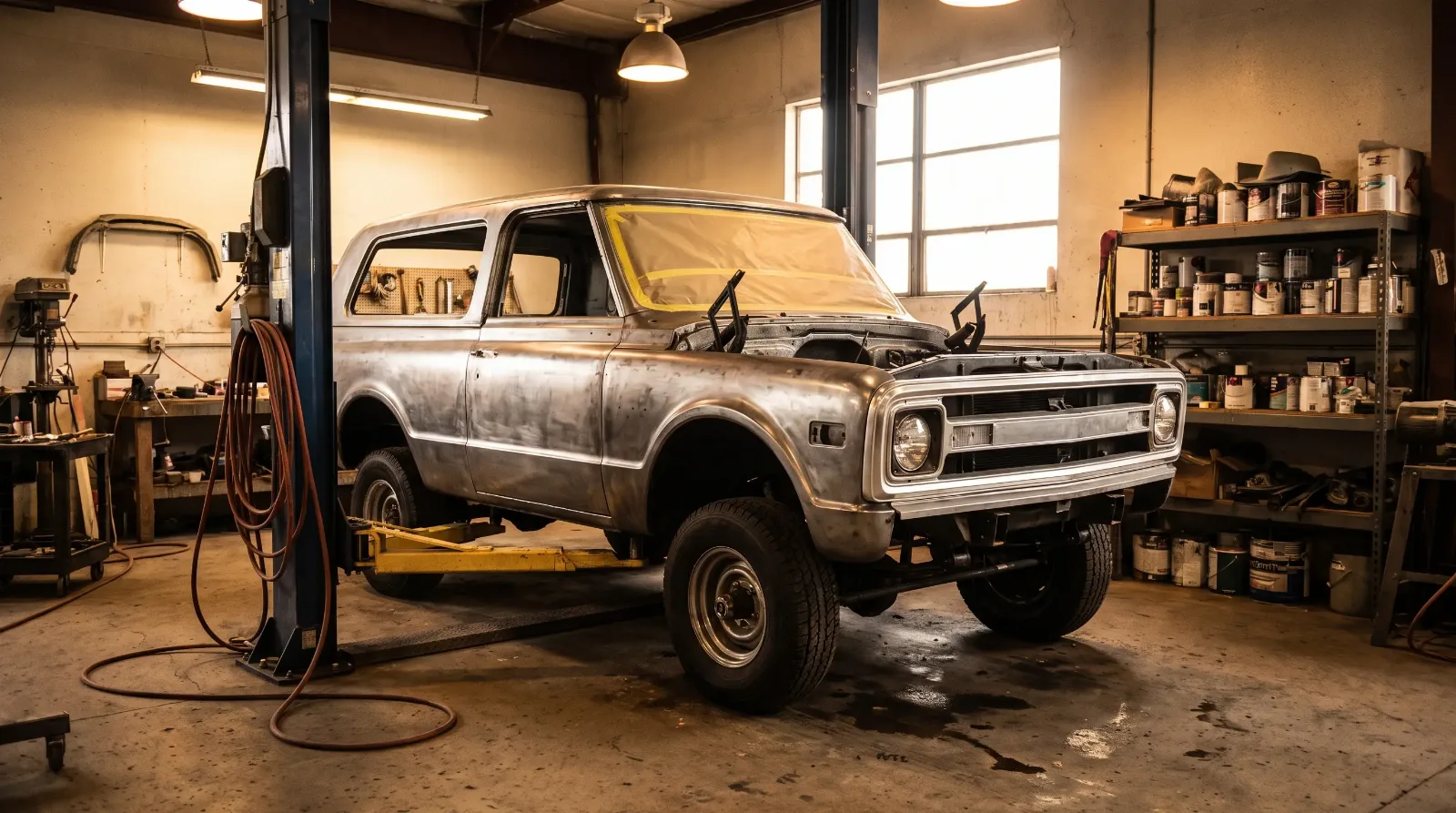
The price gap between a stock 1973 Bronco and an Icon-level build comes down almost entirely to labor and precision. Every body panel gets addressed individually. Gaps get corrected to a tolerance far tighter than Ford's original production line ever achieved. Wiring is replaced from scratch rather than patched, interior materials are sourced to a standard closer to a boutique automaker than a 1970s work truck, and the drivetrain swap is executed with a level of integration that makes the finished product feel purpose-built rather than modified.
None of that comes cheap, and none of it happens quickly. A build of this caliber can consume many months of shop time before a truck is ready to leave, and that labor investment is the primary reason these trucks carry pricing that would have seemed absurd to a Bronco buyer a generation ago.
The ripple effect on the wider market
High-profile builds from a recognized name do more than sell individual trucks. They set a reference point that shapes how the entire segment gets valued. Once a builder demonstrates that buyers will pay a premium for this level of execution, smaller shops and independent builders across the country gain room to price their own work more ambitiously, even when their craftsmanship does not reach quite the same standard.
That reference effect has helped lift values across the modified 1973 Bronco segment generally, not just for trucks built by the most recognized names. It has also, indirectly, supported values for unmodified original trucks, since a rising tide of attention toward the model year draws buyers who then discover they actually want the stock experience instead. For the full specification and production background of what these trucks originally offered before any of this transformation, our coverage lays out the whole picture on the 1973 model year.
The shops that followed Icon's lead
Icon was not the only name to reach this level, though it remains among the most frequently cited. A handful of other shops across the country have built comparable reputations for ground-up 1973 Bronco rebuilds, each developing a distinct visual and mechanical signature that regular buyers of this segment learn to recognize on sight. Some lean toward a more aggressive, off-road focused build, with larger tires and reinforced suspension geometry. Others prioritize a cleaner, more understated presentation closer to the original factory proportions, betting that subtlety will age better than a more dramatic stance.
That variety has been good for the segment overall, giving buyers genuine choice in aesthetic and mechanical philosophy rather than a single dominant template. It has also created a secondary market of its own, where a build from a particular shop carries specific resale expectations tied to that shop's reputation, much the way a piece of furniture from a recognized maker carries value independent of the raw materials used to build it.
The trade-offs buyers accept
A six-figure build is not for every buyer, and it should not be mistaken for the default way to own a 1973 Bronco. Most owners of these trucks accept a meaningful loss of originality in exchange for daily drivability and a level of finish the factory truck never had. Purists sometimes view that trade as a loss, arguing that a heavily modified truck sacrifices the historical character that made the original worth preserving in the first place.
Buyers who choose this path generally see it differently. They are not trying to preserve a museum piece. They want a truck they can drive comfortably, park in a garage as a design object, and pass down as something closer to a modern heirloom than a strict historical artifact. Both perspectives are legitimate, and the market has grown large enough to support trucks built for each.
"What Icon proved is that people will pay serious money for a truck that looks like history but drives like today. That single idea changed how every builder in this space thinks about pricing their work."
- Patrick Walsh
How a build like this actually gets commissioned
Ordering a build at this level does not resemble buying a used truck off a lot. It typically starts with a consultation about intended use, whether the buyer wants a truck for regular daily driving, occasional weekend trips, or primarily as a design object to be admired more than driven hard. That conversation shapes everything downstream, from suspension tuning to interior material choices, and it is part of why two builds from the same shop can differ substantially in character despite starting from a similar donor truck.
Wait times for a build of this caliber can stretch well beyond a year once a deposit is placed, a reflection of both the labor intensity involved and the limited number of shops capable of delivering this standard of work. Buyers accustomed to purchasing a finished vehicle off a showroom floor sometimes find that timeline surprising, but it mirrors the process of commissioning custom work from any high-end craft trade, where the schedule follows the work rather than the other way around.
What this means for a typical buyer
For most people interested in the ford bronco 1973 icon broncos conversation, a six-figure custom build is aspirational rather than realistic, and that is fine. The broader market for the 1973 Bronco still offers plenty of room below that ceiling, from honest unrestored trucks to more modest restomods built by smaller, less famous shops at a fraction of the cost. Understanding what drives the top of the market still helps, because it clarifies what buyers are actually paying for at every price point below it: labor, documentation, and the quality of the hands that touched the truck.
Anyone curious where their budget lands relative to this segment can find a classic Bronco across a range of conditions and price points, from stock survivors to builder-grade restomods, and use that comparison to decide which version of the 1973 Bronco story actually fits what they want to own.
Sources and notes
Related Reading
Have a
Ford Bronco
for Sale?
Reach thousands of serious classic car collectors across the US.
Sell It Here →
Selling a classic? Here's how: compare the places to sell classic cars
Are You a Classic Car Dealer?
List your full inventory and connect with targeted classic car buyers.
Join as a Dealer →

About the author
Patrick Walsh
Automotive journalist covering classic car shows, events, and the enthusiast community across North America.
Related Listings - Ford Bronco
Comments
Be the first to comment on this article.