
There is a photograph that shows up again and again in Blazer forums and estate sale listings: a faded truck parked in front of a farmhouse, its paint gone chalky from decades of sun, and someone in the comments always asks the same question. What color was that originally. The answer, when it comes, is often a surprise, because the k5 blazer 1969 color palette Chevrolet offered was more restrained than people expect from a truck this associated with rugged outdoor freedom.
Car Features
7 min read
The Original Colors of the 1969 K5 Blazer
Sun-faded paint on a surviving 1969 K5 Blazer is not neglect, it is evidence of a life spent outdoors. A look at what k5 blazer 1969 color choices actually said about the buyer.
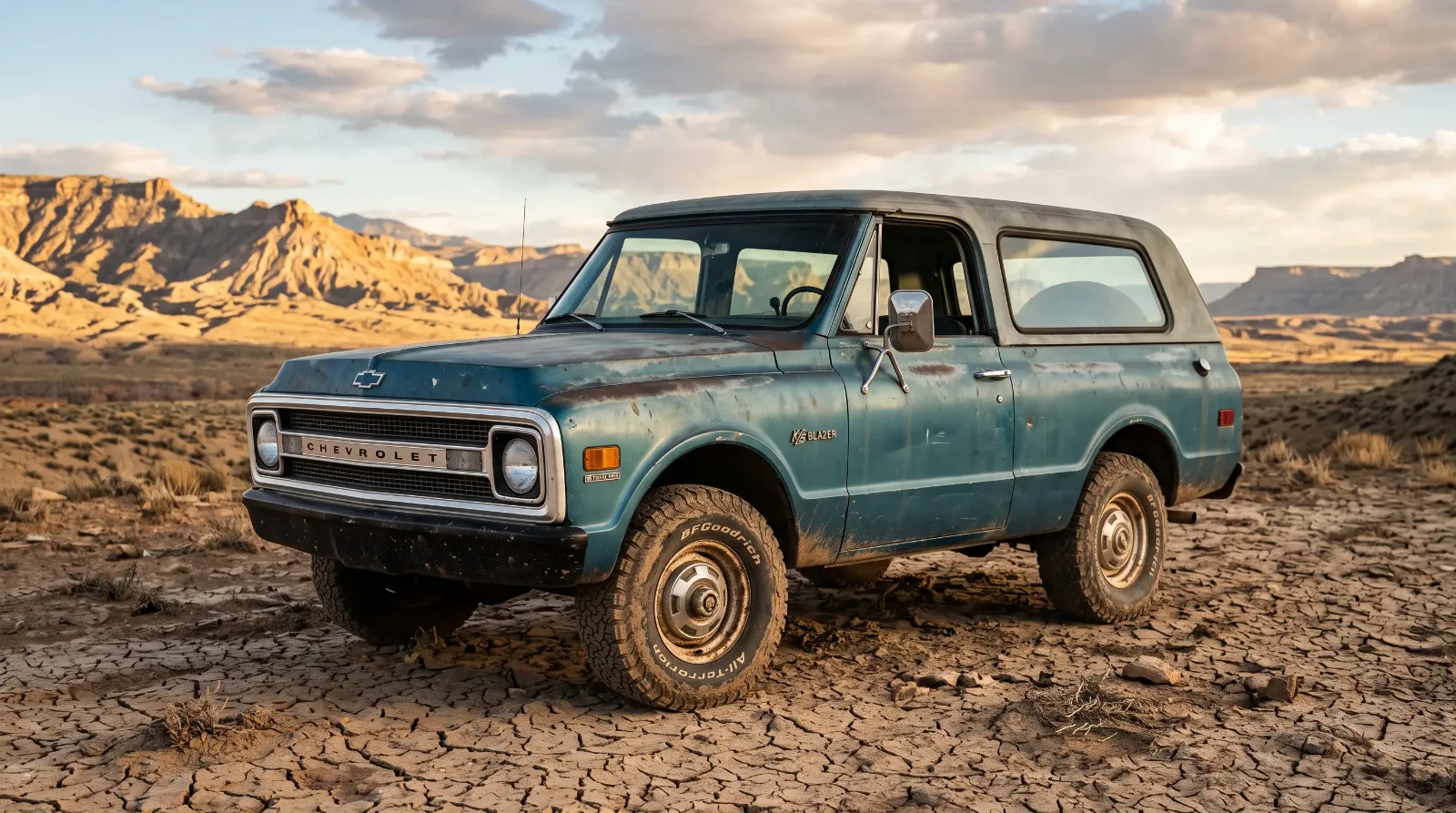
A palette built for a work truck, not a showpiece
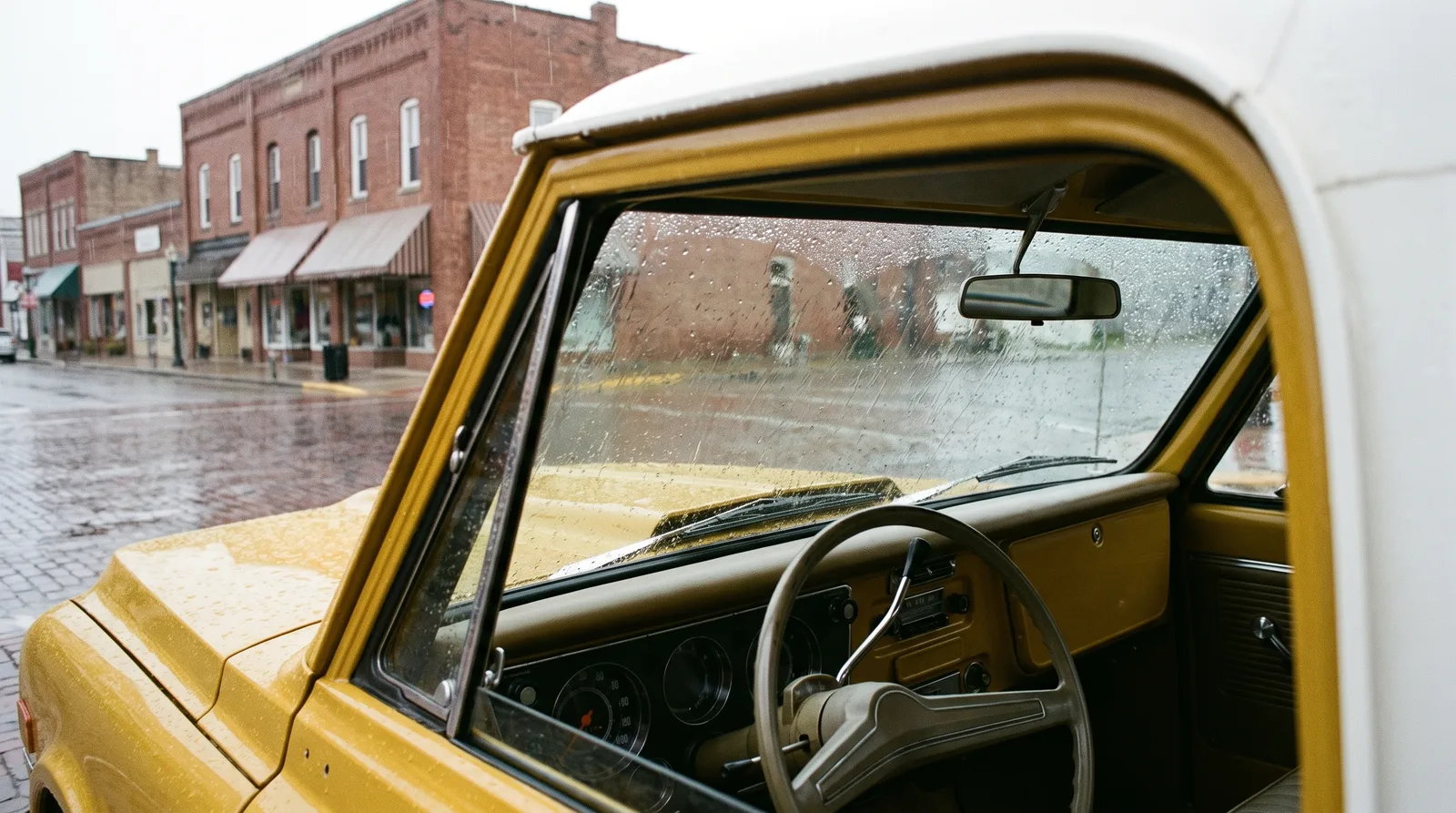
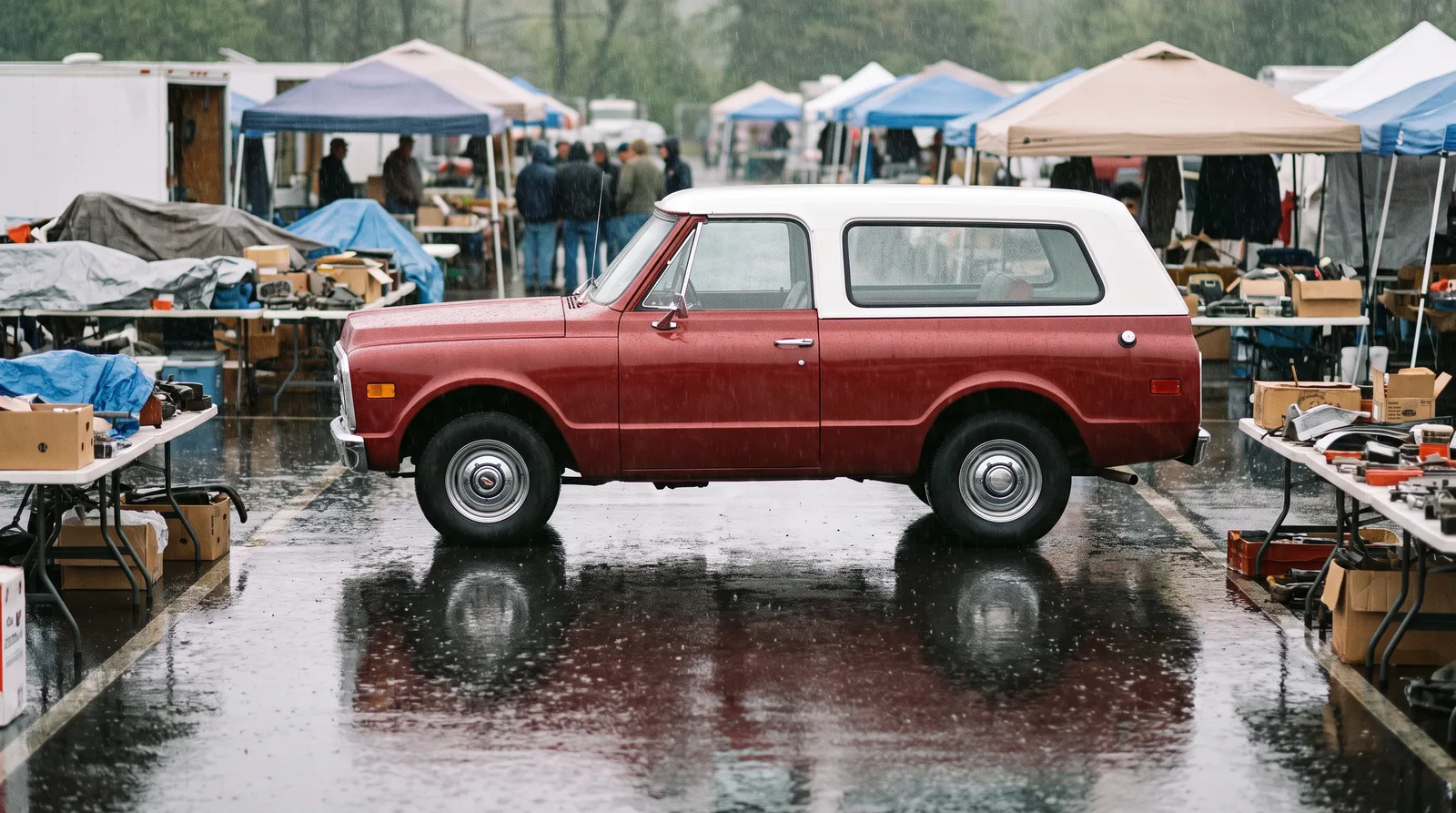
Chevrolet drew the 1969 Blazer's color options from the same broader truck-line palette used across the C/K pickup family that year, rather than developing a distinct set of Blazer-specific hues. That meant buyers chose from solid, practical colors, whites, blues, a forest-leaning green, and a deep red among them, built to hide road dust and survive years of outdoor use rather than to turn heads in a parking lot. A complete, verified list of exact 1969 factory paint codes is not something that circulates reliably in general references, so any code claimed for a specific truck is worth checking against that truck's own build sheet. Two-tone combinations existed on some configurations, typically pairing a body color with a white roof section, and those combinations have become some of the more visually memorable surviving examples today, precisely because they broke slightly from the single-color norm.
What strikes people looking back is how unglamorous this palette reads next to the muscle car colors Chevrolet was simultaneously slinging at a very different customer in 1969. Trucks did not get the same marketing treatment as the passenger car lineup that year, and the Blazer's colors reflect that gap plainly. This was paint chosen for a buyer who wanted a truck to look presentable, not spectacular.
The colors that survived, and the ones that mostly did not
Fifty-plus years of sun exposure has not been kind to any of these original finishes, but some held their character better than others. Deeper colors tended to fade to a chalky, uneven version of themselves, while the lighter factory whites often aged more gracefully, at least visually, even as the paint itself deteriorated underneath. A lot of what people encounter today on unrestored trucks is not really the original color at all, but a sun-worn approximation of it, which makes matching paint during a restoration trickier than it sounds. Getting the shade right means working from a verified original paint code, not from what a faded panel currently looks like under afternoon light.
What color choice says about the original buyer
Order data from this era is thin, but the pattern that does survive suggests two-wheel and four-wheel-drive buyers alike leaned toward the same handful of practical, durable colors rather than spreading evenly across the full palette. That is not surprising once you remember who was actually buying these trucks in 1969, ranchers, outdoorsmen, small business owners, people choosing a vehicle for years of daily use rather than a weekend showpiece. A color that hid mud and dust well was worth more to that buyer than a color that photographed beautifully in a showroom.
It is worth sitting with that for a moment, because it reframes how we ought to look at these trucks today. A faded white or a sun-bleached blue on a surviving 1969 Blazer is not evidence of neglect. It is evidence of exactly the life this truck was built for, years spent outside, doing the work it was bought to do, under a paint job that was never meant to be precious.
"Every faded panel on one of these old Blazers is a small piece of somebody's life, a season of hauling hay or hunting trips or a daily commute down a dirt road nobody paved. The color was never really the point. What it survived is."
- Nora Beckett
| Color family | General character | How it tends to age |
|---|---|---|
| Whites | Practical, common on work-oriented orders | Ages visually softer, chalking less noticeable |
| Blues | Popular mid-palette choice across truck lines | Fades toward a pale, washed-out tone |
| Deep reds | Bolder option, less common on surviving trucks | Fades unevenly, often chalky and blotchy |
| Greens | Outdoor-leaning tone, matched rural buyer tastes | Can fade toward a dull olive over decades |
| Two-tone body plus white roof | Less common, more visually distinct | Roof section often shows less fade than the body color |
What a family album can tell you that a paint chip cannot
Some of the best evidence for what these trucks actually looked like new does not come from surviving paint at all. It comes from old photographs, the kind tucked into shoeboxes and family albums, a Blazer parked next to a lake house or loaded up for a hunting trip, its paint still bright and even in a way no surviving panel fifty years later can replicate. Color film from the period was not perfect, and lighting varies, but a decent snapshot still tells you more about a truck's original hue than staring at a faded, oxidized panel ever will.
Restorers who take paint matching seriously often go looking for exactly this kind of material, family photographs, old dealership lot shots, period brochures with printed color swatches, because it grounds a restoration in something more reliable than memory or a current, sun-damaged surface. It is a small, patient kind of research, and it rarely gets the attention that engine numbers or drivetrain details receive, but it matters just as much to getting a truck's story right.
Restoring color with honesty rather than guesswork
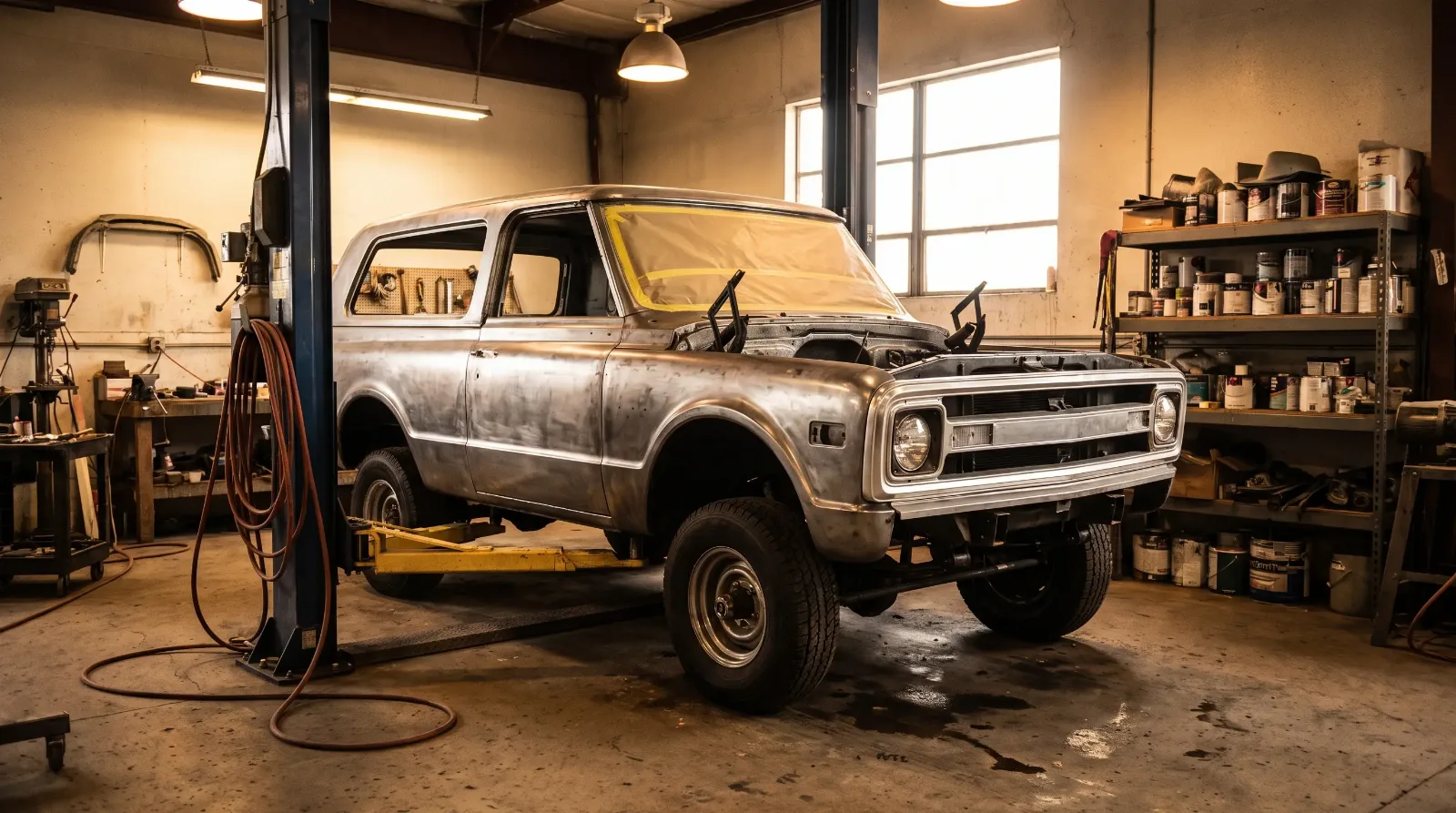
For owners restoring one of these trucks today, the temptation to pick a favorite modern shade instead of chasing down the original factory code is real, and understandable. But something is lost when a 1969 Blazer gets repainted in a color it never actually wore. Part of what makes these trucks worth preserving is the specific, unglamorous honesty of their original presentation, and a careful restoration respects that even when a bolder modern color might look more striking in photographs.
You can find that fuller context in our complete history of the model, which traces how the truck's practical, unpretentious character shows up in nearly every design decision Chevrolet made that year, paint included. And for anyone drawn to that same honest, worked-in character enough to want one of their own, you can browse classic K5 Blazer listings and see, panel by faded panel, exactly what five decades under an open sky actually does to a truck built to take it.
Somewhere out there, in a shed or a back field, another of these trucks is sitting under paint nobody has properly identified yet, waiting for someone with the patience to trace it back to a code instead of a guess. That patience is its own small act of care, and it is, in the end, no less a part of this truck's story than the engine under its hood.
Sources and notes
Related Reading
Have a
Chevrolet Blazer
for Sale?
Reach thousands of serious classic car collectors across the US.
Sell It Here →
Selling a classic? Here's how: where to sell your classic car online
Are You a Classic Car Dealer?
List your full inventory and connect with targeted classic car buyers.
Join as a Dealer →
#factory paint codes
#K5 Blazer
#chevrolet blazer
#1969 Blazer
#Blazer restoration
#classic truck paint colors

About the author
Nora Beckett
Automotive features writer and photographer who tells the human stories behind the cars, from show fields to cross-country road trips.
Related Listings - Chevrolet Blazer
Comments
Be the first to comment on this article.