
Ford bronco 1973 vs blazer is one of the more genuinely interesting matchups in early 1970s truck history, because the two vehicles took real design gambles in opposite directions. Chevrolet's K5 Blazer, introduced for 1969, had four years of market presence by 1973 and had already established itself as a bigger, more comfortable alternative to the compact Bronco. Ford's answer was not to redesign the Bronco to match. It was to refine the smaller truck's strengths and let the two vehicles compete on genuinely different terms.
Car Features
6 min read
1973 Bronco vs Chevy K5 Blazer, the Full Fight
The ford bronco 1973 vs blazer matchup pits a compact, purpose-built 4x4 against Chevrolet's roomier, pickup-based K5 Blazer in two very different visions of a utility truck.
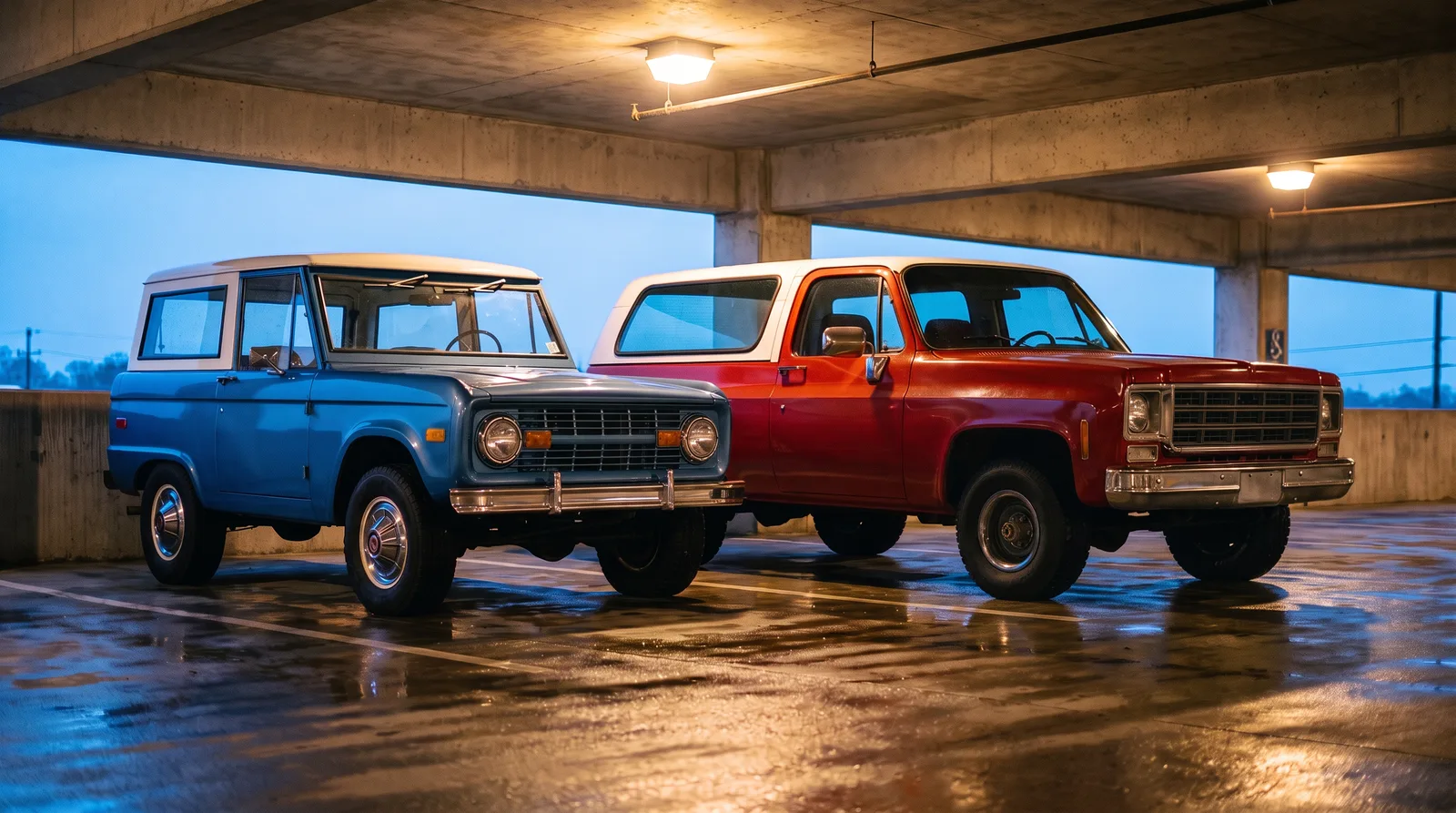
Size and platform, the core difference
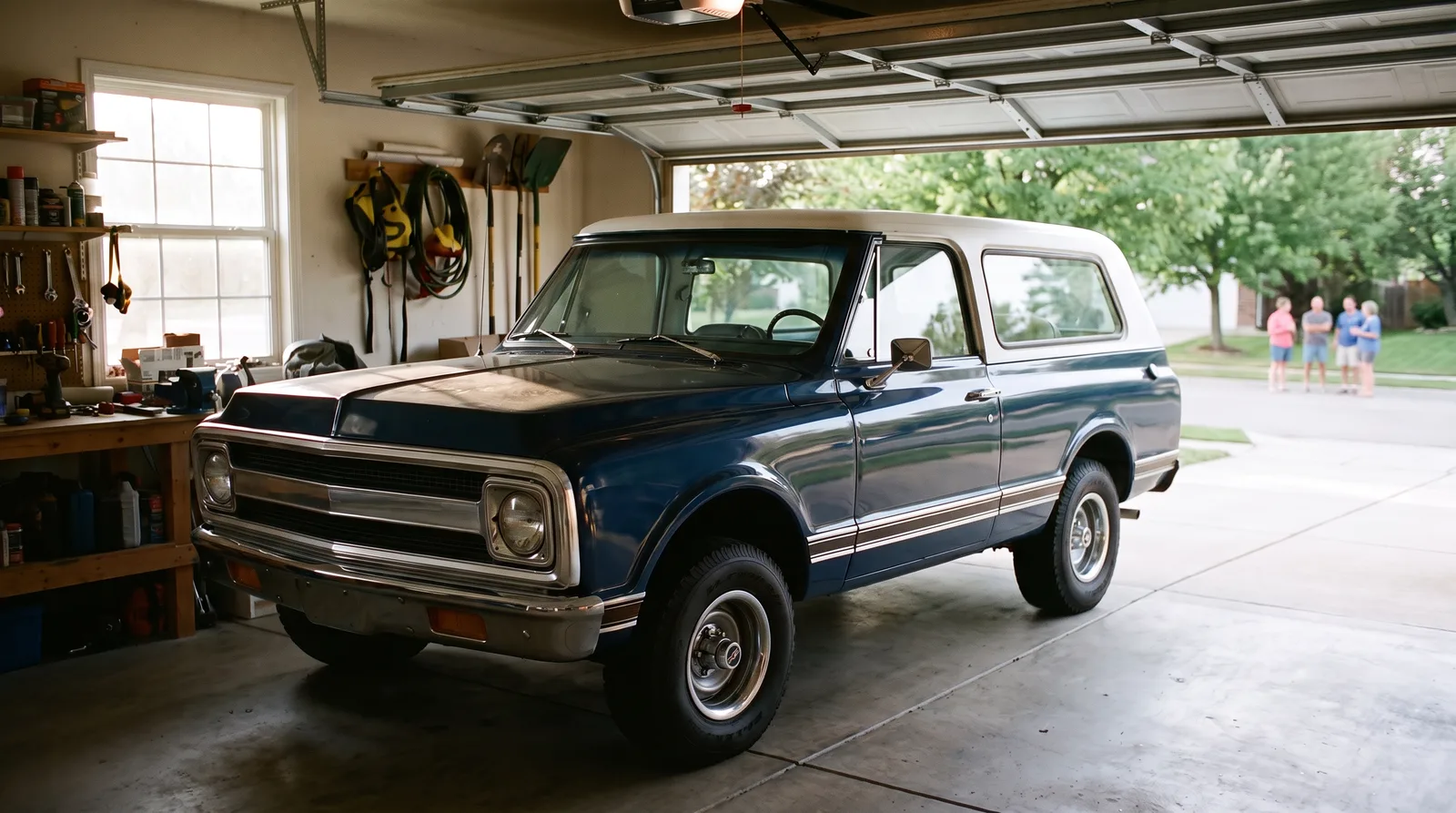
The 1973 Bronco rode on a 92-inch wheelbase and used a compact, purpose-built body shared with nothing else in Ford's lineup. The K5 Blazer, by contrast, was built on a shortened version of Chevrolet's full-size C/K pickup platform, giving it a longer wheelbase, a wider stance, and considerably more interior room. That single decision shaped nearly everything else about how the two trucks felt and how they were marketed.
Buyers cross-shopping the two in 1973 were essentially choosing between two different philosophies. The Bronco offered a tighter, more agile package that felt closer to a Jeep in tight trail situations, while the Blazer offered more cabin space, a smoother ride, and a driving experience closer to a full-size truck. Neither approach was objectively correct. They served different priorities.
| Spec | 1973 Ford Bronco | 1973 Chevrolet K5 Blazer |
|---|---|---|
| Wheelbase | 92 in | Approx. 106 in |
| Base platform | Purpose-built compact 4x4 | Shortened C/K pickup chassis |
| Engine options | 200 I6, 302 V8 | 250 I6, 307 V8, 350 V8 |
| Removable top | Yes, full removable steel top | Yes, full removable fiberglass top |
Engines and everyday drivability
Ford offered the 200 cubic inch six and the 302 V8 in the 1973 Bronco, a modest but adequate range for the truck's size and weight. Chevrolet's Blazer, built on a bigger platform, could be ordered with larger V8 options that gave it more outright power, though at the cost of worse fuel economy and a heavier, less nimble feel on tight trails. The Blazer's larger-displacement 250 six and its 307 and 350 small-block V8 options generally out-muscled the Bronco's 200 six and 302 V8 on paper, though period reviews generally agreed the Bronco felt quicker to respond and easier to place on narrow roads, while the Blazer felt more substantial and confident at highway speed.
The transmission story tracked a similar pattern. Both trucks offered automatic options by 1973, a sign that both manufacturers understood comfort-focused buyers were becoming a bigger share of the compact 4x4 market than the original off-road-only customer base from the mid-1960s.
Interior space and the practical tradeoff
This is where the Blazer's platform advantage showed up most clearly. The larger chassis gave Chevrolet's truck noticeably more front seat room and a roomier cargo area, appealing directly to buyers who wanted a 4x4 that could also function as a comfortable family vehicle. The Bronco's tighter dimensions meant less interior space, but that same compact footprint translated into better maneuverability on narrow trails, in tight parking situations, and in terrain where a wider, longer truck struggled.
Sales figures from the era reflect how buyers actually weighed this tradeoff. The Blazer generally outsold the Bronco through the early 1970s, a gap that tracked closely with the broader market's growing preference for size and comfort over pure compact agility, a trend that would eventually push Ford itself to redesign the Bronco onto a larger F-Series-based platform starting with the 1978 model year.
"The Bronco and the Blazer get compared constantly, but they were never really fighting for the exact same buyer in 1973. The Bronco held onto a customer who wanted something closer to a Jeep with more comfort. The Blazer chased someone who wanted a smaller pickup with more style."
- Tom Ramirez
Off-road manners, where the compact truck earned its reputation
Away from paved roads, the Bronco's shorter wheelbase and lighter overall weight gave it a genuine edge in tight, technical terrain. Approach and departure angles benefited directly from the compact body, letting drivers navigate rock ledges and steep trail sections that would have required far more careful line selection in the longer, heavier Blazer. Ground clearance between the two trucks was broadly comparable, but the Bronco's shorter overall length made a real difference in situations where a driver needed to maneuver quickly on a narrow trail without the luxury of a three-point turn.
The Blazer's advantages showed up more on open terrain and highway approach roads, where its longer wheelbase produced a smoother, more planted ride at speed. Neither truck was objectively better off-road. They simply excelled in different types of terrain, and serious buyers in 1973 often chose based on the specific kind of driving they expected to do most often rather than any single measurable performance advantage.
Which truck holds up better as a collector purchase
Today's collector market treats the two trucks somewhat differently. The Bronco's smaller production numbers and more compact, distinctive shape have made it a genuinely sought-after classic, particularly clean early examples with documented history. The Blazer has its own dedicated following, especially among buyers who prioritize interior space and V8 power over the Bronco's tighter dimensions.
Readers who want the deeper context on the 1973 Bronco specifically should check our 1973 ford bronco retrospective, which covers the drivetrain, trim, and comfort changes that defined the model year. For a look at how the Bronco stacked up against another 1970s rival, a related story covers the matchup against Dodge's Ramcharger. And for buyers ready to act, current Broncos for sale now give a real-time read on how the compact Bronco is valued against its bigger, roomier rivals today.
What five decades of hindsight add to the comparison
Viewed from today, the Bronco versus Blazer question looks less like a contest with a clear winner and more like an early example of market segmentation working exactly as intended. Both trucks found loyal buyers, both survived in meaningful numbers, and both went on to inspire dedicated collector communities that remain active decades later. The real difference shows up in what each community values most. Bronco owners tend to prize the compact platform's agility and distinctive shape, while Blazer owners often point to interior room and V8 power as the truck's defining strengths.
That divergence in what each fan base celebrates is itself evidence that Ford and Chevrolet succeeded in building genuinely different vehicles rather than two versions of the same idea. Fifty years on, neither the Bronco nor the Blazer has fully overtaken the other in collector demand, a rare outcome for two direct period rivals and a sign that both engineering philosophies had real, lasting merit. Anyone shopping seriously in either camp is best served by test driving both, since specification sheets only tell part of the story and the two trucks feel genuinely different from behind the wheel.
Sources and notes
Related Reading
Have a
Ford Bronco
for Sale?
Reach thousands of serious classic car collectors across the US.
Sell It Here →
Selling a classic? Here's how: compare the places to sell classic cars
Are You a Classic Car Dealer?
List your full inventory and connect with targeted classic car buyers.
Join as a Dealer →

About the author
Tom Ramirez
Corvette researcher and historian based in Bowling Green, Kentucky. Two decades documenting Corvette production history from original factory records.
Related Listings - Ford Bronco
Comments
Be the first to comment on this article.