
The 1980 Ford Bronco is not the model most people picture when they hear the name, but it carries a story that says a lot about the decade it was born into. Ford Bronco 1980 efficiency was not a marketing slogan, it was a survival plan. Gas lines had wrapped around city blocks twice in the 1970s, first in 1973 and again in 1979, and Washington had responded with corporate average fuel economy rules that treated a full-size truck the same way it treated a station wagon. Ford's answer was to make the whole F-series family, Bronco included, smaller, lighter, and easier on gas without pretending it was still 1975.
Car Features
6 min read
How the 1980 Bronco Chased Fuel Economy
The 1980 Ford Bronco traded big block muscle for a lighter frame and a standard six cylinder engine, a quiet redesign built to survive the gas crisis era.
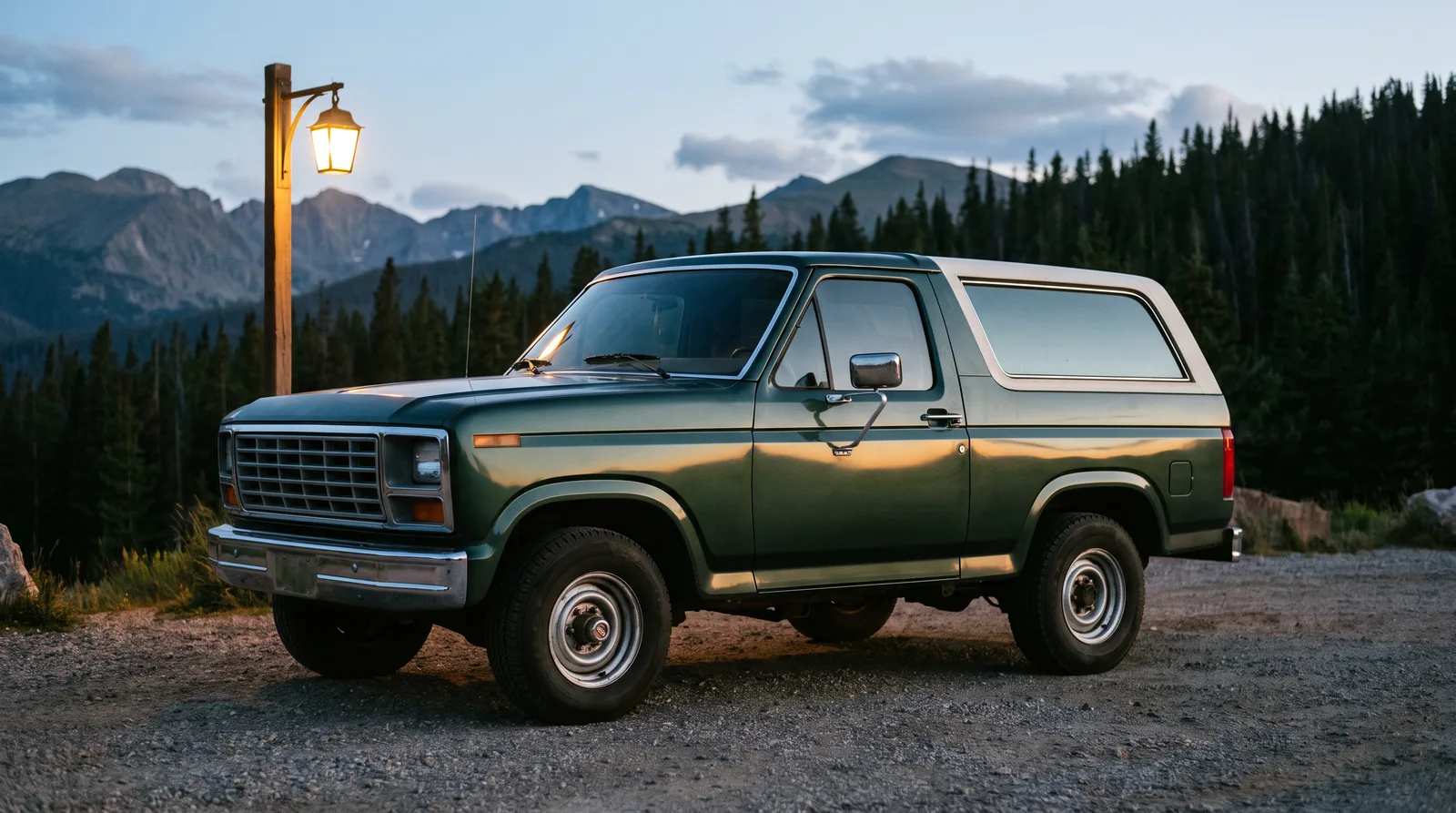
A truck built around a weight problem
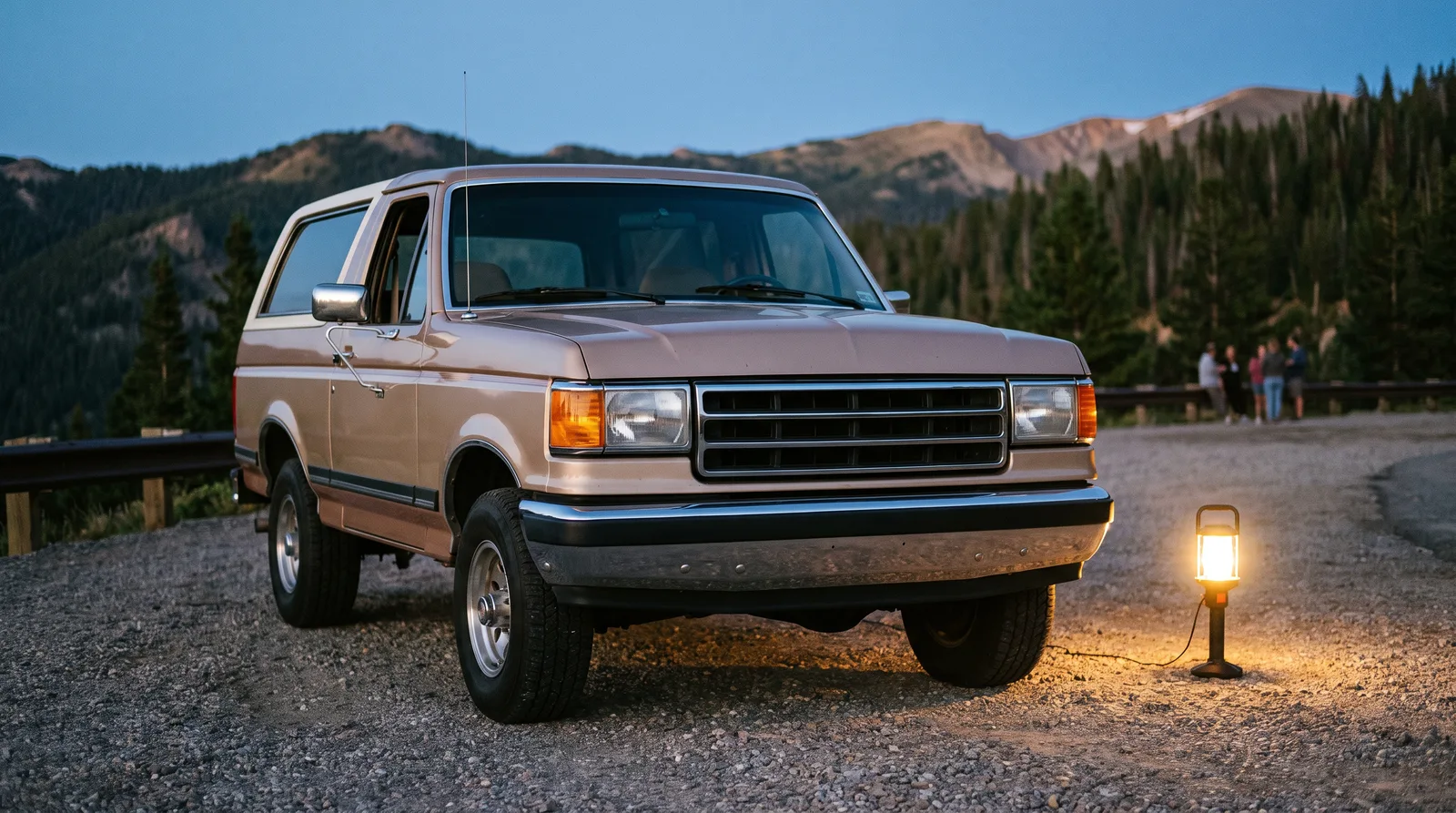
By 1979 the full-size Bronco that had replaced the original 1966 model two years earlier was a heavy, thirsty machine, and Ford knew the next fuel shock would not be forgiving. The 1980 redesign, shared with the F-series pickups and known among enthusiasts today as the bullnose generation for its rounded hood and grille, trimmed hundreds of pounds through a combination of thinner sheet metal, a smaller frame section, and a general retreat from the biggest available engines. The 351 cubic inch modified V8 that had carried over from the late 1970s Bronco remained available into the new decade but was gradually phased out in favor of the 351 Windsor V8 within a few years of the redesign, while the 300 cubic inch inline six stayed on as the standard engine and a 302 V8 served as the volume option for buyers who wanted more than the six could deliver.
That six cylinder engine did most of the heavy lifting for Ford's economy pitch. It was not fast and nobody bought a Bronco expecting sports car manners, but it was durable, simple to service by the standards of the day, and noticeably cheaper to run than the big block options that had defined trucks a few years earlier. Ford's engineers leaned into that durability angle in their advertising, framing the six as the sensible choice for a buyer who wanted a truck that would still be working a decade later.
Smaller changes that added up
Efficiency in 1980 was not just about the engine bay. Ford revised gearing in the axles to favor cruising economy over low end grunt, added a lockup torque converter option to the automatic transmission on some applications, and pushed buyers toward the manual transmission as the standard gearbox in base trim. None of these changes made headlines on their own. Together they were Ford's attempt to shave every fraction of a mile per gallon it could out of a vehicle that, by its very shape, was never going to be efficient in the way a sedan was.
The buyer Ford was chasing
Ford was not trying to win over off-road purists with the 1980 changes, at least not primarily. It was trying to keep the Bronco affordable to own for a buyer who commuted in it during the week and used it for camping or towing on weekends. Fuel economy stickers mattered more to that buyer in 1980 than they had in 1970, and Ford's dealer literature from the period leaned hard on operating cost comparisons against the outgoing generation. A Bronco that cost noticeably less to fill and drove a little lighter on its feet was an easier sell when interest rates and gas prices were both working against the household budget.
"Nobody at Ford in 1980 thought they were building a legend. They thought they were building a truck people could still afford to drive to work. That's the part collectors forget when they talk about this generation only in terms of horsepower."
- Tom Ramirez
How the numbers actually looked on paper
| Spec | 1980 Bronco (standard six) | Late 1970s Bronco (comparison) |
|---|---|---|
| Standard engine | 300 cu in inline six | 351 cu in V8 family common |
| Curb weight | Reduced by several hundred pounds versus the outgoing platform | Heavier full-size platform |
| Standard transmission | 4-speed manual | 3-speed automatic common |
| Optional V8 | 302 cu in | 351 and larger options |
None of these figures were dramatic on their own. A truck that weighs a little less and carries a smaller standard engine is not going to post numbers that impress anyone shopping today. But stacked together across an entire model run, the changes represented Ford's clearest statement yet that the Bronco had to answer to a fuel gauge as much as it answered to a trail. Dealers in 1980 were trained to lead with the operating cost pitch before they ever got to towing capacity or ground clearance, a sales order that would have been unthinkable a decade earlier.
Why this generation is undervalued today
The bullnose Bronco does not get the attention that the first generation 1966 truck or the later square body Broncos of the mid 1980s receive, and the efficiency focused early years of that generation get even less. Part of the reason is straightforward. A truck built to sip fuel and survive a recession was never going to be the fastest or the most powerful Bronco Ford made, and collectors have historically chased the opposite. But that same restraint is exactly what makes the 1980 model an honest snapshot of its era, one where a family truck had to answer to both the gas pump and the checkbook at the same time. If you want to read the background on how this generation fit into the broader run of full-size Broncos, the changes that followed just a couple of years later are worth a look too, since Ford kept tuning the formula almost every season through the early 1980s.
What to look for if you are shopping one
Early 1980s Broncos built with efficiency in mind are quietly good entry points into full-size Bronco ownership today, since they tend to be less sought after than flashier later trims and therefore more affordable to buy and insure. A well kept six cylinder truck also tends to be simpler to maintain, with fewer emissions era complications than the later fuel injected V8s that followed later in the decade. If you want to see what is currently available, you can shop classic Bronco listings and compare a six cylinder bullnose truck against its more powerful siblings before deciding which era fits what you actually want to drive.
Sources and notes
Related Reading
Have a
Ford Bronco
for Sale?
Reach thousands of serious classic car collectors across the US.
Sell It Here →
Selling a classic? Here's how: where to sell your classic car online
Are You a Classic Car Dealer?
List your full inventory and connect with targeted classic car buyers.
Join as a Dealer →

About the author
Tom Ramirez
Corvette researcher and historian based in Bowling Green, Kentucky. Two decades documenting Corvette production history from original factory records.
Related Listings - Ford Bronco
Comments
Be the first to comment on this article.