
The last full-size Bronco rolled off the line at Ford's Michigan Truck Plant in June of 1996, and almost nobody outside the factory floor treated it as a moment worth marking. There was no farewell edition, no special badge, no press event. Ford bronco 1996 farewell legacy is not a story about a grand send-off. It is a story about a truck that got quietly discontinued in favor of the Expedition, and about how much that quiet ending actually meant once collectors had time to look back.
Car Features
7 min read
What the Full-Size Bronco Left Behind in 1996
The full-size Bronco ended production in 1996 with no fanfare at all, and that quiet exit is exactly why the final trucks matter so much now.
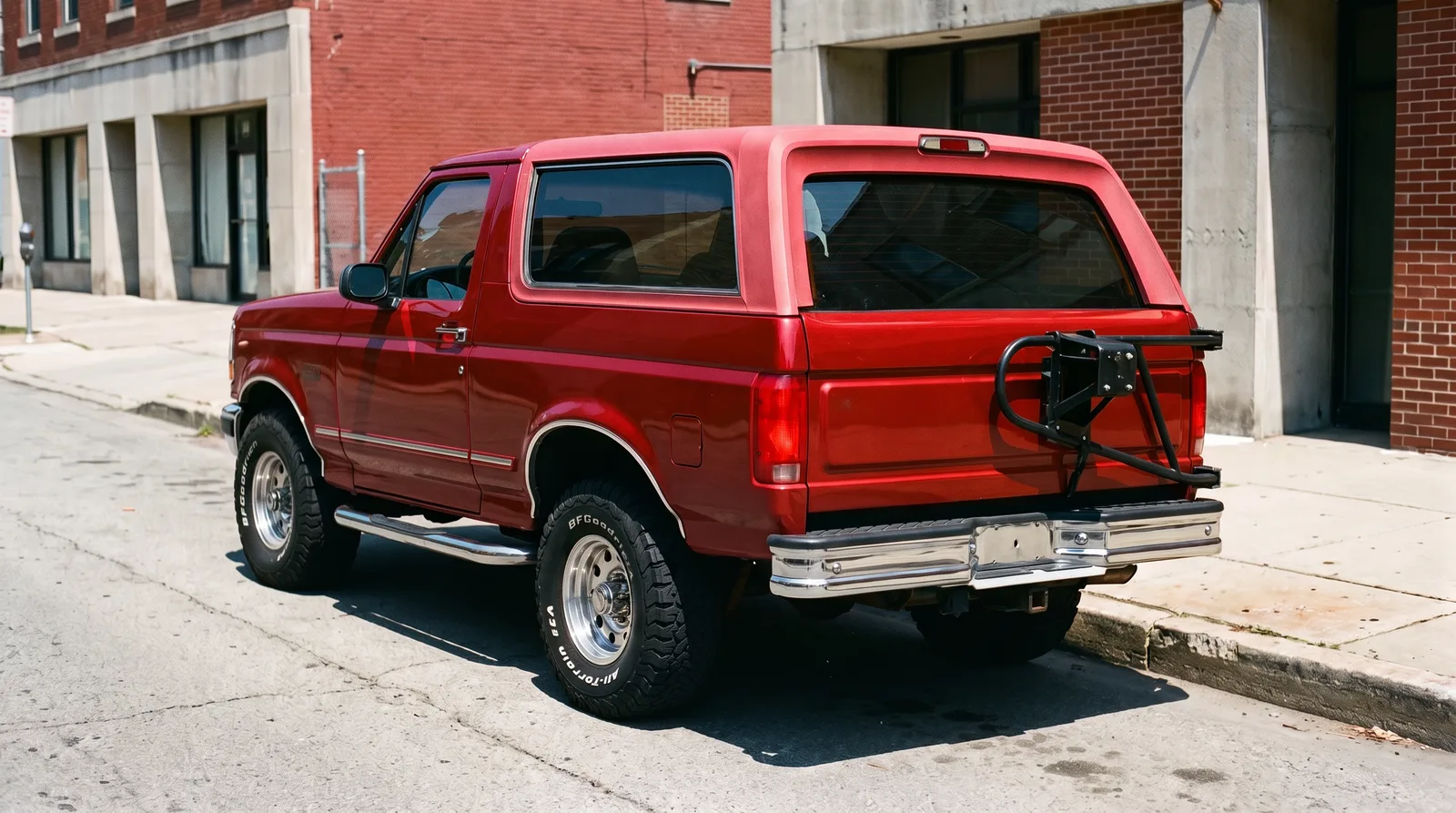
A cancellation, not a celebration
Ford's decision to end the Bronco had nothing to do with the truck losing its audience. Sales were healthy through the mid-1990s, and the full-size Bronco still had a loyal following among buyers who wanted a proper two-door SUV built on a truck frame. The real driver was the Expedition, a new four-door SUV built to compete with the Chevrolet Suburban and Tahoe, and Ford's product planners decided the market wanted more doors and more room rather than the compact two-door format the Bronco had held onto since 1966. The Bronco name did not disappear from Ford's lineup out of failure. It disappeared because the company chose to bet on a different shape of vehicle entirely.
What made the 1996 trucks different
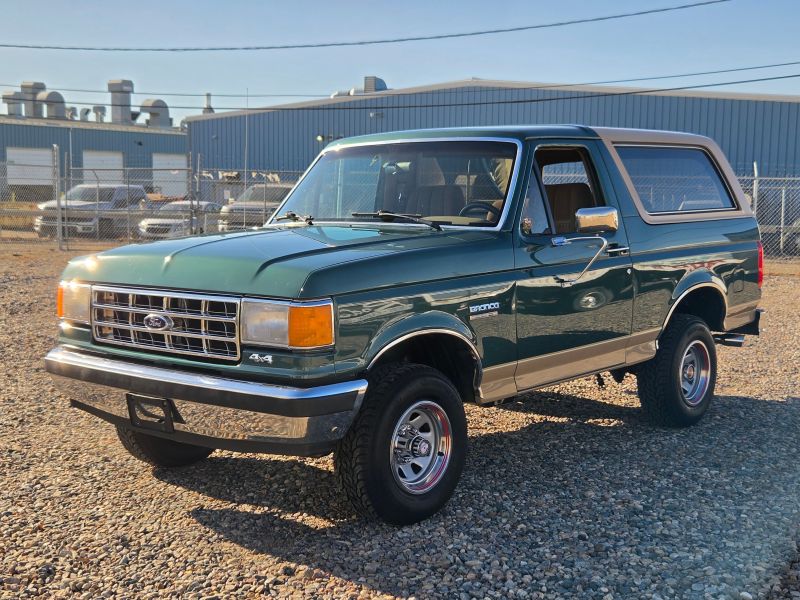
The final model year carried over the same basic body and drivetrain the full-size Bronco had used since the aero-nose redesign in 1987, with a 5.0-liter or 5.8-liter V8 under the hood and the familiar Eddie Bauer, XLT, and base trim structure intact. Nothing about the 1996 truck was built as a swan song, which is part of why it holds such a specific appeal now. Buyers looking at these trucks today are not chasing a special edition. They are chasing the plainest possible fact: this was the last one, built by workers who had no idea it would be the last one, using the same processes Ford had refined over sixteen years of full-size Bronco production.
The gap it left behind
For twenty-five years after 1996, Ford sold no vehicle called Bronco at all, a gap most automakers never let happen to a name with this much history attached. That absence is a big part of why the name carries so much weight now. Every SUV that filled the two-door, body-on-frame niche after 1996, from the Jeep Wrangler to various imported competitors, did so without a Ford badge in the mix, and enthusiasts who grew up with the Bronco spent a quarter century watching a hole in Ford's own lineup where their favorite truck used to sit.
"Nobody at the plant that last week knew they were building something people would chase decades later. That's usually how it goes. The trucks that get remembered as the end of something rarely get treated like it at the time."
- Patrick Walsh
How the modern revival changed the conversation
When Ford brought the Bronco name back for 2021, it did more than launch a new product. It reframed the classic full-size trucks and the original 1966 to 1977 Bronco as the ancestors of something living again, rather than as relics of a name that quietly died. That shift pushed collector interest in every generation of the classic Bronco upward, and the 1996 trucks in particular benefited because they are the direct, unbroken link between the name's original run and its return. A 1996 Bronco is not just an old truck anymore. It is the last chapter of a story that turned out to have a sequel nobody expected.
Why Ford waited a quarter century to bring it back
The two-decade-plus gap was not an accident of neglect. Ford's SUV strategy after 1996 leaned heavily on the Explorer and the Expedition, both of which sold in far higher volumes than the Bronco ever had, and there was little internal appetite to revive a two-door body-on-frame platform while those four-door models were performing well. It took a shift in the broader market, renewed consumer interest in off-road capable, boxy SUVs led by the modern Jeep Wrangler's continued success, to convince Ford the Bronco name was worth resurrecting rather than leaving retired. That timing matters for how collectors read the 1996 trucks now. They are not simply old vehicles. They are the closing bracket on a name that Ford itself was not sure it would ever use again, which gives the final year a weight that a routine model-year change never carries.
What sets 1996 trucks apart in the market
| Factor | Why it matters |
|---|---|
| Final model year | Last full-size Bronco built before a 25-year gap in the nameplate |
| No special edition | Every 1996 truck was standard production, making documented originals scarcer to identify |
| Same platform since 1987 | Mature, well-sorted drivetrain and chassis by the final year |
| Revival tie-in | Modern Bronco's 2021 return raised interest across every classic generation |
The full story of how the platform reached this point runs through the whole 1980 to 1996 era, and the bullnose ford bronco story covers the earlier years that set up this final chapter. If the ending has you curious about owning a piece of it, there are classic Broncos on the market spanning the full range from early bullnose trucks to the final 1996 model year.
What dealers and buyers noticed at the time
Ford dealerships did not treat the last full-size Bronco with any particular ceremony either. Sales staff at the time have described the final trucks moving through inventory the same way any other model year did, without special ordering instructions or a marketing push acknowledging the end was coming. Some buyers who purchased a 1996 Bronco new had no idea it was the last one until months or years later, when it became clear Ford had no plans to bring a two-door full-size SUV back under that name. That lack of awareness at the point of sale is exactly why so few original owners thought to preserve their trucks as anything special. Most 1996 Broncos were bought to be used, driven daily or on weekends, and only a small number ended up garaged and protected the way a truck explicitly marketed as a farewell edition might have been.
That gap between how the truck was sold and how it is regarded now is part of what makes surviving, unmodified 1996 examples genuinely harder to find than the production numbers alone would suggest. A truck nobody thought to protect gets used hard, and used hard usually means rust, accident repairs, or interior wear that a deliberately preserved special edition would have avoided. Finding a 1996 Bronco today with low miles and an unbroken ownership history is closer to finding a survivor than finding a collector piece that was always treated as one.
Why the legacy stuck
A quiet ending turned out to matter more than a loud one would have. Ford did not manufacture significance for the last Bronco, and that restraint is exactly why the truck's real significance, arriving decades late once the name came back, feels earned rather than manufactured. The 1996 Bronco left the lineup without fanfare and came back into the cultural conversation without needing any.
Sources and notes
Related Reading
Have a
Ford Bronco
for Sale?
Reach thousands of serious classic car collectors across the US.
Sell It Here →
Selling a classic? Here's how: compare the places to sell classic cars
Are You a Classic Car Dealer?
List your full inventory and connect with targeted classic car buyers.
Join as a Dealer →

About the author
Patrick Walsh
Automotive journalist covering classic car shows, events, and the enthusiast community across North America.
Related Listings - Ford Bronco




Comments
Be the first to comment on this article.