
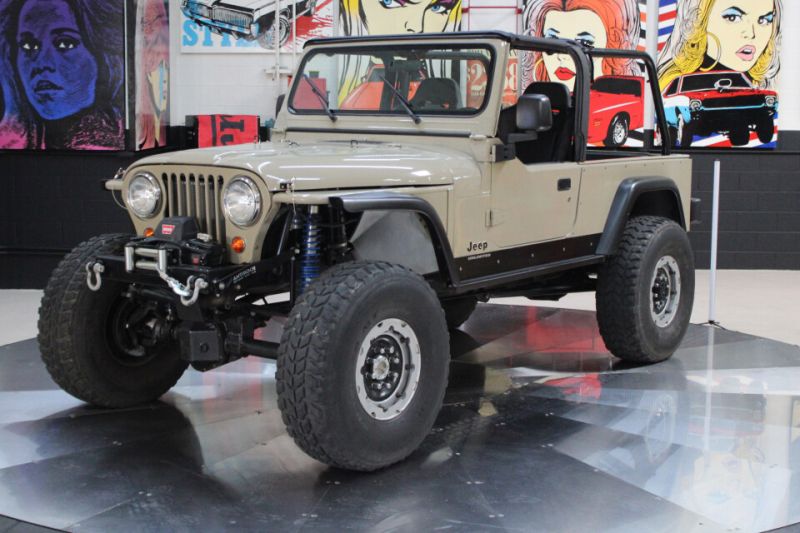
I have stripped paint off more Jeep grilles than I can count, and every single time I get down to bare metal on a CJ, I count the slots out of habit. Seven. Always seven. It is the one detail on this truck that nobody argues about changing, not the guys running steel bumpers, not the guys running fiberglass tubs, nobody. The jeep seven slot grille is treated like scripture in this hobby, and once you know where it came from, you understand why builders protect it the way they do.
Car Features
6 min read
Why the Jeep Grille Has Seven Slots
The jeep seven slot grille started as a trademark argument, not a design sketch, and it has survived every corporate owner since Willys-Overland.
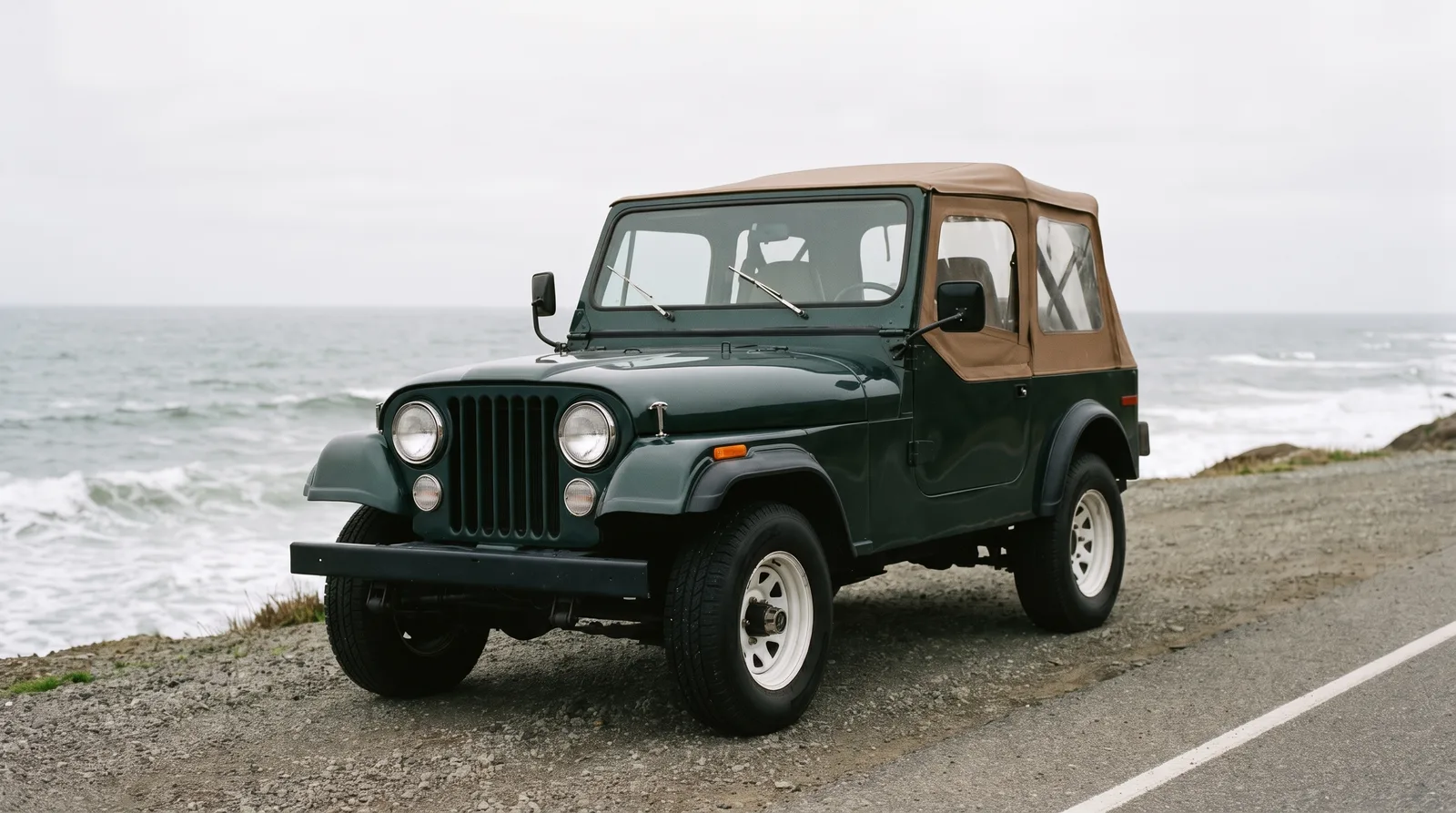
A trademark born out of a lawsuit, not a design brief
The seven-slot grille was not dreamed up in a styling studio as some bold design statement. It exists because of a branding calculation. When Willys-Overland launched the CJ-2A in 1945, it deliberately moved away from the nine-slot grille shared with Ford's wartime GPW, settling on seven slots as a pattern distinctive enough to belong to Willys alone rather than to the joint military design. Decades later, that slot pattern became a registered trademark, and Chrysler has since gone to court more than once to defend it, most notably losing a 2003 infringement case against General Motors over the Hummer's grille. Most brand icons get built by a design team chasing an aesthetic. This one got built chasing a way to own a look outright, and it stuck anyway.
Why seven and not six, not nine
Wartime Jeeps, both the Ford GPW and the Willys MB, actually varied in their slot counts during early production, with some contractors running nine narrow slots before the design settled. The number seven became the standard specifically because it was distinct enough from other manufacturers' grille designs to hold up as a trademark claim, and wide enough between slots to keep airflow reasonable without looking like a stamped-out grate. It is a compromise between legal defensibility and function, which is not the romantic origin story most owners assume, but it is the honest one.
"Every builder I know has an opinion about bumpers, about tub metal, about paint. Nobody has an opinion about changing the slot count. That grille is the one part of the truck that's off limits, and everybody just knows it without being told."
- Jim Vasquez
What builders actually do with it
In the shop, the seven-slot grille gets treated with more respect than almost any other panel on the truck. Guys doing full frame-off builds who will happily swap axles, engines, and entire suspension geometries will still hunt down a correct, straight seven-slot grille shell rather than fabricate a custom one, because a custom front end on a CJ reads as wrong to anyone who knows the truck. It is the visual anchor. You can change nearly everything behind it and the truck still reads as a CJ, but mess with that grille shape and something in the silhouette breaks. That is not sentiment talking, it is just what happens when you have looked at enough of these trucks parked next to each other. Your eye goes straight to the front end before it registers anything else.
What a fake grille costs you at resale
I have seen more than one otherwise solid CJ get knocked down hard in negotiations because the grille shell was an aftermarket reproduction with slightly wrong proportions, wider slots or a subtly different curve at the top edge that trained eyes catch in about two seconds. Reproduction grilles have their place, especially on a truck built as a daily driver rather than a numbers-matching restoration, but buyers chasing correctness will walk away from an otherwise clean example over a wrong grille faster than they will over almost any mechanical issue. That tells you something about how much weight this one panel carries in the eyes of serious collectors. Mechanical problems get fixed. A wrong-feeling front end changes what the truck actually is to a lot of buyers, and no amount of engine work fixes that perception.
Spotting a correct original takes some handling time before it becomes second nature, comparing slot width, shell thickness, and mounting hole placement against known good examples. It is not glamorous work, but it is the kind of detail that separates a truck priced as a driver from one priced as a documented, correct example, and the gap between those two prices is bigger than most first-time buyers expect.
The badge that outlasted the company that filed for it
Willys-Overland is gone. Kaiser is gone. AMC is gone. Every corporate name that has owned this grille pattern since the war has been absorbed into something else, and the seven-slot design has outlived every one of them, carried forward through Kaiser Jeep, AMC, Chrysler, and now Stellantis without a single owner willing to be the one who broke it. That is a remarkable run for a detail that started life as a courtroom argument rather than a design sketch. If you want the fuller trim history around how the CJ's identity took shape across those ownership changes, the full story covers that ground, and the naming question that comes up just as often on the shop floor is worth a look too.
There is a practical side to this too, one I run into constantly in the shop. Owners bringing in a CJ for frame-off work will sometimes ask if they can smooth out the grille opening for a cleaner custom look, ditch the slots entirely for something more modern. I always talk them out of it, not because I am precious about originality for its own sake, but because that change tanks resale value more than almost any other cosmetic modification on this platform. A custom grille might look sharp to the guy who built it, but the next buyer down the line, and the buyer after that, is going to want the seven-slot face back, and reversing a smoothed grille conversion costs real money. Some mistakes on a build are cheap to undo. This one usually is not.
Next time you are looking at a CJ, do what I do without thinking about it anymore. Count the slots. It will always be seven, and now you know it is seven because Willys needed a distinctive mark in 1945, not because a designer needed it to look good. Both things ended up being true anyway, which is a rare kind of luck for a branding decision to have. If you are hunting for a straight, honest example to start your own project, there is usually a decent spread if you shop classic CJ listings and look past the ones with aftermarket front clips.
Sources and notes
Related Reading

Have a
Jeep CJ
for Sale?
Reach thousands of serious classic car collectors across the US.
Sell It Here →
Selling a classic? Here's how: compare the places to sell classic cars
Are You a Classic Car Dealer?
List your full inventory and connect with targeted classic car buyers.
Join as a Dealer →

About the author
Jim Vasquez
Southern California hot rod and custom car builder with roots in the traditional kustom kulture scene.
Related Listings - Jeep CJ

More in Car Features
Comments
Be the first to comment on this article.