
The most expensive 1928 to 1931 Ford Model A with a name attached is a 1930 coupe that John Dillinger's gang used to flee a Wisconsin hideout in 1934. It sold for $165,000 at Barrett-Jackson Scottsdale in January 2010. Higher numbers exist in the sales databases, up to $218,900 for a 1930 car, but nobody has identified those cars, and an unidentified number is not a record. It is a rumor with a decimal point.
Car Features
7 min read
The Most Expensive Ford Model As Sold at Auction
The Dillinger getaway coupe tops the documented Model A sales at $165,000. Why the bigger numbers are unproven and what really drives the price.
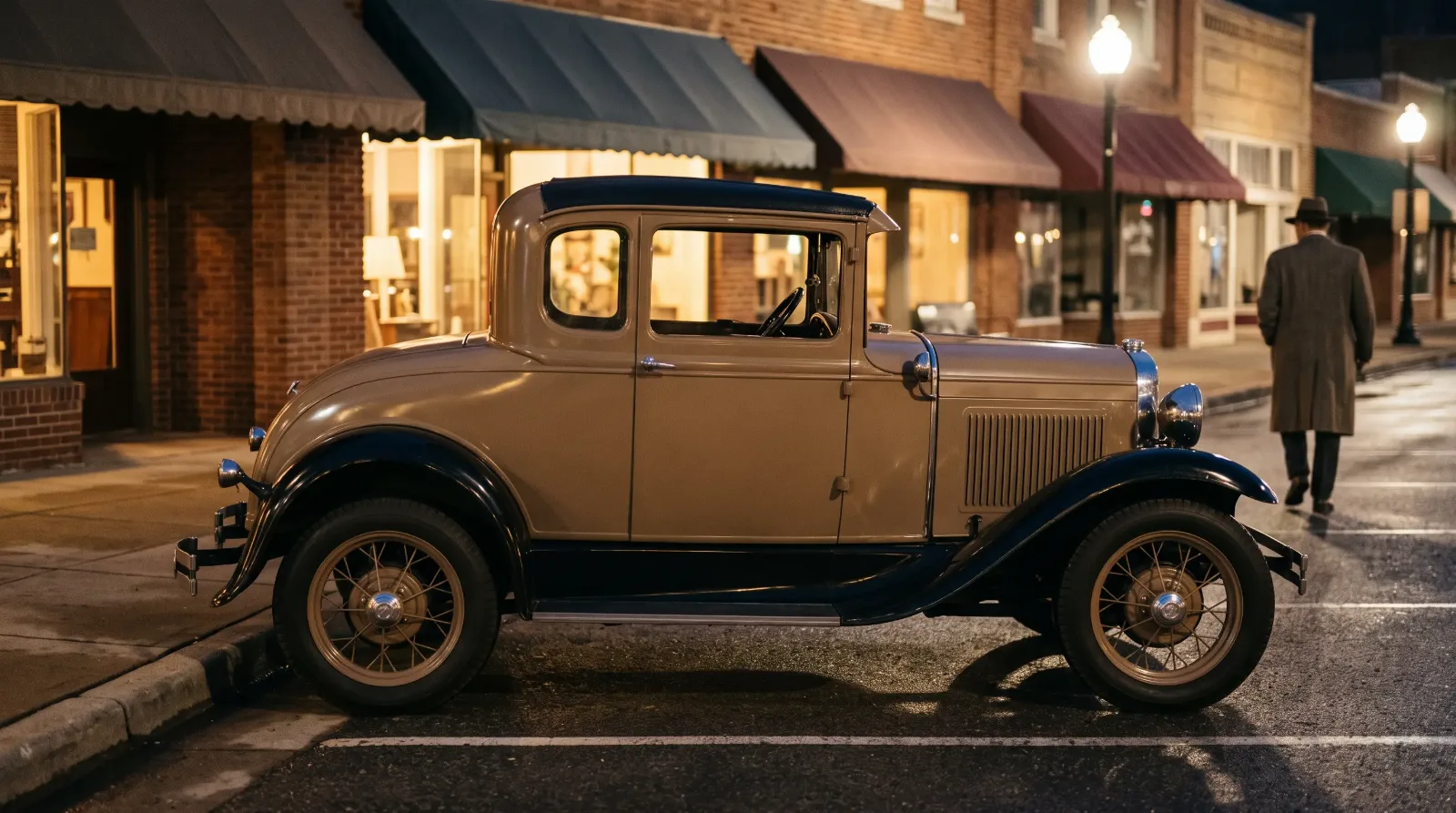
That gap is the useful part of this story. The Model A market is large, liquid and mostly modest, and the cars that break away from it do so for reasons that have little to do with the factory. If you want the broader picture of who owns and shows these cars, the clubs and museums article has the details. Here the question is narrower: which Model As brought serious money at auction, and why.
The most expensive Ford Model A sales on record
Below are the sales I can tie to a specific car, an auction house and a year. They are not a complete census. They are the ones with enough documentation to quote without a footnote of apologies.
| Car | Sale | Price | Why it sold high |
|---|---|---|---|
| 1930 Model A coupe (Dillinger gang car) | Barrett-Jackson Scottsdale, January 2010, lot 1309 | $165,000 | Criminal history, 1934 getaway |
| 1930 DeLuxe Phaeton | RM Sotheby's Hershey, 2014, lot 254 | $52,250 | Rare open body, collection car |
| 1931 Panel Delivery | RM Sotheby's Hershey, 2021, lot 288 | $26,400 | Commercial body; seen in Boardwalk Empire |
| 1931 DeLuxe Sedan Delivery | RM Sotheby's Hershey, 2019, lot 411 | $25,850 | Scarce commercial body |
| 1928 "AR" open-cab pickup | RM Sotheby's Guyton Collection, St. Louis, May 2019, lot 388 | $20,160 | Early production, open cab |
| 1931 woody station wagon | Barrett-Jackson Las Vegas, 2016, lot 802 | $18,150 | Wood body |
| 1930 Model A (body not stated) | RM Auburn Fall, 2017, lot 2041 | $15,950 | Reported film use in The Sting |
Read the table from the top and the pattern is plain. One car, sold on its story, sits far above everything else. Below it, the strong prices go to bodies Ford built in small numbers: the DeLuxe Phaeton, the delivery cars, the wagon, the early open-cab pickup. The ordinary Tudor and Fordor, the cars Ford built by the hundred thousand, do not appear.
The six-figure numbers nobody can name
One price aggregator tracks 830 sales of 1930 Model As. Its yearly highs read $107,800 in 2015, $154,000 in 2018, $218,900 in 2021, $110,000 in 2023 and $123,200 so far in 2026. For the 1929 cars it shows 731 sales and a top figure of $209,000, recorded back in 2006. Those are logged transactions, but the aggregator does not say which cars they were, and I could not tie either number to a lot.
That matters more than it sounds. A $218,900 "1930 Model A" could be a hot rod with a modern drivetrain, a car with a celebrity owner, or a rare body in exceptional condition. Each is a different market with different buyers, and only one of them tells you anything about a stock Model A. Until someone can put a body style, a serial number and an auction lot to those figures, I would not use them to price anything, and I would not call either of them the record.
One more naming trap. Search for the most expensive Ford Model A and you will also find a 1903 car, because Ford used the Model A name twice. That earlier Model A, chassis 30, described by RM as the oldest surviving car sold by the Ford Motor Company, sold for $264,000 at RM Auctions Hershey in 2012, lot 189. It is a different car from a different era, and it is not part of the 1928 to 1931 market this article covers.
Story, rarity, condition: what moves the price
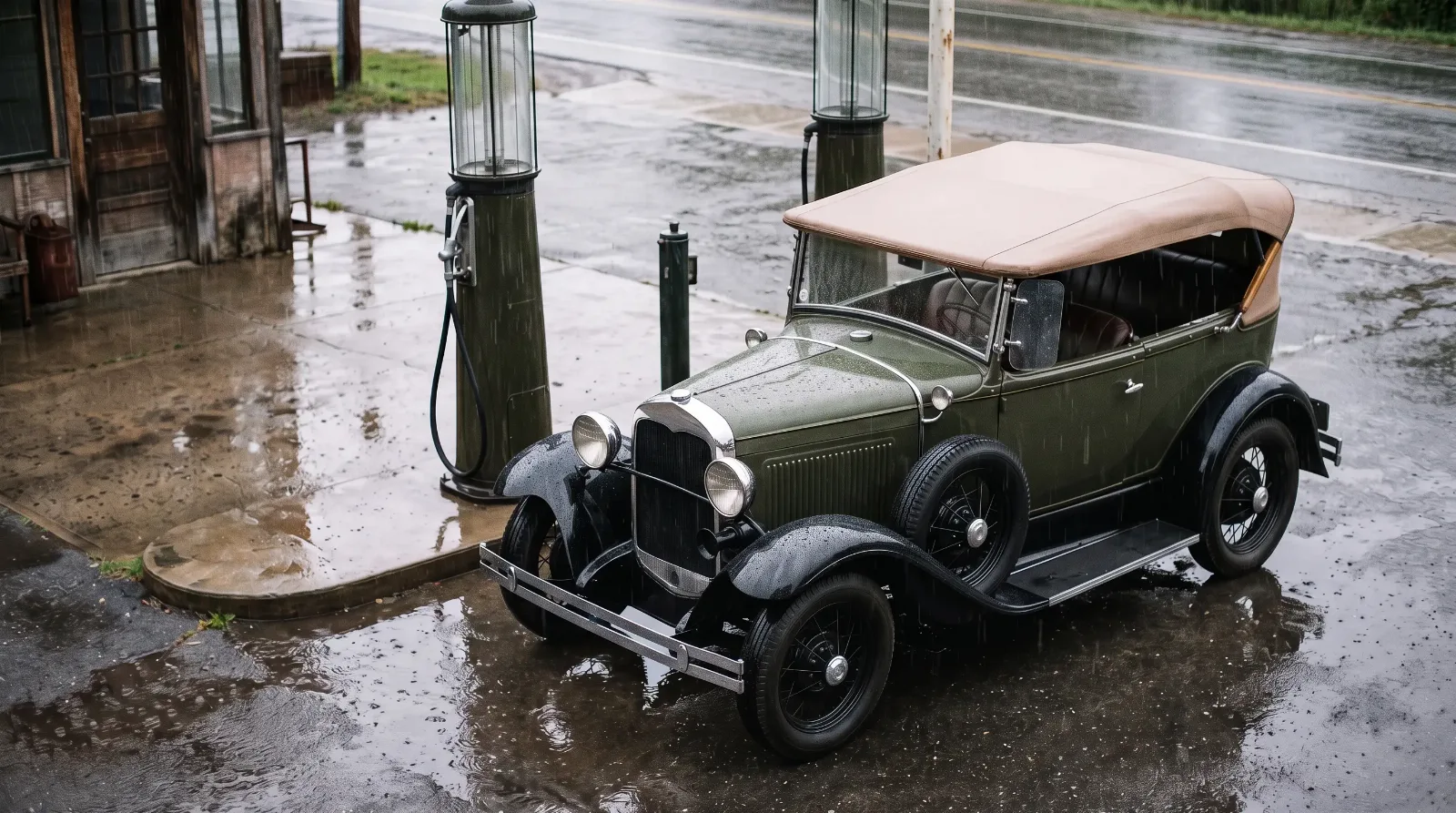
The Dillinger coupe is the clean example of value from provenance. In April 1934, after the raid on the Little Bohemia Lodge, Dillinger, Homer Van Meter and John Hamilton commandeered the coupe and its owner and drove off in it. The bullet damage was later patched for a role in the 2009 film Public Enemies. CNN put an ordinary 1930 coupe at about $13,000 at the time of the sale, so roughly $150,000 of the price was paid for the paper trail linking this one to 1934. The $165,000 also includes the buyer's premium on a $150,000 hammer price. That is also the risk. Provenance is only worth what its documentation can prove, and the day a story is challenged, the premium can go with it. A buyer at that level is buying an archive as much as a car.
Rarity is the second lever, and it is steadier. Ford built the passenger Model As in enormous numbers; you can read the production run in the Model A story. The low-volume bodies are another matter. The DeLuxe Phaeton, the station wagon, the Town Car and the commercial bodies were built in small runs, and the Town Car Delivery, at about 192 built in 1930 and 1931, is often called the rarest Model A body of all. I have no confirmed auction result for one.
"A story adds value until someone asks for the documents. A rare body adds value no matter who asks. If I had to choose which premium to pay for, I would take the body every time."
Marcus Feld
Condition is the third, and it works in the background. A concours-level restoration on a common Tudor will not reach phaeton money, but a poor phaeton will not reach it either. Discovery stories can lift a price too, although a well-documented, confirmed sale of a famous Model A barn find has not turned up in the record I trust; the barn finds piece covers what is known.
What an ordinary Model A brings
For perspective, the same aggregator puts the trimmed average for a 1930 Model A at $22,225, with a median of $20,000, and a 2026 year-to-date average of $32,607. The 1929 cars average $20,754 overall and $25,139 in 2026. The lower rows of the table, a 1930 car at $15,950 and a woody wagon at $18,150, sit right at that level.
That is the real market: deep, active and priced within reach of a working collector. It is also why the Model A is easy to sell. Liquidity is part of value, and few prewar cars have as many ready buyers. The flip side is that a common body rarely appreciates fast. The money is made, and lost, on condition and documentation, not on the badge.
How to read a big Model A sale
Before you quote a record, check four things. Is the car identified by body style and serial number? Is the sale tied to a named auction and lot? Is the figure the hammer price or the price with buyer's premium? And is the car still a stock Model A, or a rod that happens to carry a Model A title? Most headline numbers fail at least one of those tests.
Where the Model A sits in Ford's longer run, from the T to the V8, is laid out in the CCA Model T and Model A story. For valuation purposes, one point is enough to carry away. The record Model A is a car with a history you can prove, and it is a rare one.
Sources and notes
- CNN Money: Dillinger's getaway car sells for $165,000 (January 2010)
- Old Cars Weekly: Dillinger Ford now and then
- RM Sotheby's: 1930 Ford Model A DeLuxe Phaeton, Hershey 2014, lot 254
- Barrett-Jackson: 1931 Ford Model A woody wagon, Las Vegas 2016, lot 802
- RM Auctions: 1903 Ford Model A Rear Entry Tonneau, Hershey 2012, lot 189
- Conceptcarz: 1930 Ford Model A auction data
Related Reading
Have a
Ford Model A
for Sale?
Reach thousands of serious classic car collectors across the US.
Sell It Here →
Selling a classic? Here's how: compare the places to sell classic cars
Are You a Classic Car Dealer?
List your full inventory and connect with targeted classic car buyers.
Join as a Dealer →
#collector car market
#ford model a
#classic car auctions
#Model A phaeton
#Model A values
#most expensive Model A
#Dillinger

About the author
Marcus Feld
Accredited collector-car appraiser who reads the market through hammer prices, condition tiers and risk.
Related Listings - Ford Model A


Comments
Be the first to comment on this article.