
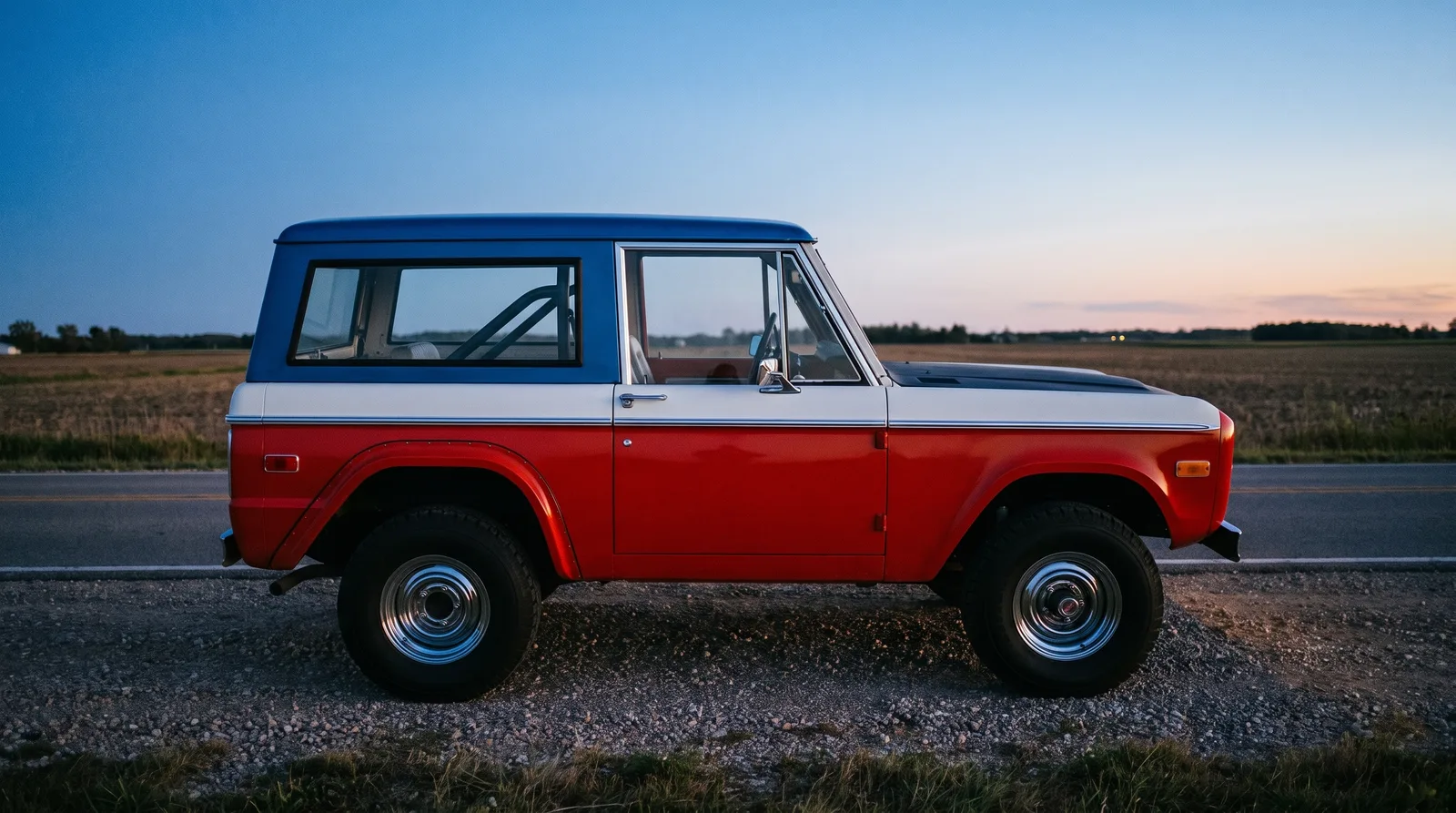
A guy named Ray pulled his Bronco into a Southern California cars and coffee last spring wearing the full costume, red white and blue paint, brush guard, roll bar, wide flares, the works. Within twenty minutes he had a crowd three deep asking if it was a real Baja Bronco. It was not. Ray built it himself over two winters in his garage, and he will tell anyone who asks exactly that, because the tribute scene around the Ford Bronco has grown into something with its own rules, its own pride, and its own occasionally prickly relationship with the handful of genuine originals still out there.
Car Features
7 min read
The Baja Bronco Tribute and Replica Scene
With original Baja Broncos scarce and expensive, a whole tribute scene has grown up around recreating the look, and the honest builders in it treat disclosure as a point of pride.
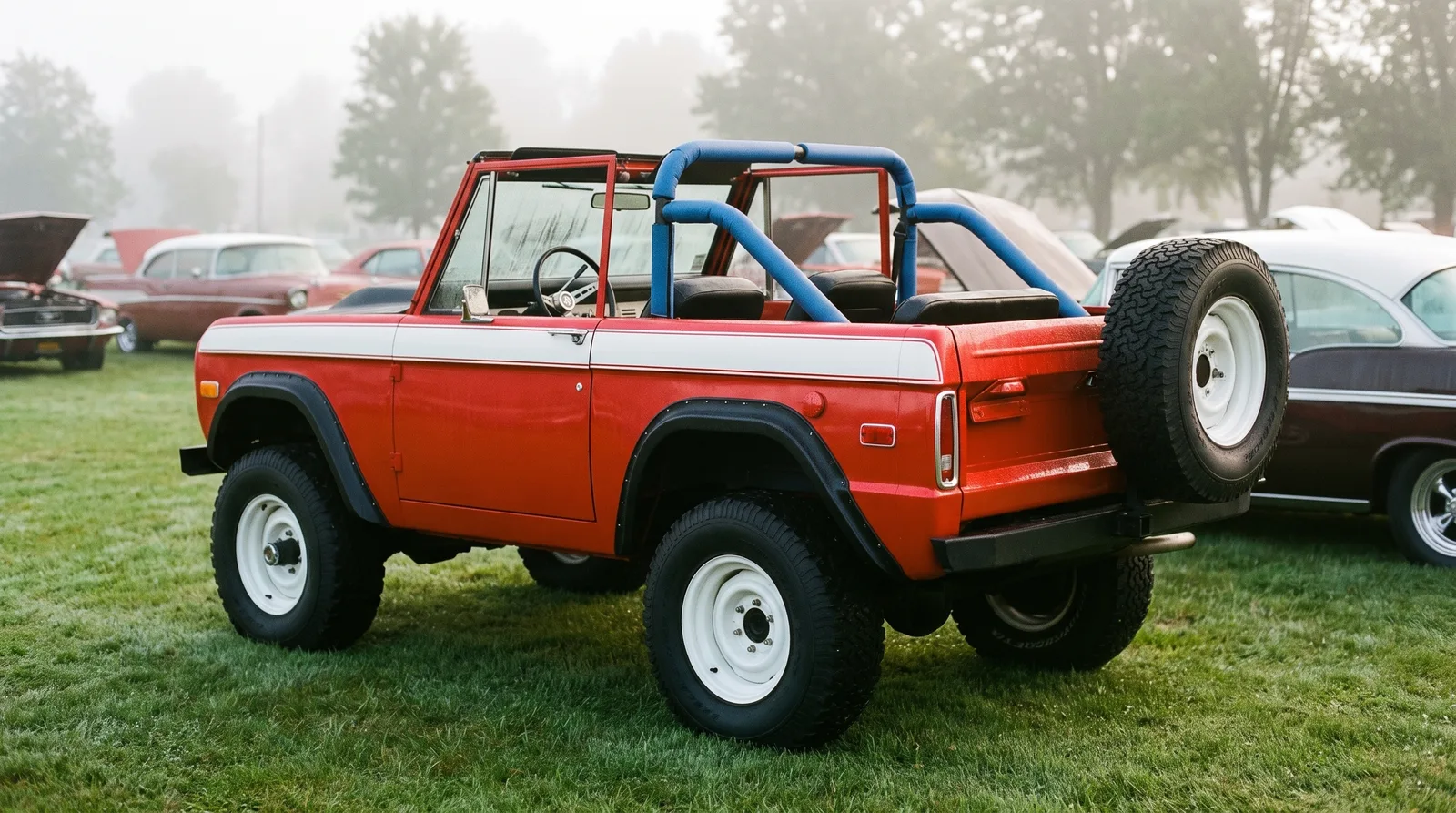
A legend too good not to copy
The original Baja Bronco special edition, sold through Ford dealers in the early 1970s in cooperation with Bill Stroppe's shop, only existed for a few years and in relatively small numbers. That scarcity, combined with a look pulled straight from actual desert race trucks, created exactly the conditions that produce a healthy replica culture. Enough people wanted the look and the story that a genuine market emerged for builders who could recreate it, whether from a rough early Bronco donor or, more controversially, from a later restomod chassis dressed up to look period correct.
For the full account of how the original package came together, including Stroppe's role in shaping it, where this started lays out that history properly. The tribute scene exists because that original story was compelling enough to want to relive, even for people who could never afford or find a real one.
The builders who do it right
Not every tribute Bronco is a quick paint job over a stock truck. The best replica builders research original color codes, panel gaps, roll bar geometry, and even the specific brush guard design used on the factory cars, and they will tell you upfront that what they built is an homage, not an original. That distinction matters enormously in this hobby. A well documented tribute, built honestly and sold honestly, holds real value among enthusiasts who want the look without paying original-truck money. A tribute passed off as genuine, intentionally or through sloppy research, poisons trust for everyone else building in the same style.
I have talked to enough of these builders to know the good ones take real pride in getting details right that most buyers would never notice. The correct stitch pattern on a roll bar pad. The right font on a decal. The way the fender flares were riveted rather than bolted. It is a strange kind of craftsmanship, recreating someone else's design faithfully rather than putting your own stamp on a build, but the people who do it well earn real respect in the community for it.
Where the market draws the line
Auction houses and serious collectors have gotten sharper about this distinction over the years, partly because the price gap between a documented original and a well-built tribute has grown wide enough to tempt bad actors. A genuine Baja Bronco with factory paperwork and a traceable history commands a real premium. A tribute, however good, sells for a fraction of that even when it is difficult to tell apart visually. The difference lives entirely in the paper trail, not the truck sitting in front of you.
That has pushed the honest end of the replica scene toward transparency as a selling point rather than a liability. Builders who keep build logs, receipts, and photo documentation of the transformation process are not just protecting future buyers, they are protecting the hobby's reputation. A tribute Bronco sold with a clear paper trail showing exactly what it is tends to hold its value better over time than one sold vaguely, because buyers trust sellers who are upfront about what they are getting.
"The best tribute builders I know are almost more careful about disclosure than the guys selling originals. They know exactly what happens to their reputation the first time someone catches them being cute about it."
- Patrick Walsh
Why the tribute scene keeps growing
Part of what keeps the replica scene alive is simple math. Original Baja Broncos rarely come up for sale, and when they do, the prices reflect both the truck's rarity and its documented racing pedigree. A tribute build gives an enthusiast a way to own the look, the presence, and a lot of the driving experience without competing for one of a handful of surviving originals. That is not a lesser path into the hobby, it is a different one, and the community has largely made peace with that as long as everyone stays honest about what they are looking at.
There is also something to be said for the build process itself. Restoring or fabricating a tribute truck from a rough donor teaches an owner more about how the original package went together than simply buying a finished original ever could. Guys like Ray did not just buy a look, they learned the truck from the frame up, and that knowledge shows every time they talk about their build at a show.
If the tribute scene has you thinking about starting your own project, the first step is finding the right donor truck, ideally a solid early Bronco with good bones rather than one already dressed up incorrectly by a previous owner. You can browse what is currently on the market and shop classic Bronco listings to find a starting point worth putting the work into. Whether you end up with a period correct tribute or something closer to a personal interpretation, the Baja look has proven durable enough that it will still be turning heads at cars and coffee events for years to come.
What tribute owners get wrong early on
The most common mistake I see with first-time tribute builders is chasing the paint scheme before addressing the mechanical foundation underneath it. A truck can wear the colors perfectly and still drive like a tired thirty year old utility vehicle if the suspension, brakes, and drivetrain have not been sorted first. The original race and street Baja trucks were built to actually perform, not just look the part, and a tribute that skips the substance behind the styling ends up feeling hollow the first time it leaves a parking lot.
The builders whose trucks Ray and I both admire tend to work in the opposite order. They get the mechanicals right first, drive the truck enough to trust it, and only then start layering in the cosmetic details that sell the look. It takes longer and it is less satisfying in the short term, since a bare truck with good bones does not photograph nearly as well as a freshly painted one. But it produces a tribute that actually earns its presence rather than just borrowing it, and that is the difference between a costume and a genuine homage to a truck that once had to survive five hundred miles of Mexican desert without stopping.
Sources and notes
Related Reading
Have a
Ford Bronco
for Sale?
Reach thousands of serious classic car collectors across the US.
Sell It Here →
Selling a classic? Here's how: where to sell your classic car online
Are You a Classic Car Dealer?
List your full inventory and connect with targeted classic car buyers.
Join as a Dealer →

About the author
Patrick Walsh
Automotive journalist covering classic car shows, events, and the enthusiast community across North America.
Related Listings - Ford Bronco
Comments
Be the first to comment on this article.