
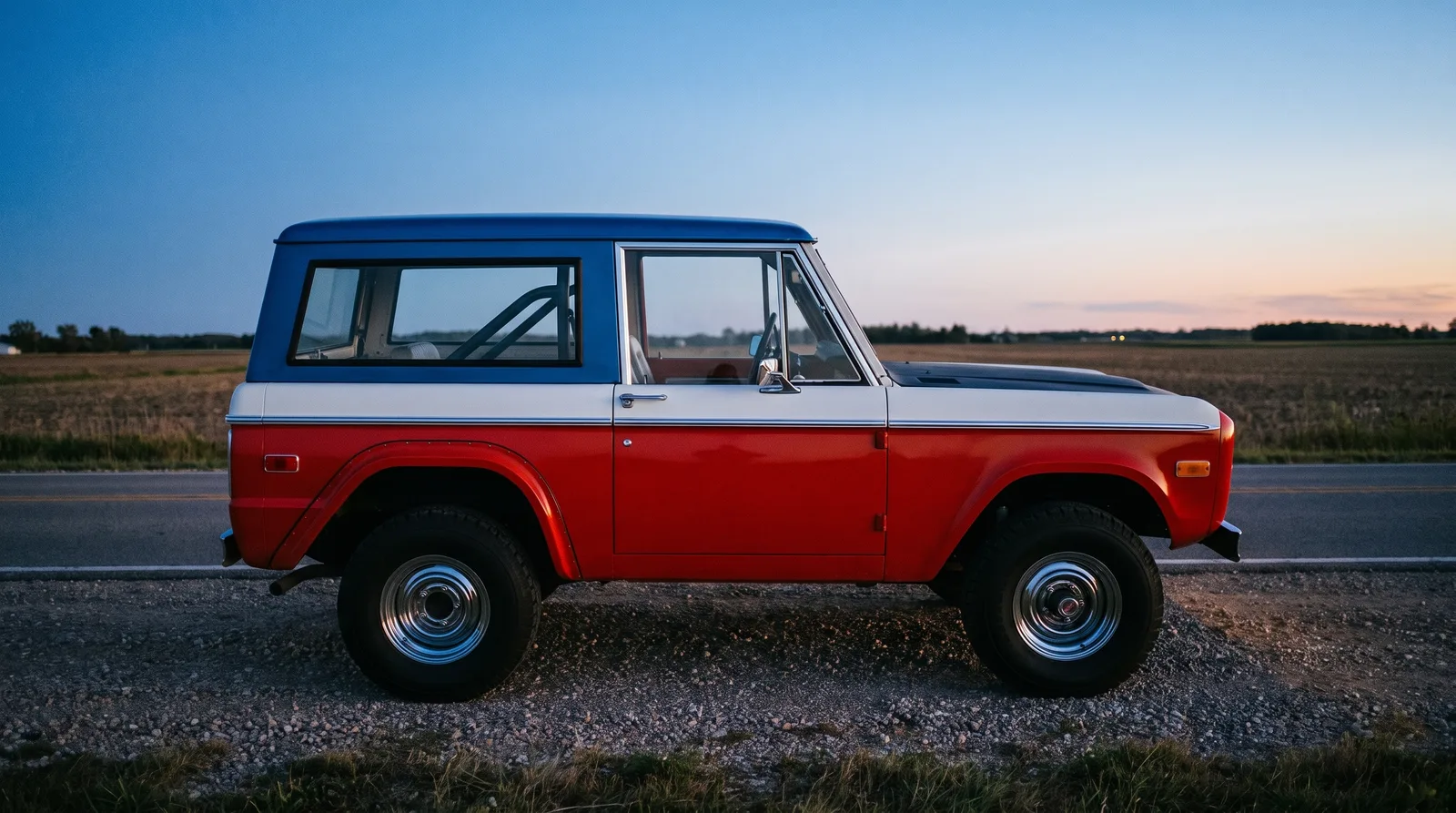
Ford Bronco Baja Bronco value has become a genuine six-figure conversation over the past several years, and that is a striking outcome for a truck that started life as a dealer-installed dress-up package rather than a purpose-built race car. Condition, documentation, and honest provenance separate the trucks trading at real premiums from the ones that simply wear similar graphics, and the gap between those two categories is where most of the risk in this market sits.
Car Features
7 min read
The Six-Figure Baja Bronco Market
Genuine Baja Bronco value depends on documentation as much as condition, and the gap between a proven example and a tribute truck is significant.
Why this specific variant commands a premium
The Baja Bronco package traces its visual identity directly to Bill Stroppe's Big Oly race truck, and that connection alone does most of the heavy lifting in the market. Buyers are not just purchasing a well-optioned early Bronco. They are purchasing a tangible link to a specific, well-documented chapter of desert racing history, and that story sells at a premium that a mechanically identical standard Bronco simply does not command.
Scarcity compounds the story-driven demand. Because the package was applied through dealers rather than tracked on a dedicated factory production line, surviving genuine examples are limited, and low supply against steady collector demand pushes prices upward in a way that is fairly predictable from a market standpoint. What makes this segment harder to appraise than most is the documentation gap. A standard early Bronco's originality is comparatively easy to verify against widely understood factory specifications. A Baja Bronco's authenticity often comes down to dealer records, period photographs, or a chain of ownership that may or may not have survived intact.
What actually drives price within the segment
Not every Baja Bronco commands the same number, and the spread between a documented, well-preserved example and a questionable one is significant. Buyers evaluating value should weigh several factors together rather than any single detail in isolation.
| Condition and documentation tier | General market position |
|---|---|
| Fully documented, matching-numbers, low-mileage survivor | Top of the market, generally into six figures at major auctions |
| Documented but driven and restored to high standard | Strong premium over a standard early Bronco, often reaching well into six figures for the best examples |
| Partial documentation, some original components replaced | Meaningful discount versus fully documented trucks, still above standard Bronco pricing |
| Undocumented or tribute-graphics truck claiming Baja status | Priced closer to a well-optioned standard early Bronco, regardless of seller claims |
The middle two tiers are where most real transactions happen, and where buyers most need to bring genuine scrutiny rather than enthusiasm to a purchase decision. A truck presented as fully documented but lacking the paperwork to prove it should be priced, and treated, as a partial-documentation example until proven otherwise.
The risk side of the equation
Every appraisal is really a risk assessment, and the Baja Bronco segment carries risks that a standard early Bronco buyer does not need to weigh nearly as heavily. Fraud risk sits at the top of that list. The value gap between a genuine Baja Bronco and a well-executed tribute is large enough to tempt sellers into overstating originality, whether through honest confusion about a truck's history or more deliberate misrepresentation. Liquidity risk matters too. This is a thin market with relatively few transactions each year, which means a buyer who overpays or who buys a truck with documentation problems may find it genuinely difficult to exit the position at a price that reflects what they paid.
For a fuller picture of the racing history that underpins this entire market segment, including the Stroppe shop that originated the Baja look, the full story is worth reading before evaluating any specific truck's asking price. Understanding the source material makes it considerably easier to judge whether a given example's claimed provenance actually holds together.
"Value in this segment is not really about the flares and the paint. It is about how many people before you can vouch, in writing, that the truck is what the seller says it is."
- Marcus Feld
How this segment compares to the wider classic Bronco market
It is worth placing the Baja Bronco's pricing in context against the broader early Bronco market it grew out of. A well-kept standard early Bronco has itself appreciated substantially over the past decade as collector interest in the platform has broadened well beyond dedicated off-road racing enthusiasts. The Baja Bronco premium sits on top of that broader appreciation rather than existing in isolation, which means a genuine example benefits from two separate tailwinds, general classic Bronco demand and the specific desert racing story attached to the package.
That layered demand is part of why the segment has held value relatively well even as broader collector car markets have seen more volatility. A buyer is not purchasing a single-story asset dependent entirely on one narrow niche of interest. They are purchasing exposure to the classic Bronco market generally, with an added layer of scarcity and story on top. That does not eliminate the appraisal risk discussed above, but it does explain why serious collectors continue to treat documented examples as worth the additional diligence required to buy one with confidence.
A practical read for buyers
Anyone entering this market with real money on the table should budget for independent verification before closing a deal, not after. That means seeking out any available dealer records, cross-referencing period photographs where they exist, and being honestly skeptical of a seller who cannot produce documentation but insists the truck is genuine. None of that removes all risk from a six-figure purchase, but it meaningfully narrows the gap between what a buyer believes they are purchasing and what they can actually prove they own.
For buyers who decide the documentation risk and premium pricing of a genuine Baja Bronco is not worth it, a well-kept standard early Bronco delivers most of the same driving experience and historical connection at a fraction of the cost and with far less appraisal complexity. Either way, the starting point is the same: look carefully before committing, and browse classic Bronco for sale listings with condition and documentation, not just the graphics package, as the deciding factor.
Where this market goes from here
Collector interest in the classic Bronco platform generally shows no real sign of cooling, and the Baja Bronco's specific story, tied to a genuine racing legacy rather than a marketing invention, gives it durability that some other niche collector segments lack. Trends built purely on nostalgia or a passing style tend to fade as tastes shift. A segment anchored to a documented, verifiable piece of motorsport history has more staying power, because the underlying story does not depreciate the way fashion does.
That said, appraisers should never treat any collector segment as immune to correction. A broader downturn in classic vehicle values, a shift in which eras and styles collectors are chasing, or simply a wave of previously undocumented trucks surfacing with questionable paperwork could all put pressure on pricing in ways that are hard to predict precisely. Buyers entering this market today should do so with a clear understanding that they are paying for both a driving experience and a documented piece of history, and that the second half of that equation carries real diligence requirements that a standard classic car purchase does not.
Sources and notes
Related Reading
Have a
Ford Bronco
for Sale?
Reach thousands of serious classic car collectors across the US.
Sell It Here →
Selling a classic? Here's how: where to sell your classic car online
Are You a Classic Car Dealer?
List your full inventory and connect with targeted classic car buyers.
Join as a Dealer →

About the author
Marcus Feld
Accredited collector-car appraiser who reads the market through hammer prices, condition tiers and risk.
Related Listings - Ford Bronco
Comments
Be the first to comment on this article.