
Bill Stroppe was already a known name in racing circles by the time Ford handed him a stack of new Broncos in 1968, having built a reputation running Lincolns in the Carrera Panamericana and Mercurys on NASCAR ovals through the 1950s. What he did with the Bronco after that is the reason any ford bronco bill stroppe profile has to start with racing rather than the truck itself. Stroppe did not just prepare Broncos for competition. He proved the truck could take a beating in the harshest desert racing on the continent, and that proof shaped how the public saw the vehicle for the rest of its production run.
Car Features
7 min read
Bill Stroppe, the Man Who Made the Bronco Race
From Lincoln road racers to NASCAR Mercurys to the Baja desert, a profile of the builder who turned the Bronco into a proven racer.
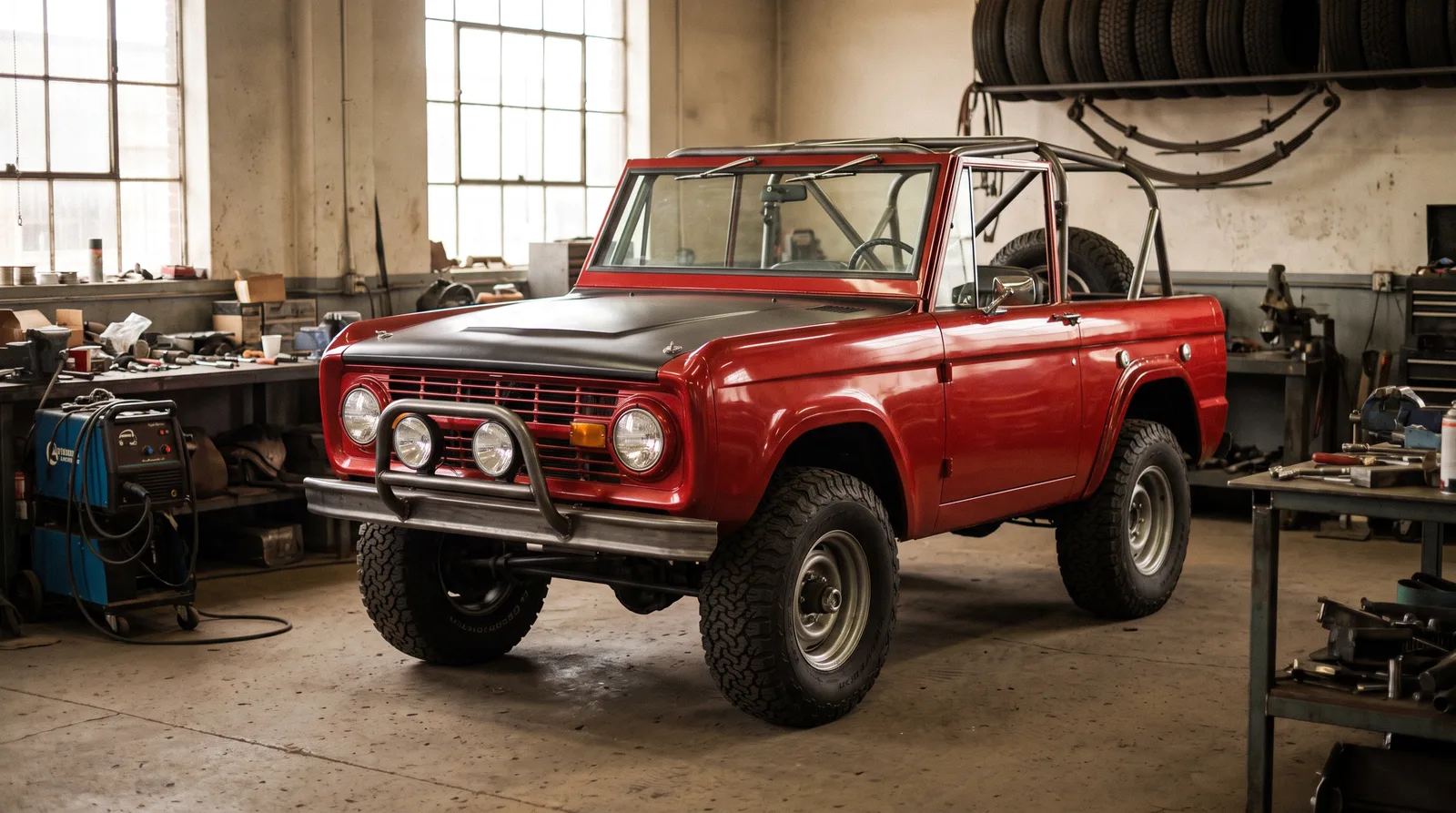
A hands-on instinct that shaped his approach
Stroppe came up around cars and mechanical work in a way that gave him an early feel for what a machine could actually survive versus what a spec sheet claimed it could survive, a distinction that matters enormously in desert racing where the gap between paper capability and real durability decides who finishes and who does not. His name first became known nationally when Lincolns he prepared with fellow tuner Clay Smith finished 1-2-3 in the stock car class at the Carrera Panamericana in Mexico in 1952 and 1953, back-to-back results that put him on Ford's radar for good. That practical, hands-on grounding shows up consistently across his career, from the road racing years through the NASCAR seasons and into the Bronco program. He was never purely a strategist working from a desk. He tested ideas against real terrain and real failure points, and that habit of trusting what actually broke over what should have worked in theory is a big part of why his prepared vehicles held up when competitors' did not.
From ovals and road races to the desert
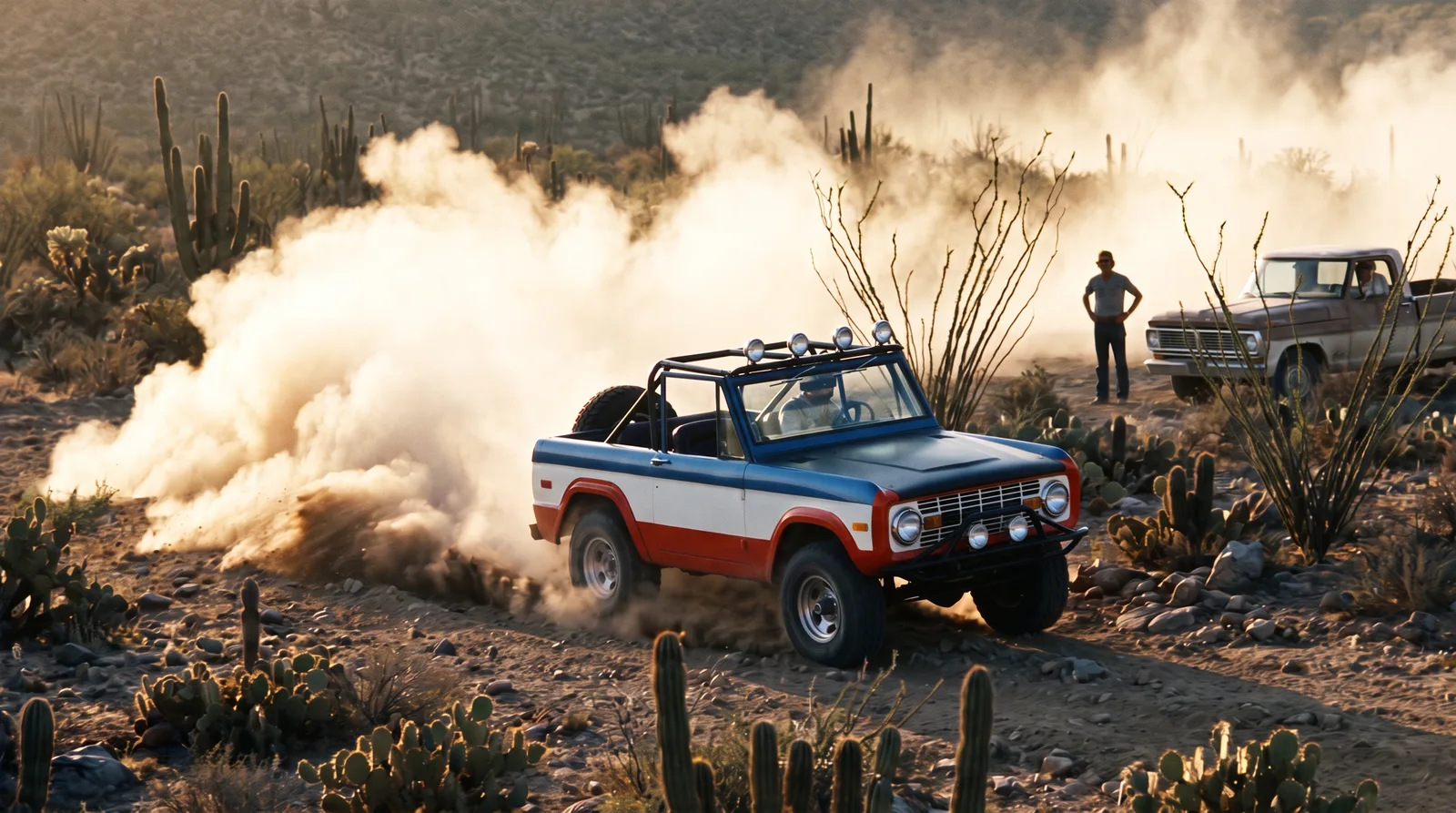
By the mid-1960s Stroppe had built his name on pavement, running factory-backed teams through some of the toughest road events in North America. The move to off-road desert racing was not an obvious next step for a man with that background, but Baja California in the late 1960s was drawing serious attention from manufacturers looking for a proving ground that would mean something to buyers. Ford wanted in, and Stroppe was the builder they trusted to make it happen. He took the Bronco, a truck Ford had designed for general-purpose off-road use rather than racing, and turned it into a competitive desert machine within a couple of seasons.
The partnership that defined an era
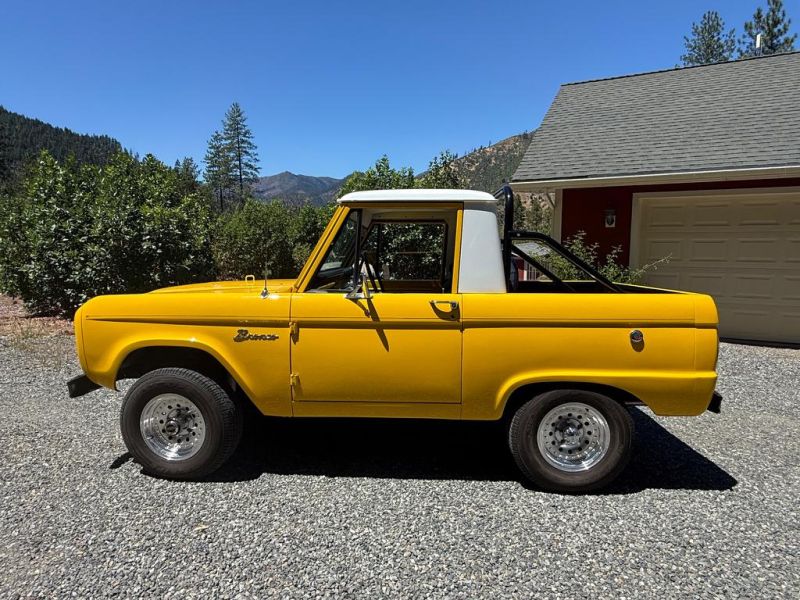
Stroppe's shop reworked Broncos with reinforced suspension, upgraded cooling, and the kind of durability thinking that comes from a builder who has watched enough cars break in competition to know exactly where the weak points hide. His prepared trucks ran the Baja 1000 and other Mexican desert races, and they won often enough that Ford leaned into the association hard, eventually licensing Stroppe's name for a limited-production street Bronco built to capture some of that racing image for buyers who would never see the Baja peninsula. That licensing deal is a rare thing in automotive history: a builder's competition reputation translated directly into a retail product carrying his own name on the fender.
Career highlights that led to the Bronco
| Era | What Stroppe did |
|---|---|
| 1952-1953 | Prepared Lincolns for the Carrera Panamericana road race in Mexico |
| Late 1950s-early 1960s | Ran factory-backed Mercury teams in NASCAR and USAC competition |
| Late 1960s | Began preparing Ford Broncos for Baja desert racing |
| 1971 onward | Licensed Baja Bronco street edition carried his name |
"Stroppe wasn't a marketing hire. He was a racer Ford happened to let sell trucks. The Baja Bronco carries his name because he actually earned it in the desert, not because a committee decided it sounded good."
- Patrick Walsh
A rivalry that pushed the program forward
Stroppe's Broncos did not race in a vacuum. Other prepared trucks and buggies, including entries backed by rival manufacturers, were pushing just as hard to prove their own vehicles in the same brutal terrain, and that competition forced continuous improvement rather than a single breakthrough followed by years of standing still. Each season brought new failure points to solve, whether it was a suspension component that could not survive repeated high-speed impacts or a cooling system that could not keep pace with sustained desert heat over hundreds of miles. Stroppe's shop treated every race as new data rather than a victory lap, and that iterative mindset is a large part of why the Broncos his team fielded kept improving year over year instead of plateauing after an initial strong showing.
Why the connection still matters to collectors
A truck built or influenced by Stroppe's shop carries a documented competition pedigree that few other Bronco variants can claim, and that pedigree is a large part of why Baja-associated trucks sit at the top of the collector market today. Buyers are not just paying for two-tone paint and a badge. They are paying for a link to a specific person whose engineering decisions genuinely made the truck better suited to punishment than the stock version Ford sold across the rest of the lineup. For the deeper story of how that racing program actually unfolded, ford bronco baja history covers the races themselves in more detail than a builder profile has room for, and a related story digs into the Baja 1000 specifically.
The shop, not just the man
Stroppe rarely gets credit as an organization builder, but that part of the story matters as much as the racing results. His shop in Long Beach employed a rotating crew of fabricators, mechanics, and drivers who moved between programs, learning from one racing discipline and applying it to the next. The people who reinforced a Bronco's suspension for Baja in 1969 were often the same crew who had spent the previous decade solving durability problems on road racers and NASCAR ovals, which means the Bronco benefited from institutional knowledge that had nothing to do with off-road racing specifically. Durability is durability, whether the failure mode is a suspension component cracking on a banked oval or a control arm snapping on a rock field, and Stroppe's team carried that cross-discipline experience into every new vehicle they touched.
That crew culture also explains why the Stroppe name kept showing up on new projects for decades after the original Baja Bronco program wound down. Builders who came up under Stroppe went on to run their own shops, and more than one competitor in later Baja races could trace their approach directly back to techniques first worked out on Ford's behalf in the late 1960s. A profile of one man is really a profile of an entire lineage of desert racing know-how that happened to start with a Bronco parked in a Long Beach shop.
The legacy beyond one street edition
Stroppe's influence on the Bronco outlived the limited run of street trucks bearing his name. The durability lessons his shop learned in Baja fed back into how enthusiasts and later builders approached the platform, and the credibility he lent the Bronco in its early years helped the truck earn a reputation as a genuinely capable off-roader rather than just a stylish alternative to a Jeep. Few builders get a production vehicle named after them while they are still alive to see it succeed. Stroppe did, and the Bronco is remembered partly because he was willing to prove what it could do before anyone else believed it.
If that history has you interested in owning a piece of the Baja lineage, there are Broncos for sale now worth comparing against the documented Stroppe-era trucks discussed above.
Sources and notes
Related Reading
Have a
Ford Bronco
for Sale?
Reach thousands of serious classic car collectors across the US.
Sell It Here →
Selling a classic? Here's how: where to sell your classic car online
Are You a Classic Car Dealer?
List your full inventory and connect with targeted classic car buyers.
Join as a Dealer →

About the author
Patrick Walsh
Automotive journalist covering classic car shows, events, and the enthusiast community across North America.
Related Listings - Ford Bronco




Comments
Be the first to comment on this article.