
Stand at any Bronco show and say the phrase "early Bronco" out loud, and watch a small crowd form to argue about what you just said. One owner points to their boxy 1966. Another insists a 1976 counts just as much. A third, standing next to a 1978, gets quietly ignored by both. The ford bronco early bronco definition is one of the most contested pieces of terminology in the entire hobby, not because anyone is confused about which trucks exist, but because the word "early" is doing more work than most people realize, and different generations of owners have inherited different versions of what it means.
Car Features
6 min read
What Enthusiasts Mean by Early Bronco
Why the term early Bronco specifically means the uni-body 1966 to 1977 first generation, and why confusing it with later trucks costs buyers.
The definition most collectors actually use
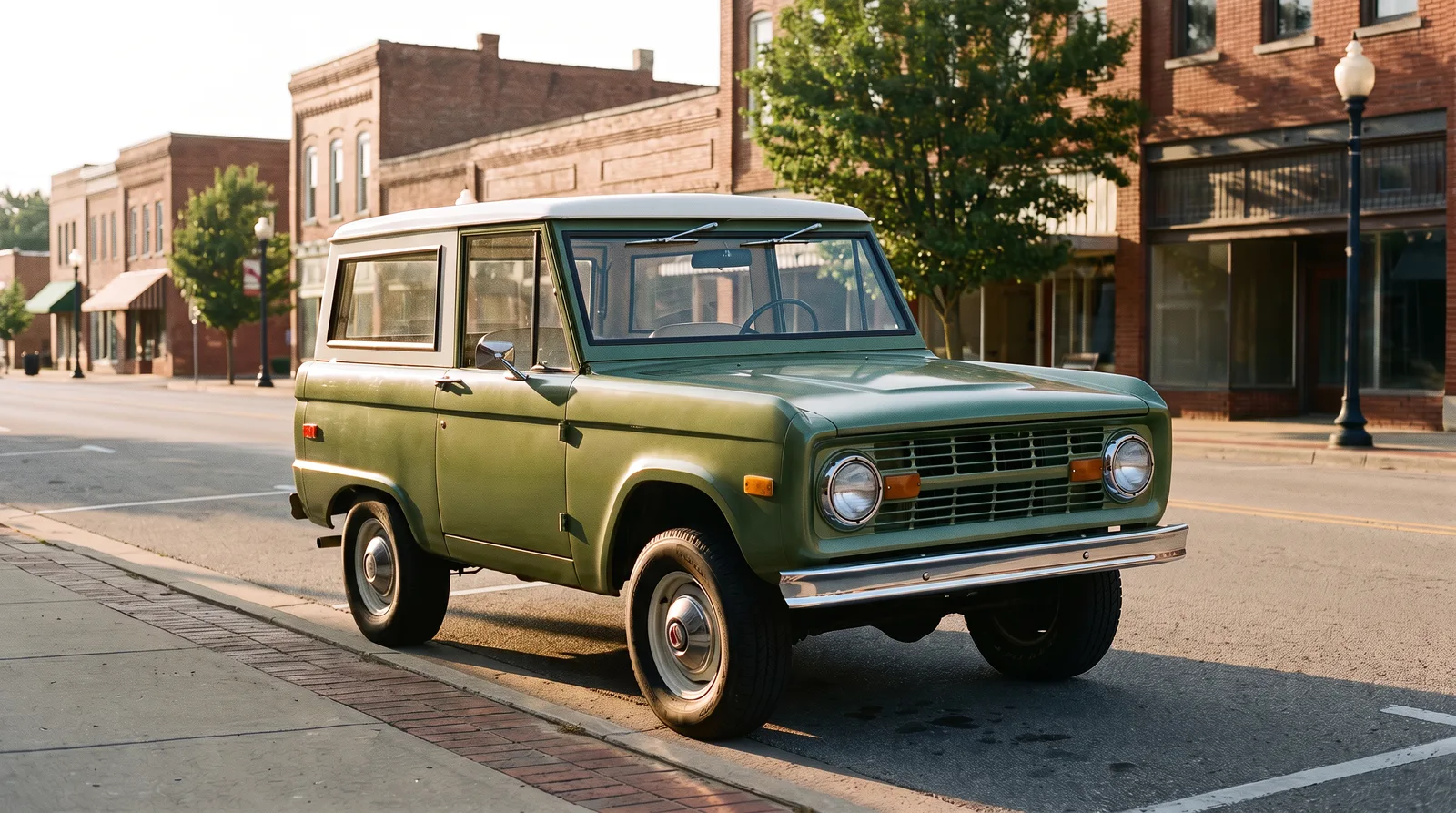
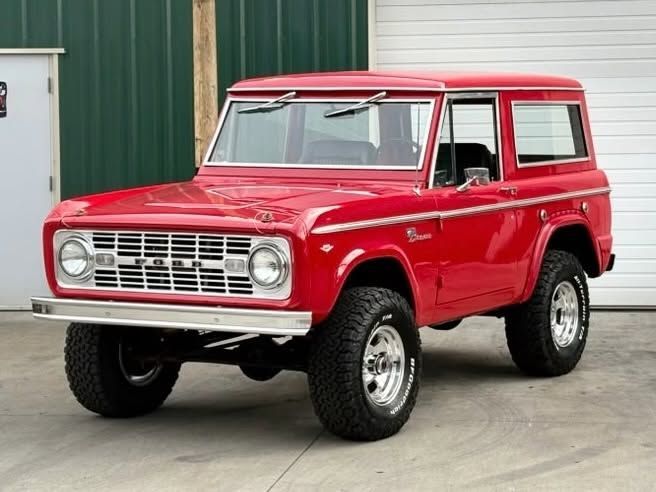
Among people who buy, sell, and restore these trucks for a living, "early Bronco" almost always refers specifically to the uni-body first generation Ford built from 1966 through 1977. That is the truck with the compact, boxy proportions, the flat glass, and the uni-body construction that Ford abandoned when it moved to the larger, body-on-frame second generation for 1978 and 1979. Inside that eleven-year run there is further stratification, with 1966 and 1967 treated as the purest first-year trucks, the late 1960s as the leaf-rear, drum-braked trucks before running updates like the larger fuel tank arrived, and 1971 through 1977 as the mature, most-produced version of the same basic design (the coil-sprung front axle itself was part of the Bronco's design from the 1966 launch). But all of it, the whole eleven years, falls under the early Bronco umbrella by the collector community's working definition.
Readers who want the full account of how that eleven-year run unfolded should read the first generation bronco history, which traces every meaningful change across the era in detail.
Where the confusion actually comes from
The disagreement rarely comes from inside the hobby. It comes from outside it, specifically from casual sellers and general audiences who use "early" loosely to mean anything old, sometimes stretching it to include the boxier 1978 and 1979 big Broncos, or even early examples of the 1980 through 1996 full-size trucks. Those later Broncos are legitimately classic vehicles in their own right, but they share almost nothing with the uni-body first generation beyond the name and the general concept. A 1979 Bronco rides on a full frame borrowed from the F-150. A 1966 Bronco does not. That is not a minor technical footnote. It is the entire reason the "early Bronco" label exists as a separate category instead of just meaning "old Bronco."
Why the definition matters for buyers
This is not just a semantic argument that enthusiasts enjoy having at swap meets. It has real consequences for anyone shopping. A seller listing a 1979 truck as an "early Bronco" is, whether they know it or not, describing a mechanically and structurally different vehicle than what most serious buyers are picturing when they search that term. Parts do not interchange the same way. Values do not track the same way. And the ownership experience, from ride quality to visibility to how the truck handles off pavement, differs enough that conflating the two generations sets buyer expectations in the wrong direction before a single question gets asked.
"I watched a buyer nearly walk away from a genuinely excellent 1975 because a dealer two lots over had a 1979 mislabeled as early. He thought he was overpaying. He wasn't. He just didn't know the two trucks weren't the same thing."
- Patrick Walsh
How the terminology settled over time
The early Bronco label did not exist in this precise form when Ford was still building the trucks. It emerged later, largely through club culture and the specialty parts industry, as a practical way to distinguish the uni-body trucks from everything that came after once the model line had grown to include three structurally distinct generations. Once specialty suppliers started stamping catalogs with "Early Bronco parts" to separate their inventory from big Bronco and full-size Bronco parts, the phrase hardened into the standard the hobby still uses. It is a useful, functional definition even if it occasionally sparks an argument about whether a 1977 truck, mechanically closer in some ways to the 1978 that followed it than to the 1966 that started it, still belongs firmly in the club.
For a broader look at how that eleven-year window breaks down year by year, a related story lays out the specific running changes across the eleven-year first generation.
How the definition varies inside the hobby
Even within the group of people who agree that early Bronco means the 1966 through 1977 uni-body trucks, there are smaller, quieter disagreements about which of those years counts as the truest expression of the term. A vocal contingent treats only 1966 and 1967 as truly early, arguing that everything after the early-1970s running updates, including the larger fuel tank, represents a meaningfully different truck deserving of its own subcategory. A larger and generally more practical contingent treats the entire eleven-year run as one continuous family, acknowledging the running changes without breaking the group apart. Neither camp is wrong exactly. They are simply applying different levels of precision to the same underlying eleven years, and a new buyer benefits from knowing both exist before assuming everyone at a swap meet is using the term identically.
This internal variation rarely causes real confusion once a buyer understands the outer boundary, meaning the 1966 start and the 1977 finish. It mostly surfaces in casual conversation, when one owner describes their 1968 as "a real early Bronco" in a tone that implies a 1976 somehow counts less. Most dealers and serious sellers avoid this distinction entirely in listings, sticking to the broader eleven-year definition because it matches how the majority of the market actually searches and shops.
Why it is worth getting right
Getting the definition straight is not pedantry. It changes what a buyer should expect to pay, what parts they should expect to source, and what kind of truck they are actually bringing home. Anyone entering the market with the term "early Bronco" in mind should be picturing a boxy, uni-body truck built somewhere between 1966 and 1977, not the larger frame trucks that followed. Shoppers ready to see what fits that definition can look at Broncos for sale now and use the terminology with confidence rather than guessing at what a listing actually means. Ask a seller directly which generation their truck belongs to, request the frame type in writing if a listing is ambiguous, and treat any casual use of "early" as a starting point for a question rather than a settled fact about the vehicle in front of you. It costs nothing to ask, and the answer will tell you more about what you are actually buying than the word "early" ever could on its own.
Sources and notes
Related Reading


Have a
Ford Bronco
for Sale?
Reach thousands of serious classic car collectors across the US.
Sell It Here →
Selling a classic? Here's how: compare the places to sell classic cars
Are You a Classic Car Dealer?
List your full inventory and connect with targeted classic car buyers.
Join as a Dealer →
#Ford Bronco
#early bronco
#first generation bronco
#Bronco history
#Bronco terminology
#classic Bronco buying

About the author
Patrick Walsh
Automotive journalist covering classic car shows, events, and the enthusiast community across North America.
Related Listings - Ford Bronco

Comments
Be the first to comment on this article.