
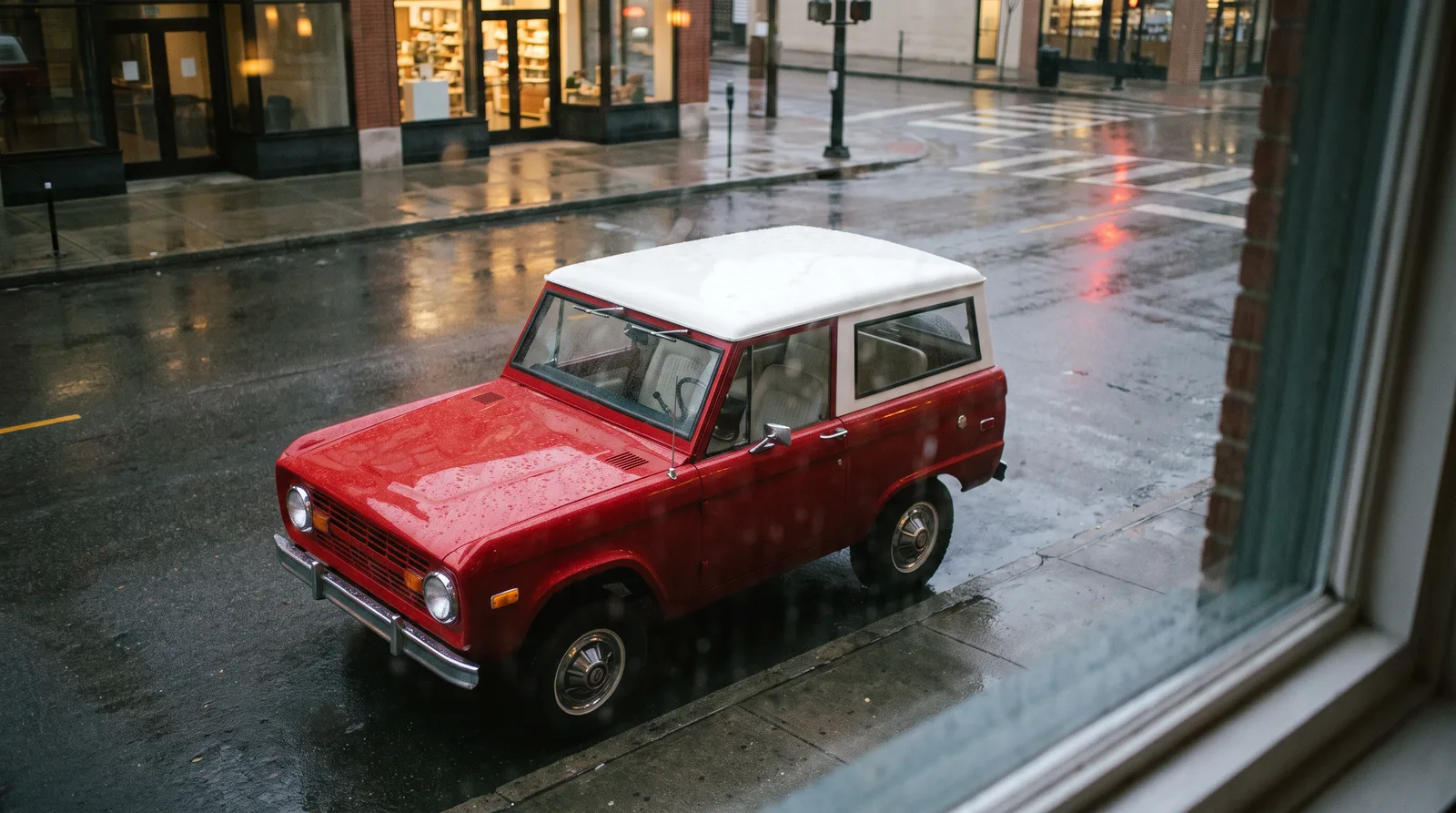
A precise ford bronco first gen timeline is harder to assemble than most published sources suggest, because Ford treated the Bronco as a running project rather than a fixed design across its eleven-year first generation. Between the August 1965 introduction of the 1966 model and the final trucks built for 1977, the uni-body Bronco absorbed a steady stream of running changes, some documented clearly in factory literature and some visible only in a careful comparison of surviving examples. Treating the truck as an artifact, examining what actually changed and when, is the only reliable way to build an accurate year-by-year record.
Car Features
7 min read
The Full First Generation Bronco Timeline
A researcher's year-by-year record of the uni-body first generation Bronco from its 1966 launch through the final 1977 model year.
Why a precise timeline is harder to build than it looks
Ford's own factory documentation from this period was not written with future historians in mind. Production bulletins, dealer service notices, and running change memos were internal working documents meant to keep assembly lines and parts counters current, not a tidy public record of design evolution. Many of these documents were never preserved with any long-term archival intent, and what survives today comes from a patchwork of dealer records, owner's manuals, factory parts catalogs, and the personal archives of collectors and clubs who saved material that Ford itself treated as disposable. Reconstructing an accurate timeline means cross-referencing these fragmentary sources against physical evidence on surviving trucks, since any single source in isolation can be incomplete or, in some cases, simply wrong about when a specific change actually took effect on the line.
1966 to 1967: the original specification
The Bronco launched for the 1966 model year as a compact, uni-body utility vehicle offered in wagon, half-cab, and open roadster body styles, a spread of configurations Ford would eventually narrow as demand sorted itself out. Power came from a 170 cubic inch inline six as the standard engine, with a 289 cubic inch V8 available as an option partway through the run. The front suspension used a coil-spring, radius-arm design from the very beginning, a detail that surprises buyers who assume all early Broncos rode on leaf springs front and rear. 1967 carried the specification forward with only minor running changes, making the first two model years the closest thing the Bronco has to an unaltered baseline.
For a complete account of how this design evolved across the full run, our complete history covers every meaningful year in sequence.
1968 to 1970: early refinement
These three model years brought incremental changes rather than a single defining update. Federal safety regulation began influencing interior details, including padded surfaces and revised switchgear, as the decade's new safety standards phased in across the American auto industry. Emissions equipment began appearing on certain engines toward the end of this period as well, an early sign of regulatory pressure that would intensify through the following decade. Mechanically, the Bronco of 1970 is recognizably the same truck as the 1966 original, which is part of why enthusiasts often group these early years together as a single design phase.
1971: the mid-cycle update
1971 stands out as the most consequential single year in the first generation's running changes. Ford enlarged the fuel tank from 13 gallons to 20 gallons, directly addressing a persistent owner complaint about range. By this point the open roadster body style, dropped after 1968, and the half-cab pickup, which would be dropped after 1972, were already on their way out of the lineup as Ford narrowed production to focus on the wagon configuration that had proven most popular with buyers. These changes mark a clear dividing line collectors use when discussing pre-1971 versus post-1971 early Broncos, since a truck built after this update carries meaningfully different equipment than one built before it.
1972 to 1976: the mature production years
This stretch represents the Bronco at its most refined within the uni-body architecture, with steady increases in available comfort options, revised trim, and engine offerings that shifted in response to tightening emissions requirements through the mid 1970s. Power output on some engines declined across these years as manufacturers adjusted to new regulatory testing methods, a pattern that affected the entire American auto industry and not the Bronco specifically. These are also, by production volume, some of the more commonly surviving early Broncos, since output climbed as the design matured and demand grew.
"People assume the earliest truck is automatically the most correct reference point. For documentation purposes, the 1976 truck often tells you more about what a working, everyday early Bronco actually looked like, simply because more of them survive in original condition."
- Sarah Whitfield
1977: the closing chapter
1977 marked the final model year for the uni-body first generation before Ford moved to the larger, F-150-based second generation for 1978. Production that year reflected a design at the very end of its run, carrying forward the accumulated refinements of the previous decade without any major final revision. Trucks from this year are frequently sought after specifically because they represent the last of the original architecture, a distinction that carries its own collector interest separate from any single mechanical feature.
Reading a truck against the timeline in person
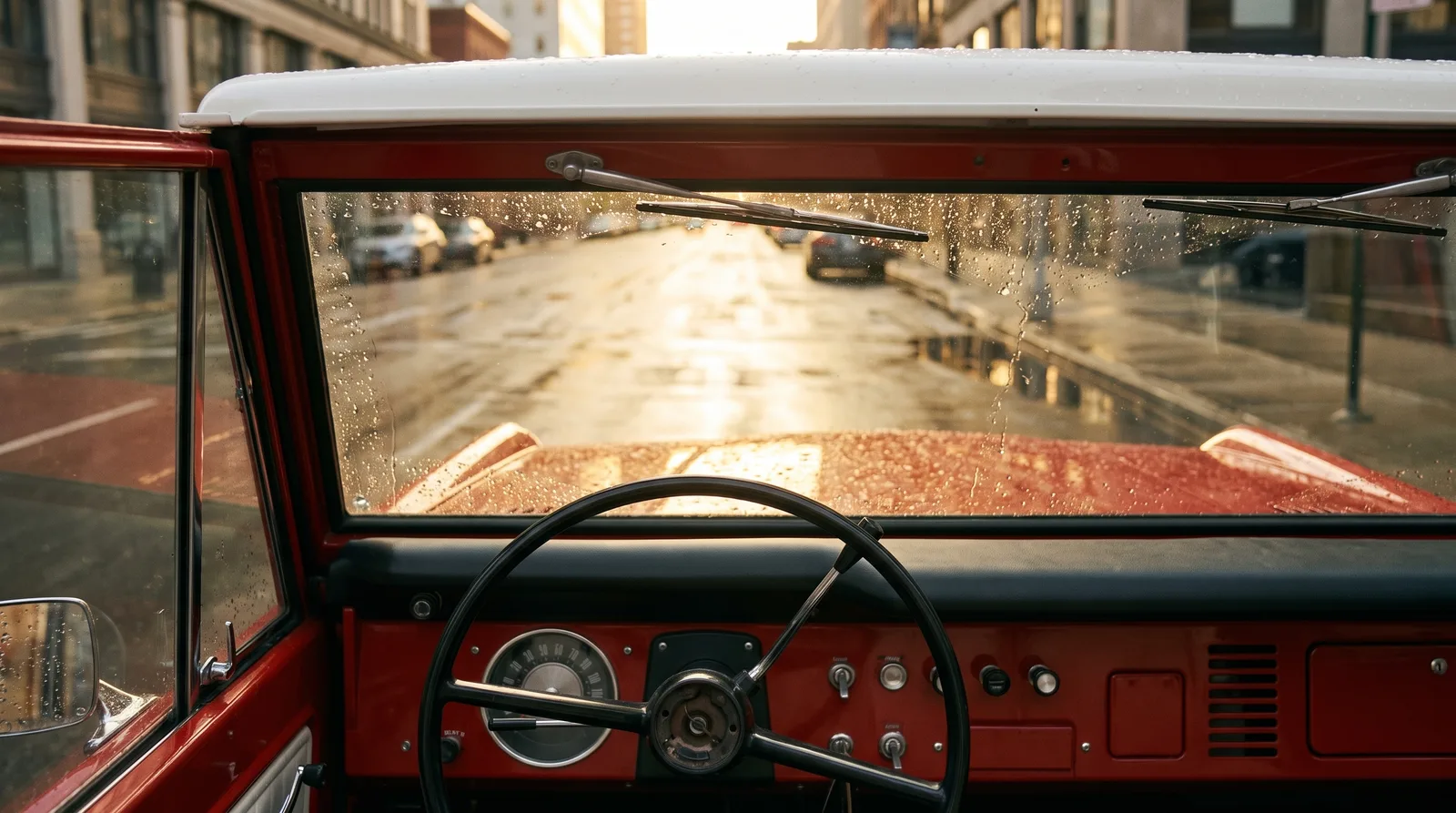
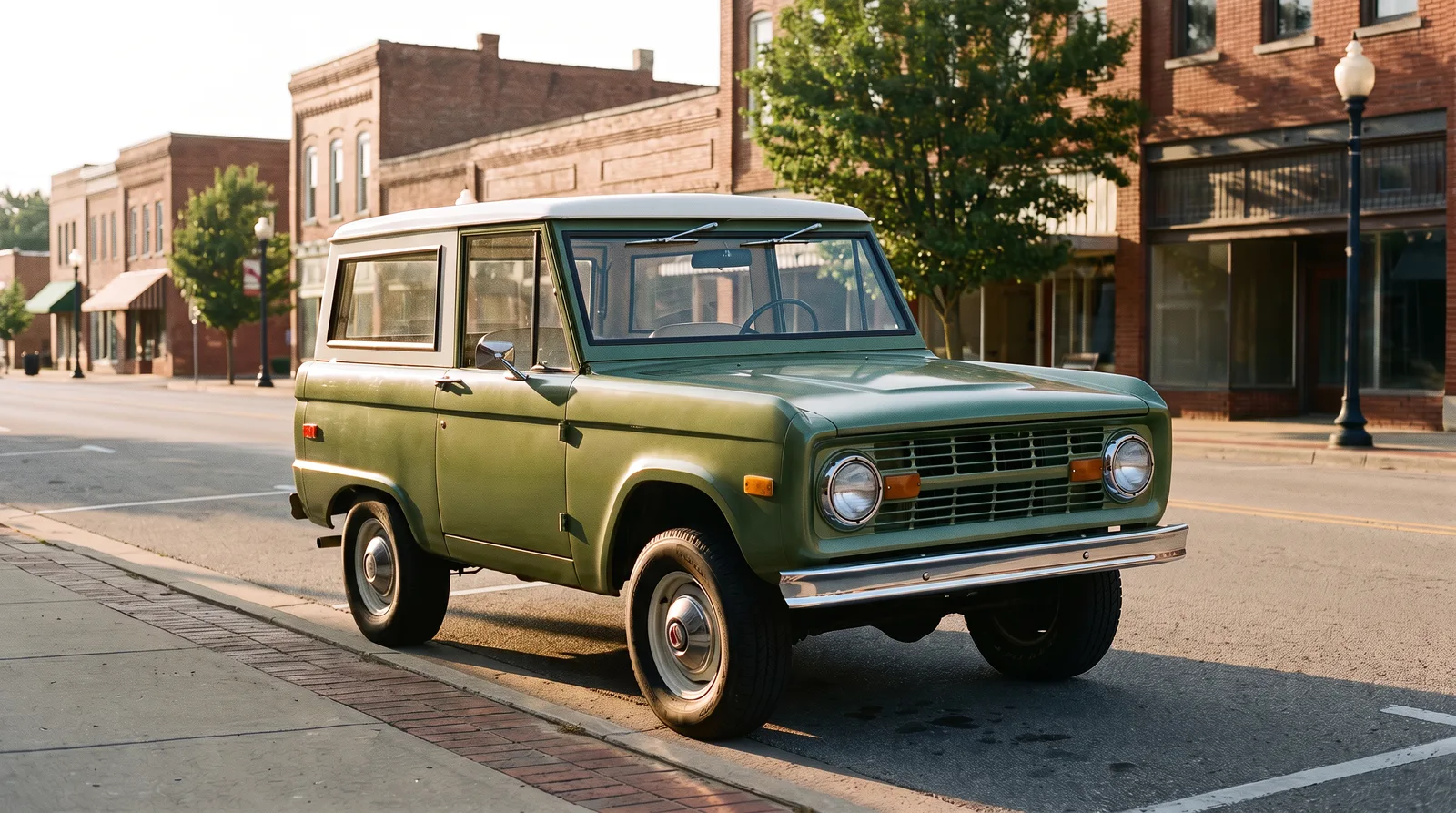
Dating an unrestored early Bronco by eye, rather than by documentation, requires knowing which specific features map to which specific years, and the process rewards patience over assumption. Fuel tank size is one useful marker, since a larger 20-gallon tank points to 1971 or later while a smaller original tank points to an earlier truck, though this is hard to check without lifting the vehicle. Body style offers another clue: the roadster disappeared after 1968 and the half-cab after 1972, meaning a wagon-body truck could theoretically be any year but a surviving roadster or half-cab narrows the range considerably. Trim details, dashboard switchgear, and emissions equipment under the hood offer finer resolution for narrowing a truck to a specific range of years within the mature 1972 to 1976 period, though these details require more specialized knowledge to read accurately.
None of these visual cues substitute for a proper VIN decode and title check, which remain the only fully reliable way to confirm a truck's actual model year. But for a buyer standing in front of a truck at a swap meet or a private seller's driveway, understanding these physical markers provides a useful first check against whatever the seller claims the year to be, and discrepancies between the visual evidence and the stated year are worth investigating before any money changes hands.
Reading the timeline as a whole
What the full first generation Bronco timeline shows, when assembled carefully from factory records and surviving examples rather than repeated secondhand summaries, is a truck that Ford treated as worth continuously improving rather than redesigning outright for over a decade. That continuity is precisely what makes documentation difficult and precisely what makes the early Bronco such a rewarding subject for careful research. Buyers interested in locating a truck from any specific point along this timeline can find a classic Bronco and use the year-by-year details above to evaluate what they are actually looking at, checking physical evidence against paperwork before ever discussing price. A truck whose visual details line up cleanly with its claimed year, across tank capacity, body style, and trim, is a far safer purchase than one where the seller's story and the metal in front of you tell two different accounts of the same eleven-year window.
Sources and notes
Related Reading
Have a
Ford Bronco
for Sale?
Reach thousands of serious classic car collectors across the US.
Sell It Here →
Selling a classic? Here's how: compare the places to sell classic cars
Are You a Classic Car Dealer?
List your full inventory and connect with targeted classic car buyers.
Join as a Dealer →

About the author
Sarah Whitfield
Third-generation classic car collector specializing in pre-war American and European coachbuilt automobiles. Researcher and concours enthusiast.
Related Listings - Ford Bronco
Comments
Be the first to comment on this article.