
There is a particular kind of quiet that settles over a parking lot when an early Ford Bronco pulls in next to a row of modern crossovers. Heads turn, not because the truck is loud or fast, but because its shape reads as instantly, almost stubbornly, correct. The ford bronco first gen design legacy is not an accident of nostalgia. It is the result of a small design team working under real constraints in the mid 1960s, and the fact that the resulting shape still looks right sixty years later says something about how good design gets made in the first place.
Car Features
7 min read
The Timeless Design Language of the Early Bronco
The early Ford Bronco's boxy, honest shape came from a rushed 1960s deadline, not a design lab, and that is exactly why it still looks right today.
A shape born from a deadline, not a dream
Ford did not set out to build an icon in 1965. The brief was narrower and more urgent than that. Jeep owned the compact off road market with the CJ-5, and International Harvester was carving out its own share with the Scout. Ford wanted a piece of that business, and it wanted it fast. The Bronco program moved from concept to production in roughly two years, a pace that forced the design team toward simplicity rather than away from it. Compound curves take time to tool and time to get right. Flat panels, straight beltlines, and a boxy greenhouse do not. What reads today as confident minimalism was, in large part, a schedule solving itself through restraint.
That does not diminish the achievement. Plenty of rushed designs from the period look rushed. The early Bronco does not. The proportions work because the wheelbase, at a tight 92 inches, kept the body short and the stance planted, and because the designers resisted the temptation to decorate a shape that did not need decoration. The result is a truck that looks like it was drawn with a ruler and then never second guessed.
Flat glass and honest hardware
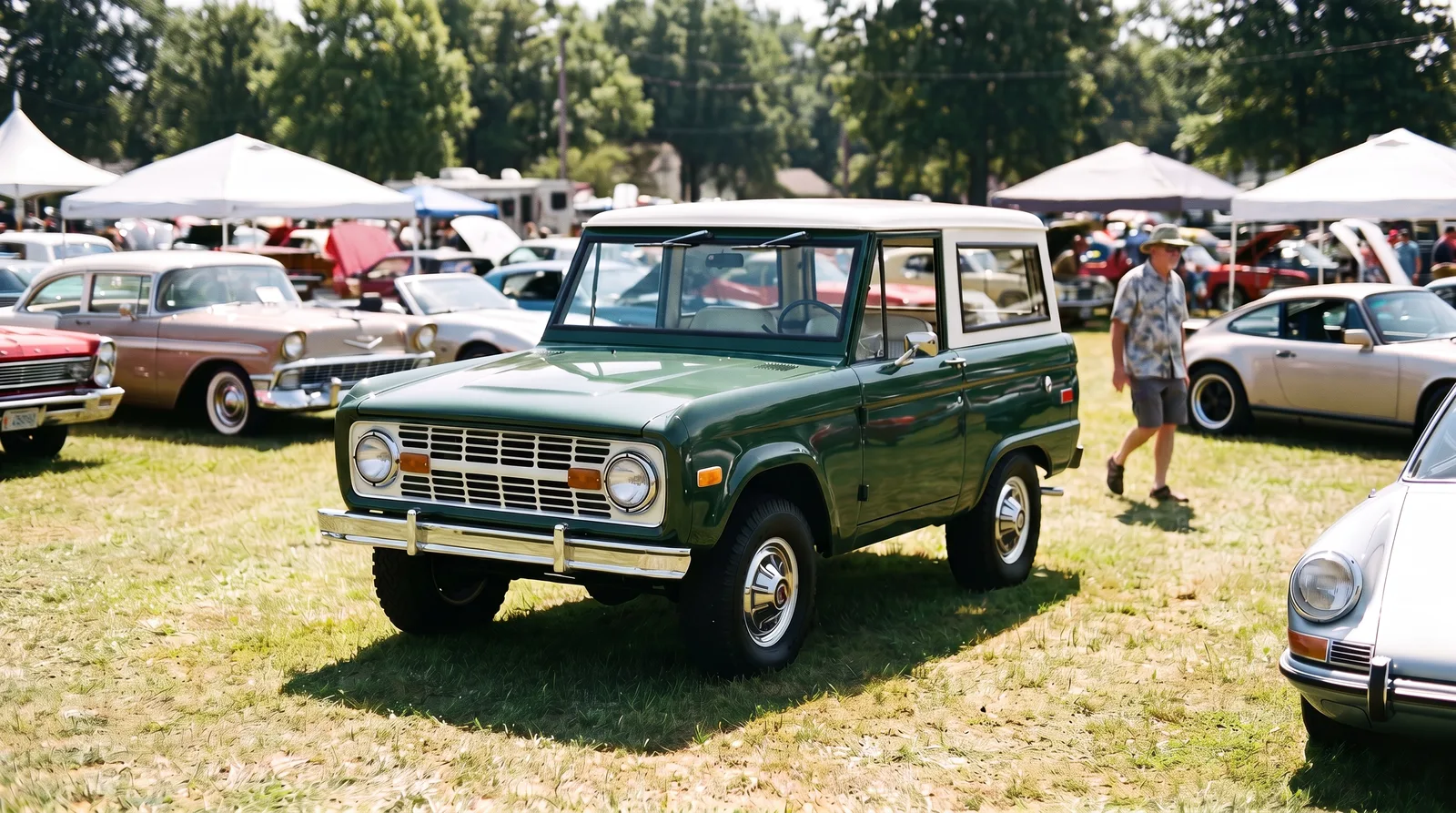
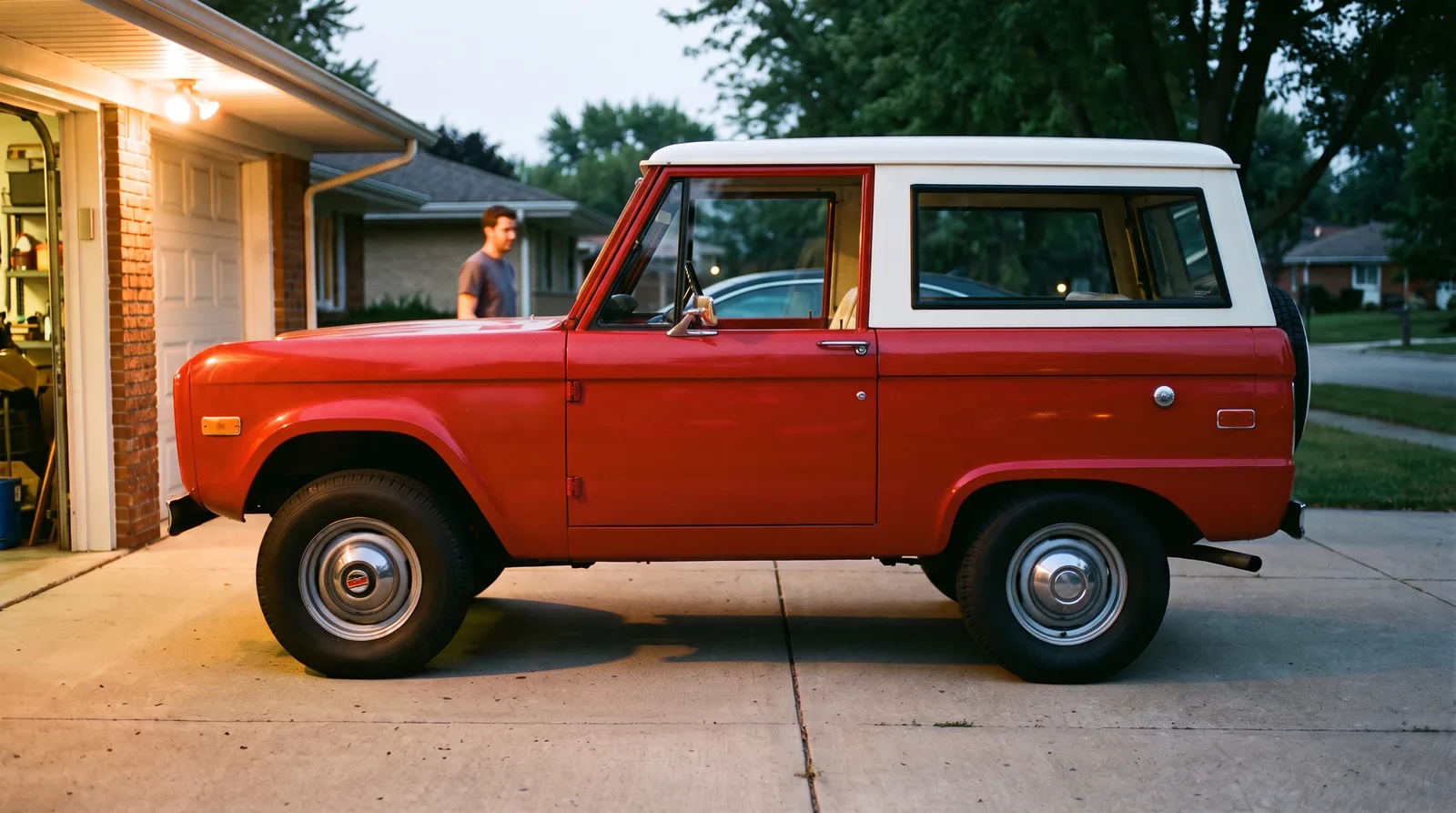
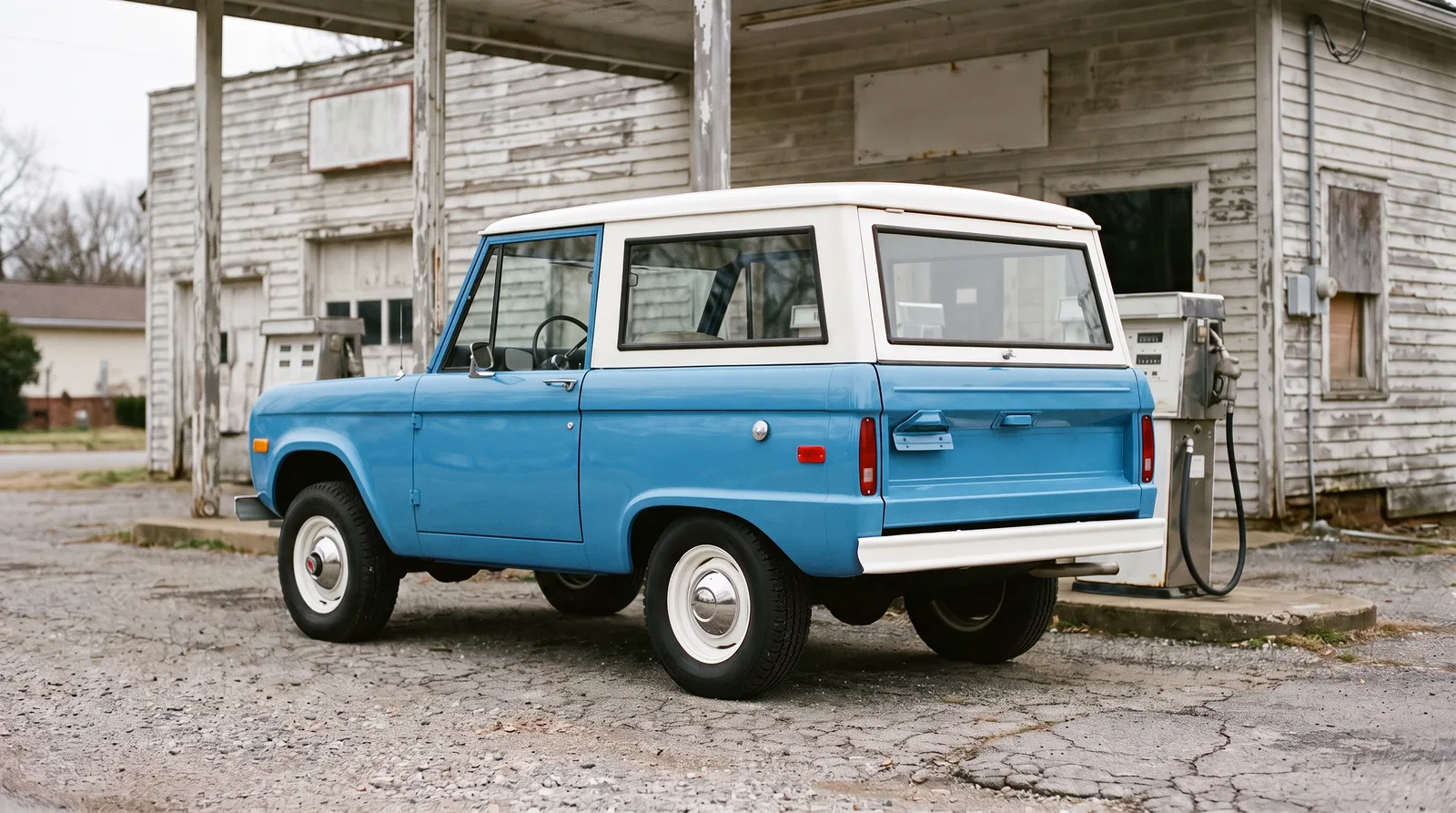
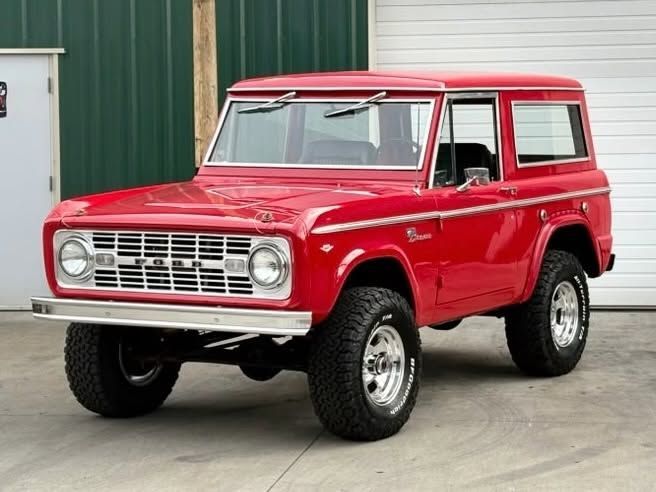
Walk around an unrestored first generation Bronco and the details tell the real story. The windshield is flat, not curved, because flat glass was cheaper and easier to source in volume, and because a flat windshield fit the boxy theme rather than fighting it. The door hinges sit exposed on the outside of the body rather than hidden inside the jamb, a choice born of manufacturing simplicity that also happens to look purposeful, almost architectural. Round wheel openings, generous in their cutout, exist for approach and departure angle rather than style, yet they soften the truck's edges just enough to keep it from looking like a shoebox.
Nothing on the body panel is there to be decorative. The rear tailgate is flat and functional. The hood is a single stamped panel with no character lines to speak of. Every visual cue traces back to a practical decision, and that honesty is exactly what later, more ornamental trucks lost. Designers who study the early Bronco today often point to this as the lesson: restraint reads as confidence, and confidence ages well.
Color as a second signature
If the shape is the Bronco's grammar, the paint is its vocabulary. Ford leaned into bold, saturated colors through the late 1960s and into the 1970s, names like Holly Green, Wimbledon White, and later the brighter Grabber shades that arrived as the muscle car era bled into the truck lineup. These were not timid colors chosen to blend into a dealer lot. They were chosen to be seen on a beach, in a canyon, at a rodeo. A white Bronco with a green roof insert reads almost nautical. A dark green example with steel wheels reads like military surplus gone civilian. The same body shape, wearing different colors, tells noticeably different stories, and collectors today chase specific color and trim combinations the way art buyers chase a particular period from a painter's career.
"You can tell a Bronco's whole personality from ten feet away, before you even see the badge, because Ford never made a boring color for this truck."
- Nora Beckett
Why the shape refuses to age
Design language dates. Chrome eras give way to aero eras, aero gives way to whatever comes next, and most trucks from any given decade look locked to that decade the moment you glance at them. The early Bronco has mostly escaped that fate. Part of it is proportion, the way the greenhouse, the wheel openings, and the short overhangs balance each other so there is no single decade specific flourish to point to and date. Part of it is that Ford's modern design team went back to this exact truck, decades later, when it needed a template for reviving the Bronco name, and traced its cues rather than inventing new ones. When a company builds a new product by copying an old one's silhouette, that is about as strong an endorsement of the original design as exists.
For anyone curious about how this shape came to exist in the first place, where this started lays out the fuller origin story of the model, the people behind it, and the market it was built to answer.
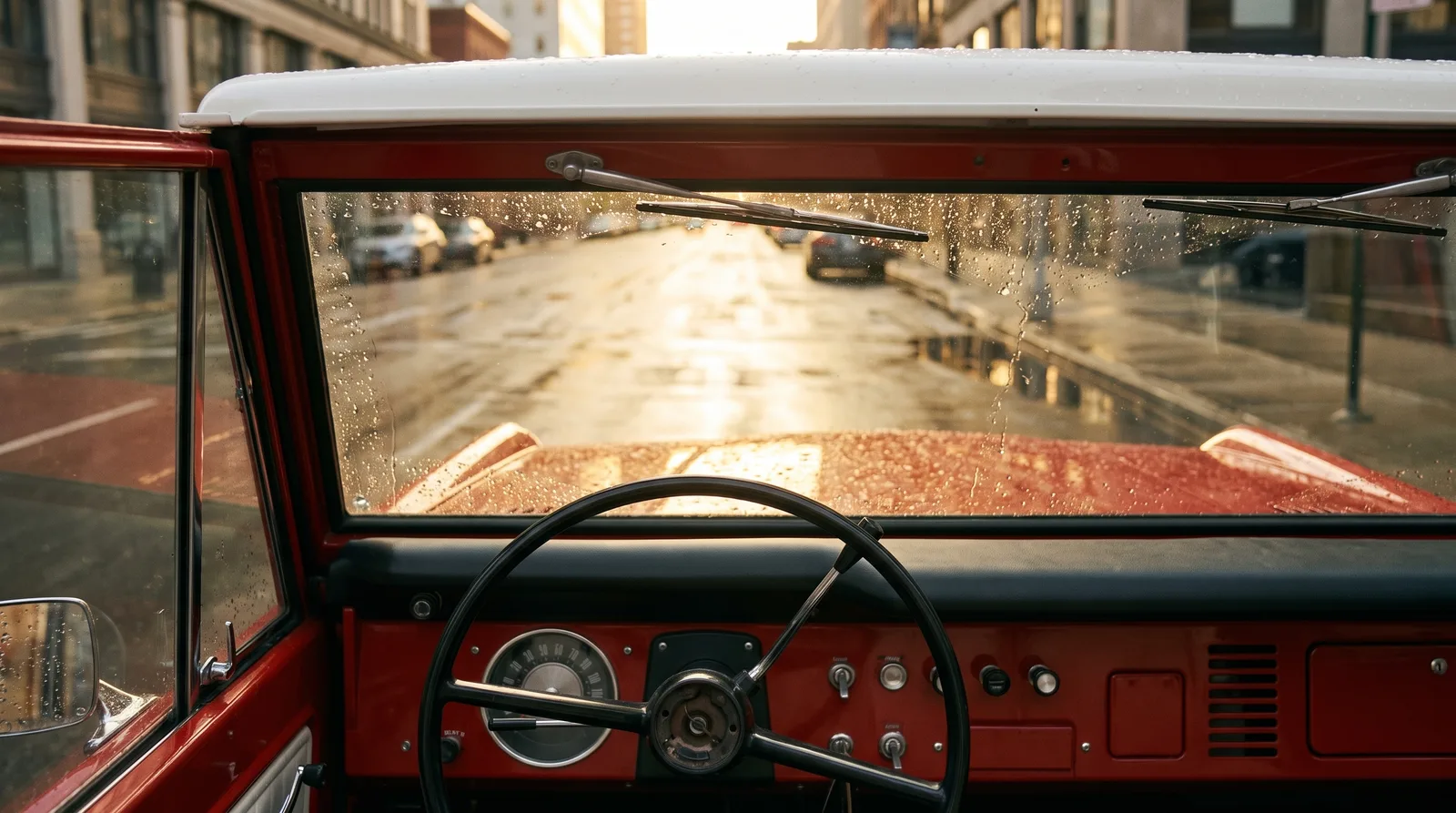
The design discipline did not stop at the sheet metal. Step inside and the dashboard follows the same logic, a simple stamped panel with round gauges set directly into it, no wraparound console, no trim pieces competing for attention. Switchgear is basic and mostly mechanical, toggle style controls a driver could operate with a gloved hand without looking down. This was not an interior designed to impress a showroom visitor with novelty. It was designed to be understood instantly by someone who needed to get to work in the dark or in the rain, and that same clarity is a large part of why the cabin still feels legible, even a little modern in its honesty, decades after softer, more heavily trimmed interiors from the same period have started to look fussy and dated by comparison. Bench seating in early configurations reinforced the utilitarian read further, and even as Ford added more comfort oriented options through the run, the basic architecture of the dashboard and control layout stayed remarkably consistent, never lurching through an awkward transitional phase the way some competitors' interiors did.
Living with a piece of design history
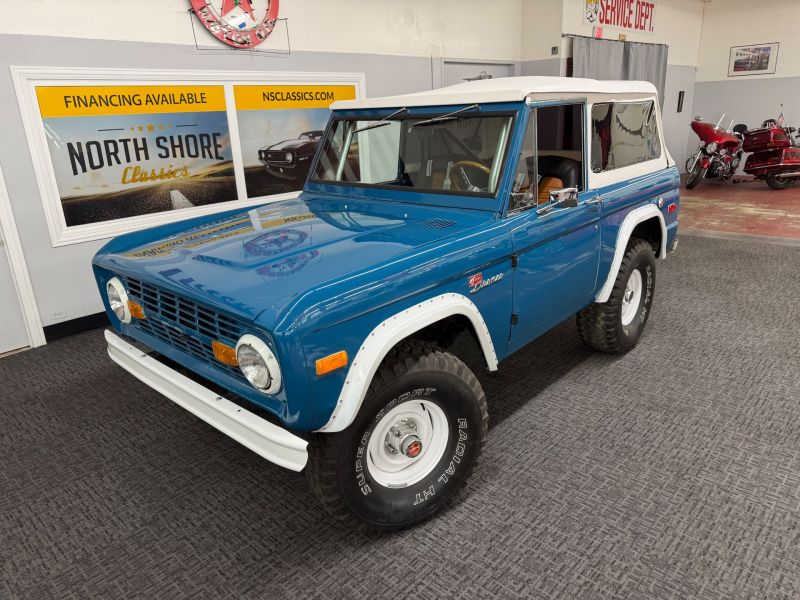
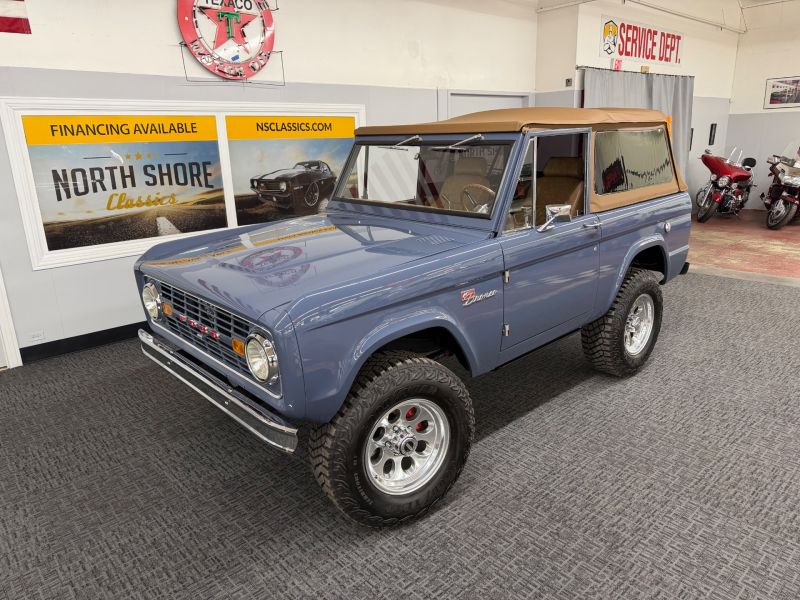
What is easy to forget, standing in a museum or scrolling through auction photos, is that this was a working truck, built to be used, not preserved behind glass. That practicality is part of the design legacy too. The flat panels that were cheap to stamp are also simple to repair. The honest hardware that looks good is also easy to service. A design built for manufacturing speed turned out, almost by coincidence, to also be a design built for longevity in the hands of an owner who actually drives the thing. For those who want to experience that shape in person rather than just admire it in photographs, it is worth browsing where sellers currently list them, and buyers who want to see what is available right now can shop classic Bronco listings to get a feel for how these early trucks present across different colors, trims, and condition levels.
Six decades on, the early Bronco's design still does what good design is supposed to do. It disappears into function until you stop and actually look at it, and then it does not let you look away.
Sources and notes
Related Reading
Have a
Ford Bronco
for Sale?
Reach thousands of serious classic car collectors across the US.
Sell It Here →
Selling a classic? Here's how: compare the places to sell classic cars
Are You a Classic Car Dealer?
List your full inventory and connect with targeted classic car buyers.
Join as a Dealer →

About the author
Nora Beckett
Automotive features writer and photographer who tells the human stories behind the cars, from show fields to cross-country road trips.
Related Listings - Ford Bronco
Comments
Be the first to comment on this article.