
Ask a longtime off-road racer about the Ford Bronco Rod Hall connection and you will likely get a story before you get a fact. That is how Rod Hall's name tends to come up at club meetings and swap meets, someone starts talking about the early Baja races and within a minute the conversation has drifted into a tale about Hall's stamina, his sense of humor under pressure, or the way he treated a thousand miles of desert like a Sunday drive that just happened to take twenty hours.
Car Features
7 min read
Rod Hall, the Bronco's Desert Racing Hero
Rod Hall's patient, mechanically sympathetic driving style turned a production Ford Bronco into an overall Baja 1000 winner in 1969.
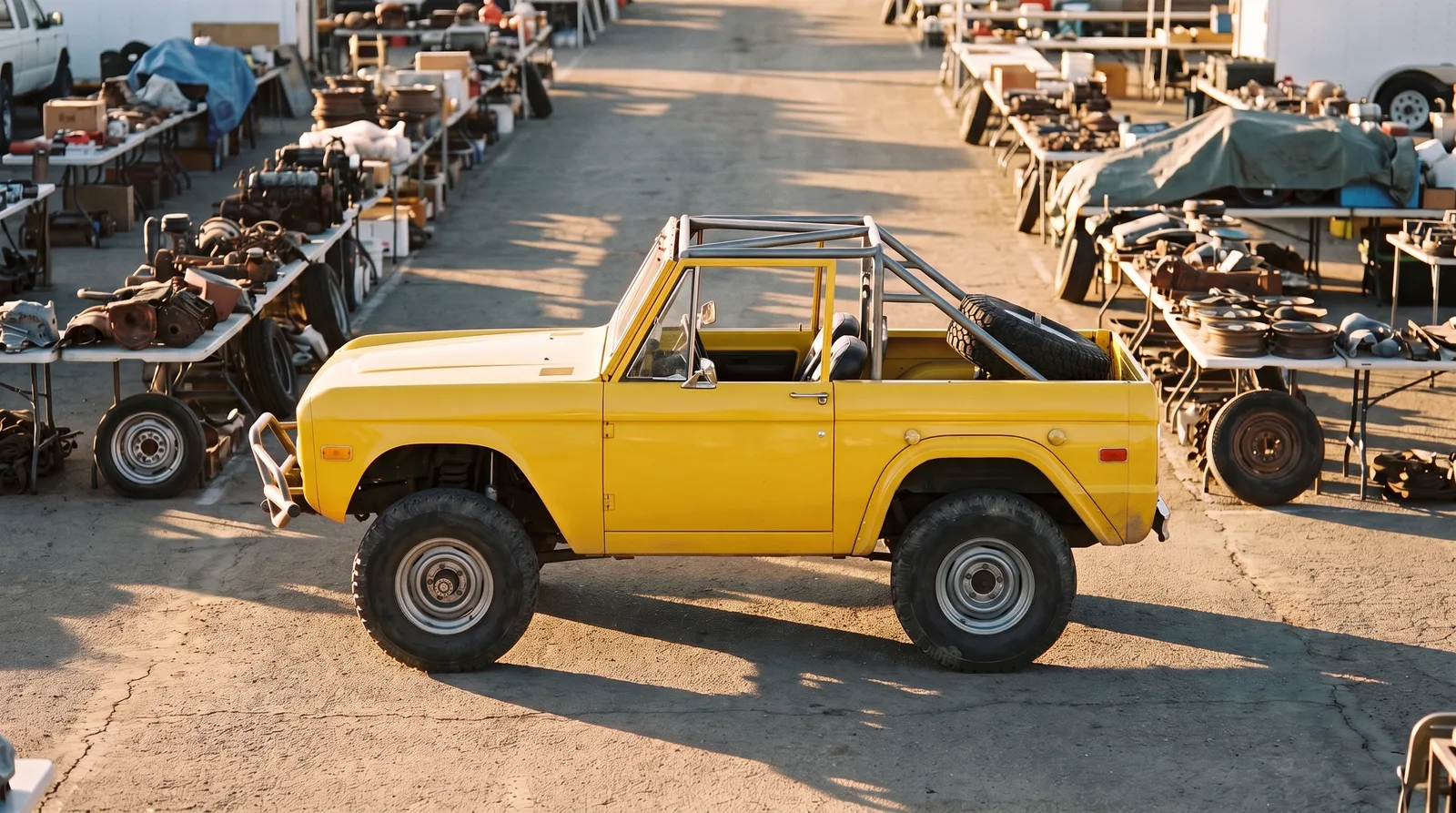
A racer who never missed a Baja
Rod Hall built his reputation the hard way, by simply showing up, year after year, to some of the most punishing off-road events in the country. He is credited with fifty consecutive Baja 1000 starts, a streak that ran from the race's early years through his final start in 2017 at nearly 80 years old, and off-road racing people still talk about that run with something close to disbelief. In an era when trucks broke axles, boiled radiators, and stranded crews in the dark with no cell service, simply finishing was an achievement. Hall finished more often than almost anyone, and he did it across decades and across different vehicles, but the Ford Bronco chapter of his career is the one most collectors ask about first.
What made Hall stand out was not flash. He was not the loudest personality in the pit lane, and he did not chase headlines the way some of his rivals did. He drove with a mechanic's patience, nursing a truck through a rock field rather than attacking it, and that patience translated directly into results when other, faster cars broke down chasing a pace they could not sustain.
The Bronco years and the 1969 breakthrough
Hall's most celebrated result behind the wheel of a Ford Bronco came in 1969, when he and co-driver Larry Minor took an overall win at the Baja 1000, a result that put a 4x4 truck ahead of purpose-built race cars and motorcycles across the full distance. It was not a class win. It was the whole race, and it happened in a vehicle that Ford sold to ranchers and hunters as easily as it sold to racers. Anyone digging deeper into that specific weekend should read the full story, but the short version is that Hall proved a production-based Bronco, properly prepared, could out-endure cars built for nothing else.
That result did more than win a trophy. It gave Ford a marketing story it could not have manufactured on its own, and it gave the Bronco a credibility among off-road drivers that outlasted the specific truck Hall drove that year. Every Bronco race program that followed, whether run by Bill Stroppe's shop or by independent teams, operated in the shadow of what Hall and Minor had already proven was possible.
A community built around a name
The Ford Bronco Rod Hall association carries weight in club circles today partly because Hall stayed connected to the off-road racing community for the rest of his life. He was not a driver who won a race and disappeared into private life. He kept racing, kept mentoring younger competitors, and kept showing up at events where Bronco owners and off-road enthusiasts gathered. That visibility meant several generations of racers met him in person, heard the stories directly, and passed them along with the kind of detail that only comes from someone who was actually there.
Club raconteurs love a story with a clear moral, and Hall's Bronco years offer one without much effort. The lesson usually told around a campfire or a swap meet folding table is that mechanical sympathy beats raw aggression over a long enough distance. Hall did not need the fastest truck on the starting line. He needed the truck still capable of running at the finish, and in 1969 that truck was a Ford Bronco.
"Everybody at the swap meet has a Rod Hall story, and none of them are about him showing off. They are all about him finishing when nobody expected the truck to make it."
- Wayne Coburn
The partnership with Larry Minor
No off-road win happens with one name in the car, and Hall's 1969 result was very much a two-man effort. Larry Minor rode alongside him for the win, handling navigation duties and sharing the physical toll of a race that could stretch past twenty hours behind the wheel on terrain that never let a driver relax. Co-driving in this era meant more than reading a map. It meant staying alert enough through the middle of the night to call out hazards a tired driver might miss, and it meant being ready to jump out and help with a roadside repair if the truck needed one before the finish.
Minor went on to build his own reputation in off-road racing and later in truck racing more broadly, but the 1969 Bronco win remains one of the results most closely associated with his name. The chemistry between a driver and co-driver mattered enormously in an event with this little margin for miscommunication, and Hall and Minor's partnership that year is still cited as an example of how much a well-matched two-person crew could accomplish against a field of faster, less patient competitors.
How the truck itself was set up
Hall's Bronco for that race reflected the preparation philosophy that defined the best desert racing efforts of the period, reinforced frame sections, upgraded suspension travel, and a mechanical layout that prioritized components a crew could actually service in the field if something broke. Off-road racing at that time offered no guarantee of outside assistance, so every design decision had to account for the possibility that the crew itself would need to fix a failure in the dark, with whatever tools and parts they had brought along.
That practical mindset shaped how Hall approached the race as much as it shaped how the truck was built. He was known among competitors for pacing himself rather than pushing for maximum speed at every opportunity, a discipline that kept the Bronco within its mechanical limits for the full distance rather than risking a breakdown chasing a lead that would not matter if the truck never reached the finish line.
What this means for collectors today
Genuine Rod Hall race Broncos are almost impossible to find in private hands, and documentation is the deciding factor whenever one is claimed. Buyers should expect period photographs, event records, or verifiable chain of ownership before paying a premium tied to his name. Absent that documentation, a truck's connection to Hall is a story, not a provenance, and pricing should reflect that difference honestly.
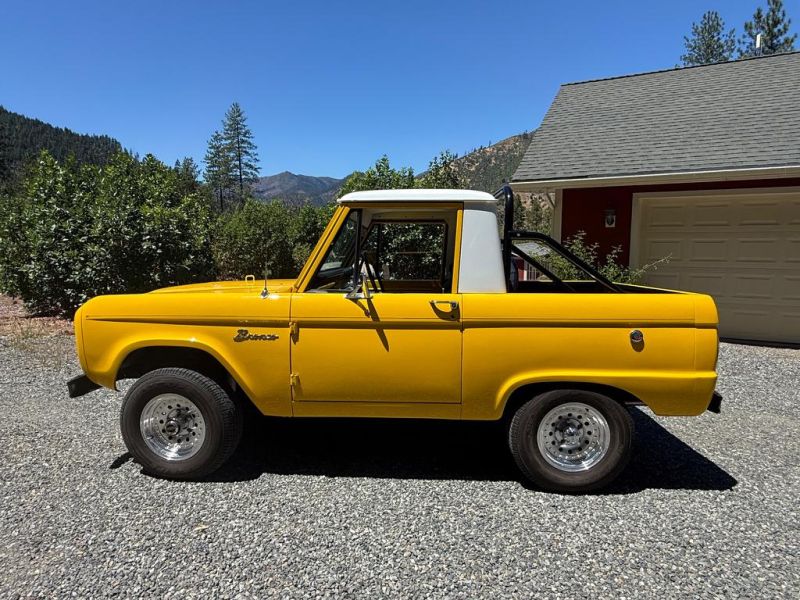
For most enthusiasts, the more realistic way to connect with this chapter of Bronco history is through an honest, well-kept early production truck rather than a claimed race survivor. The early Bronco that Hall and Minor campaigned started life close to what any buyer could purchase from a Ford dealer, which is part of what made the 1969 win resonate so widely. Those interested in owning a piece of that era, without chasing an unverifiable racing pedigree, can start by looking to browse classic Bronco listings for a solid, honestly represented early truck.
Rod Hall passed away in 2019, but his name still opens conversations at Bronco gatherings decades after his Baja years ended. The truck changed, the sponsors changed, and off-road racing itself changed considerably, yet the basic respect earned by a driver who simply finished, over and over, when others could not, has not faded at all.
Sources and notes
Related Reading

Have a
Ford Bronco
for Sale?
Reach thousands of serious classic car collectors across the US.
Sell It Here →
Selling a classic? Here's how: sell my classic car
Are You a Classic Car Dealer?
List your full inventory and connect with targeted classic car buyers.
Join as a Dealer →

About the author
Wayne Coburn
Longtime Corvette owner, judge and club figure who knows the cars, the records and the people behind them.
Related Listings - Ford Bronco



Comments
Be the first to comment on this article.