Picture a young driver from Elmhurst, Illinois, already known on the short tracks of the Midwest for a smooth, almost surgical driving style that stood out against the bump-and-run reputation NASCAR carried at the time. By 1962, Fred Lorenzen had made the jump to the big superspeedways, and the ford galaxie 1962 fred lorenzen breakthrough is the story of how that combination, a disciplined young talent and Ford's most competitive full-size body of the era, started coming together into something the rest of the garage area could not ignore.
The driver before the big machine
Lorenzen had already built a reputation in short-track and modified racing around Chicago before NASCAR's Grand National circuit ever saw him regularly, and that background showed in how he drove once he got there. Where plenty of his contemporaries relied on aggression to make up ground, Lorenzen was known for a patient, mechanically sympathetic approach, the kind of driving that keeps a car alive for 500 miles instead of burning it up trying to win the first fifty. That style meshed well with the demands of superspeedway racing, where consistency across a long run mattered as much as raw speed in any single lap.
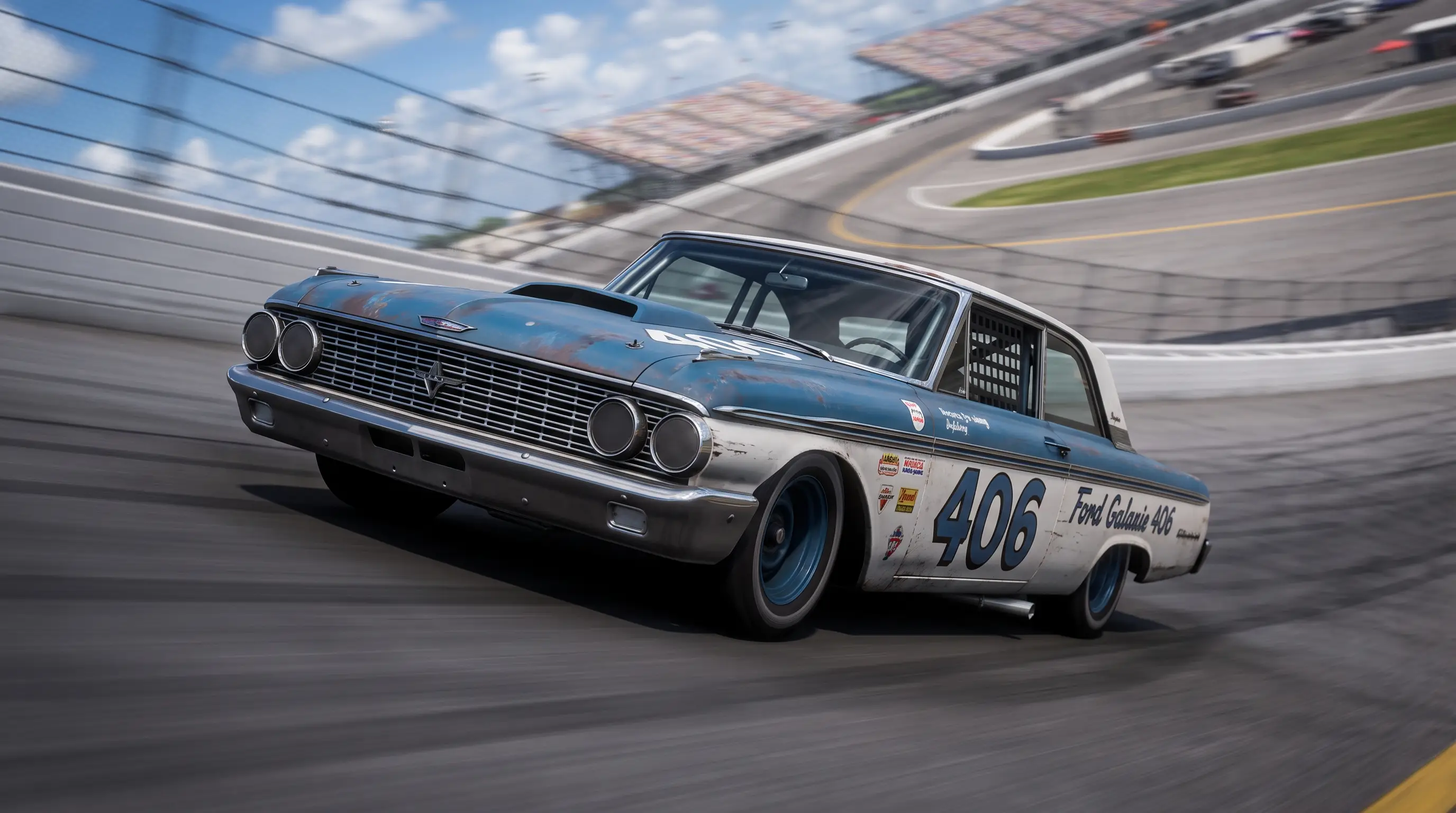
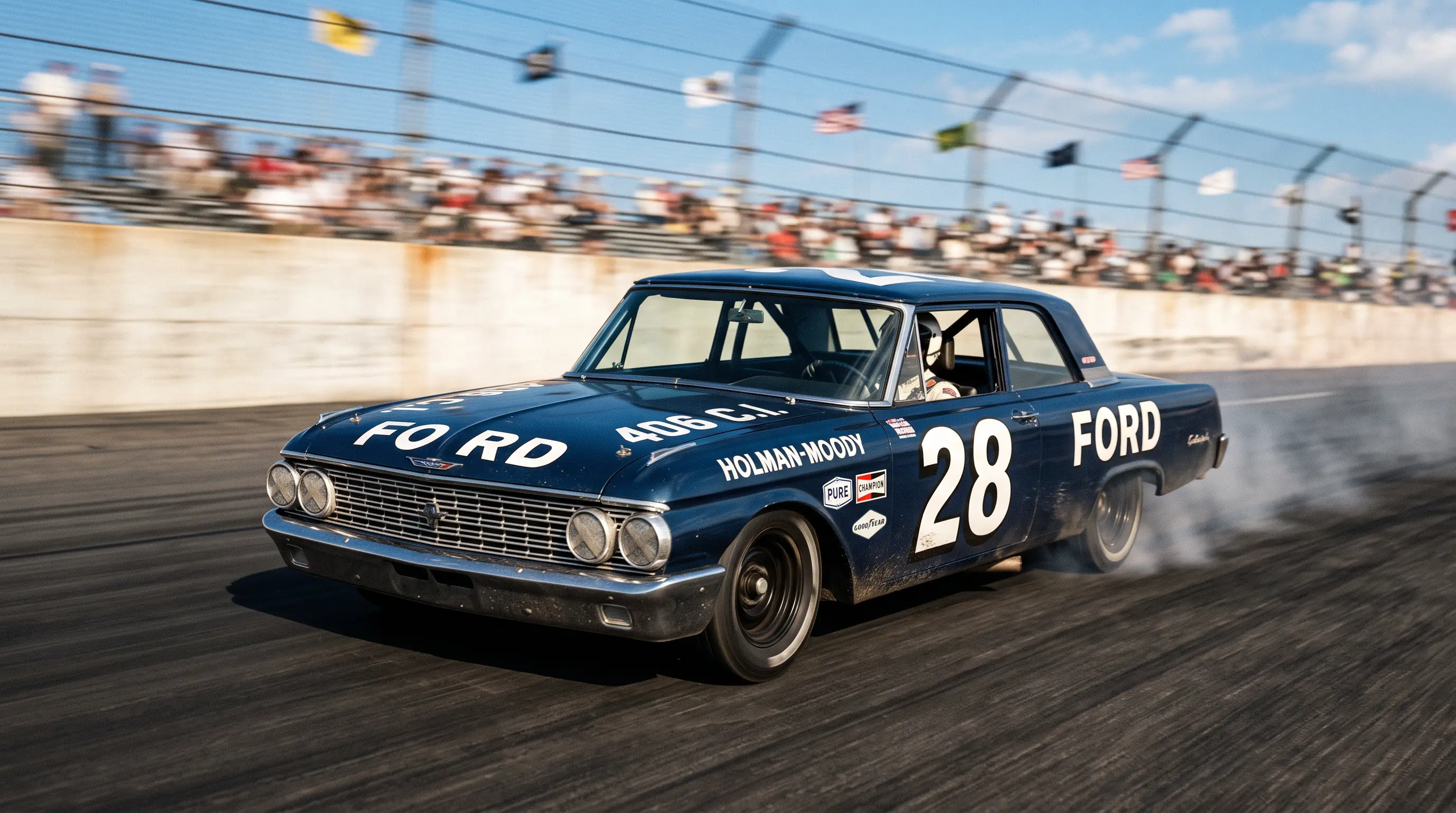
By 1962, Lorenzen was driving for Holman-Moody, the Charlotte-based operation that had become Ford's de facto factory racing arm during the Total Performance years. That partnership put him behind the wheel of a properly prepared full-size Galaxie, backed by the kind of engineering and preparation resources that separated the top factory-supported teams from the independents still building cars in a home garage.
The Galaxie as the right tool at the right time
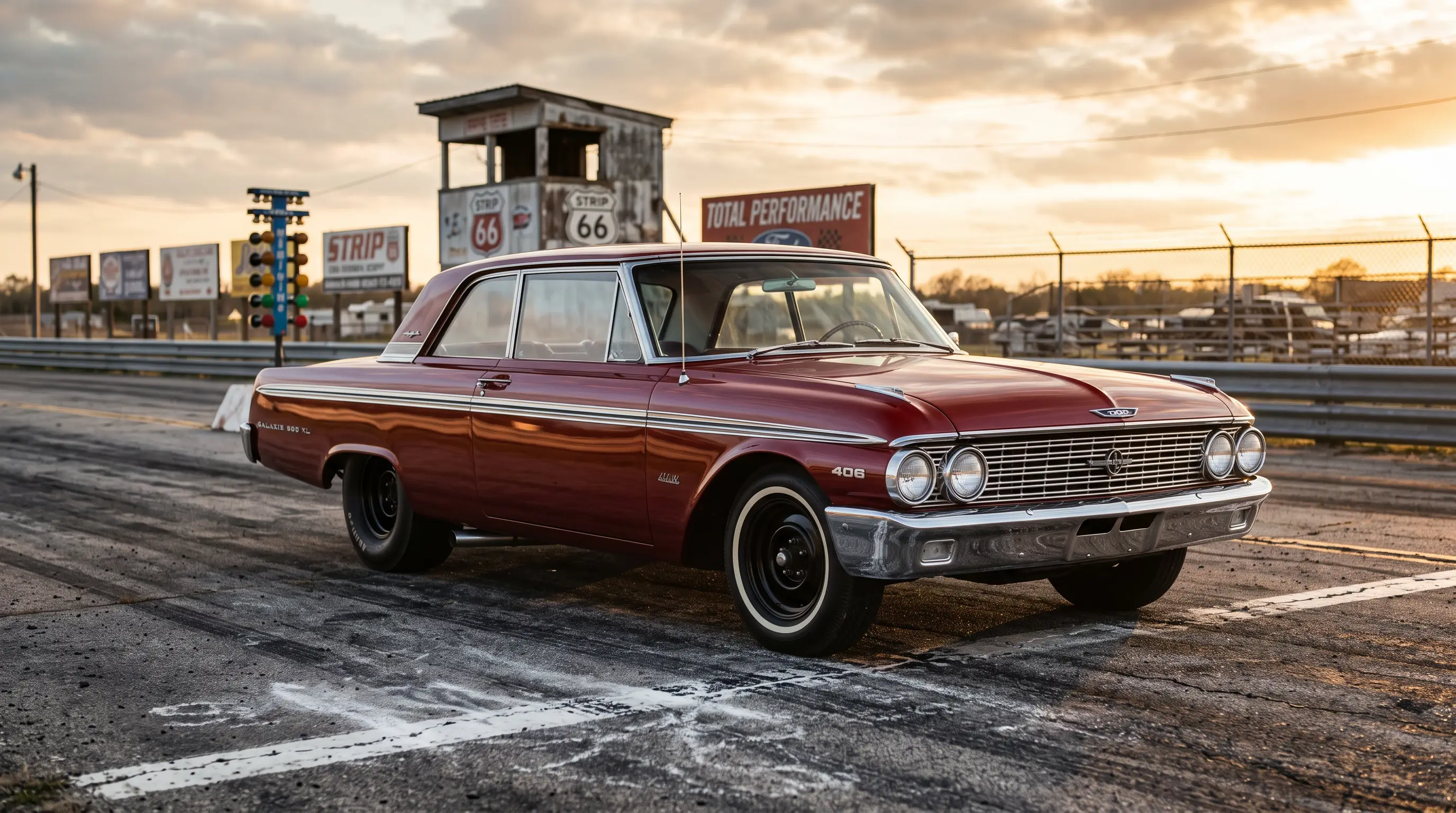
The 1962 Galaxie gave Lorenzen a genuinely competitive package to work with. Ford's formal-roofed full-size body, backed by the 406 engine option in its most aggressive Tri-Power state of tune, was built specifically to compete on the same superspeedways where Lorenzen's patient style could pay off over a full race distance. The car was not the most dominant machine on the circuit that season, but it was competitive enough, in the hands of a driver willing to manage it carefully, to start putting up results that got noticed by people who followed the sport closely.
What made the pairing work was less about any single race and more about the way Lorenzen approached a full season. He treated each start as an opportunity to finish strong rather than a chance to make a statement in the first ten laps, and that philosophy, applied to a Galaxie that rewarded careful management of its 406 under sustained high-speed running, produced the kind of steady, building momentum that a driver's reputation is actually made from. Lorenzen closed out 1962 with two wins, the Atlanta 500 and a race at Augusta Speedway, and finished seventh in the final Grand National points standings, a solid personal result in a season where Ford as a manufacturer struggled against Pontiac's dominant 421-powered cars. The Atlanta win came in a Galaxie fitted with Ford's short-lived Starlift fastback conversion, one of the only races that modified car was ever allowed to run before NASCAR barred it from wider competition.
Why 1962 reads as the setup, not the payoff
The bigger headlines around Lorenzen's NASCAR career came in the seasons that followed, once the 427 replaced the 406 under the hood and his results with Holman-Moody turned into some of the most talked-about performances of the mid-1960s. But 1962 is where the foundation for that breakthrough got built. It is the season where a talented young driver and a factory-backed team found each other, where Ford's full-size Galaxie proved itself capable enough on the biggest tracks to justify the investment, and where the patient driving style that would define Lorenzen's reputation started producing results consistent enough to matter.
That is the part of the story that gets lost when people jump straight to the highlight-reel wins that came a year or two later. Nobody arrives at a breakthrough season fully formed. Lorenzen's 1962 campaign in the Galaxie was the quieter groundwork, the season where the pieces clicked into place before the results became impossible to ignore.
"Everybody remembers the wins that came later, but 1962 is when you could already see it coming if you were paying attention. The car was right, the team was right, and Lorenzen drove like a man who already knew exactly what he had underneath him."
- Patrick Walsh
The garage area's read on the young driver
Veteran competitors and crew chiefs around the Grand National circuit noticed Lorenzen's approach before the wider public did, and that kind of insider recognition often precedes the headlines by a full season or more. Drivers who had been running superspeedways for years could tell the difference between someone driving over their head trying to make a name for themselves and someone driving within a car's limits with a clear plan for the closing laps. Lorenzen fell firmly into the second category, and that reputation traveled through the garage area well before casual fans outside the sport started paying close attention to his name.
Part of what made this credible to seasoned observers was how Lorenzen talked about his own racing, treating each event as a puzzle to be solved rather than a fight to be won through sheer aggression. That mindset fit naturally with Holman-Moody's own engineering-first culture, a team built around methodical preparation rather than seat-of-the-pants improvisation, and the pairing of driver temperament and team philosophy is exactly the kind of alignment that tends to produce results once the equipment catches up to the talent.
Comparing the competition of that season
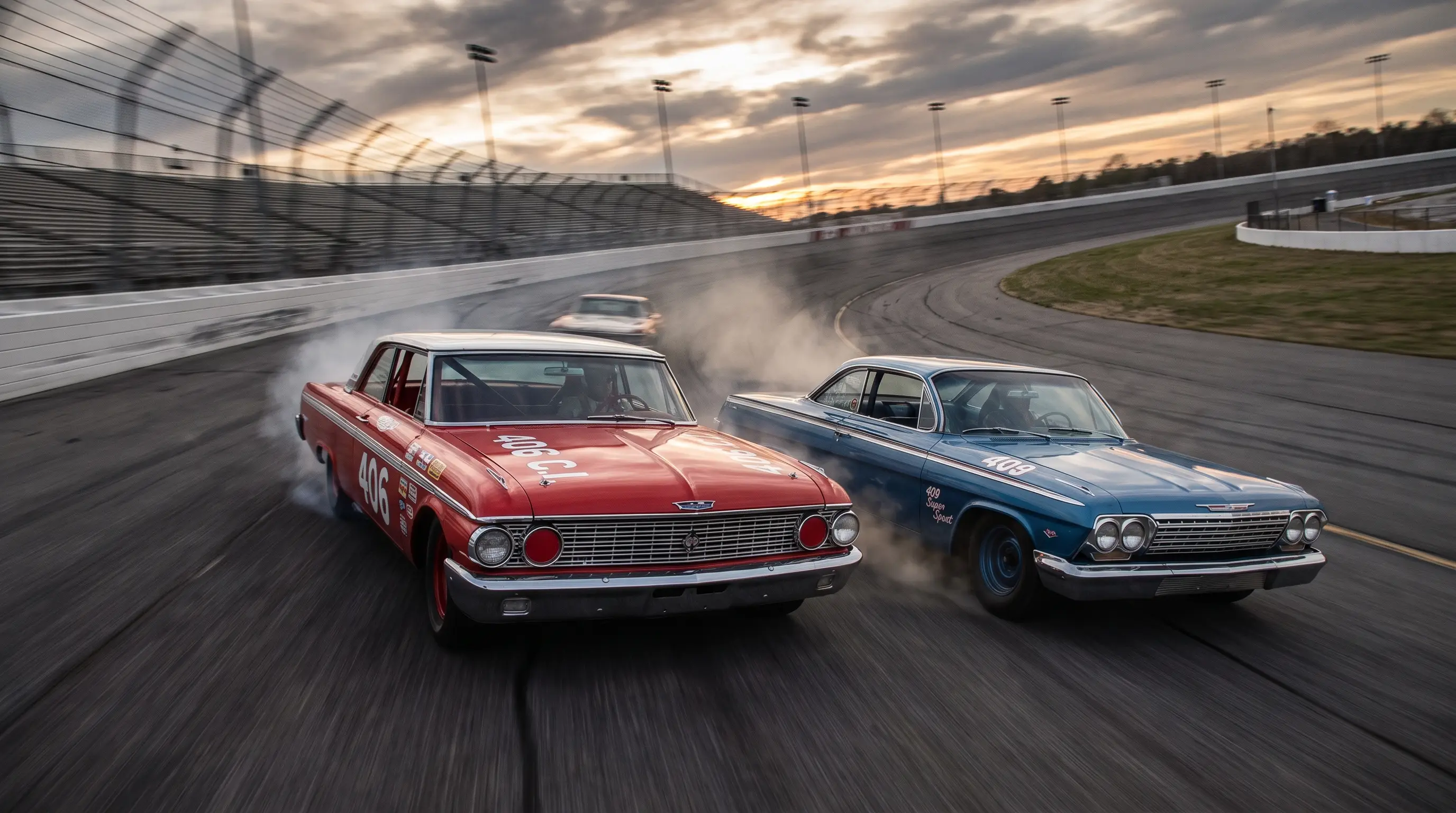
Lorenzen's Galaxie was not racing in a vacuum, and understanding his 1962 progress means understanding what he was up against on any given Sunday. Chevrolet's 409-powered Impala was the most direct rival that season, and the rivalry between the two full-size platforms shaped how both manufacturers approached engine development and team preparation. We have covered that direct matchup in a related story if you want the full comparison between the two cars that defined the season's top-level competition.
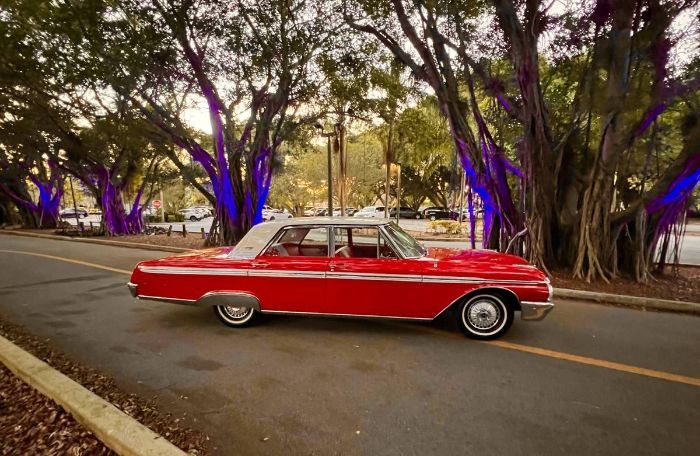
For the broader context of the 1962 Galaxie and everything else it accomplished that model year, our 1962 ford galaxie retrospective covers the full lineup, the 406 engine, and the styling changes that made this specific season possible. And if this era of Ford's Total Performance history is what draws you to the Galaxie name, the current Galaxies for sale now are worth a look for anyone chasing a genuine piece of that story.
Looking back at it now, the appeal of the 1962 season is exactly that it does not need embellishment to be worth telling. A young driver from Illinois, a factory-backed team built on preparation over improvisation, and a full-size Ford still finding its footing against the 409-powered Impala it was chasing on every superspeedway that mattered. None of it was guaranteed to add up to anything. It just happened to be the season where all three pieces started clicking into a partnership that would go on to define a meaningful chapter of Ford's NASCAR history in the years right after.