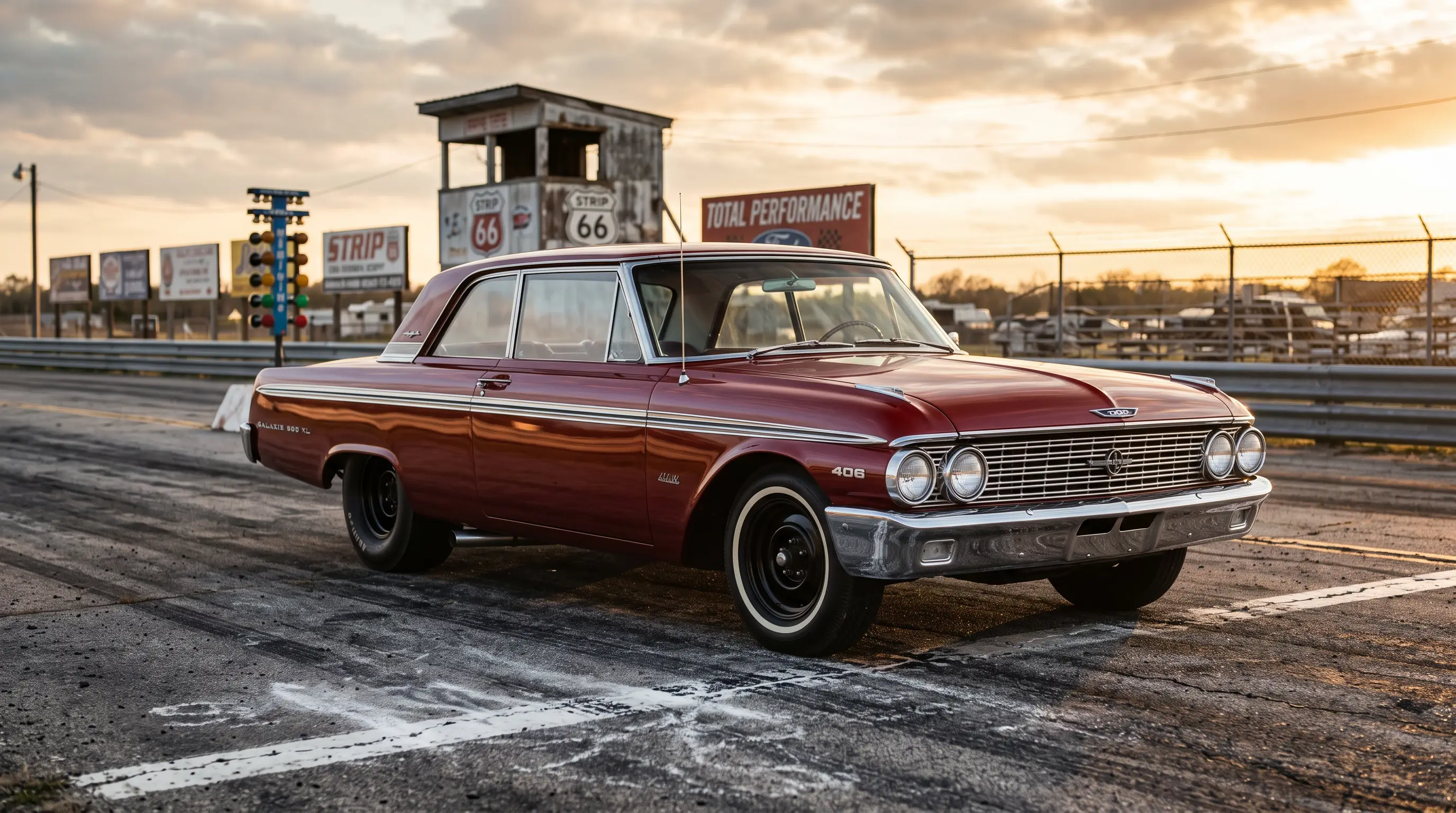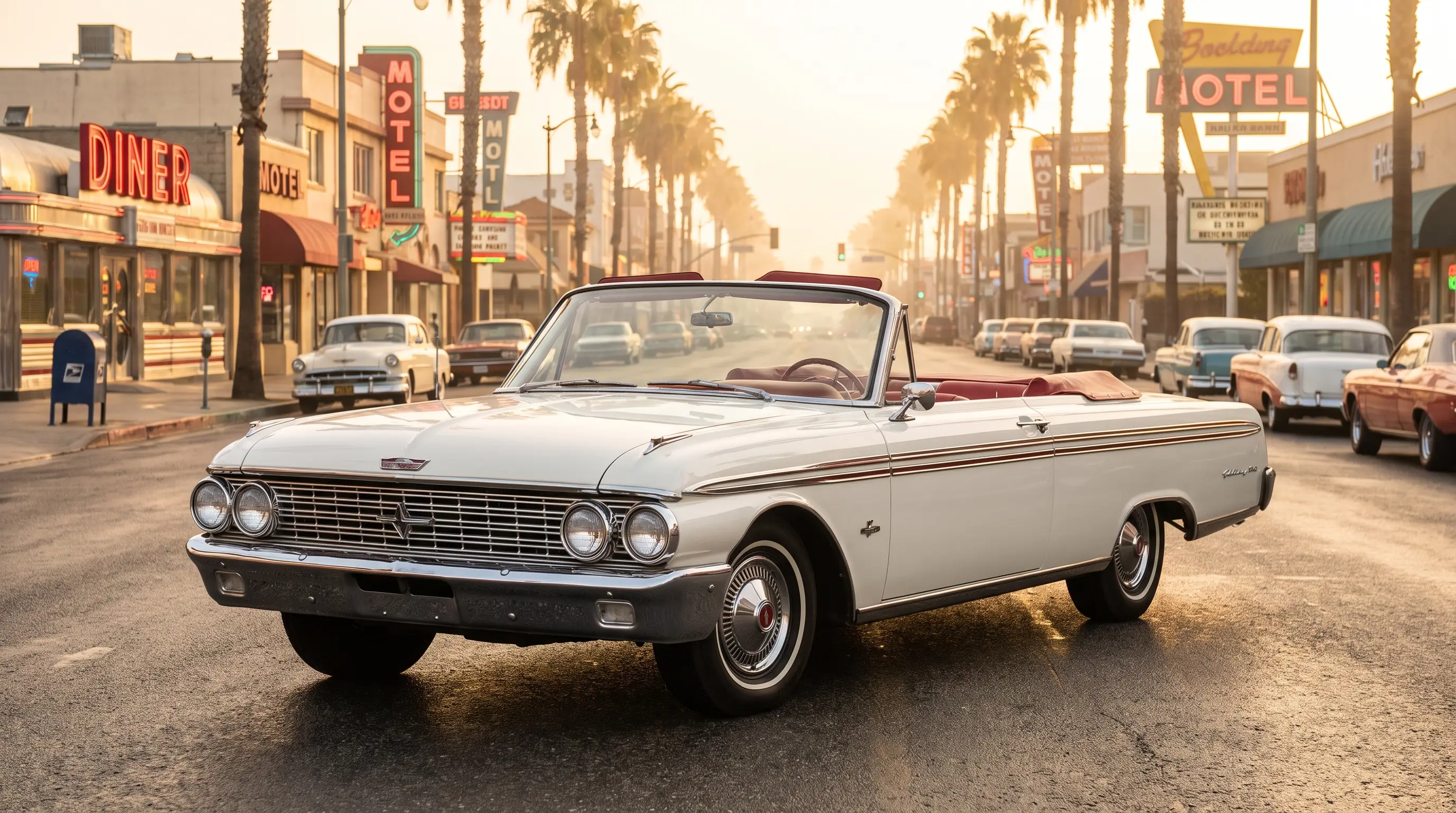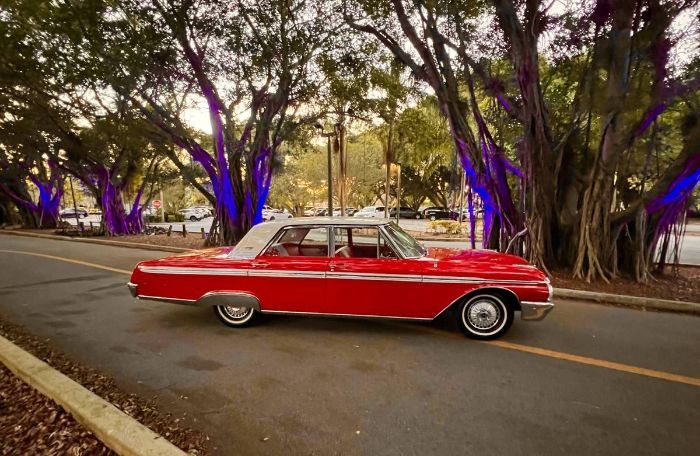
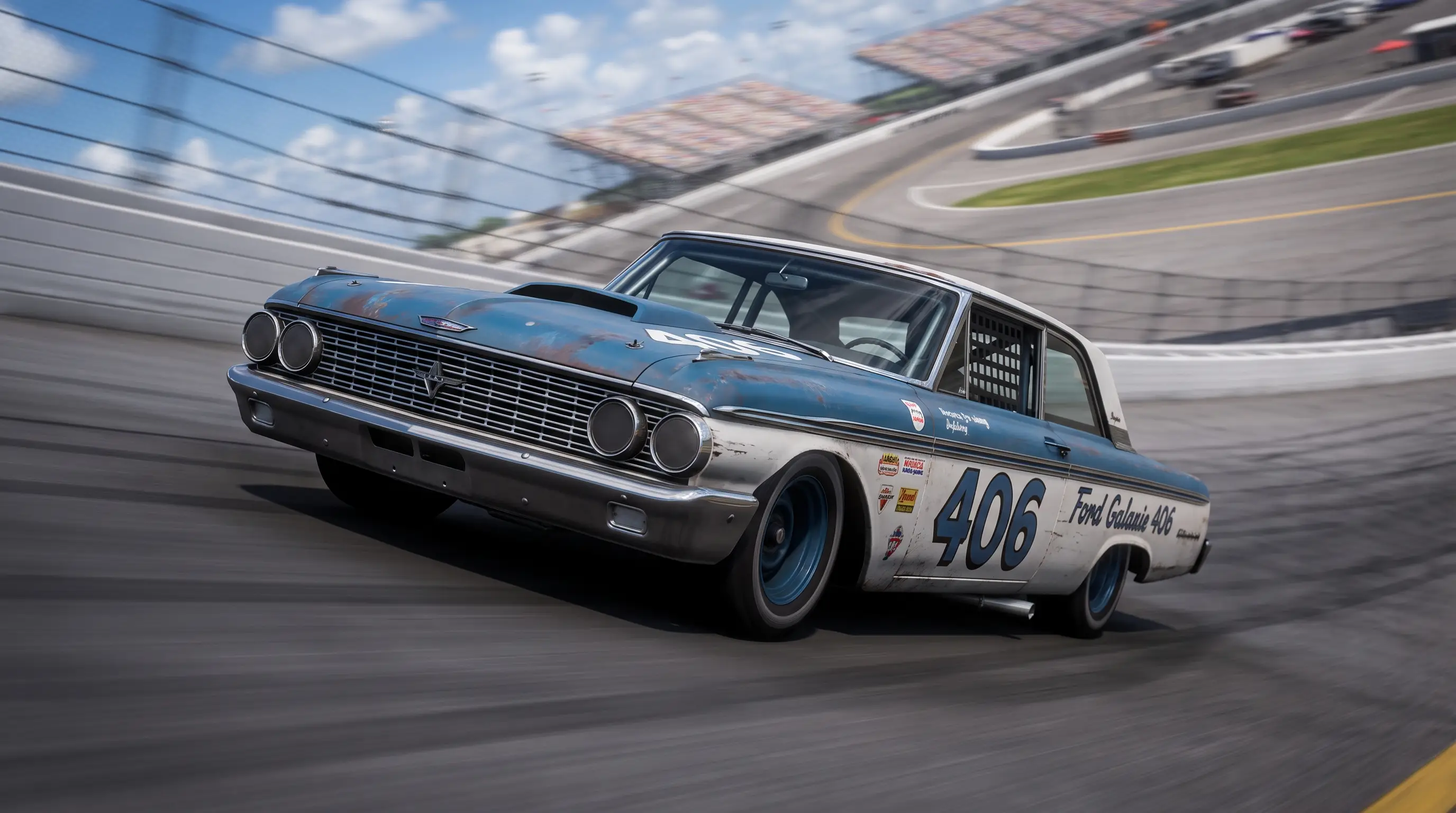
Racing programs make good marketing copy, but the underlying engineering story is usually more interesting than the highlight reel. The ford galaxie 1962 nascar 406 campaign is a case study in exactly that: a mid-cycle engine option pushed into top-level competition, evaluated hard for one season, and superseded within a year by a purpose-built successor once the data came in.
The competitive baseline Ford was working against
Going into 1962, Ford's full-size cars were competing directly against Chevrolet's 409 and Chrysler's 413 max wedge on NASCAR's biggest superspeedways, tracks where sustained high RPM operation and top-end power mattered more than anywhere else on the circuit. The 406, in its Tri-Power form, gave Ford a genuine answer in that specific fight, an engine built with a solid-lifter valvetrain and reinforced internals aimed squarely at the demands of 500-mile races run at sustained high speed. That competitive framing matters, because it explains why Ford committed factory resources to a Galaxie body and 406 combination that would only run for a single full season before both the engine and, eventually, the body itself moved on.
The Galaxie's role in this campaign was straightforward from an aerodynamics standpoint: the formal-roofed body carried more frontal area and drag than a fastback would have, which put real pressure on Ford's engineers to extract every available horsepower from the 406 to stay competitive on the fastest tracks. That pressure is a big part of why the Tri-Power version existed at all, since three two-barrel carburetors gave tuners more flexibility to optimize fuel delivery across the RPM range than a single four-barrel could match.
What the season actually demonstrated
Running the 406 hard across a full superspeedway season generated the kind of real-world data no dyno session alone could produce. Sustained high-speed running exposed exactly where the FE block's design margin ran thin at 406 cubic inches, informing the taller-deck, cross-bolted design changes that would define the 427 the following year. In an engineering sense, the 1962 NASCAR campaign functioned as an extended validation program, the kind of stress test that reveals a design's actual limits faster than any bench test can, because a superspeedway does not forgive a marginal component the way a controlled test cell might.
Ford's competition results that season were rougher than the engineering effort deserved. The Galaxie's squared-off notchback roofline cost real speed on the superspeedways, and some early 406 blocks developed cracks under sustained high-RPM racing, on top of everything else working against the package. Ford managed only six victories across the full 1962 Grand National season, its worst NASCAR showing since 1955, while Pontiac's 421-powered cars swept to the manufacturers' title with 22 wins. The honest engineering read is that the 406 bought Ford a season of real competition experience, cracked blocks and all, while the real solution, the 427, was still being finalized, and that is exactly the role a bridge engine is supposed to play even when the scoreboard does not show it.
The teams and preparation behind the numbers
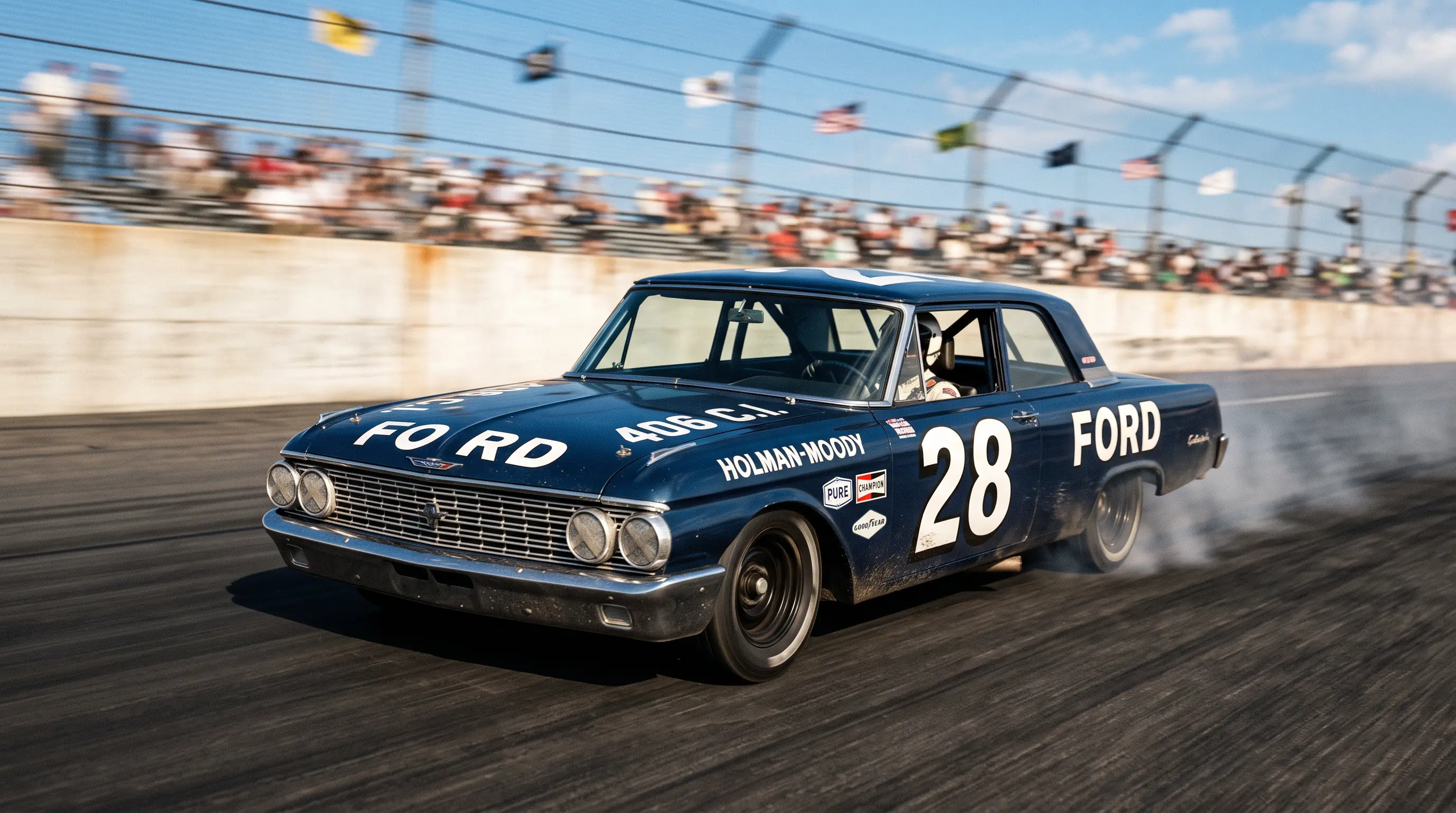
None of this happens without the factory-aligned teams doing the actual preparation work. Holman-Moody, operating out of Charlotte, functioned as Ford's de facto competition department during this era, building and maintaining the cars that carried the 406 into top-level events, and their engineering staff was directly responsible for translating whatever Ford's production engineers learned about the 406's limits into race-ready setups that could survive a full 500-mile event. That relationship between the factory and its contracted competition teams is what made the entire 1962 campaign function as a genuine data-gathering exercise rather than just a marketing exercise dressed up as racing.
Independent teams running the same basic 406 package without factory-level support faced a harder road, since the margin between a well-prepared engine and a marginal one narrowed considerably once sustained high-speed running started exposing weak points. That gap between factory-backed and independent preparation is a recurring theme across most of NASCAR's early Total Performance years, and it is one reason results from this specific season need to be read with an eye toward which team fielded which car, not just which engine sat under the hood.
Reading the results without the hype
It is easy to romanticize this campaign in hindsight, treating it as a clean stepping stone toward the 427's dominance later in the decade. The more accurate read is less tidy and more interesting: Ford ran a genuinely capable but structurally maxed-out engine in top-level competition for one season, learned exactly where it broke down under sustained stress, and used that specific data to engineer a better solution rather than simply scaling up the same approach. That is a normal, healthy engineering process, and it produced a better outcome precisely because Ford treated the 406's limitations as information rather than something to paper over with marketing.
"A one-season engine that gets replaced isn't a failure. It is a test program that happened to also compete for a national championship. The 406 did its job, then the data it generated made the 427 possible."
- Emily Chen
Why this matters for the car today
For anyone researching a 1962 Galaxie with genuine NASCAR-adjacent history, the 406's role as a single-season competition engine is exactly why documentation matters so much more here than with the longer-lived 427. A verified 406 Tri-Power car from this specific campaign represents a narrower, more specific slice of Ford's Total Performance story than a 427 car from any of the several years that engine ran, and that specificity is part of what makes an authenticated example worth the extra diligence to confirm. For the broader context of how this engine and this racing season fit into the model year, the full story covers the rest of the 1962 lineup, and if you are hunting for a genuine period-correct example, it is worth taking time to browse classic Galaxie listings currently available with documentation to match.
There is also a broader lesson in how this campaign has aged in the collector community's memory. Because the 406 only ran one full competitive season before the 427 took over, the cars and the results from 1962 specifically occupy a narrower, more precisely dated slice of Ford's racing history than almost anything that came in the years immediately after. That precision is exactly why the campaign rewards careful study rather than a quick summary. Every detail, the specific tracks run, the specific teams fielding cars, and the specific configuration of the 406 under a given hood, adds up to a more complete and more accurate picture of what Ford's engineers and drivers were actually working with in a single, tightly bounded window of time.
Modern engine builders and historians who have gone back and studied surviving 406 blocks generally agree on the core conclusion this article has been building toward. The engine was a legitimate competitive tool operating close to the edge of what its casting could reliably sustain, and the season it ran validated both its strengths and its limits well enough to make the following year's redesign an easy engineering decision rather than a guess. That is the quiet, unglamorous truth behind a campaign that gets remembered, when it gets remembered at all, mostly as a footnote on the way to the 427.
Sources and notes
- Ford's 1962 Galaxie NASCAR Aerodynamics Story - EssentiallySports
- Ford FE engine - Wikipedia
- 1962 Ford Galaxie 406: A Profile of a Muscle Car - HowStuffWorks
- Fred Lorenzen - Wikipedia
- Vintage Car Life Road Test: 1962 Ford Galaxie 500 XL 406 - Curbside Classic
- 406 vs 409 vs 427 - Ford FE Engine Forum