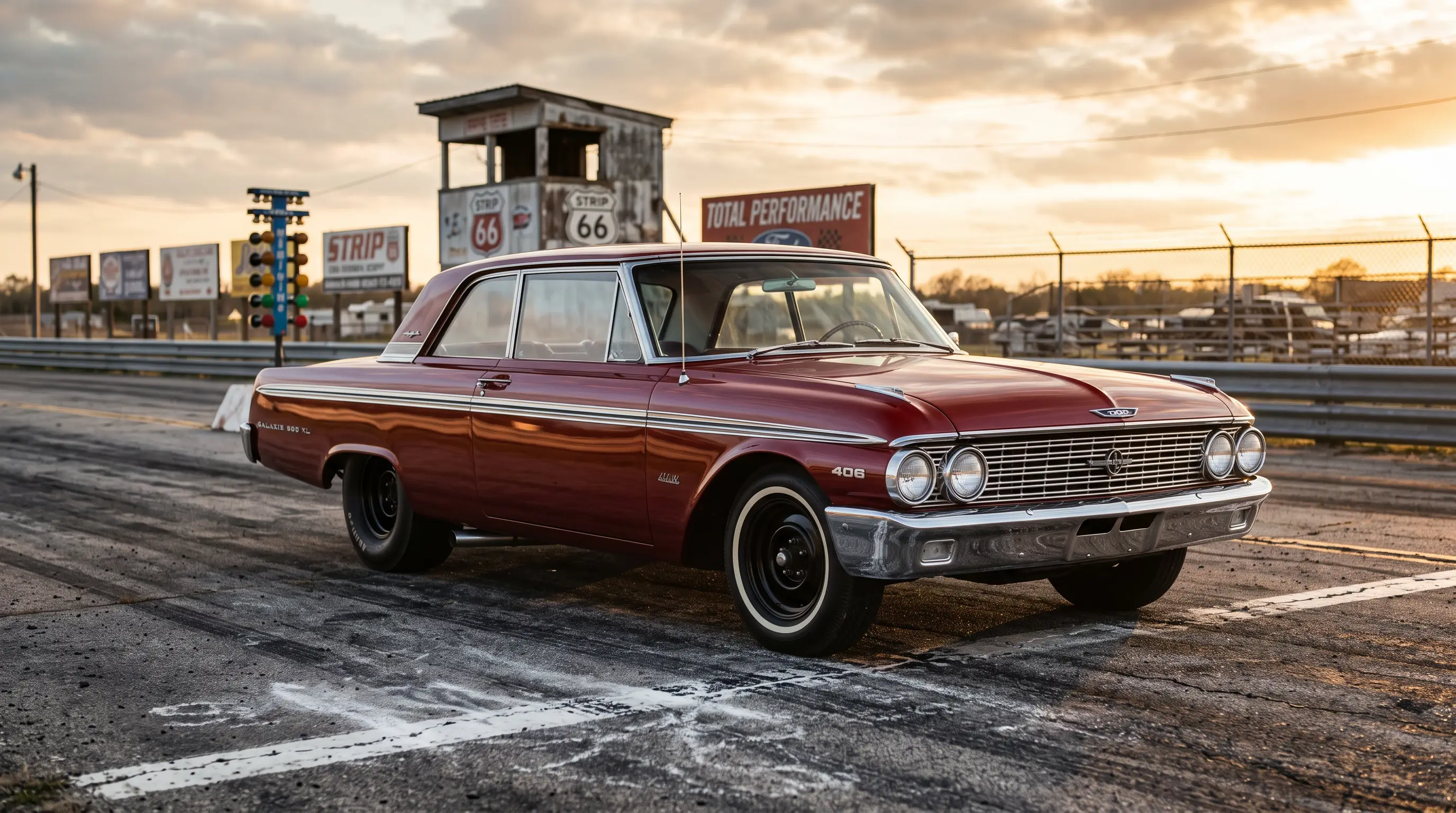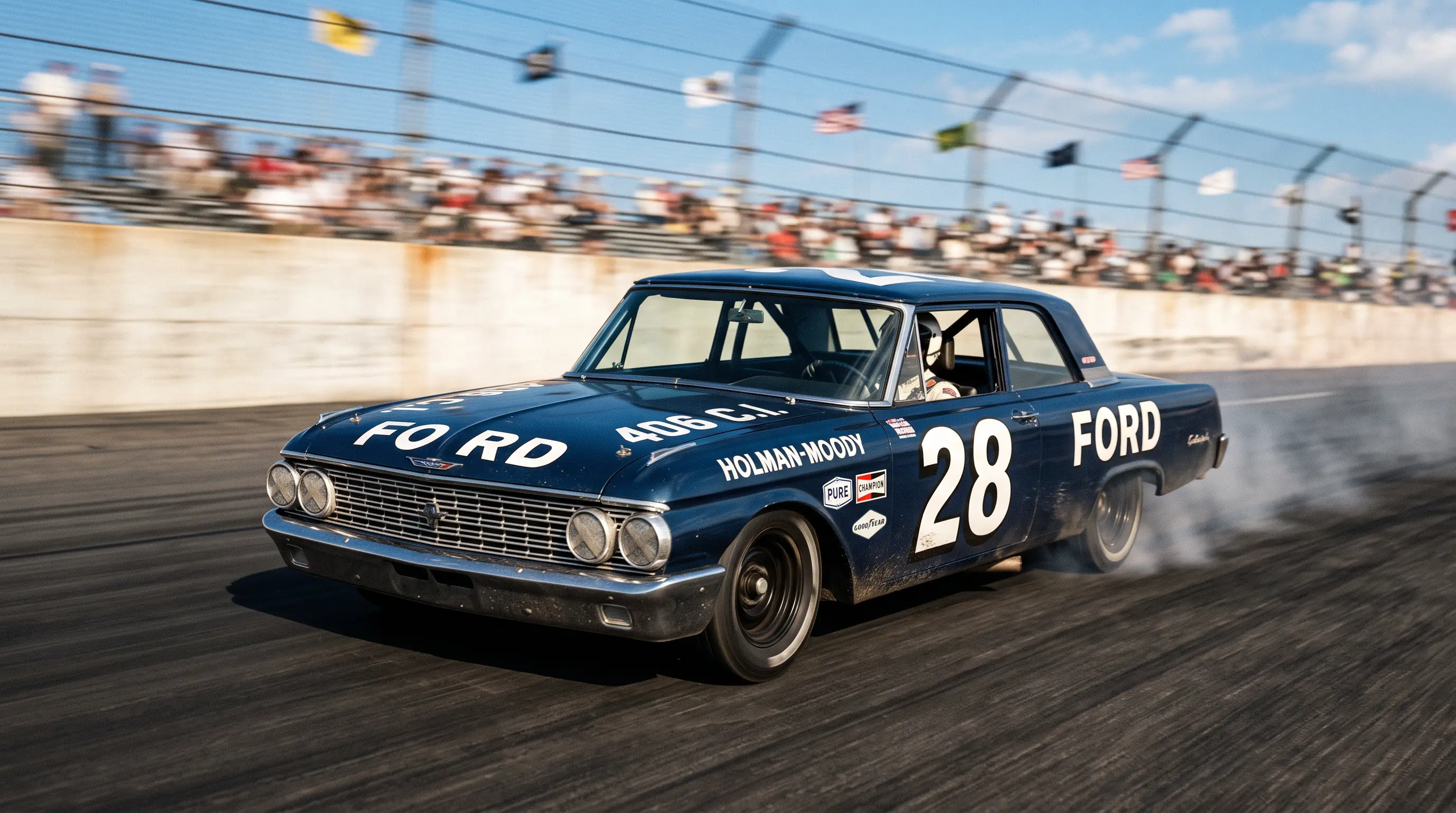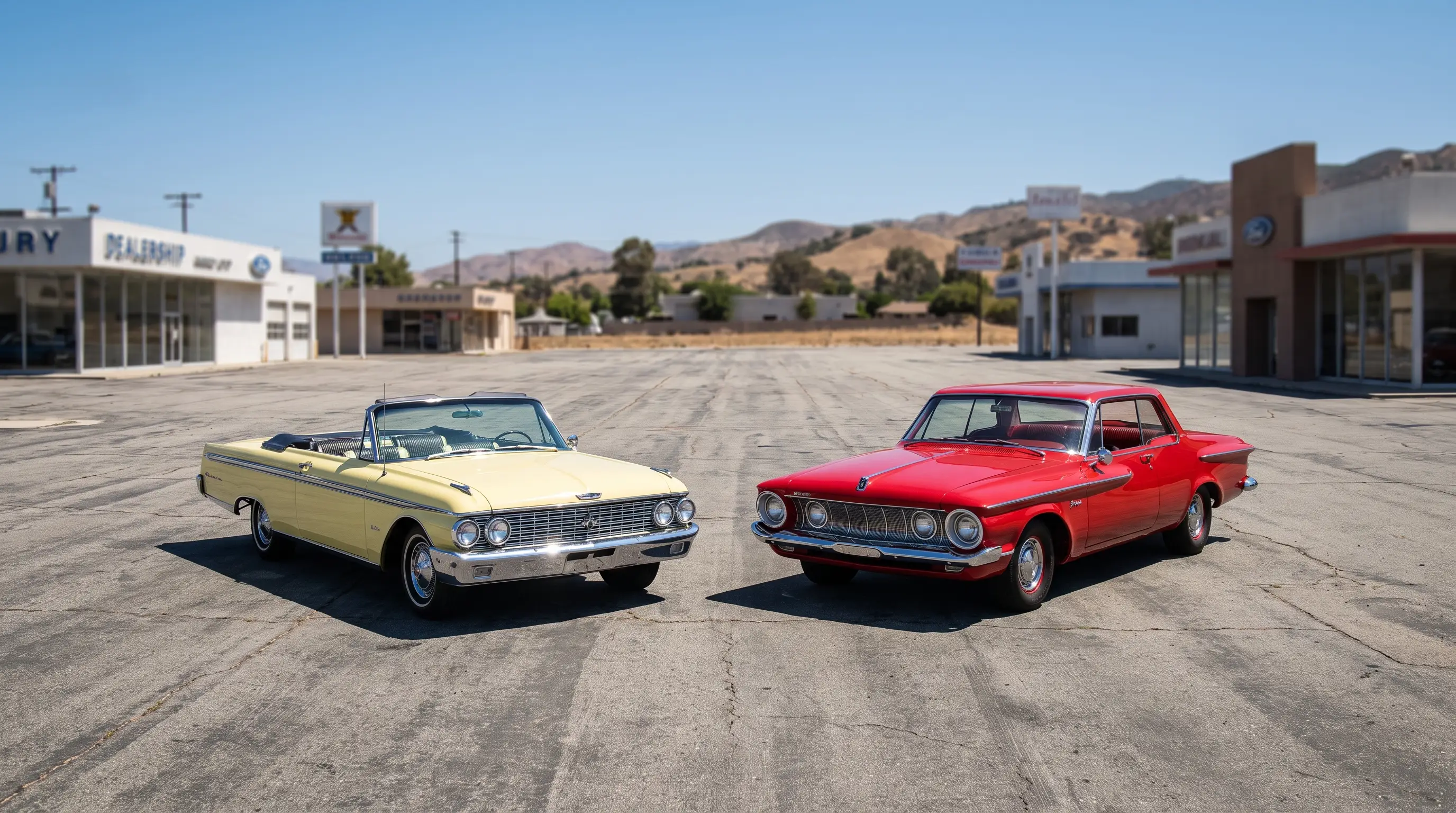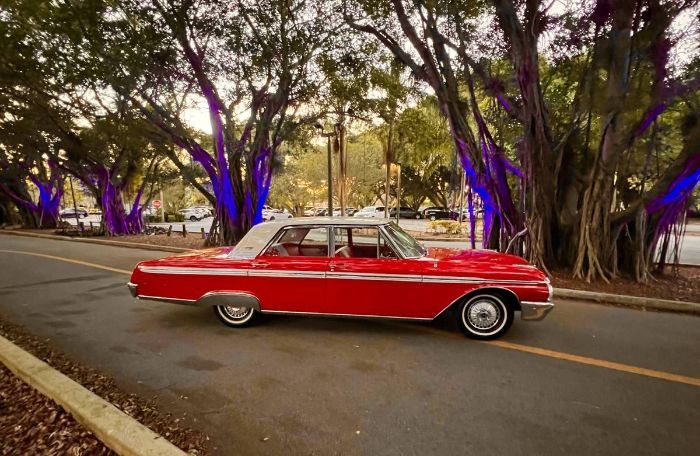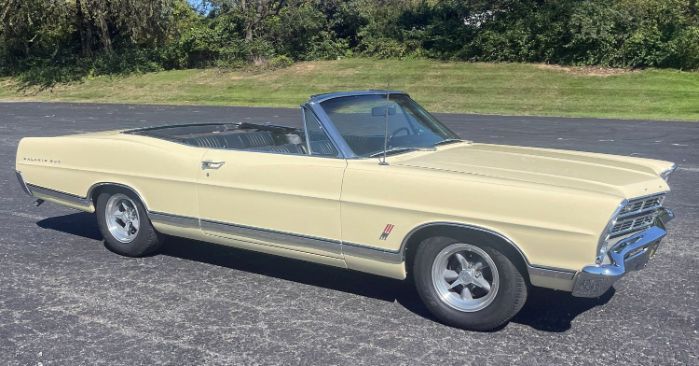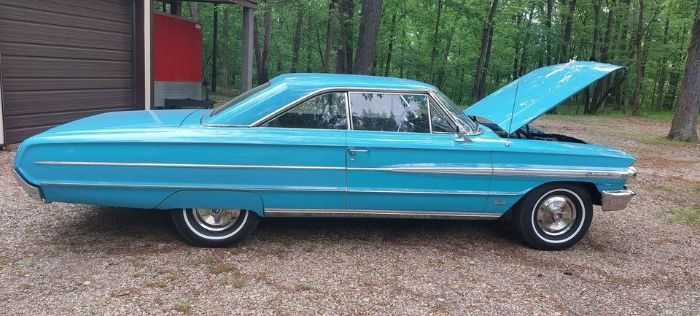
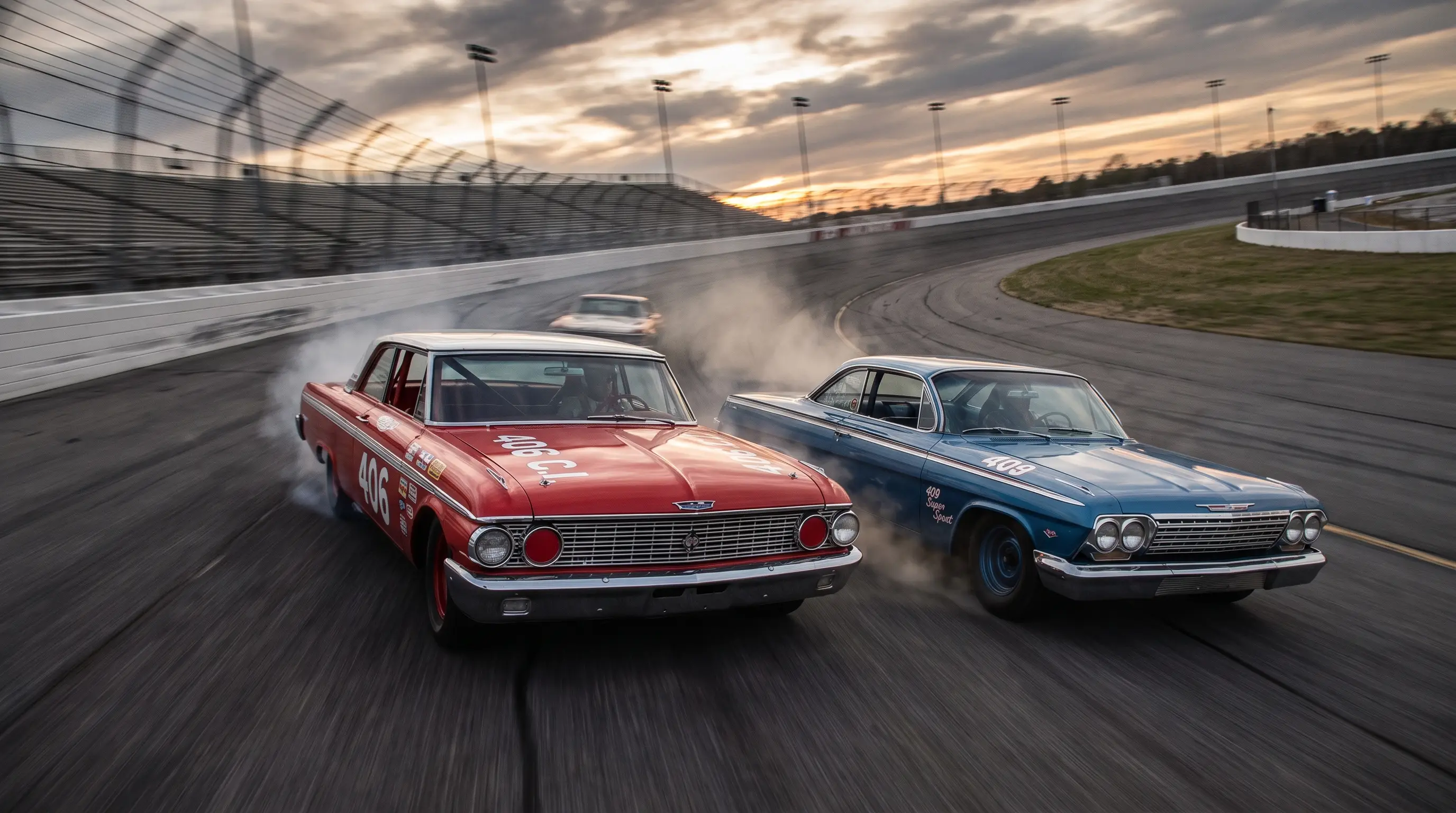
The ford galaxie 1962 vs 1962 impala 409 argument gets settled in bar rooms and swap meets more often than it gets settled with a stopwatch, and that is the interesting part. Both cars showed up in the same model year with a bored-out big block, a marketing department eager to talk about horsepower, and a sales floor that suddenly cared about quarter miles as much as trunk space. Ford put its money on the 406. Chevrolet put its money on the 409. Neither company was subtle about it.
Two philosophies, one horsepower war
By 1962 the full-size performance fight was no longer a rumor, it was a line item. Detroit had figured out that a family sedan with a genuinely quick engine sold magazines and, more importantly, sold cars to young men who wanted both a back seat and a reputation. Ford's approach with the Galaxie was to take an existing FE-family block, already proven in the Thunderbird and the 390, and push the bore and stroke until it made real numbers. Chevrolet did something similar with its W-series block, stretching the 348 into the 409. The two companies arrived at almost the same displacement from opposite directions, and that alone tells you the target was not a specific number, it was "more than the other guy."
If you want read the background on how the Galaxie got to this point in its life cycle, the short version is that Ford had spent two seasons building the full-size car's reputation on comfort and quiet, and the 406 was the moment that reputation got a companion.
The 406: Ford's answer under the hood
The 406 cubic inch V8 arrived for 1962 as a bored version of the 390, built specifically to give the Galaxie a credible answer to the big-inch Chevrolets and Mopars showing up at the strip. Ford offered it in two states of tune, a single four-barrel version rated at 385 horsepower and a triple two-barrel "Tri-Power" version rated at 405 horsepower. Both used solid lifters, both leaned on a stout bottom end borrowed from truck and marine applications, and both were only available with a manual transmission and a heavy-duty rear end, because Ford's engineers understood that a lightweight torque converter was not going to survive the abuse this engine was designed to dish out.
What made the 406 credible was not just the peak number, it was the fact that it did not fall apart doing it. The block, the crank, and the mains were all overbuilt relative to what a stock full-size car actually needed, which is a polite way of saying Ford expected people to race these things and did not want a rash of warranty claims to follow.
The 409: Chevrolet's shove
Chevrolet's 409 needs no introduction, mostly because a surf band wrote a song about it and the song did more for the engine's reputation than any dyno sheet could. For 1962 the 409 came in a base single four-barrel tune rated at 380 horsepower and a dual quad version that Chevrolet advertised at 409 horsepower, a number that was clearly chosen because it matched the displacement and not because anyone thought the public would check the math too closely.
The 409 shared the W-series architecture with the 348, which meant a scalloped combustion chamber design and valve covers that looked unlike anything else on the market. It was a heavier, more truck-derived design than the 406 in some respects, but Chevrolet's chassis people did their homework, and the Impala SS package that carried the engine was tuned as a package rather than as an engine bolted into an unchanged car.
On the strip and on the street
Period magazine tests generally had the two running close, with the edge shifting depending on gearing, tune, and which magazine's test driver got the better launch. What is not really in dispute is that both cars were heavier than they should have been for this kind of output, both needed stiff rear gearing to make the power usable, and both were bought in far smaller numbers than the base six-cylinder or small-block cars that actually paid Ford and Chevrolet's bills that year.
The Galaxie's advantage, such as it was, showed up in ride quality and in a chassis that Ford had spent years refining for the highway rather than the strip. The Impala's advantage showed up in outright drama, both in how the engine looked under the hood and in how loudly Chevrolet was willing to talk about it. Buyers cross-shopping the two in period were not just comparing timeslips, they were comparing which brand's swagger matched their own.
Which one actually wins today
Six decades later the argument has cooled from a street fight into a documented one, and the honest answer is that neither engine was objectively better so much as differently compromised. The 406 is arguably the more forgiving engine to live with, less finicky about tune, and it sits in a car that a lot of collectors still underrate. The 409 has the name recognition and, thanks to that song, a cultural footprint the 406 never earned. If you are chasing investment value the 409 usually wins the auction block. If you are chasing a car you can drive on a Sunday without babying it, the 406 Galaxie makes a quietly strong case.
Either way, values on clean big-block full-size Fords and Chevys from this era have moved steadily upward as the cars have gotten scarcer, and if this comparison has you leaning Ford's direction, you can find a classic Galaxie without much trouble on the current market.
There is also a documentation problem that favors patient buyers on either side of this argument. Genuine 406 Galaxies and genuine dual-quad 409 Impalas were built in low numbers relative to the six-cylinder and small-block cars that filled dealer lots, and decades of engine swaps have muddied the pool. A car with the correct block casting numbers, the correct carburetion, and paperwork that ties the engine to the body is worth a real premium over a car that merely wears the right badges. Buyers who do the homework, checking casting dates against production records rather than trusting a seller's word, tend to end up with the better investment regardless of which brand they picked.
Weight distribution is worth a mention too, since it gets left out of most magazine-era comparisons. Both cars carried their big blocks nose-heavy, and both benefited from stiffer front springs than the base six-cylinder cars used. Owners who autocrossed or drag raced these cars in period frequently added aftermarket traction bars or heavier-duty shocks, a detail that shows up on surviving cars as a small but telling sign of how hard the car was actually used rather than simply owned.
| Spec | Ford 406 (1962) | Chevrolet 409 (1962) |
|---|---|---|
| Displacement | 406 cu in | 409 cu in |
| Base horsepower | 385 hp | 380 hp |
| Top horsepower | 405 hp (Tri-Power) | 409 hp (dual quad) |
| Carburetion | 1 or 3 two-barrels | 1 or 2 four-barrels |
| Transmission offered | Manual only | Manual, some automatic |
"People want this to be a simple story about which engine was faster. It was never that simple. It was two different companies solving the same marketing problem with the tools they already had in the parts bin."
- Emily Chen