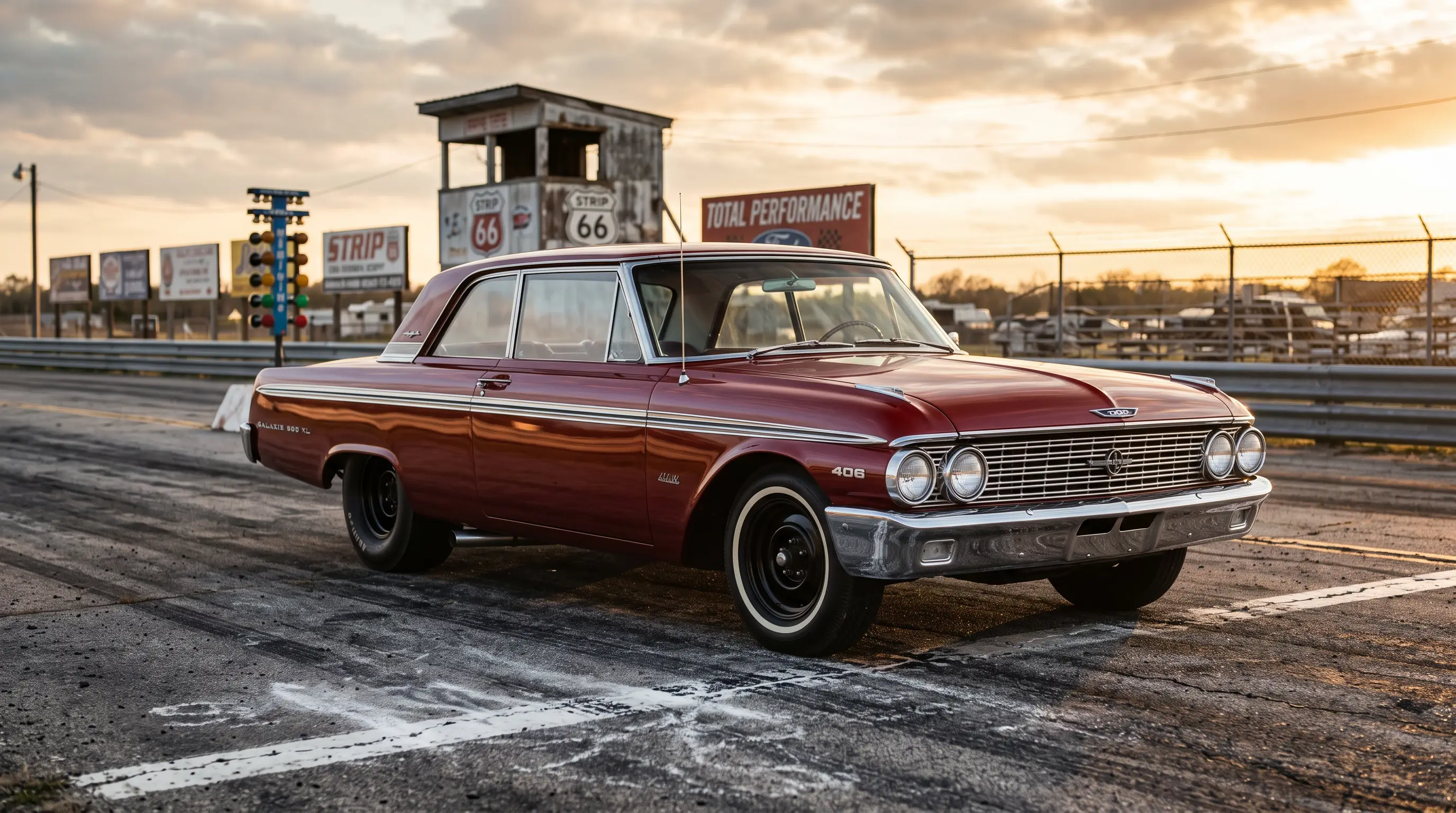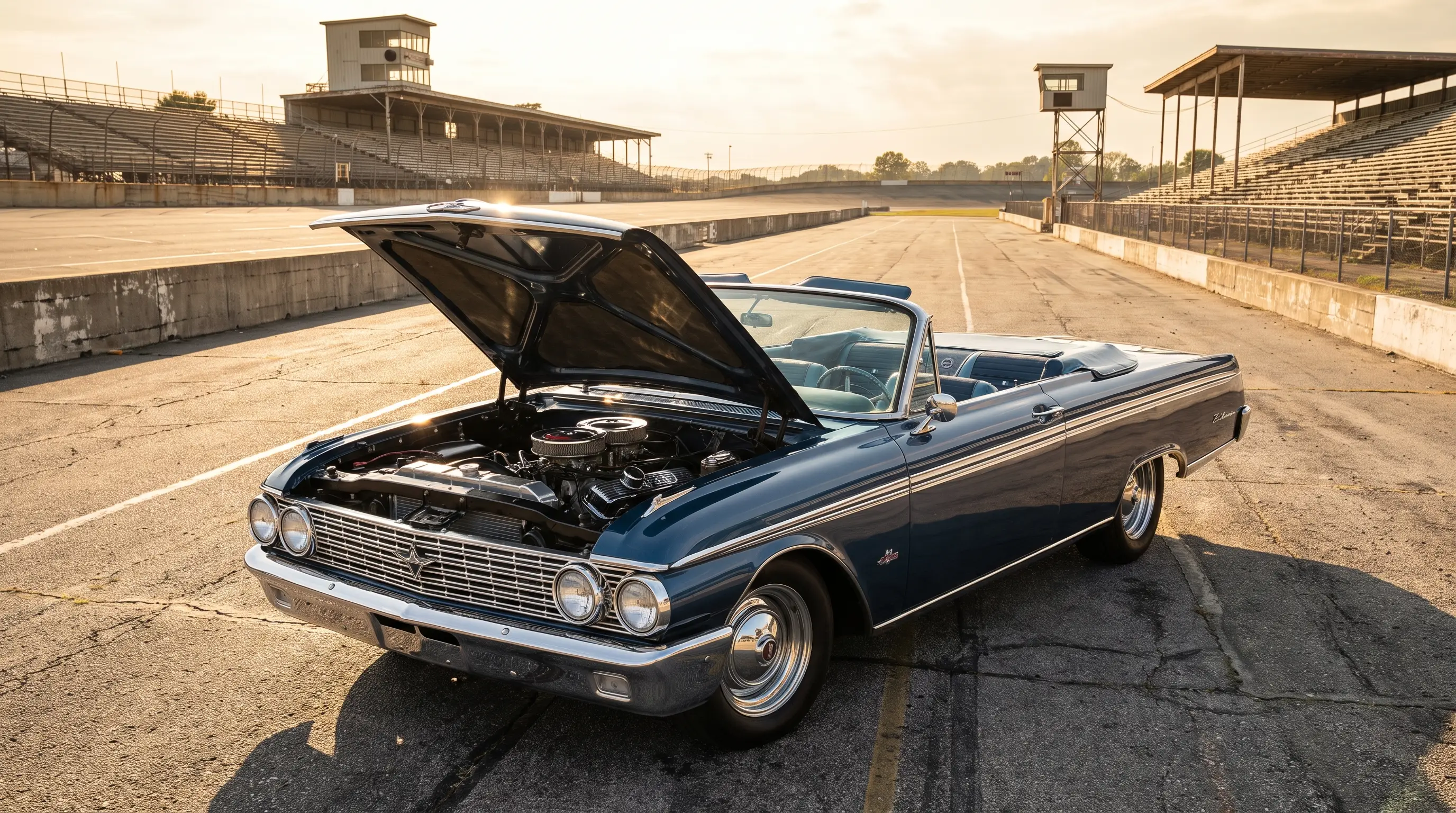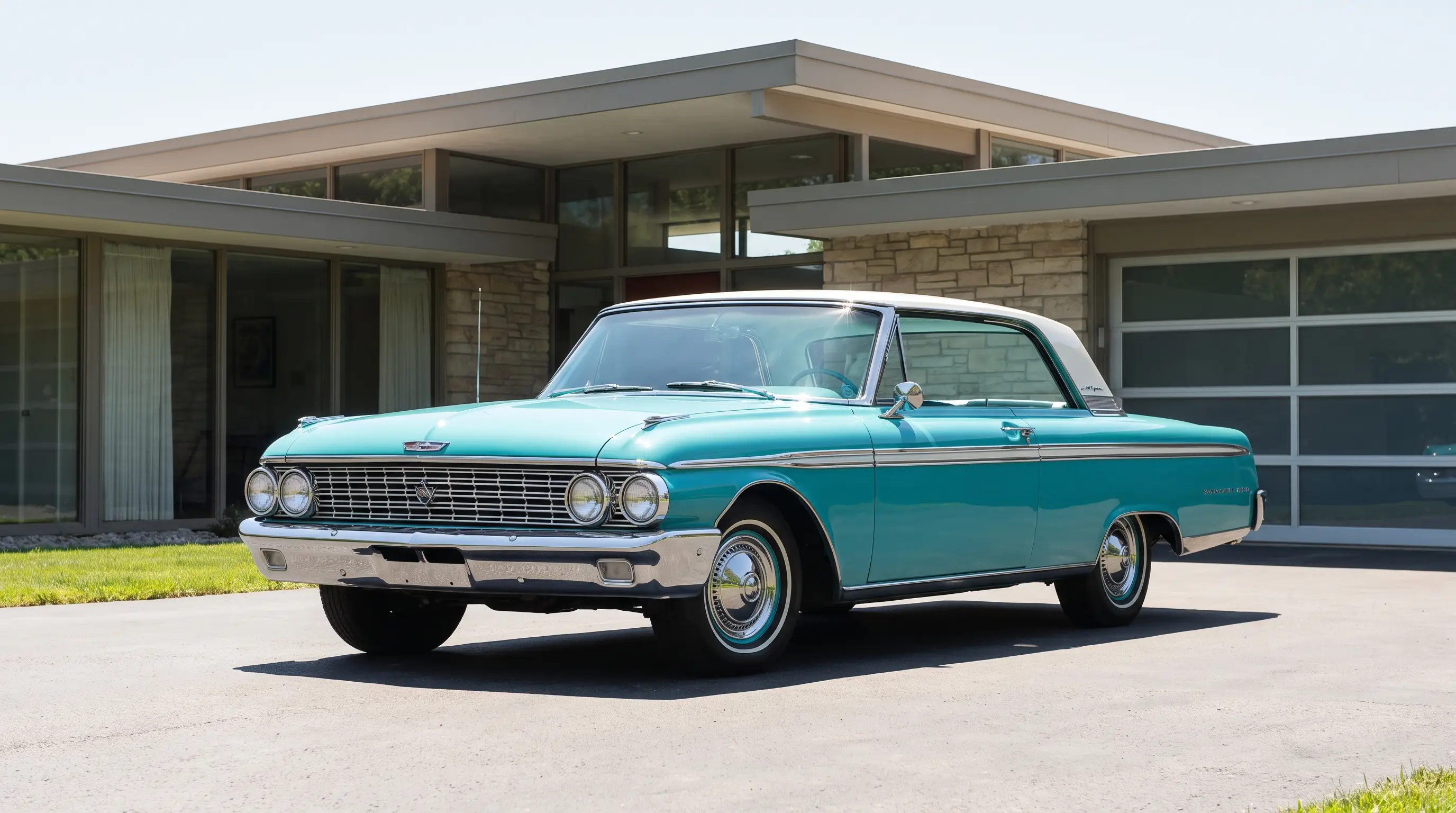
Every long-running nameplate has a year where it stops being the new kid and starts acting like the car it was always going to become. For Ford's full-size line, that year was 1962. The ford galaxie 1962 full size transition marks the moment the Galaxie name stopped sharing top billing with the Fairlane 500 and took over as Ford's senior full-size identity, a shift that shaped everything the nameplate did for the next decade.
From add-on trim to top of the line
When the Galaxie name arrived for 1959, it was introduced as a new top trim grafted onto an existing full-size platform, competing directly with the Chevrolet Impala for the attention of buyers who wanted a formal roofline and a longer options list. By 1961 the Galaxie had already absorbed most of the prestige that used to belong to the Fairlane 500, but the two names still coexisted in a way that confused the lineup's identity. For 1962, Ford cleaned that up. The Galaxie became the unmistakable senior series, and the changes that came with the model year reinforced the point structurally, not just cosmetically.
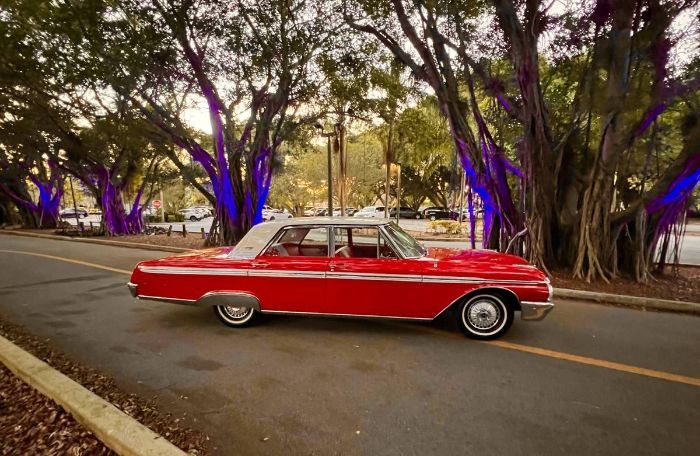
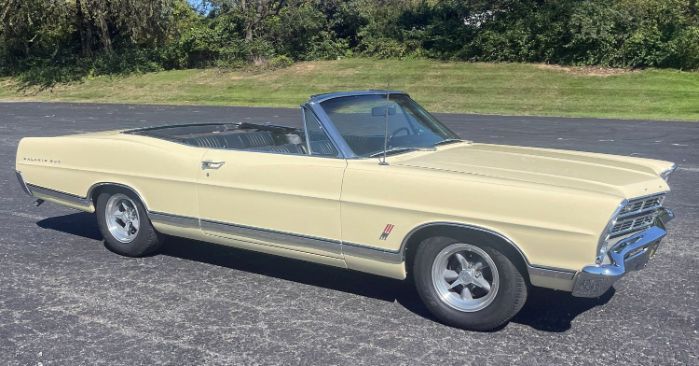
The clearest visual signal was the new formal roofline shared across the closed models, a squared-off greenhouse that traded some of the previous year's sweeping glass for a cleaner, more upright profile that read as more expensive and more serious. Ford paired that with a fastback-roofed Galaxie 500/XL Sports Hardtop, sold alongside the notchback body, giving buyers a genuine either-or choice between formal and sporty within the same top trim for the first time.
The engine lineup grows a serious option
The full size transition was not only about sheet metal. Ford introduced the 406 cubic inch V8 for 1962, a bored and stroked evolution of the FE-series big block that had been steadily growing since its 1958 introduction. The 406 arrived in two states of tune, a single four-barrel version and a triple two-barrel Tri-Power setup, both aimed squarely at drag strip and superspeedway competition rather than boulevard cruising. That decision to put a genuinely race-bred engine option into the Galaxie lineup told buyers exactly what kind of full-size car Ford wanted this to be. Read the full engineering story behind that engine in a related story we have covered separately.
This engine push did not happen in isolation. It sat inside Ford's broader Total Performance marketing campaign, the company-wide effort to win on every track that mattered and advertise every one of those wins. A full-size Galaxie winning NASCAR races on Sunday and sitting on dealer lots on Monday was the entire point of the strategy, and 1962 is the year that strategy started paying off in a full-size body specifically built to carry it.
Trim levels sort themselves out
Below the Galaxie, Ford kept the Fairlane and Fairlane 500 names alive but shifted them down to a genuinely mid-size platform for 1962, a new intermediate class that would eventually spawn the Torino. That move finished the sorting job. Full-size buyers now had a clean three-tier choice inside Ford showrooms: the entry-level Custom and Custom 500, the mainstream Galaxie, and the top-shelf Galaxie 500 and 500/XL. No more ambiguity about which nameplate sat where. The Galaxie 500/XL specifically targeted buyers cross-shopping the Impala Super Sport, with bucket seats, a center console, and unique trim that made the interior feel like a step above the standard Galaxie 500 cabin.
How dealers and advertising framed the change
Ford's dealer literature for 1962 leaned hard into the idea of a full-size lineup that finally made sense at a glance, and that clarity was a selling point in its own right. Salesmen no longer had to explain why a Fairlane 500 and a Galaxie might overlap in price and equipment, because the Fairlane had moved down to the new intermediate platform and the Galaxie now stood alone as the full-size flagship. That kind of structural simplicity made the showroom pitch easier, and it gave advertising copy a cleaner story to tell about where Ford's full-size buyer fit into the broader lineup, from the value-focused Custom 500 through to the console-equipped Galaxie 500/XL.
The advertising also leaned on the 406 and the Total Performance banner more aggressively than Ford had pushed full-size performance messaging in prior years. Print ads from the period frequently paired a Galaxie 500/XL hardtop with racing imagery, tying the showroom car directly to whatever the factory-backed teams were doing on NASCAR's biggest tracks that same season. That kind of direct line between the car on the lot and the car on the track was a deliberate strategy, and it worked well enough that Ford leaned on the same playbook through the entire mid-1960s run of 427-powered Galaxies that followed.
Why 1962 reads as a turning point today
Collectors looking back at the Galaxie's full run tend to treat 1962 as the year the formula locked into place: a formal full-size body, a genuine performance engine option at the top of the range, and a trim structure that clearly separated economy, mainstream, and prestige buyers within one nameplate. Everything Ford did with the Galaxie through the mid-1960s, including the 427 side-oiler era and the 7-Litre flagship package, built directly on the foundation laid down this year. If you want the fuller picture of how the model year came together, our 1962 ford galaxie history covers the full range of body styles and options in more depth.
"People remember 1962 for the 406 and the NASCAR wins, but the quieter story is how thoroughly Ford reorganized the whole full-size lineup that same year. The engine got the headlines. The trim structure is what actually stuck around."
- Tom Ramirez
What it means for buyers today
A 1962 Galaxie in any trim carries the weight of that transition year, whether it is a stripped Custom sedan or a documented 406 Tri-Power hardtop. The body style choice alone tells a story about how Ford was positioning the full-size market that year, and the trim level tells you which buyer Ford had in mind when the car left the factory. Anyone shopping the current Galaxies for sale now should treat the body style and trim combination as a piece of that larger history, not just a checklist of options. A 1962 Galaxie 500/XL hardtop is not simply a well-equipped car. It is a physical record of the exact moment Ford decided what its full-size flagship was going to be for the rest of the decade.
That is worth sitting with for a moment, because it is easy to look at a full-size sedan or hardtop from this era and see only the surface details, the color, the trim level, the engine choice, without recognizing the larger organizational decision each of those details reflects. The 1962 Galaxie carries the imprint of a company actively deciding what kind of car it wanted to be known for, at a moment when the competitive market genuinely demanded that kind of clarity. Buyers cross-shopping Ford against Chevrolet and Chrysler that year were choosing between three distinct full-size philosophies, and Ford's answer, formalized in 1962, held up well enough to carry the Galaxie name profitably for another decade.
Sources and notes
- Ford Galaxie - Wikipedia
- Ford FE engine - Wikipedia
- Vintage Car Life Road Test: 1962 Ford Galaxie 500 XL 406 - Curbside Classic
- 1962 Ford Full Size Cars Fact Sheet - Over-Drive Magazine
- 1962 Ford Galaxie 406: A Profile of a Muscle Car - HowStuffWorks
- Ford Galaxie Club of America - 1962 Specifications