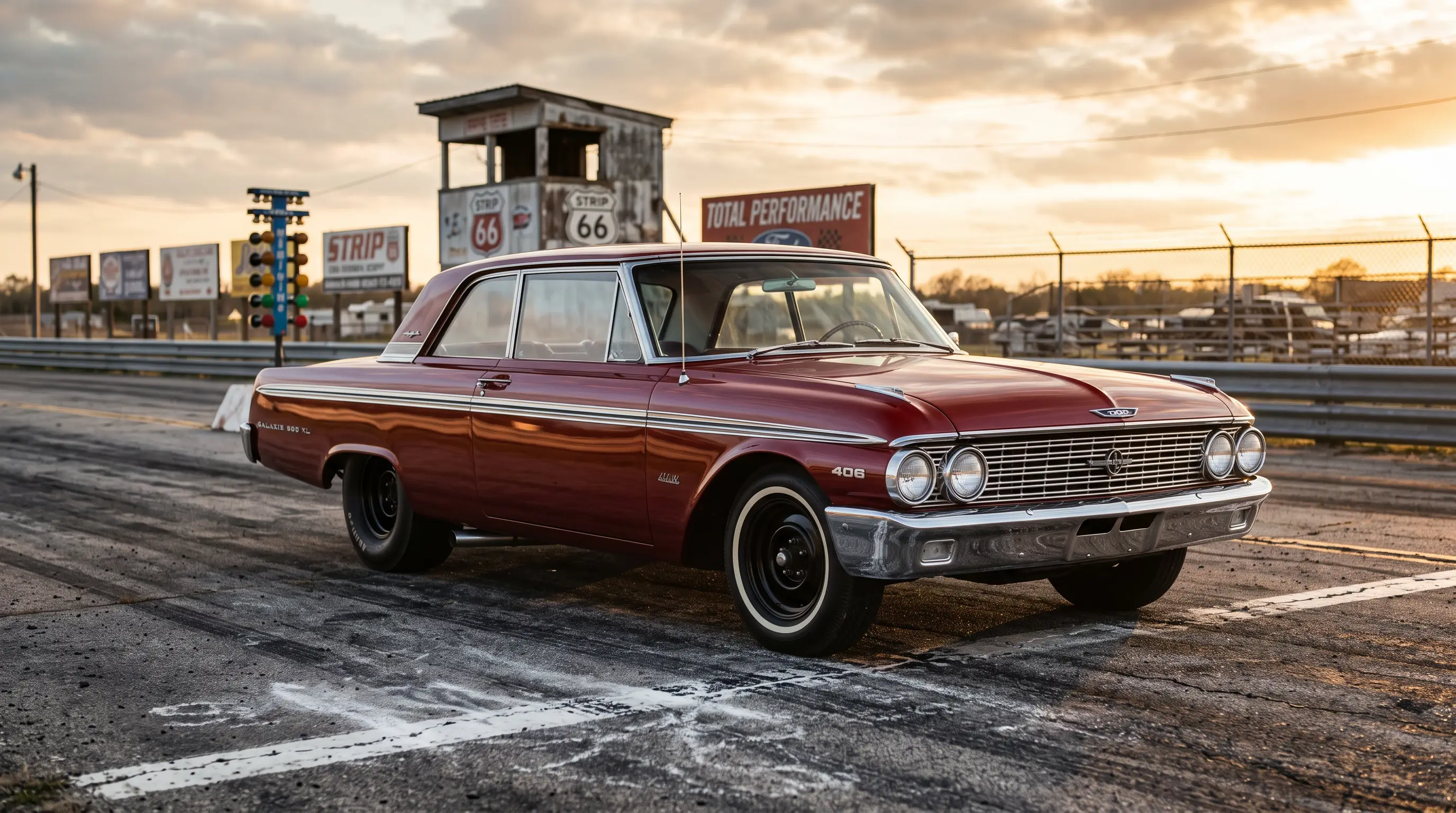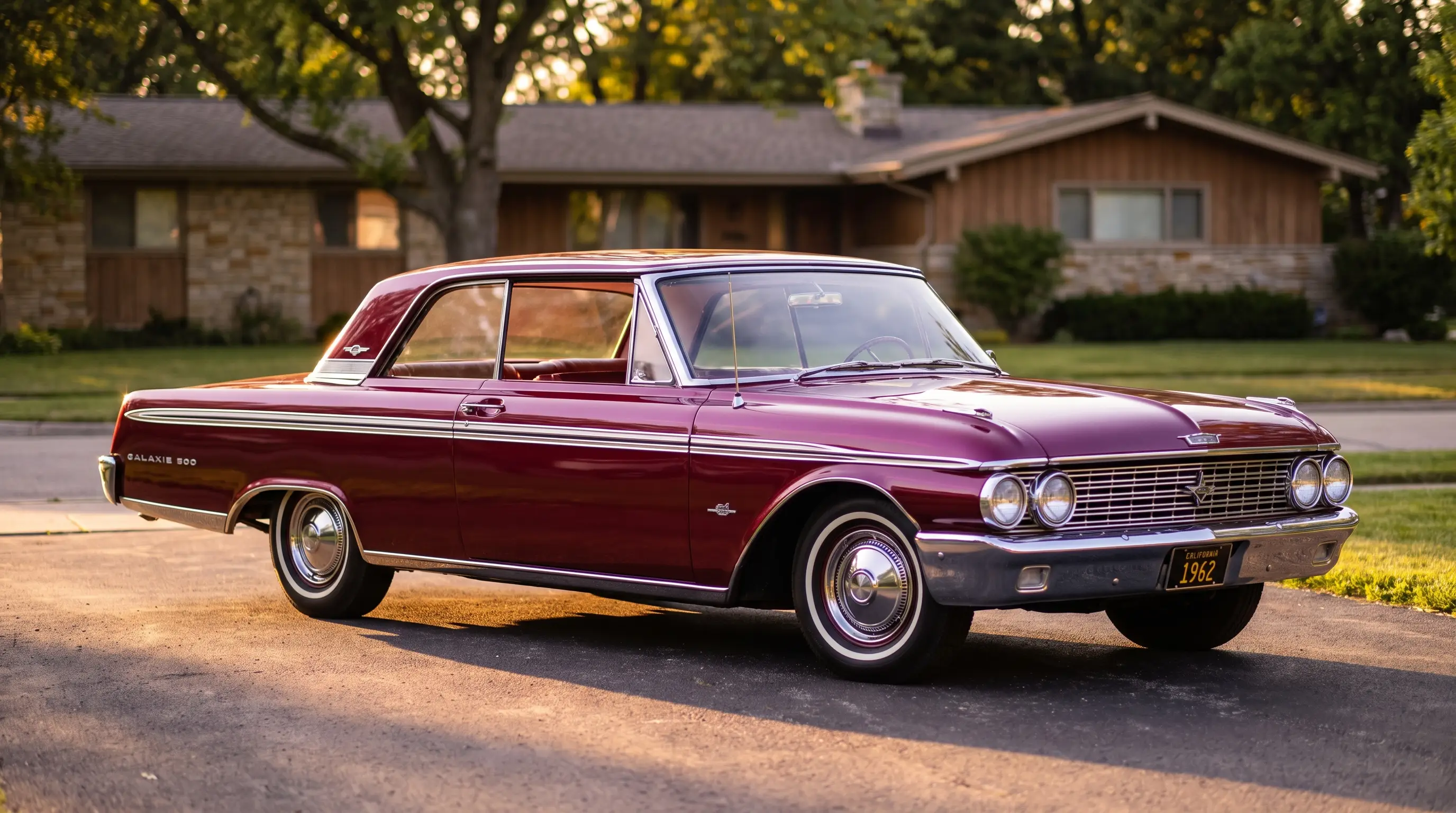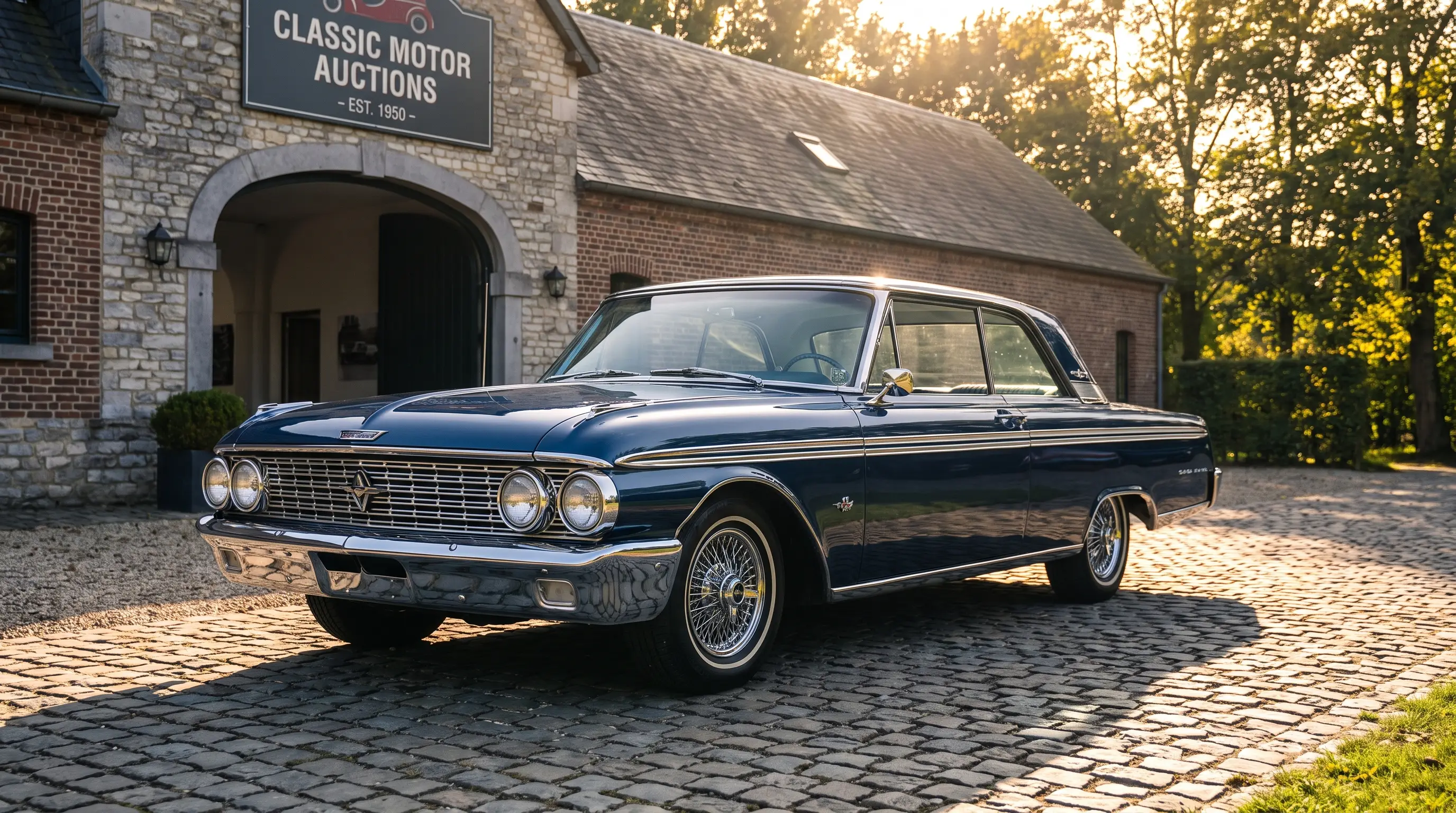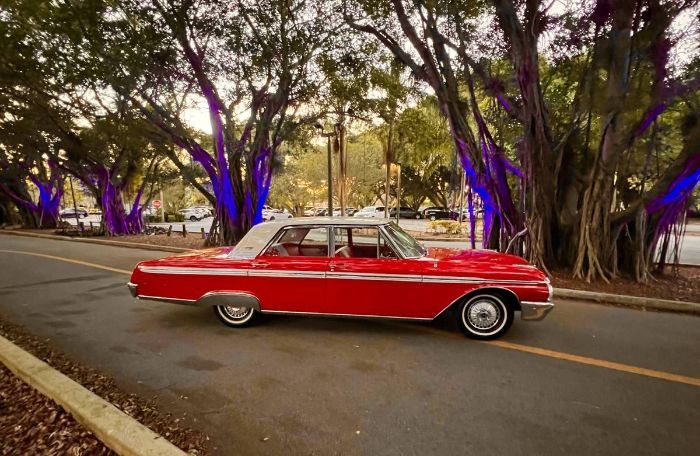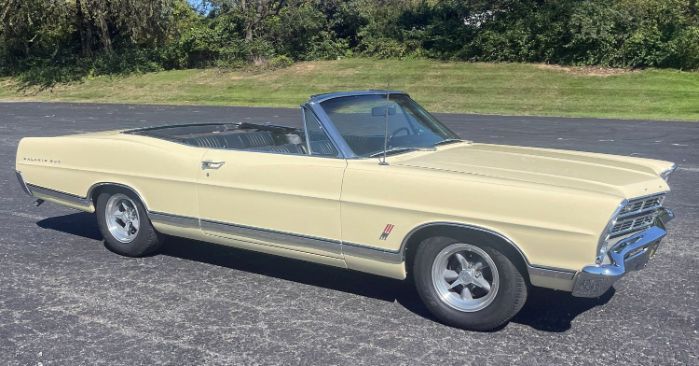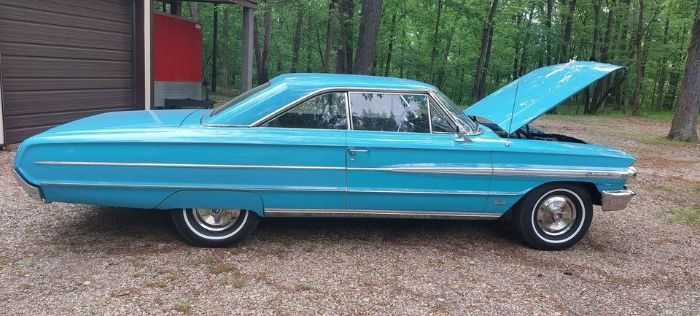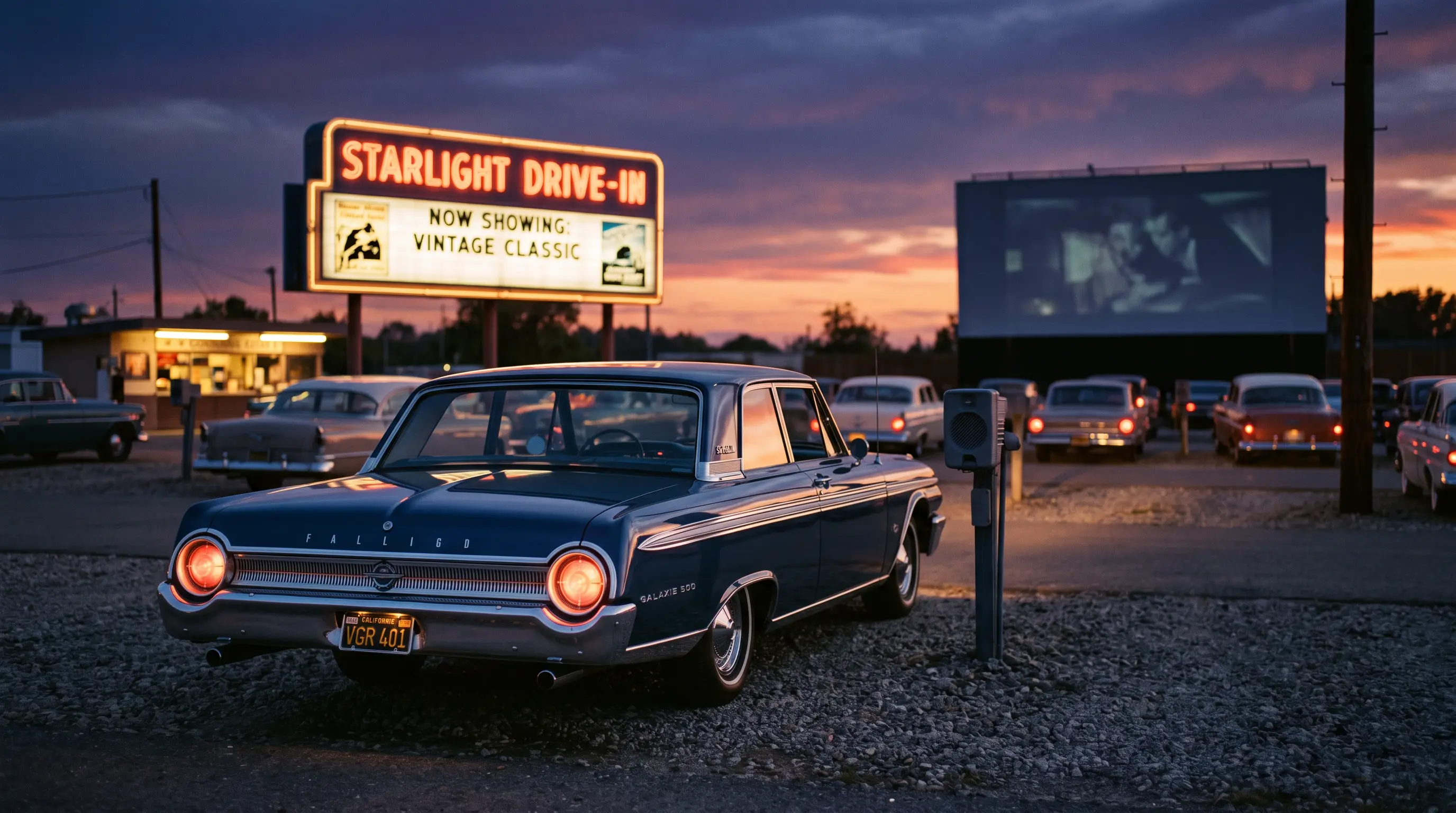
Ask someone to picture an early 1960s American street scene and a ford galaxie 1962 in pop culture is probably sitting somewhere in that mental image even if they cannot name it. It is parked outside a diner, idling at a stoplight behind a station wagon, or rolling past in the background of a black and white broadcast. The Galaxie did not need a starring role to shape how the era looked on screen. It was simply everywhere, and that ordinary omnipresence is its own kind of cultural footprint.
The car that did not need to be the star
Plenty of cars from this period earned pop culture immortality through a single dramatic role, a chase scene, a song, a specific character's specific ride. The Galaxie's relationship with the culture was quieter and, in a way, more honest. Because Ford sold full-size Galaxies in enormous volume through the early 1960s, the car became visual shorthand for ordinary American life on television and in film without any studio needing to make a deliberate choice about it. Set dressers reaching for a period-appropriate background car reached for a Galaxie constantly, simply because so many were on the road.
For the model year's full context, 1962 ford galaxie history covers the car's specifications and story in detail, but its cultural presence deserves separate attention because it played out differently than its engineering did, in the background of a thousand frames rather than in a single headline moment.
A favorite of the badge and the beat
Full-size Fords, the Galaxie included, were a common choice for municipal and police fleets through this period, their combination of size, durability, and available big-block power making them a practical pursuit vehicle for departments across the country. Ford's own 1962 law enforcement lineup, which included the Galaxie-based Police Interceptor package with its available V8, was marketed directly at these fleet buyers, and full-size Fords remained a common sight in municipal fleets throughout the decade. That practical relationship fed directly into how television and film portrayed law enforcement in the early 1960s, with Galaxie-based cruisers showing up in period productions simply because that is what a real department's fleet actually looked like at the time. The car's presence in these roles was not glamorous. It was procedural, which in its own way says something honest about how deeply the Galaxie had embedded itself into the ordinary machinery of American public life.
Radio, records, and the sound of a full-size Ford
The early 1960s produced a wave of car culture songs celebrating specific engines and specific models, and while the most famous of these tracks pointed at Chevrolet's big-block rather than Ford's, the broader musical moment still swept the Galaxie along with it. Radio culture in this period treated the family sedan and the muscle car as points on the same spectrum rather than separate categories, and a Galaxie 500 with the 406 under the hood belonged to the same cultural conversation as its more famous rivals even without a hit single of its own.
That absence of a signature song is worth sitting with for a moment rather than glossing over. The Galaxie's cultural identity was built on reliability and ubiquity rather than a single loud moment, which is a less romantic story but arguably a more accurate reflection of what most owners actually valued about the car.
A family car in a decade that photographed everything
The early 1960s were among the most heavily photographed decades in American history to that point, home movies, yearbook photos, newspaper archives, and the Galaxie shows up constantly in that visual record, parked in driveways, loaded for road trips, dressed up for a wedding with cans tied to the bumper. This is the quieter half of the car's pop culture story, not its appearances in scripted media but its appearances in the actual lived record of the decade, the family photo albums and local newspaper archives that never intended to document automotive history but did so anyway simply by existing.
If you want to trace how the Galaxie's cultural footprint connects to questions of value and rarity today, a related story picks up that thread directly, since a car's cultural presence and its collector value are more tightly linked than either topic gets credit for on its own.
NASCAR Sundays and the living room
Beyond scripted media, the Galaxie earned a genuine cultural presence through motorsport broadcasts and coverage in the early 1960s, a period when NASCAR's biggest full-size stock car battles were increasingly finding their way into national newspapers and, eventually, television highlight reels. A Galaxie running competitively on a superspeedway carried a different kind of cultural weight than the same car parked outside a diner, one rooted in genuine athletic drama rather than incidental set dressing. Fans who followed the sport in this period came to know specific Galaxie liveries and specific drivers the way later generations would come to know specific paint schemes decades on, and that recognition fed back into showroom interest in ways period dealers understood well.
This dual identity, background prop in one context and genuine competitor in another, is part of what makes the Galaxie's cultural footprint harder to summarize in a single sentence than a car with one clean, famous role. It occupied both the ordinary and the exceptional at the same time, depending on which Sunday you happened to be watching.
Why the quiet version of fame still counts
A car does not need a single dramatic scene to matter to a culture. Sometimes it matters more by being the thing everyone half-remembers seeing everywhere, the background detail that makes an old photograph or an old broadcast feel authentically of its moment. The 1962 Galaxie earned that kind of fame honestly, through volume and ordinary use rather than through a single manufactured cultural event, and that is a legacy worth taking seriously rather than dismissing simply because it lacks a famous chase scene. If that quieter kind of history appeals to you, there are Galaxies for sale now that carry the same understated presence their ancestors did on every American street corner sixty years ago.
There is also something worth saying about how this quieter fame ages compared to the loud kind. A car remembered for a single dramatic scene gets frozen there, forever tied to one script, one director's choices, one moment that may or may not still resonate with audiences decades later. A car remembered for simply being everywhere gets to age more gracefully, because its cultural claim was never dependent on a specific piece of media staying relevant. The Galaxie's fame does not need anyone to have watched a particular film recently. It just needs someone to have grown up in a house with a driveway in the early 1960s, and that population, even now, is larger and more forgiving than any box office number could ever be.
"Some cars get remembered for one dramatic scene. The Galaxie got remembered for being in every scene, quietly, which might be the more honest kind of fame."
- Nora Beckett