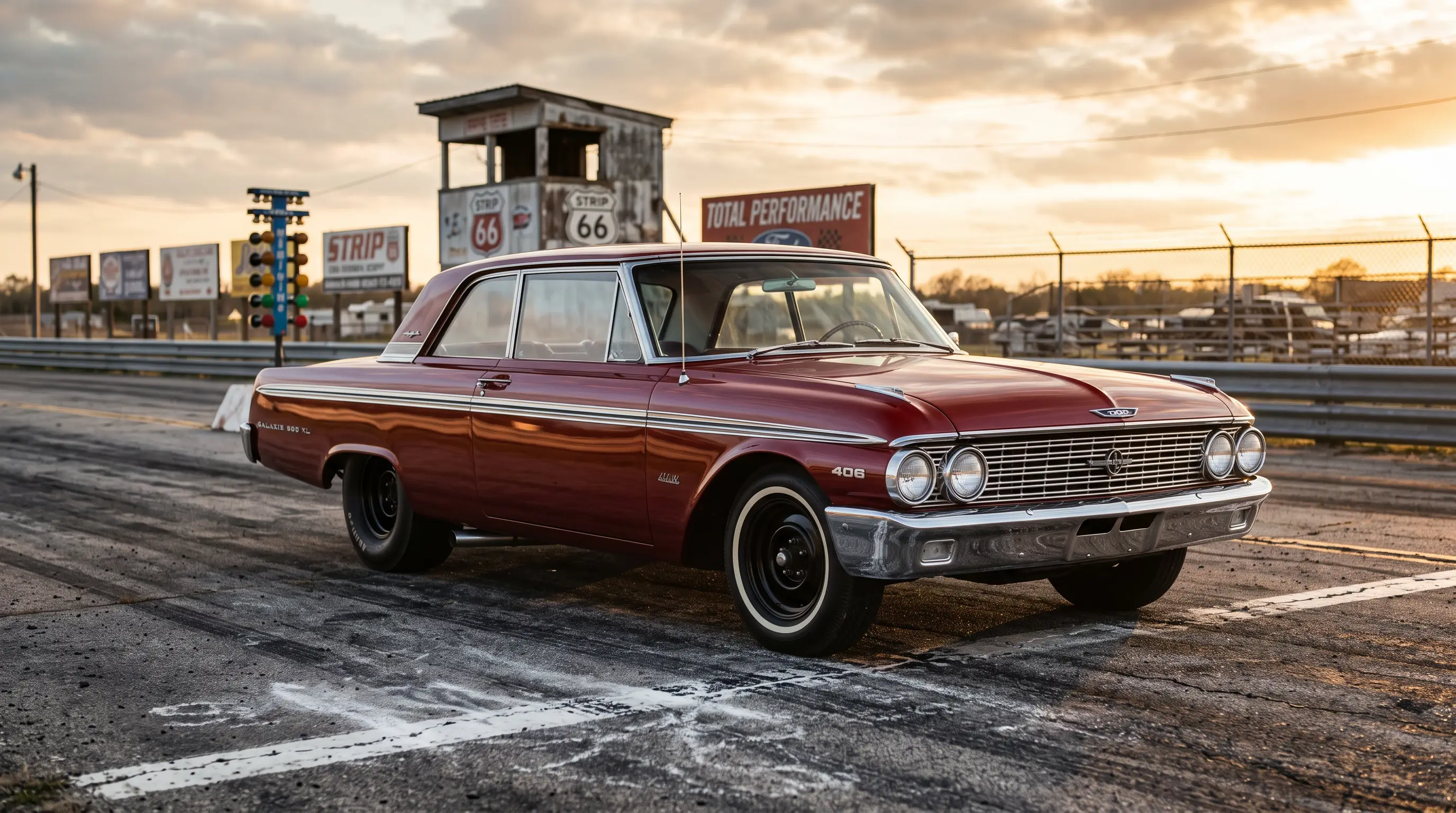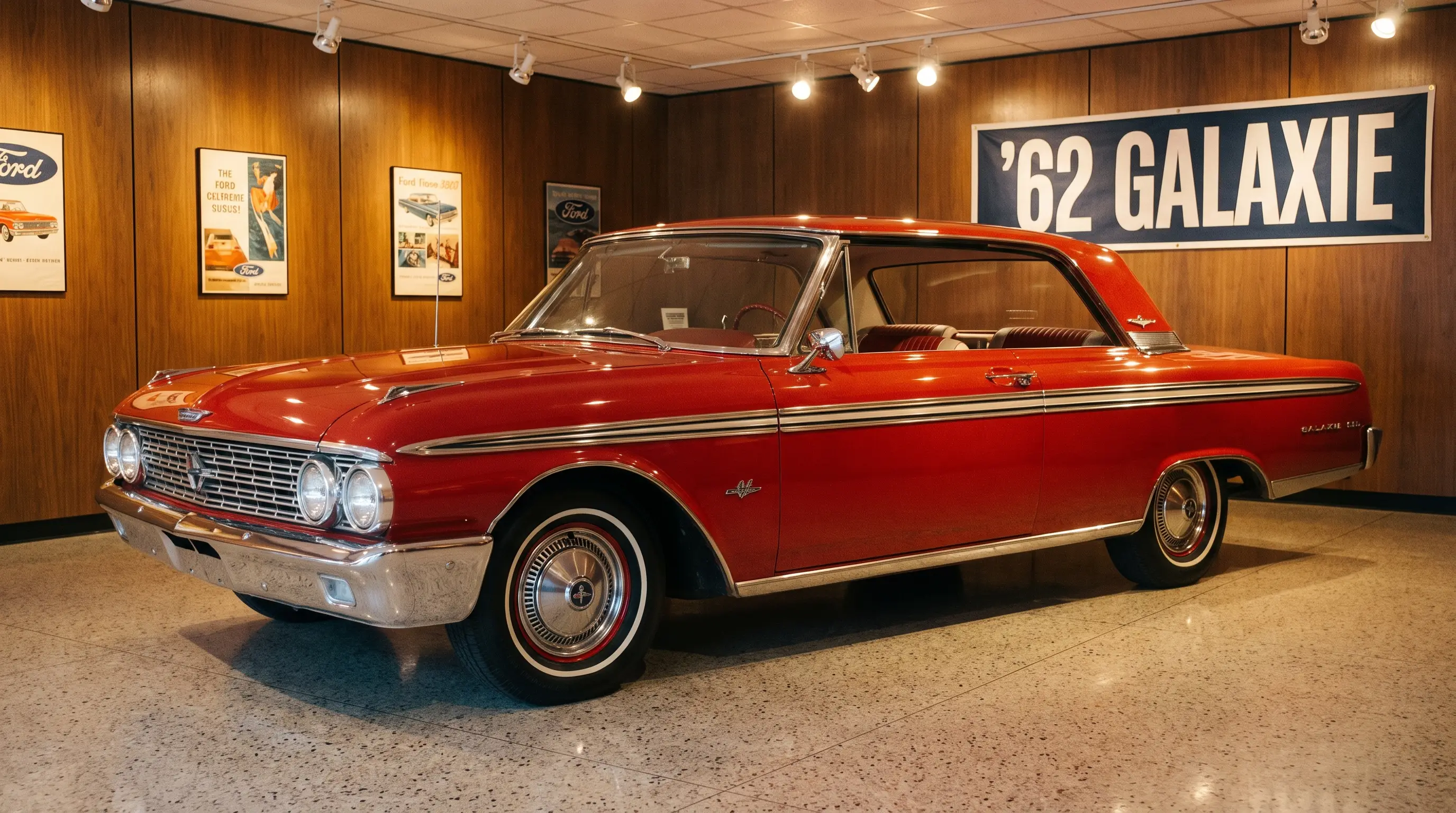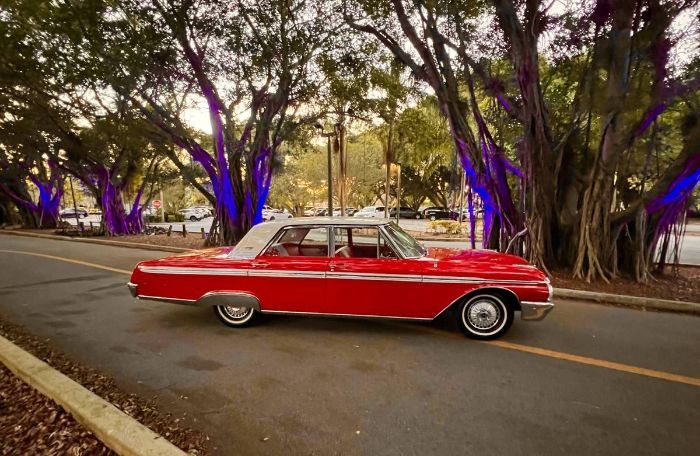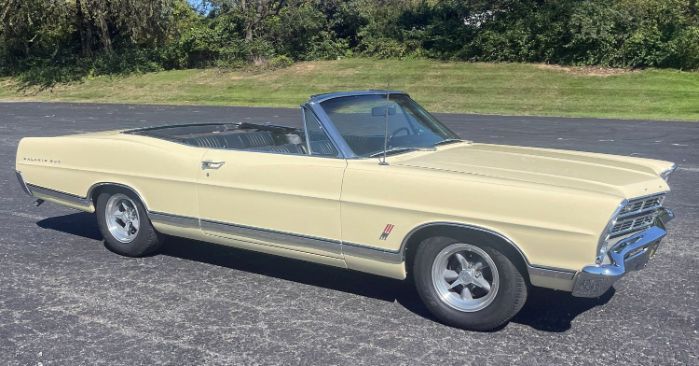
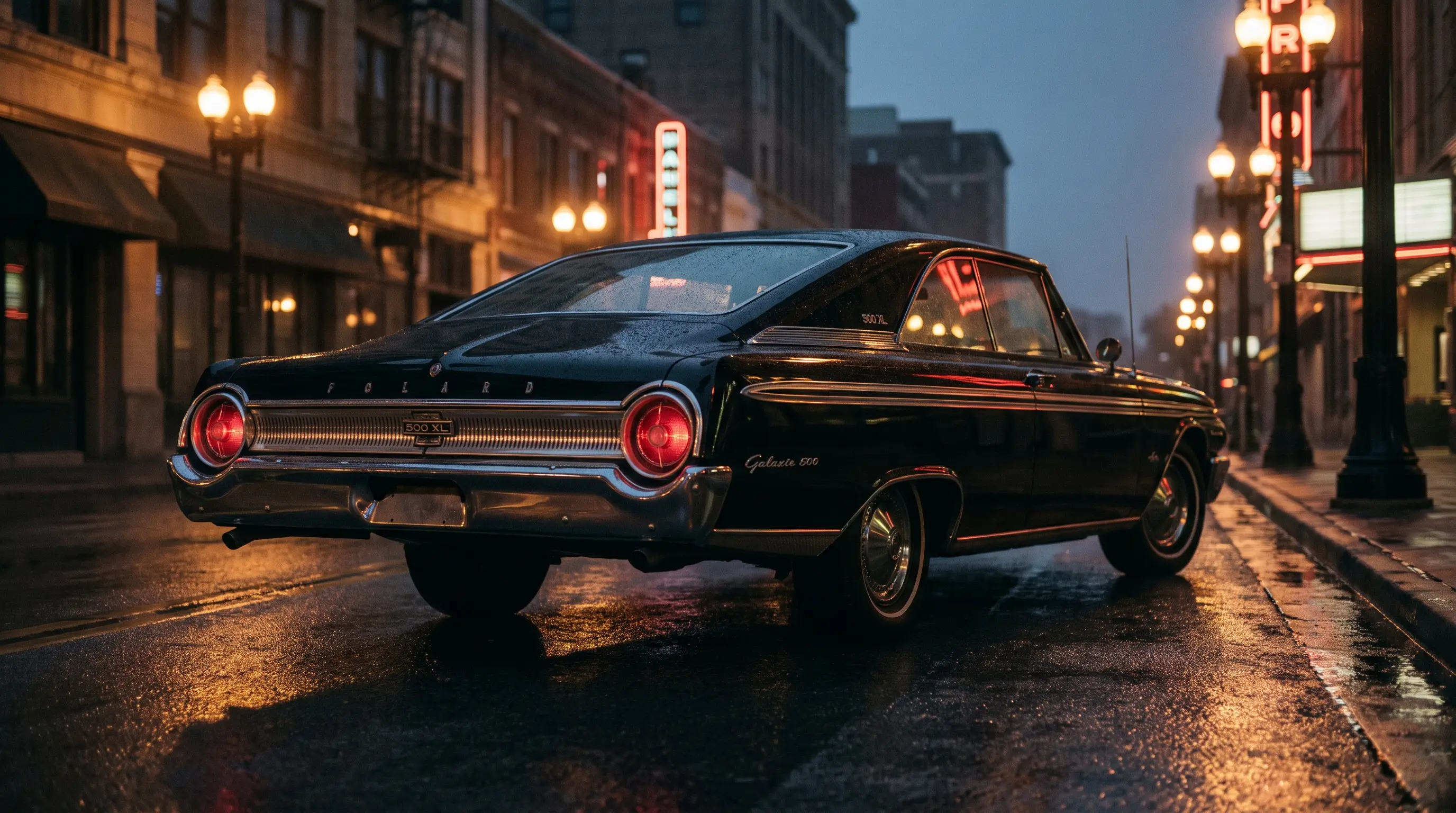
Some nameplates disappear with a whimper. The ford galaxie 1962 starliner farewell was quieter than that, more of a rebadging than a real ending, but it still closed out one of the more distinctive body styles Ford built during the full-size fastback craze of the late 1950s and early 1960s. The Starliner name went away for 1962, even though the sweeping fastback roofline it had introduced did not entirely vanish with it.
What the Starliner actually was
The Starliner arrived for 1960 as the fastback-roofed companion to the formal-roofed Galaxie Sunliner and Town Victoria hardtops, giving Ford a genuine style choice within its top trim. The sweeping, low-slung roofline gave the car a lower, faster look than the notchback models, and it carried over into 1961 largely unchanged in concept even as the rest of the lineup received a facelift. It sold well enough in both years to justify its existence, and it gave Ford a direct visual answer to the fastback Chevrolet Impala and Bel Air of the same period, a rivalry that shaped body style decisions across the entire full-size segment at the time.
What made the Starliner distinctive was not just the roofline, it was the way that roofline was marketed as a performance-adjacent style choice, aimed at buyers who wanted their full-size Ford to look quick sitting still. That styling identity mattered more than most buyers realized, because the fastback shape genuinely did cut through the air better on a superspeedway than the squared-off notchback roof, a fact that would matter enormously to NASCAR teams within a couple of seasons.
Why the name went away for 1962
For 1962, Ford restructured the full-size lineup and folded the fastback body style into the Galaxie 500/XL series as the Sports Hardtop, dropping the standalone Starliner name entirely. The car did not disappear so much as it got absorbed into the top trim level and rebranded to fit Ford's cleaned-up 1962 nameplate structure, where the Galaxie 500/XL now carried both a formal notchback and a fastback body style under one series name rather than two competing model names. It is a subtle distinction, but it matters for anyone trying to correctly identify or discuss a car from this exact window, since calling a 1962 fastback a Starliner is technically incorrect even though it is the same basic body concept the Starliner name had established two years earlier.
The timing was not coincidental. Ford's Total Performance push was accelerating through 1962, and the fastback roofline's aerodynamic advantage on the NASCAR circuit made it valuable to keep in production even as the marketing name changed. Folding it into the 500/XL series let Ford sell the shape to performance-minded buyers without maintaining a separate Starliner identity that had, by 1961, started to feel redundant next to the increasingly performance-focused Galaxie 500/XL trim itself.
What survived the rebrand
Mechanically and structurally, the fastback body that replaced the Starliner name carried forward the same core advantages: a lower drag coefficient than the notchback roof, and a genuinely distinct visual identity on the road that separated it from the formal-roofed Galaxie 500 sedans and hardtops most buyers were choosing. Buyers who wanted the sportier look could still get it in 1962, they just ordered a 500/XL Sports Hardtop instead of a Starliner, and the badge on the car reflected the new trim structure rather than the old standalone nameplate.
The wider fastback trend it belonged to
Ford was not alone in chasing the fastback silhouette through this period. Chevrolet ran its own version of the sweeping roofline on the Bel Air and Impala throughout the same years, and Pontiac and Dodge experimented with similar shapes on their own full-size flagships. The entire industry had recognized, independently and around the same time, that a lower, more sloped roofline read as faster and more expensive to a showroom customer even before the car turned a wheel. That shared instinct is part of why the Starliner's fastback shape did not simply disappear when the name did. The market had already validated the styling direction across multiple manufacturers, and Ford had no reason to abandon a shape that was working, only the standalone branding around it.
What set Ford's approach apart was how directly it tied that fastback shape to on-track performance rather than treating it purely as a styling exercise. Aerodynamic advantage on a superspeedway is measurable in a way that showroom appeal is not, and Ford's engineers understood by the early 1960s that the fastback roofline was doing real, quantifiable work at high speed, not just looking fast standing still. That dual purpose, showroom appeal paired with genuine competition advantage, is what kept the shape alive under the 500/XL badge well past the point where the Starliner name itself had served its purpose.
Why this transition still matters to collectors
For collectors today, understanding the Starliner farewell means understanding that 1962 is a genuine dividing line in Ford's full-size fastback story, not an arbitrary cutoff. A 1961 Starliner and a 1962 Galaxie 500/XL Sports Hardtop share obvious styling DNA, but they are documented under different nameplates, different trim structures, and in some cases different production paperwork conventions, which matters enormously when verifying originality or tracking a car's factory history. Anyone researching a fastback Ford from this exact window needs to know which side of 1962 they are dealing with before assuming anything about how the car was originally badged and sold.
"People see the fastback roof and assume Starliner automatically, but by 1962 that name was already retired. It is a small correction, but it is the kind of detail that separates an accurate restoration from a well-meaning guess."
- Tom Ramirez
The Starliner name may have ended in 1962, but the fastback idea it introduced kept working for Ford right through the peak years of its NASCAR success. For the fuller picture of how the 1962 model year came together around this transition, read the background we have covered on the year as a whole, and if the top-trim story from this same season interests you, the debut of the 500/XL series is worth a look too. If you are hunting for a genuine example of this era in person, you can shop classic Galaxie listings currently available.
Whichever badge ends up on the decklid of a car you are researching, the underlying point stands. 1962 is a genuine hinge year in Ford's fastback story, not a footnote. Treating the Starliner's disappearance as a simple end of the line misses the more accurate picture, which is a nameplate retiring gracefully into a broader trim structure while the shape it introduced kept doing real work on showroom floors and racetracks alike for several more years.