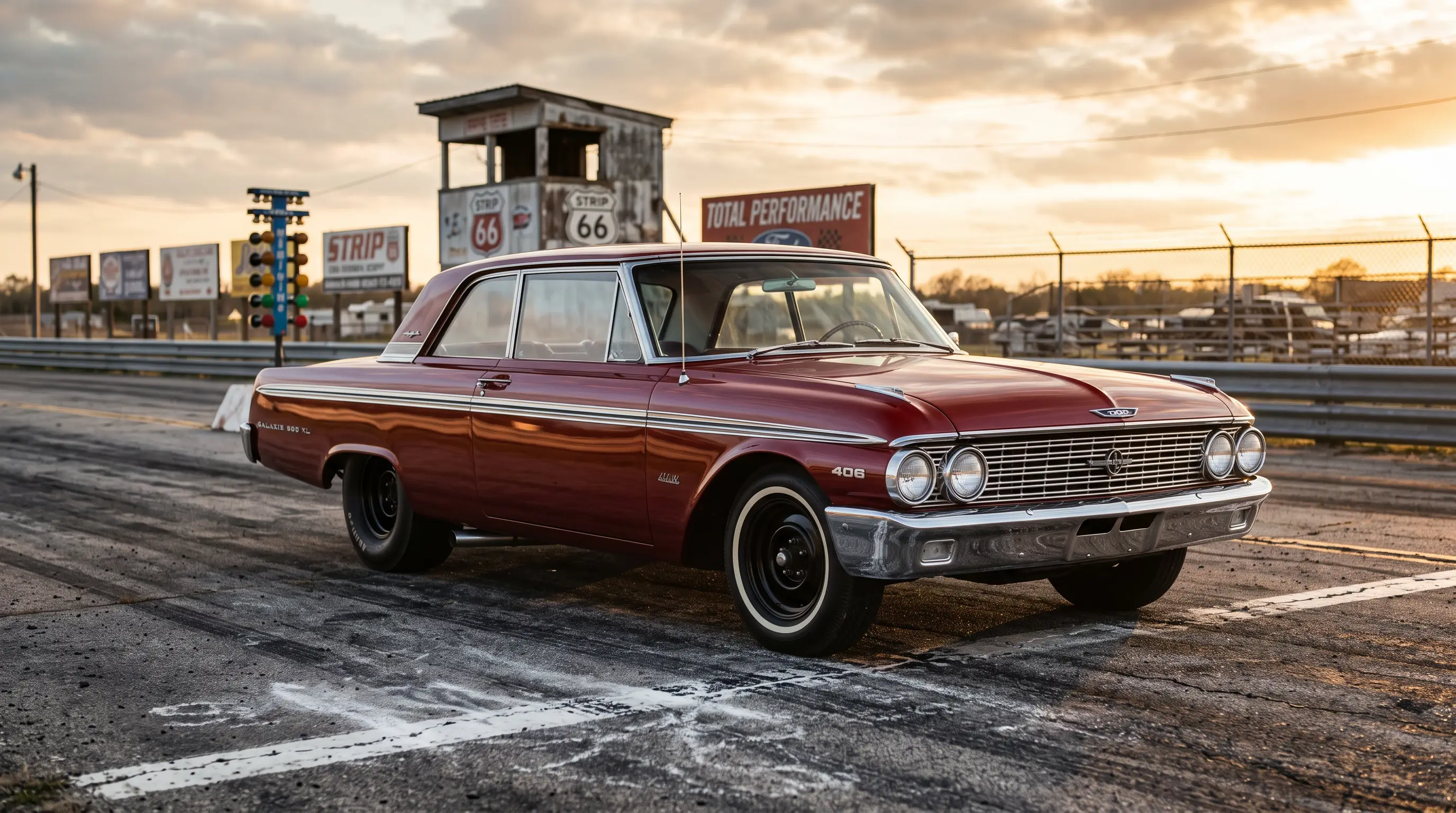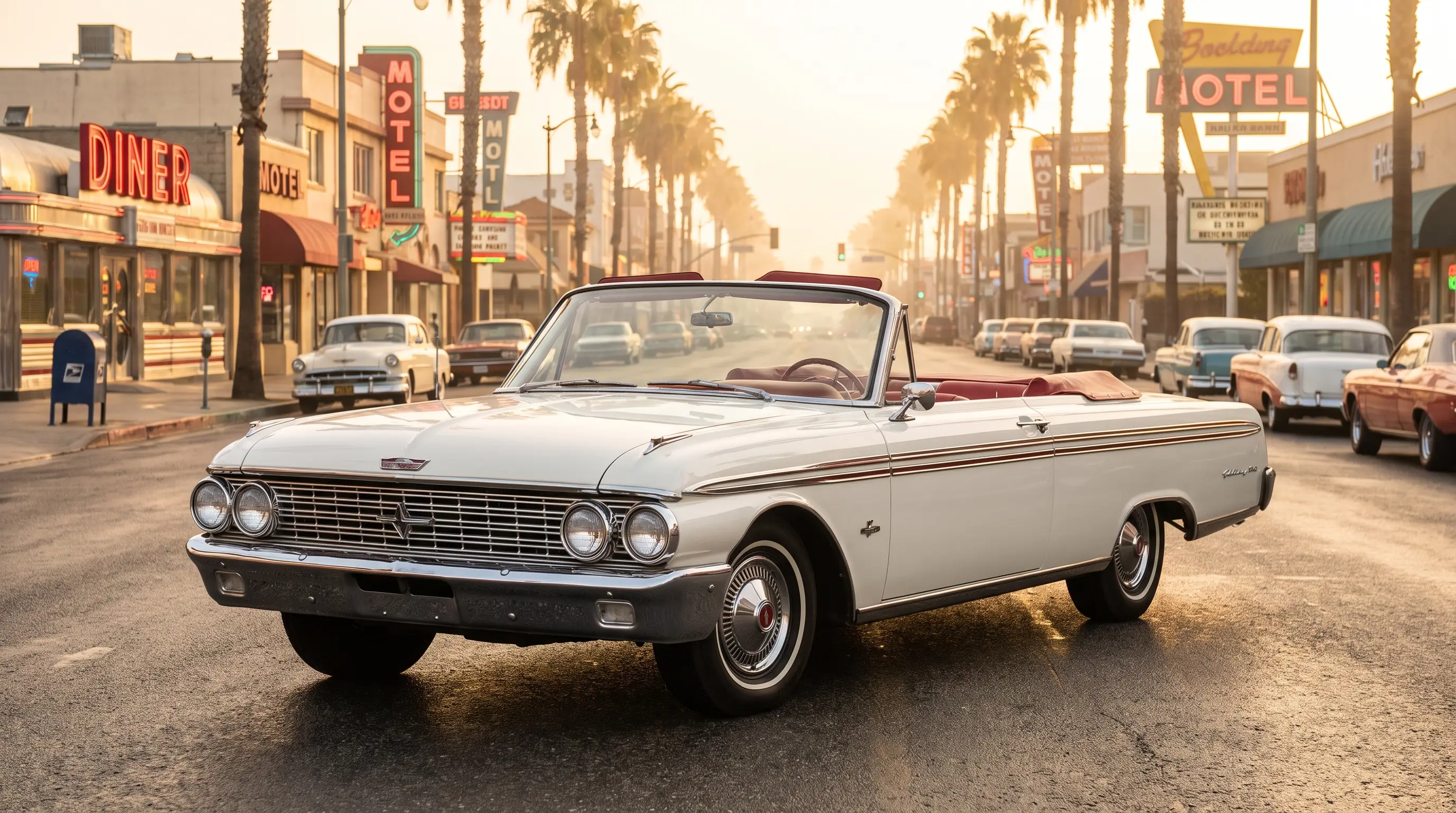
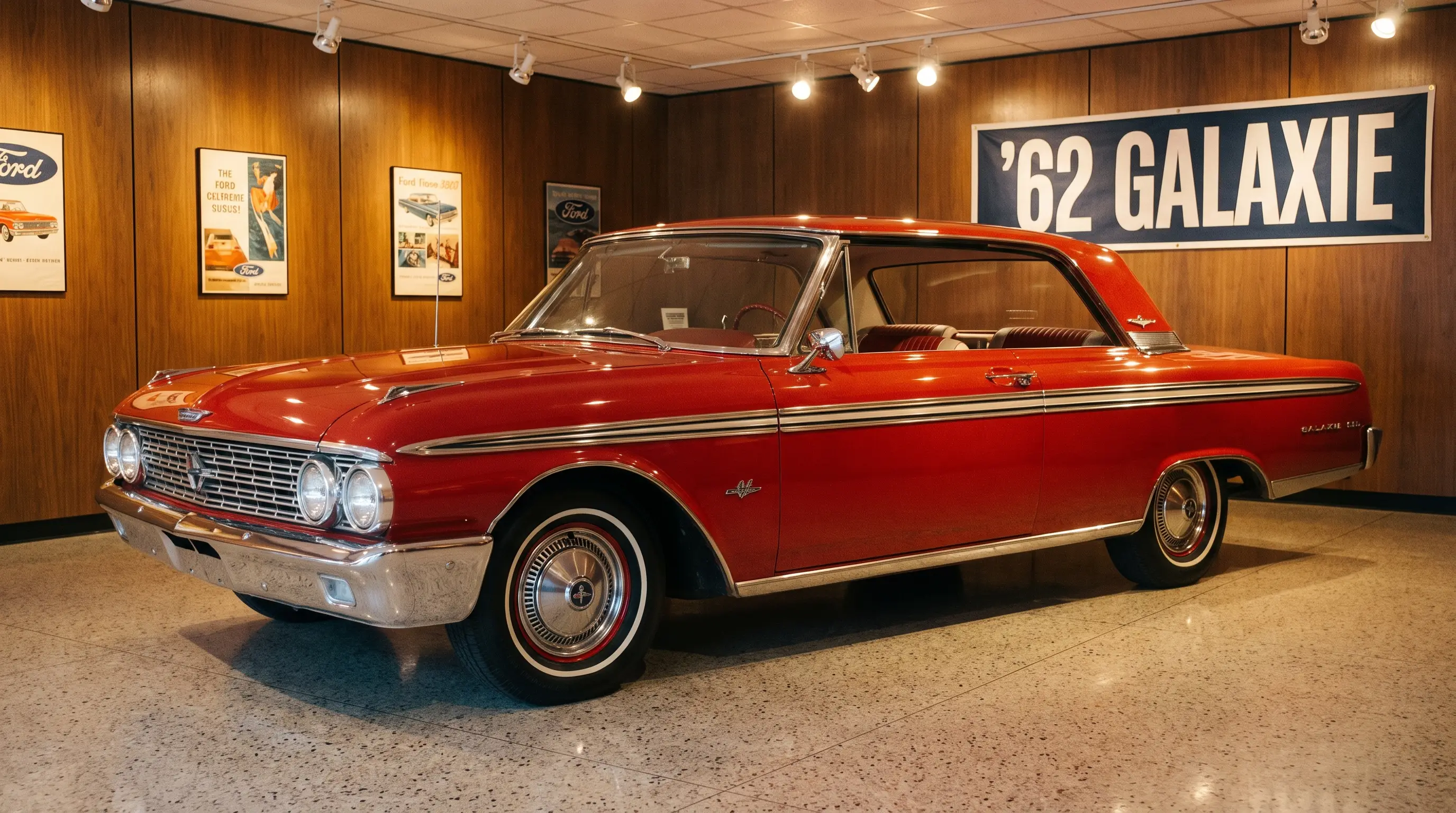
Trim badges rarely carry this much weight, but the ford galaxie 1962 500 xl debut is worth treating as a genuine artifact of its moment. The XL designation, introduced this year atop the existing Galaxie 500 series, marked the first time Ford built a full-size personal-luxury trim specifically engineered to compete with the bucket-seat, console-equipped Impala Super Sport, and the details Ford chose for that debut tell you exactly what kind of buyer the company was chasing in 1962.
Reading the badge correctly
The 500/XL sat above the standard Galaxie 500 as a distinct sub-series rather than a simple option package, which is an important distinction for anyone documenting a car's period identity. Ford offered it in both the formal notchback hardtop body and the fastback-roofed Sports Hardtop, giving buyers a choice of silhouette while keeping the XL's defining interior and trim elements consistent across both. That interior is where the trim earned its name: bucket seats up front, a floor-mounted shifter and console when equipped with the available four-speed manual, and unique trim badging that separated it visually from a standard bench-seat Galaxie 500 the moment you opened the door.
From a documentation standpoint, this matters because the XL designation appears on build sheets and trim tags in ways that a casual buyer might overlook. A car cataloged simply as a "Galaxie 500 hardtop" and one correctly identified as a "Galaxie 500/XL" from the same model year are meaningfully different artifacts, with different original price points, different factory-installed content, and different collector expectations today.
The period context that shaped the decision
Ford did not introduce the 500/XL in a vacuum. Chevrolet's Impala Super Sport had already established a template for a full-size, bucket-seat, performance-adjacent trim aimed at younger buyers and enthusiasts who wanted their family-sized car to feel special without stepping down to a smaller body. General Motors had proven there was real demand for this configuration, and Ford's response with the 500/XL in 1962 was a direct competitive answer, timed to coincide with the broader Total Performance marketing push the company was running that same model year.
What is worth preserving accurately here is that the 500/XL was positioned as an image trim first and a performance trim second. Buyers could order it with the base six-cylinder or a modest V8 just as easily as with the available 406 big block, which means the presence of an XL badge alone tells you nothing definitive about what sits under the hood. Only the original build documentation, correctly cross-referenced, confirms the actual drivetrain a specific car left the factory with.
How the XL fit alongside the rest of the 1962 lineup
Placing the 500/XL correctly within the 1962 hierarchy matters for anyone building an accurate picture of the model year. Below it sat the standard Galaxie 500, offered in the same body styles but without the bucket seats, console, or unique trim badging, aimed at buyers who wanted the prestige of the Galaxie name without paying for the image package on top of it. Below that sat the Custom and Custom 500 series, positioned as the value-oriented full-size choice for buyers who cared more about interior room and a recognizable Ford badge than about styling flourishes. The 500/XL, by contrast, existed specifically to give Ford a genuine answer in the growing market for full-size cars that doubled as a personal statement, not just family transportation.
That hierarchy is worth documenting carefully because period brochures and dealer materials treated the distinctions seriously, listing separate equipment lists and separate suggested retail prices for each series. A researcher working from original literature can usually confirm within a few minutes whether a given set of features and trim matches the 500/XL specification correctly, provided they have access to the correct year's brochure rather than relying on later reproductions or secondhand summaries that sometimes blur the lines between adjacent trim levels.
What an authentic example looks like today
Cataloging a genuine 1962 500/XL correctly means checking several period-specific details together rather than relying on any single one. The trim tag should reflect the correct interior trim code for the bucket-seat configuration. The console, when present, should match the correct pattern and shifter arrangement for whether the car left the factory with an automatic or the available four-speed manual. And the exterior badging, distinct from a standard Galaxie 500, should be present and correctly placed. Reproduction and donor parts have circulated long enough that any of these details in isolation can mislead an inexperienced eye, which is exactly why concours-level documentation treats the whole package as one artifact rather than a checklist of interchangeable pieces.
This kind of careful attention is not pedantry for its own sake. It is what preserves the historical accuracy of a genuinely important trim level, one that represents Ford's direct answer to a specific competitive pressure at a specific moment, and losing that context to careless restoration or casual parts swapping erases a piece of the story that the car itself was built to tell.
"An XL badge on a bench-seat interior tells you someone made a substitution somewhere along the way. The trim, the console, and the badge exist as a set. Treat them as one artifact, not three separate decisions."
- Sarah Whitfield
Why the debut still resonates
The 500/XL's 1962 debut set a template Ford would keep refining through the mid-1960s, eventually rolling the same bucket-seat, console, performance-image formula into later Galaxie 500/XL and 7-Litre trims as the decade progressed. Understanding where that formula started gives real context to everything that followed it. For the broader picture of the 1962 model year this trim debuted within, more on the 1962 ford galaxie covers the full lineup and body style range, and for the origin of the Galaxie name itself, where this started traces the nameplate back to its 1959 introduction. Anyone researching or shopping an original 500/XL should look carefully at classic Galaxies on the market with an eye toward the documentation, not just the badge on the trunk lid.
What makes the 500/XL such a satisfying object of study is how completely it captures a specific competitive moment in the industry. It exists because Chevrolet proved a market existed, because Ford's engineers and stylists had the tooling and the trim inventory to respond quickly, and because 1962 happened to be the exact year the rest of the full-size lineup was being reorganized clearly enough to give the new trim a coherent place to sit. Treat the badge, the bucket seats, and the console as a single unit of period evidence, and a genuine 1962 500/XL tells a more complete story than almost any other trim level in the Galaxie's long run.