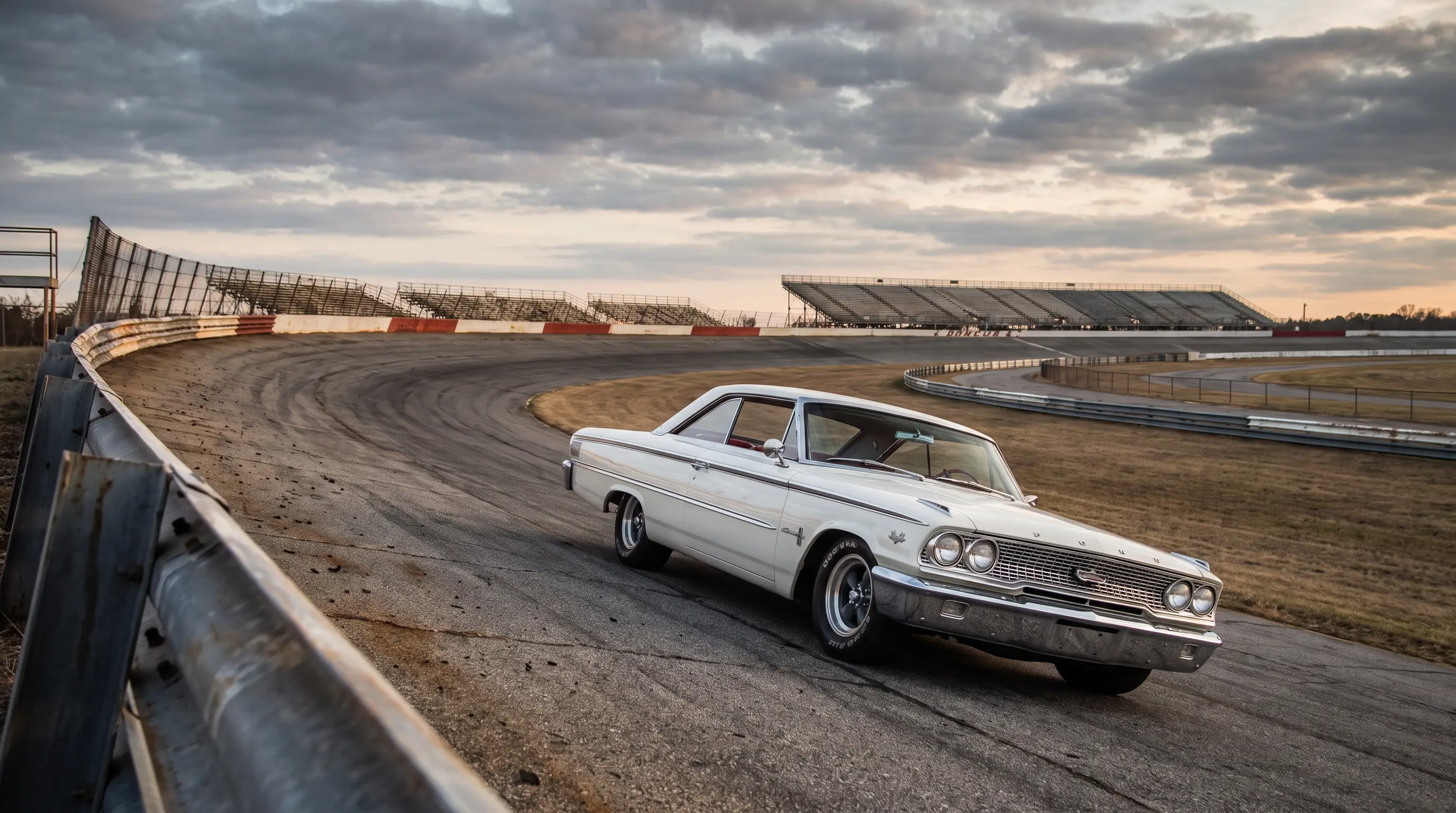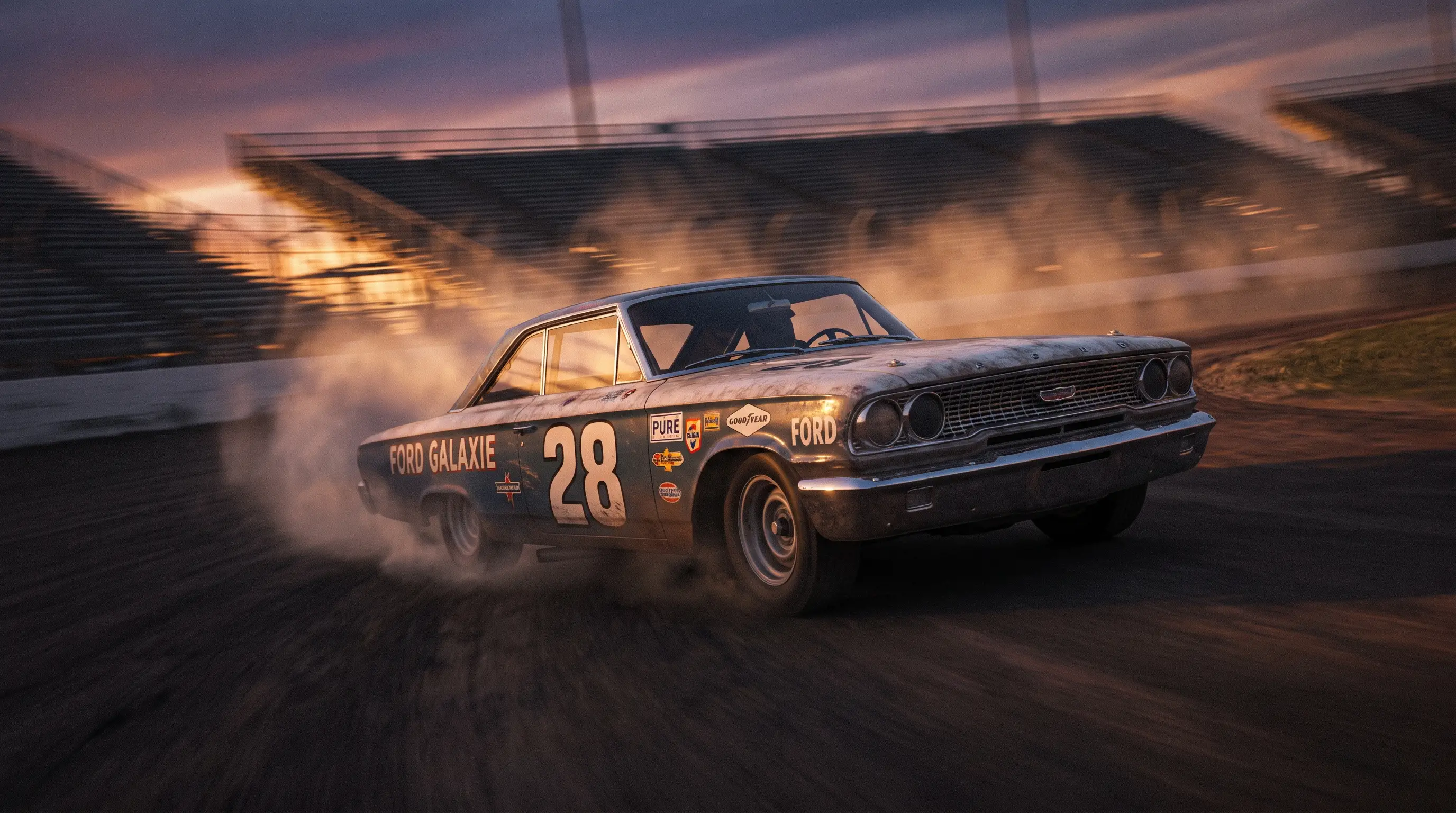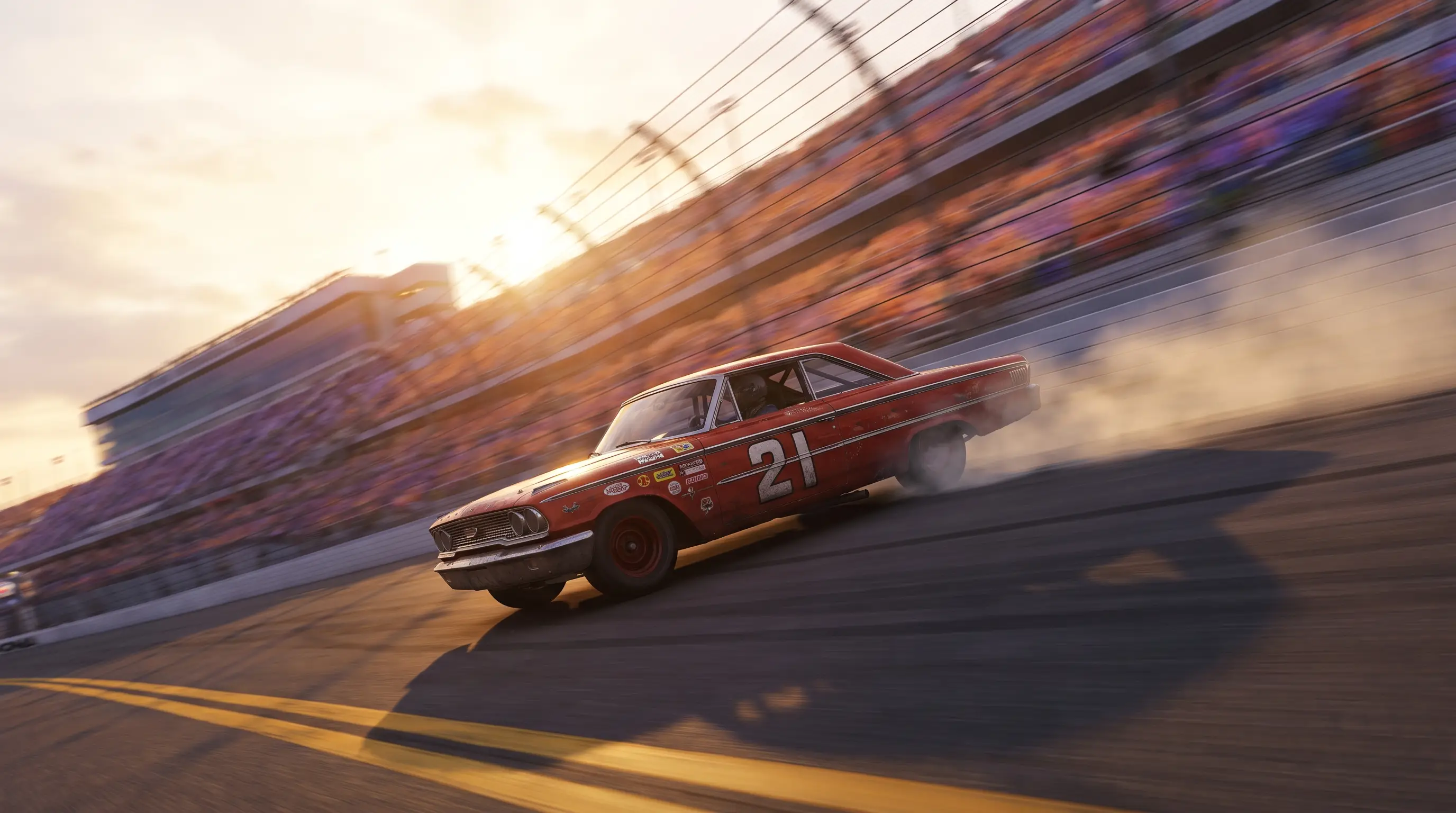
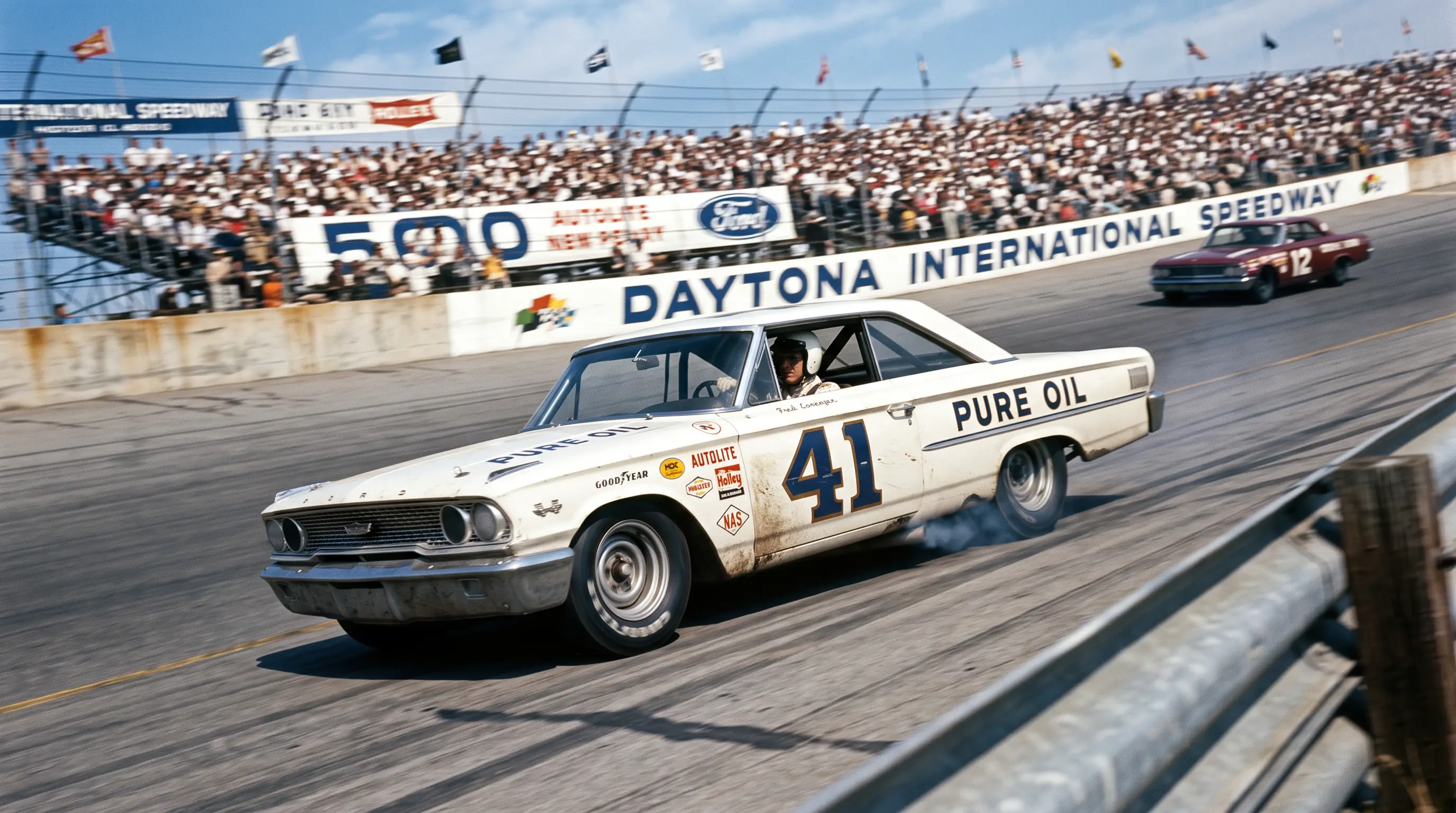
The infield at Daytona in February 1963 smelled like race fuel and fresh asphalt, and by the time the checkered flag dropped that afternoon, the story reporters filed back to their desks was not close to a photo finish. It was a rout. The ford galaxie 1963 daytona 500 domination that unfolded that day remains one of the more complete performances any single manufacturer has put together at America's biggest superspeedway, and it happened at the exact moment Ford needed the world to see it.
A season Ford could not afford to lose
Ford had spent the preceding year rebuilding its entire competitive posture around the Total Performance idea, pouring engineering resources into the Galaxie specifically to prove that racetrack success and showroom credibility were the same argument told two different ways. The 1963 Daytona 500 was the first real test of that bet on the sport's biggest stage, run in front of the largest audience NASCAR could deliver, and a weak showing would have undercut a full year of marketing built on the premise that these cars actually were as fast as Ford said they were.
What happened instead was closer to a coronation. Galaxies swept the top five finishing positions that afternoon, Tiny Lund taking the win with Fred Lorenzen about 24 seconds behind in second, Ned Jarrett third on the lead lap, and Nelson Stacy and Dan Gurney rounding out fourth and fifth a lap down, a result strong enough that competing manufacturers spent the following weeks explaining, in trade press and to their own dealer networks, what had gone wrong rather than celebrating anything of their own. For a company that had spent the winter promising this exact outcome, the actual race result read less like a pleasant surprise and more like a plan executed almost precisely as drawn up.
What made the difference on race day
The engineering story behind that dominance traces directly back to decisions made months earlier, the 427 R-code big-block built to NASCAR's displacement ceiling, and the new fastback Sports Hardtop roofline rushed into production specifically to cut aerodynamic drag at superspeedway velocities. Neither change existed in isolation. Together they gave Ford's teams a car that could hold a higher sustained pace over Daytona's long banked straights than the previous year's notchback body had managed, and 500 miles at that kind of speed rewards every fraction of a mile per hour a team can find.
Race strategy mattered as much as raw hardware that day. Daytona in 1963 was still a relatively young track by superspeedway standards, and teams were still learning how drafting, fuel strategy, and tire wear interacted at these speeds over a full 500-mile distance. Ford's preparation across multiple entries meant the manufacturer was not betting the whole campaign on a single car's luck holding up for 500 miles. Depth of the entry list, not just the ability of any one driver or car, is what turned a strong individual run into a genuine team sweep of the top finishing positions.
The moment that made the headlines
Every dominant team performance needs a story the wider public can actually remember, and 1963's Daytona 500 delivered one that had nothing to do with engineering charts or lap-time data. A driver who was not even supposed to be in the race that day, stepping into a car after a teammate's injury sidelined him during practice, ended up delivering the signature moment of the whole afternoon, a storyline sports writers who had never covered a stock car race before could not resist. That human drama did more to cement the day in NASCAR lore than any spec sheet Ford's engineers could have produced, and it is worth its own telling in full rather than a summary here.
What that moment did for Ford's broader campaign is harder to overstate. A dominant finish backed by a genuinely compelling underdog story is worth more in advertising terms than either element alone, and Ford's marketing department, already leaning hard into the Total Performance message, had exactly the kind of race-day narrative that turns a strong finishing order into something regular sports fans actually talk about at the water cooler on Monday morning.
"You do not get a season-defining headline out of a race unless the racing itself backs it up first. Ford's cars were fast enough at Daytona in 1963 that the story writing itself afterward was almost inevitable. The hard part, the part nobody outside the shop ever sees, was building a car capable of giving that story somewhere to happen."
- Patrick Walsh
How the rest of the field responded afterward
Losing a race that badly on the sport's biggest stage forced immediate reaction from every manufacturer Ford had just beaten. Trade publications covering the following weeks describe rival engineering departments accelerating their own aerodynamic and displacement programs almost overnight, which is the surest sign a competitor actually respects what just happened rather than dismissing it as luck. Nobody redesigns a roofline or rushes an engine program because of a fluke result. They do it because the data from Daytona showed a real, repeatable advantage that would keep costing them races if left unanswered.
That ripple effect is part of why the 1963 Daytona 500 matters beyond its own scoreboard. It functioned as a genuine inflection point for the entire NASCAR aerodynamics arms race that would define full-size stock car competition for the rest of the decade, with every manufacturer eventually following Ford's lead toward fastback rooflines and displacement-maximizing big-blocks. A single afternoon at one Florida superspeedway ended up reshaping how every competing team approached body design for years afterward, which is a much larger legacy than one trophy suggests on its own.
Why this race still gets talked about
Six decades later, the 1963 Daytona 500 still comes up whenever conversations turn to Ford's most complete competitive performances of the entire Total Performance era, and it earns that reputation honestly. It combined genuine engineering advantage, the R-code engine and the new fastback body working exactly as designed, with a depth of team entries that turned individual speed into a collective result, and it happened with a human storyline dramatic enough to carry the whole event into general sports coverage rather than staying confined to racing pages. Readers who want the fuller context of everything else that model year brought to the Galaxie beyond this one race day should look at where this started, which covers the full scope of the 1963 lineup changes.
For anyone whose interest in this story has turned into wanting the real car in their own garage, a current look at classic Galaxie for sale from this exact model year is the natural next step, and there are few better ways to appreciate what that Daytona win actually required than sitting behind the wheel of the car that delivered it.