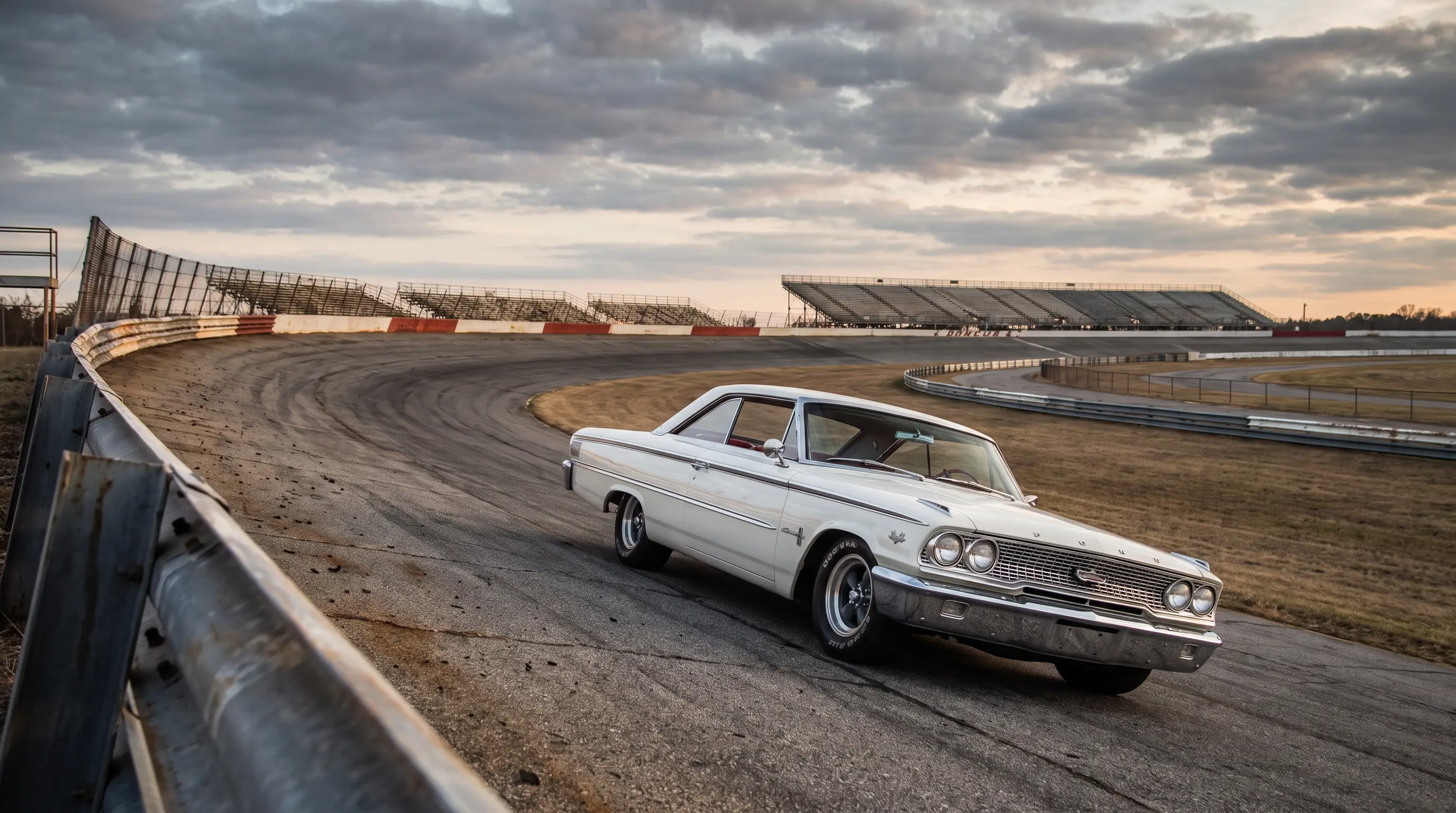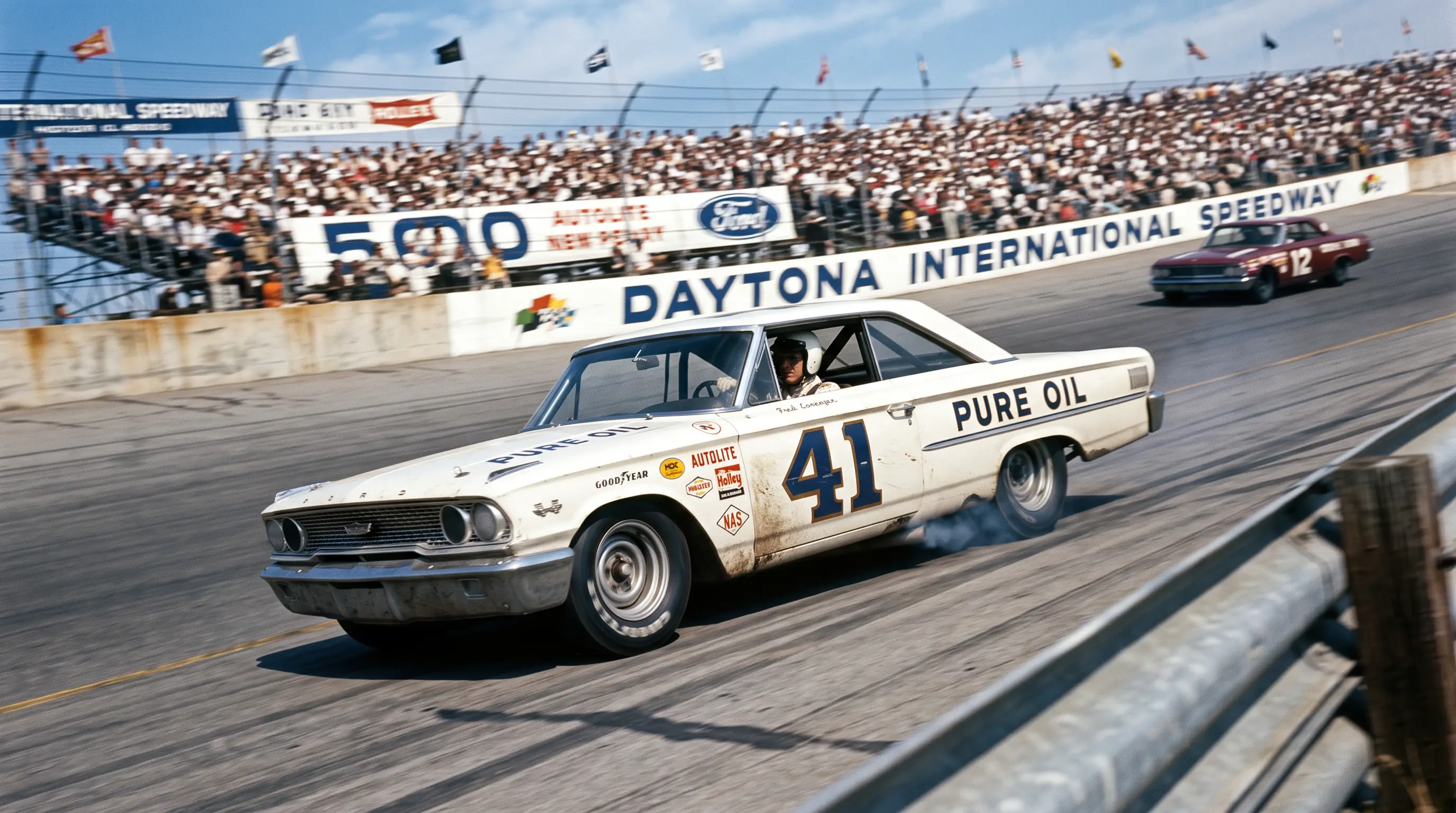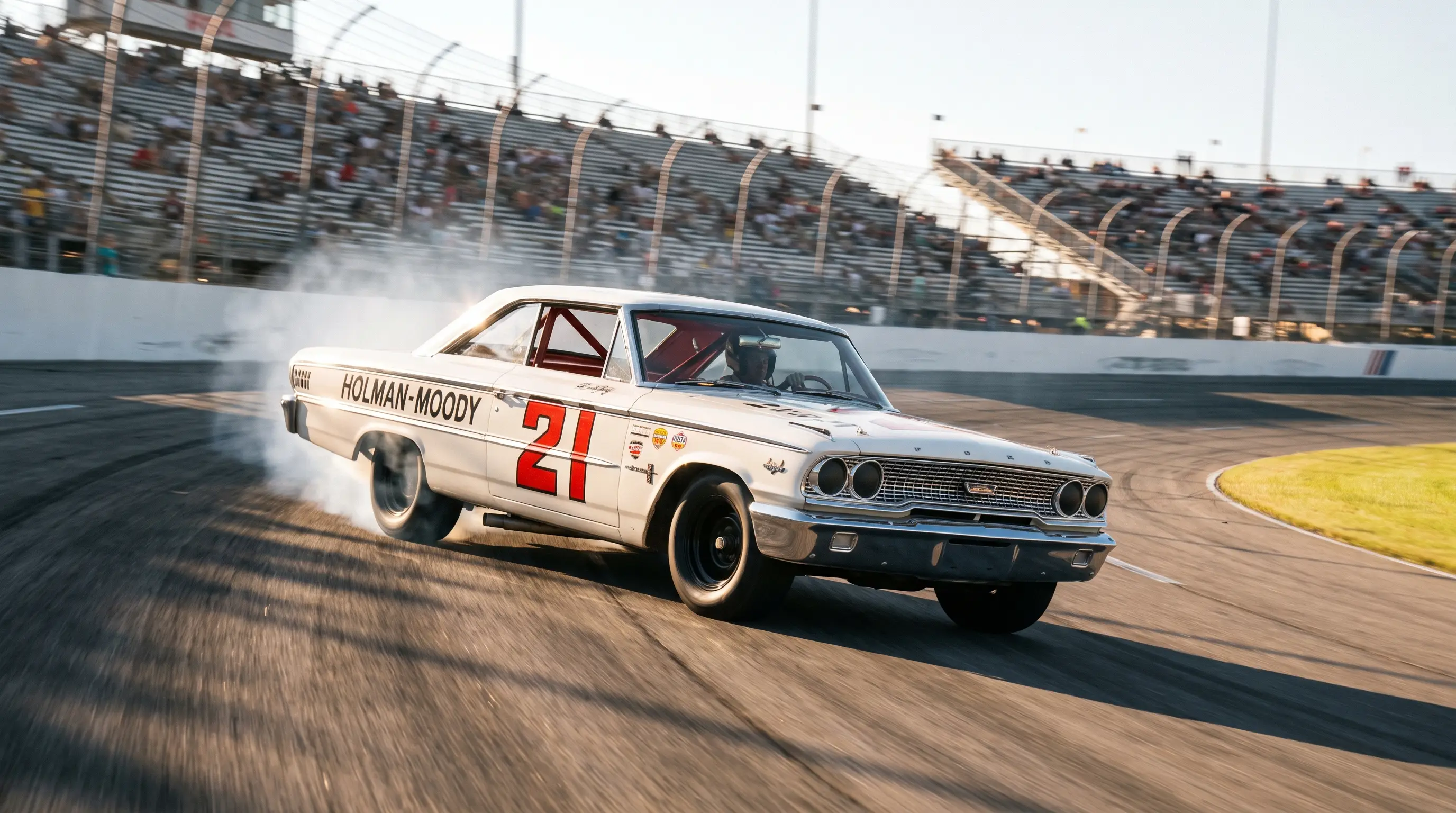
Every car club I have ever belonged to has one story that gets told at least once a year, usually after the second cup of coffee at a Saturday cruise-in, and for anyone who loves the full-size Fords of this era, it is the ford galaxie 1963 tiny lund daytona hero story. I have heard it told a dozen different ways by a dozen different old-timers, and the details shift a little each time, but the bones of it never change, because the bones of it are simply true, and they are better than anything a scriptwriter could have invented.
A crash in practice that nobody expected to matter
Days before the 1963 Daytona 500, driver Marvin Panch was badly hurt when an experimental Ford-powered Maserati sports car he was testing for a separate sportscar race caught fire on the track. What happened next is the part that turns this from a racing footnote into a genuine piece of American folklore. DeWayne "Tiny" Lund ran to the burning car and pulled Panch out, an act of raw physical courage that later earned Lund the Carnegie Hero's Medal; several other men at the scene are part of the broader account, though Lund's own role in the rescue is the best documented and the one history has remembered. Lund did not walk away from that moment thinking about a ride in the race a few days later. He walked away having helped save a man's life, and that would have been the whole story on its own, worth telling at any cruise-in with no racing outcome attached at all.
But Panch, recovering in a hospital bed, still had a car entered in the biggest race of the year, the Wood Brothers' Ford Galaxie, and no driver healthy enough to be behind the wheel. Word reached the team that Lund, the man who had just helped pull their driver out of a fire, needed a ride. What happened next is the kind of turn that sounds invented even when you know every word of it is documented.
From rescuer to race winner in the same week
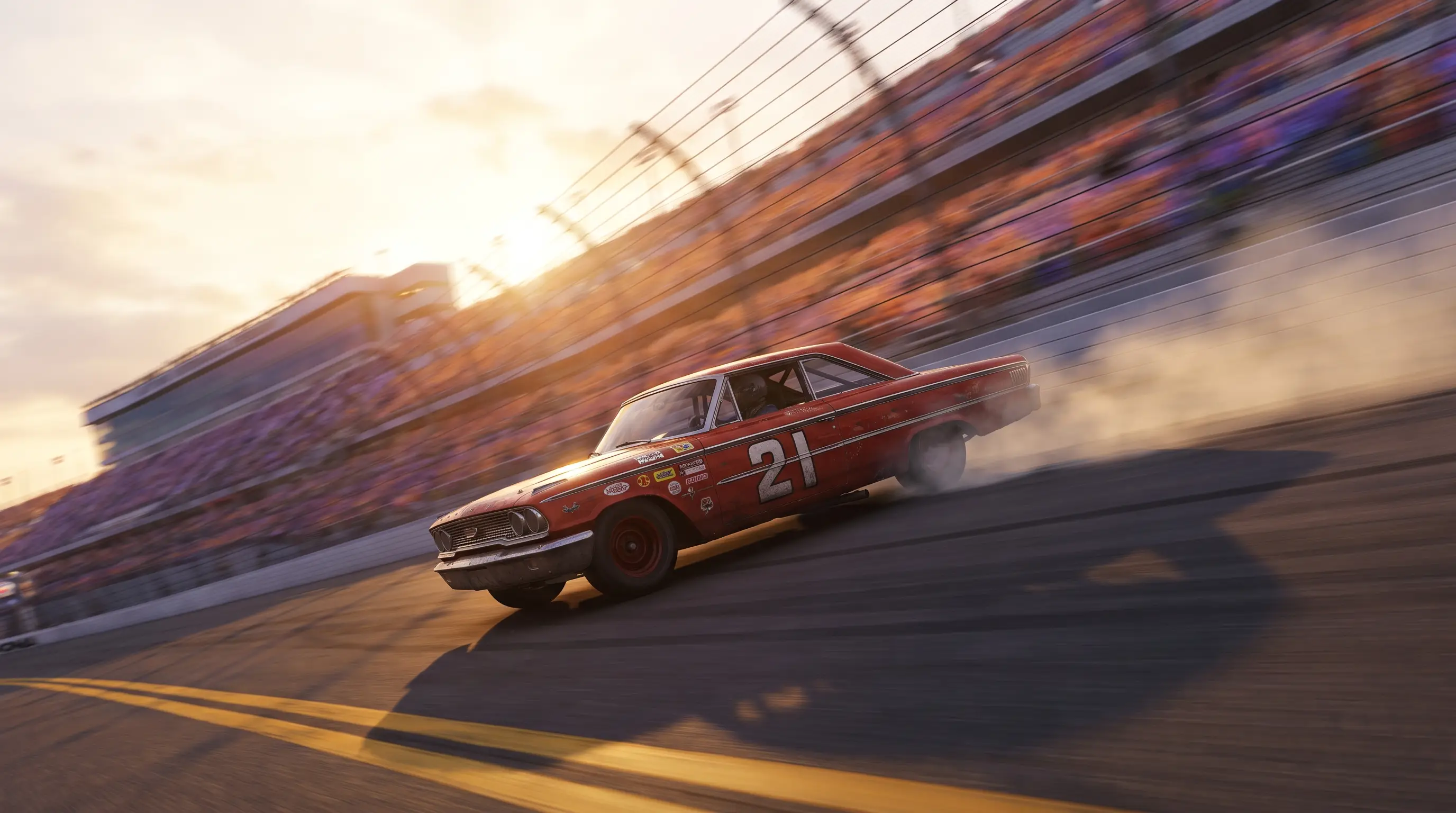
Lund got the seat in Panch's Ford, and on race day, in a car and a team he had barely had time to get comfortable with, he drove to victory in the 1963 Daytona 500, starting 12th and working forward. Fuel strategy really did decide the finish: the Wood Brothers planned for Lund to make one fewer pit stop than his rivals, and an early caution period that let the track dry helped make that four-stop strategy hold up. In the closing laps Lorenzen ran out of fuel with 10 laps to go and Jarrett ran dry with three laps left, while Lund's own tank went empty on the final lap, leaving him to coast across the line still in front.
What nobody argues about is the emotional shape of the week. A driver who was not even supposed to be in the car went from pulling a fellow racer out of a burning wreck to standing in victory lane at Daytona within the same handful of days, driving the very car that belonged to the man he had just helped save. You cannot write a better piece of racing folklore than that, and the fact that it is not folklore, that it actually happened exactly the way club members still tell it, is what keeps the story alive at every gathering where this era of Ford comes up.
Why this particular story sticks with car clubs
Racing history is full of dominant performances by drivers who spent months preparing for a specific race, and those stories are worth telling too, but they do not have the same hold on a room the way Lund's does. This one has a rescue, a hospital bed, a borrowed seat, and a trophy, all inside one week, and every piece of it involves real people making real decisions under real pressure rather than a strategy session in a boardroom. Club members who never raced a lap themselves still feel like they understand exactly what was at stake, because the human stakes, a man's life first and a race second, translate instantly in a way engine specifications never quite do.
That is the real reason this story gets retold at every cruise-in and every club meeting where the 1963 Galaxie comes up. It is not really about the car, though the car matters and deserves its place in the telling. It is about what a person is willing to do for a stranger on a racetrack, and what can happen to that same person a few days later when circumstance hands them an opportunity nobody could have scripted.
What the story teaches newer club members
I bring this one up whenever a newer member joins one of our club runs and asks why so many of us seem to care as much about the people attached to these cars as the cars themselves. The Lund story is the clearest answer I have. A 1963 Galaxie sitting in a driveway is a fine looking car on its own, but the reason people like me spend our weekends talking about one specific example from one specific race is that the car became part of something bigger than itself for one week in February, and that connection to a real human moment is what turns a piece of Detroit steel into something a club full of grown adults will still get worked up about six decades later.
New members sometimes assume the appeal of this hobby is mechanical, torque figures and casting numbers and the rest of it, and there is nothing wrong with that side of things. But ask any longtime club member which story they tell first at a new member's first meeting, and more often than not it is this one, not because the mechanical specifications do not matter, but because a stranger risking himself to pull a driver out of a burning car, then winning that same driver's race a few days later, is the kind of thing that makes people care about a hobby they might otherwise have dismissed as just old cars in a parking lot.
"I have told this story to new club members for years, and it never gets old, because it is not really a car story first. It is a story about a man who helped save somebody's life and then, almost by accident, won the biggest race in the country driving that same man's car. The Galaxie is just lucky enough to have been sitting in the middle of it."
- Wayne Coburn
Anyone who wants the fuller context of the model year this whole story belongs to, the engineering and the roofline changes that gave Ford's cars the edge they had at Daytona that week, should look at the full story of the 1963 Galaxie beyond just this one race. And for club members who want to stand next to the kind of car that carried Lund to victory lane, a look through current browse classic Galaxie listings is the closest most of us will ever get to that feeling, short of finding the actual Wood Brothers car itself.