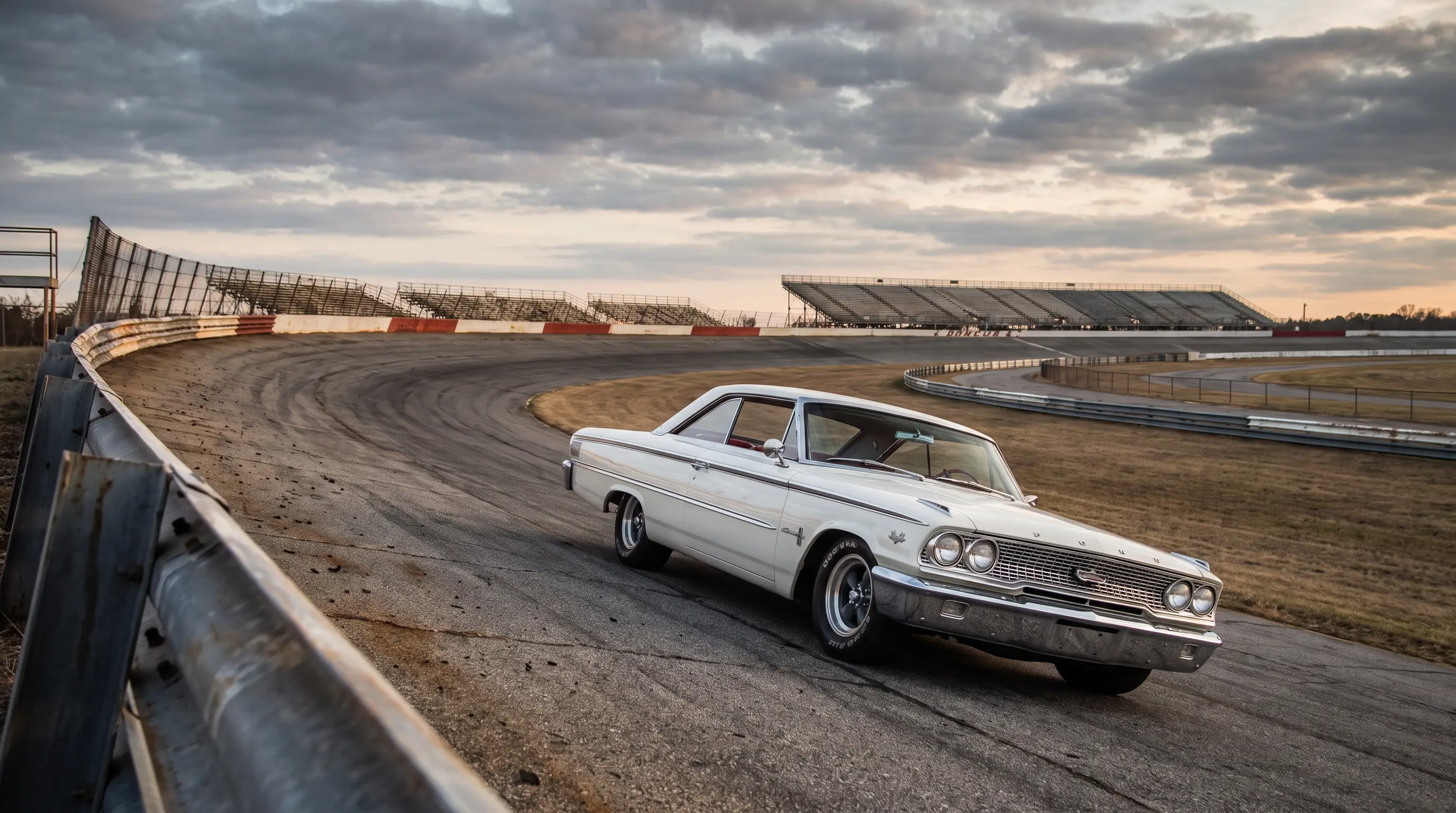
Picture a Ford stylist standing beside a clay model in early 1963, running a hand along a roofline that used to end square and now sweeps back toward the trunk in one long unbroken line. He is not thinking about a showroom customer admiring the silhouette from the sidewalk. He is thinking about a car doing 160 miles an hour down a superspeedway backstretch, because the ford galaxie 1963 fastback sports hardtop debut did not begin in a design studio dreaming up something beautiful. It began on a racetrack, with Ford losing.
A roofline born out of frustration
Ford's full-size cars had gone into the 1963 NASCAR season wearing the same squared-off notchback roof the Galaxie had carried since the redesign a few years earlier, and that flat rear window and abrupt trunk line were bleeding speed at high velocity in a way a showroom shopper would never notice but a stopwatch would. Competing manufacturers were fielding bodies with cleaner airflow over the rear deck, and Ford's engineers watched their advantage in raw horsepower get eaten alive by drag their competitors simply were not fighting. The response, remarkably fast for a company that usually planned body changes years in advance, was a new roofline introduced partway through the model year rather than held back for 1964.
That mid-cycle urgency is the part of the story easy to lose. Automakers do not normally rush a new roof panel into production outside the usual yearly cadence, because tooling and stamping changes cost real money and real time. Ford did it anyway in 1963, and the fact that the Sports Hardtop arrived as a running change rather than waiting for the next model year tells you how seriously the company was taking its losses on the superspeedway that spring.
What the Sports Hardtop actually changed
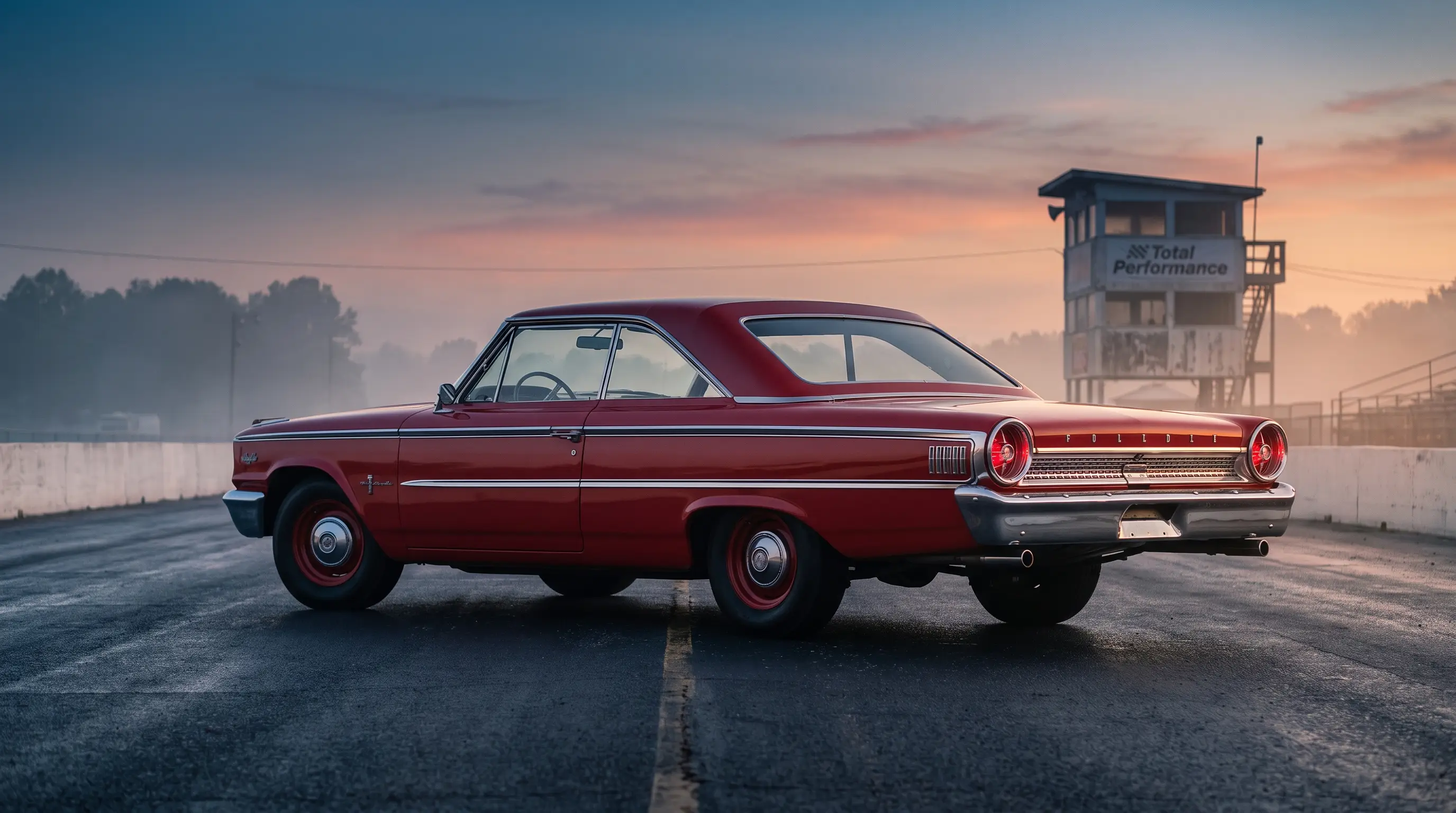
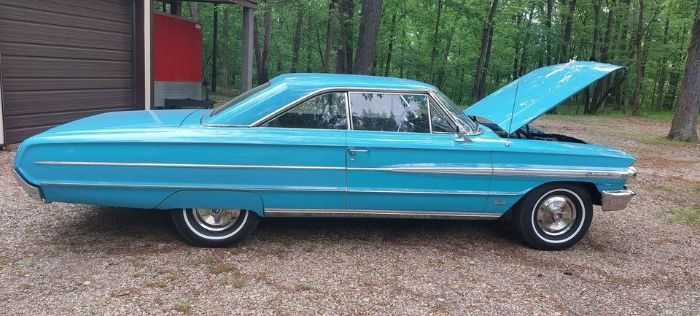
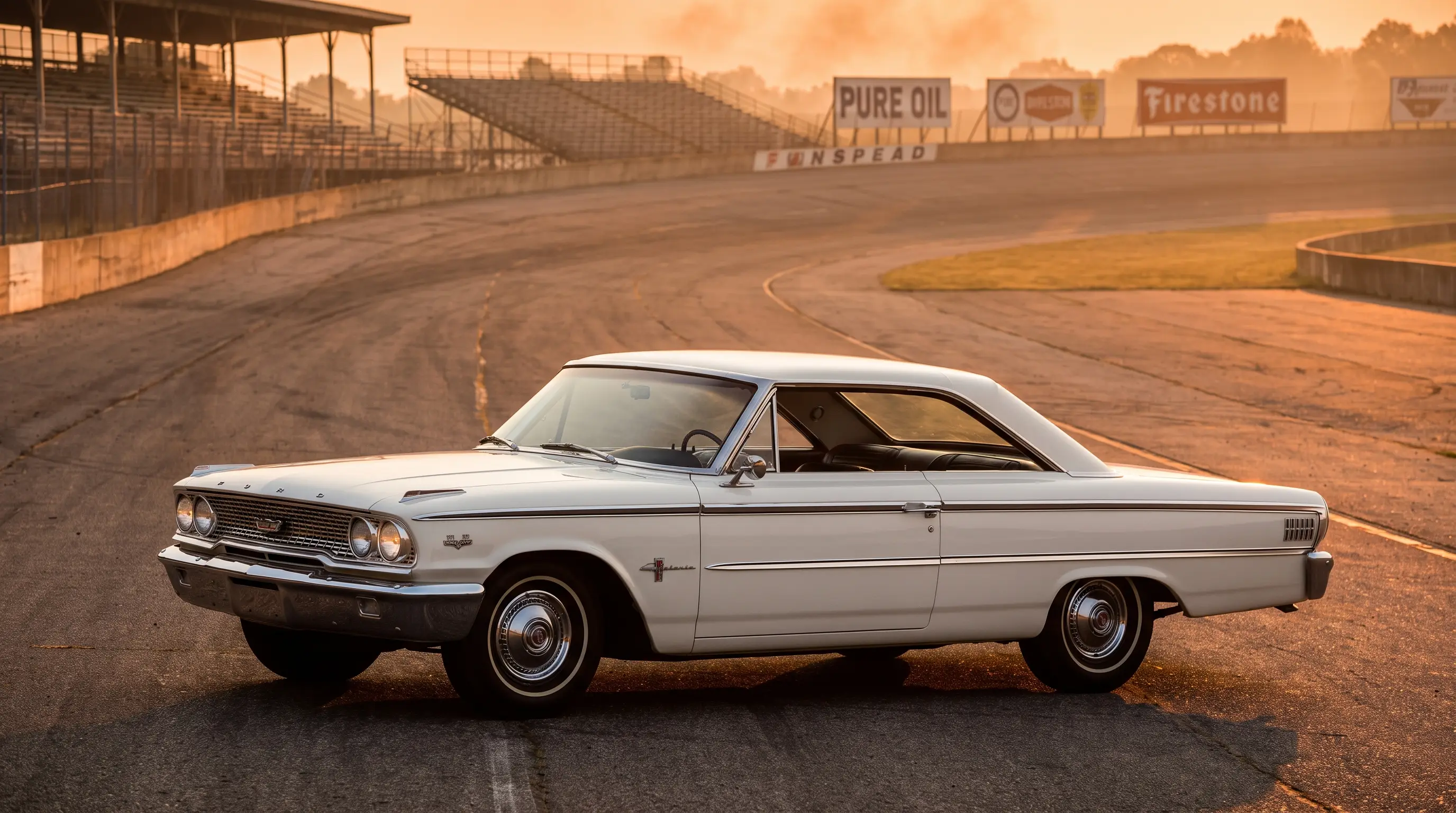
The new roofline earned its "fastback" nickname honestly. Instead of the previous notchback's near-vertical rear window and formal trunk break, the Sports Hardtop's roof flowed back in a single sweeping curve that reduced the low-pressure turbulence forming behind the car at speed. On a superspeedway, that difference translated directly into a car that could hold a drafting line more efficiently and lose less ground on the straights, exactly the margin Ford needed against rivals who had already solved this problem. On an ordinary suburban street, the same roofline simply looked faster standing still, a side benefit stylists were happy to take credit for even though the racetrack, not the design studio, had forced the decision.
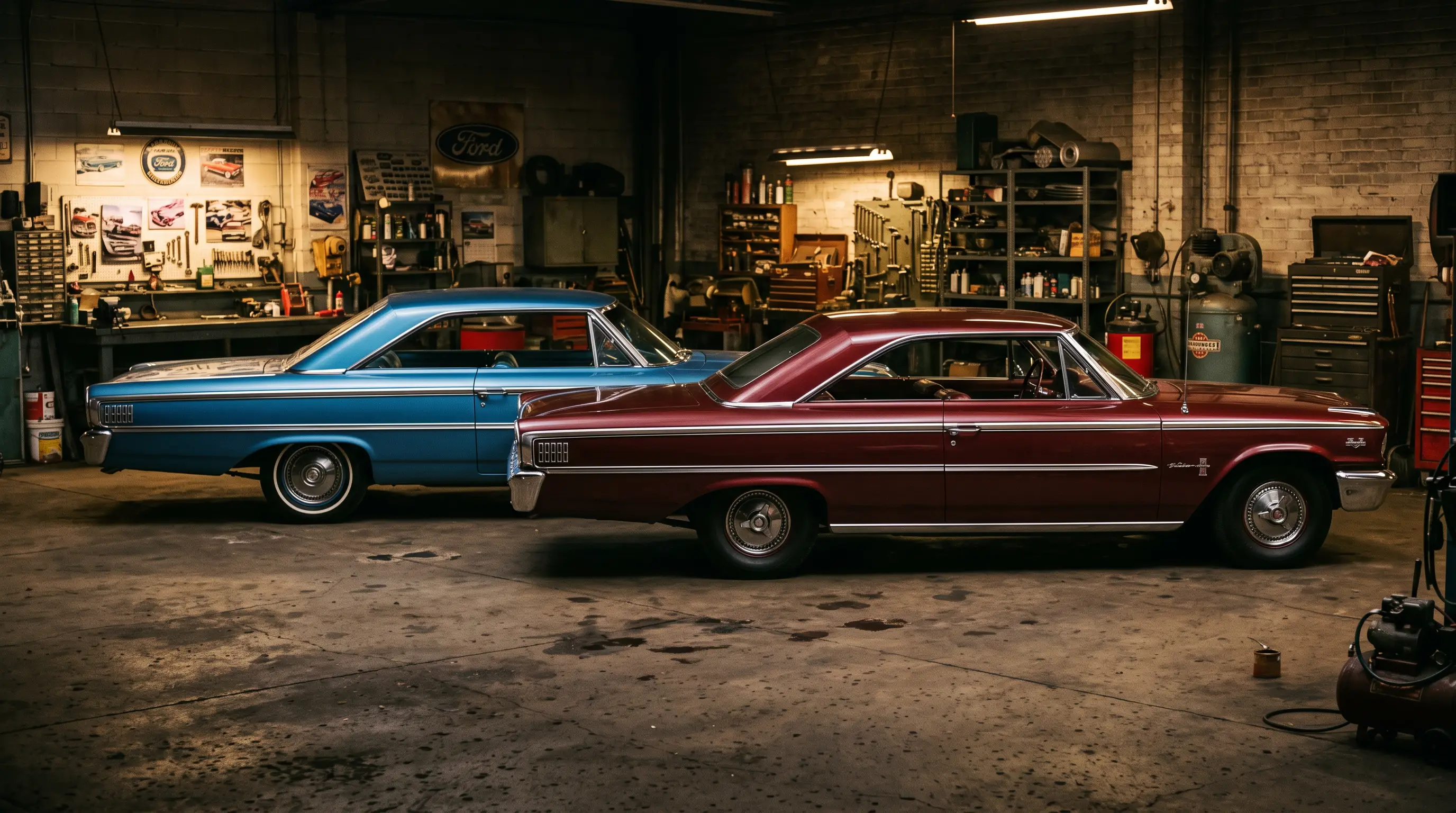
What buyers actually got, whether they cared about NASCAR or not, was one of the more distinctive silhouettes Ford offered that year, available on Galaxie 500 and Galaxie 500 XL hardtops alongside the older notchback body for those who preferred a more traditional profile. That choice, offering both rooflines side by side rather than replacing one with the other outright, meant Ford could satisfy dealers who worried the fastback looked too aggressive for conservative buyers while still fielding the aerodynamically superior body for competition use.
How buyers actually responded
Dealers reported a mixed but genuinely curious reaction from ordinary customers when the fastback first appeared on showroom floors midway through the model year. Some buyers, particularly younger ones or those already inclined toward the sportier XL trim, gravitated toward the new roofline immediately, drawn to a silhouette that looked noticeably different from every full-size Ford that had come before it. More conservative buyers, the kind who wanted a Galaxie precisely because it looked dignified and familiar, sometimes preferred sticking with the older notchback profile, which is exactly why Ford kept both available rather than forcing the change on the entire lineup at once.
That split reaction turned out to be useful information for Ford's stylists heading into future model years. The fastback's popularity with younger, performance-minded buyers reinforced a lesson the Total Performance campaign was already teaching the company elsewhere in its lineup, that a meaningful share of full-size car buyers wanted their Ford to look and feel connected to the racing program, not separate from it. Full-year production tallies for 1963 in fact favored the new roofline outright: across the Galaxie 500 and Galaxie 500 XL lines combined, fastback Sports Hardtops outnumbered notchback hardtops by a wide margin, evidence that the "more talked-about car on the lot" reputation among dealers was backed by real sales, not just showroom buzz.
A small design change with an outsized racing legacy
The Sports Hardtop's real test came almost immediately, in the superspeedway events of that season, and the clearest result came at the 1963 Daytona 500, where Fords driven by Tiny Lund, Fred Lorenzen, and Ned Jarrett swept the top three finishing positions. No single factor, roofline, engine, or race-day fuel strategy, explains that result in isolation, but the fastback's aerodynamic gain was part of the package Ford brought to that race. The roofline stayed relevant into the following seasons too, since the aerodynamic lesson Ford learned in 1963 shaped how the company approached full-size body design for the rest of the Total Performance era. A fastback roof that started as an emergency fix against a superspeedway deficit ended up influencing Ford styling decisions well beyond the racing program that demanded it in the first place.
There is something quietly moving about a car whose most memorable silhouette exists because engineers needed to stop losing a race, not because a designer set out one morning to make something gorgeous. The beauty came second, almost as an afterthought, riding along on a decision that was really about drag coefficients and lap times. That is often how the best-looking cars from this era actually happened. Nobody sat down intending to create an icon. Somebody was trying to solve a specific, urgent problem, and the icon showed up as a side effect.
"Every fastback Galaxie from 1963 is wearing a roofline that exists because a stopwatch said the old one was too slow. That is not a romantic origin story on paper, but stand next to one in person and the shape still does exactly what it was built to do. It looks like it is moving before the engine even turns over."
- Nora Beckett
The fastback's debut is only one chapter in a model year that changed more about the Galaxie than its roofline alone, and readers who want the fuller picture of everything else 1963 brought to the lineup should look at our complete history of that year. For anyone who has read the story and now wants to see one of these fastback hardtops in the flesh, the fastest way to settle the question of whether the shape holds up is simply to go look. A search to find a classic Galaxie from that model year turns up exactly the kind of car this whole story is about, and there is no substitute for standing beside one and following that roofline back with your own eyes.