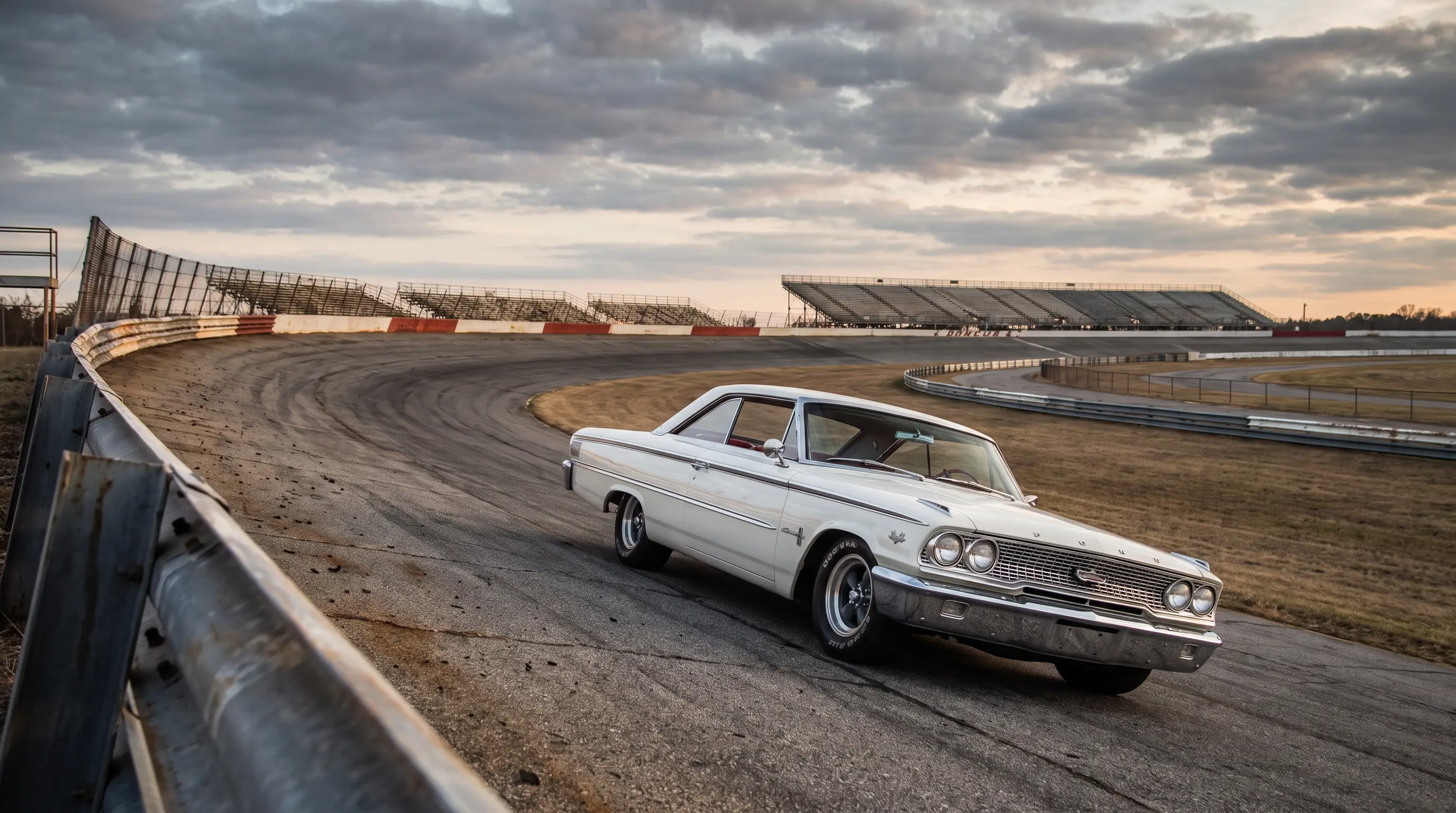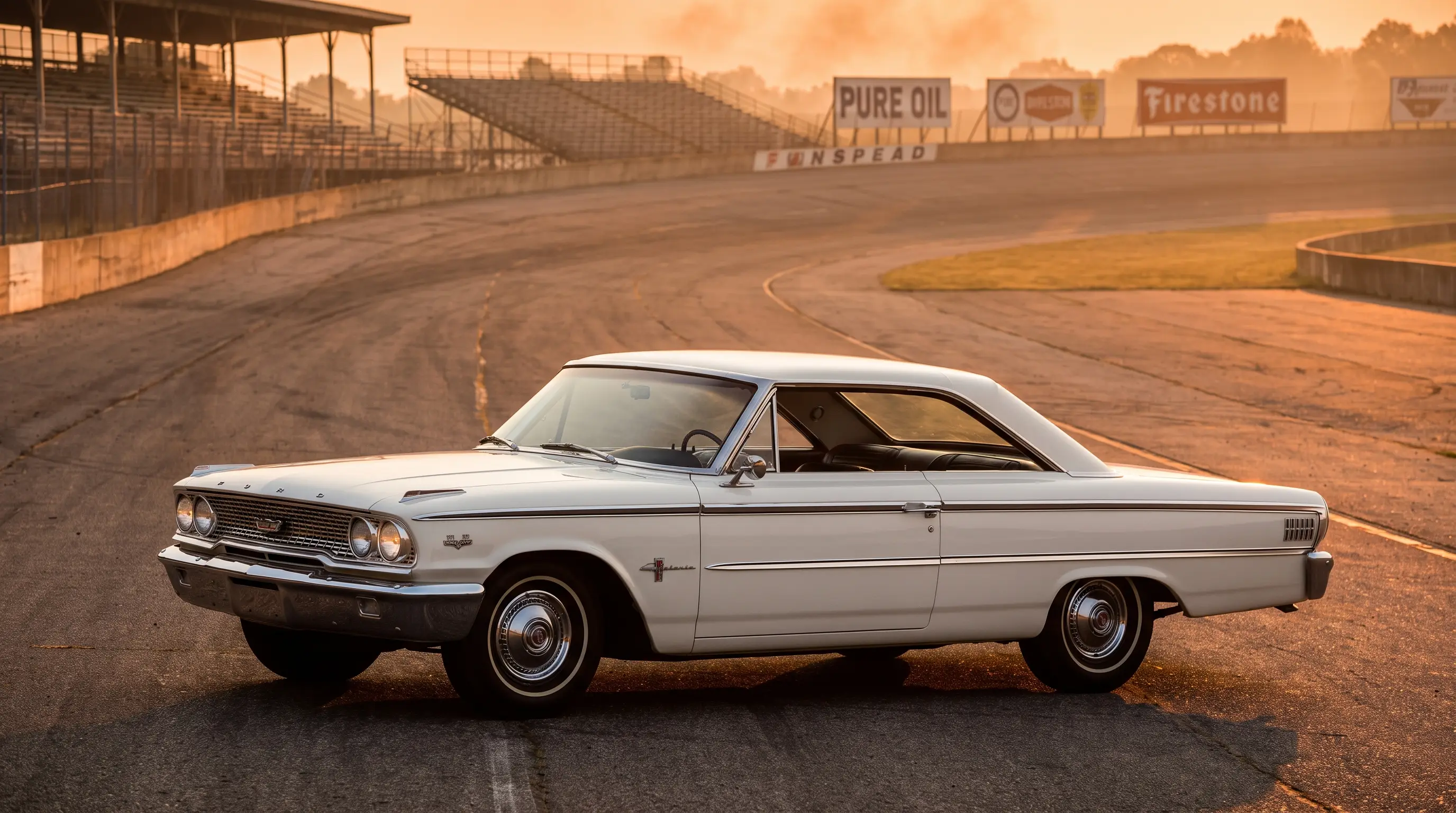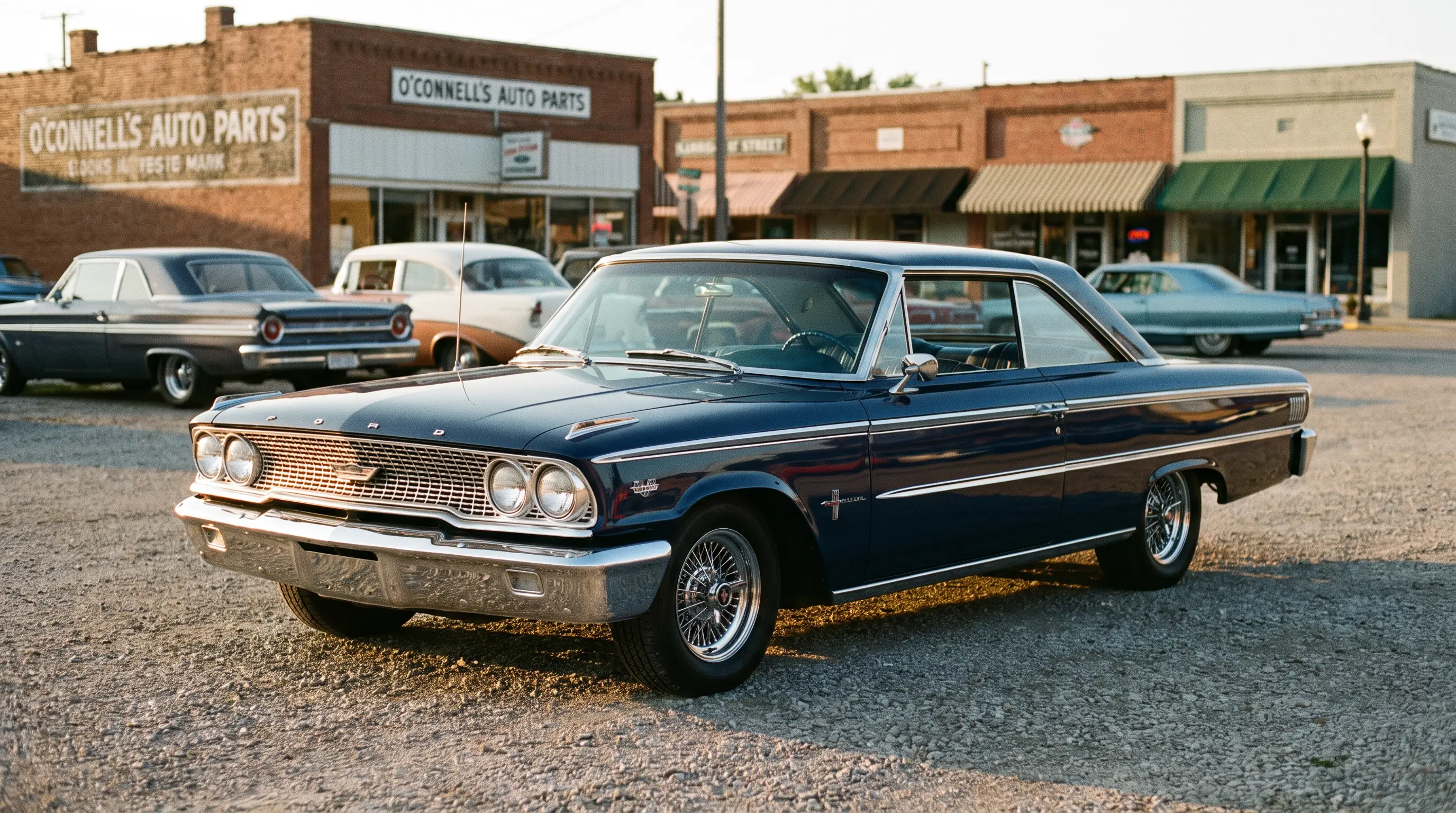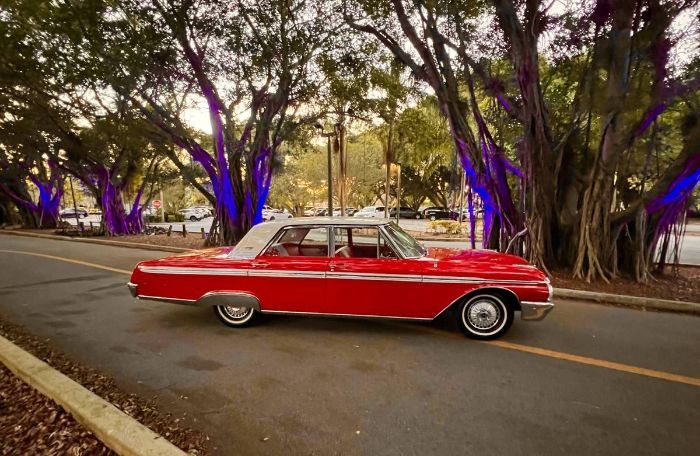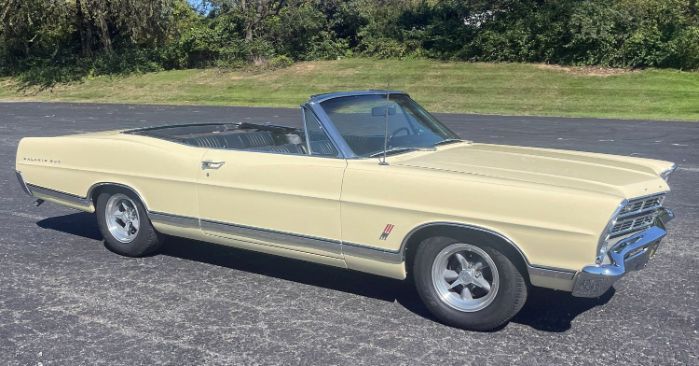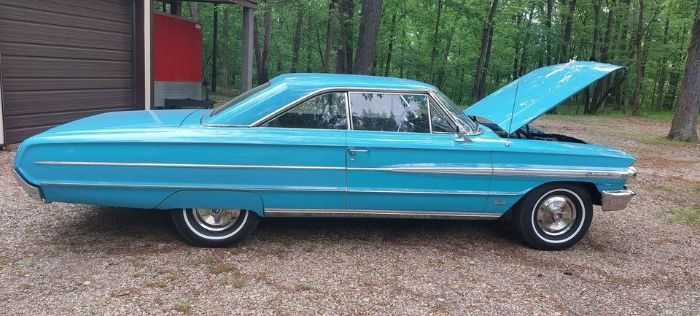
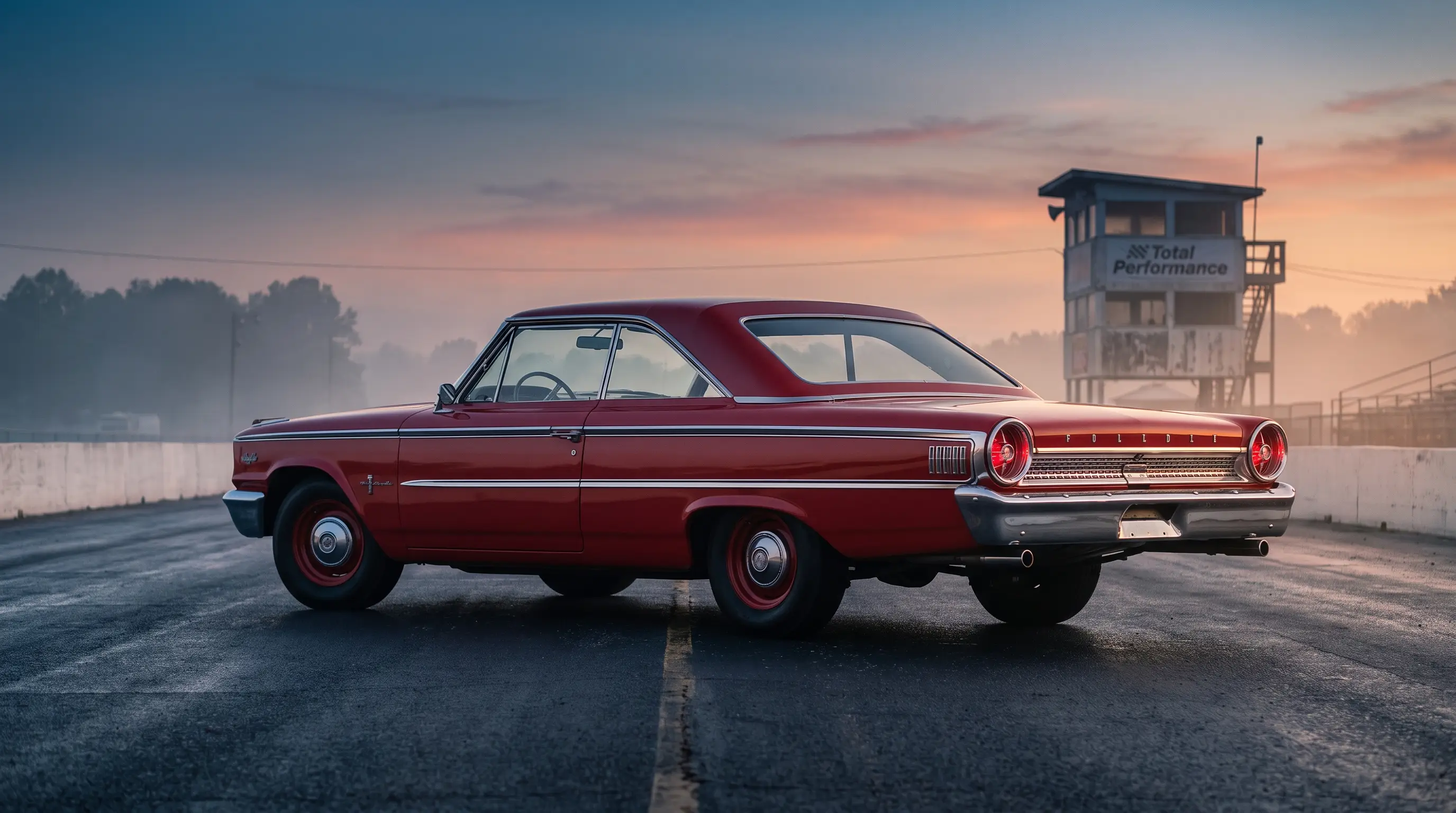
Ford's own paperwork from the early 1960s tells the story better than any advertisement did. Internal correspondence and dealer bulletins from 1962 into 1963 show a company deliberately pivoting away from the conservative, family-first image it had carried through the 1950s and toward something the marketing department eventually branded Total Performance. The ford galaxie 1963 total performance push was not a slogan bolted onto an existing car. It was a company-wide reallocation of engineering, budget, and factory floor space toward winning races, with the full-size Galaxie as the primary vehicle, literally and figuratively, for proving the point.
Where the phrase actually came from
Total Performance surfaced as Ford's answer to a simple problem: General Motors and Chrysler were both winning on track and in the sales charts, and Ford's leadership under Lee Iacocca and, above him, Henry Ford II, decided the company needed visible competition wins to sell everyday cars. The strategy touched drag racing, NASCAR stock car competition, rally events, and eventually Le Mans, but 1963 is the year the domestic stock car side of that push became inseparable from the Galaxie nameplate specifically. The campaign traces to 1962, when Ford's "Lively Ones" product theme evolved into the Total Performance banner under Iacocca's push for a credible performance image, and engineering resources were already moving toward stock car homologation requirements before the marketing department had settled on the final name for the campaign.
What gets lost in casual retellings is that Total Performance was never just about NASCAR wins translating to showroom traffic. It was a documented internal bet that performance credibility, provable on a track with a stopwatch and a scoring pylon, would move more full-size sedans than another round of comfort-and-convenience advertising. The Galaxie, as Ford's volume full-size car, carried that bet whether or not the specific customer walking into a dealership cared about racing at all.
The 1963 engineering push, by the numbers
The clearest evidence of the Total Performance commitment sits in Ford's parts and homologation paperwork for 1963. The 427 cubic inch big-block, introduced specifically to meet NASCAR's engine displacement rules, arrived in two carburetor configurations, and Ford built the R-code high-performance version in genuinely small numbers, roughly 3,857 cars across the 1963 Galaxie line, small enough that surviving cars are individually documented today rather than treated as a common option. Alongside the engine, Ford homologated a lightweight body package for NASCAR-eligible Galaxies, substituting aluminum for steel in select body panels to shed weight for competition use, a detail dealer service bulletins from the period describe in specific part-number terms rather than general marketing language.
None of that engineering happened in isolation from the rest of the 1963 lineup. The same model year introduced the fastback-roofed Sports Hardtop, a body style change driven directly by NASCAR aerodynamics rather than showroom styling preference, since the squared-off notchback roofline Ford had used generated enough drag at superspeedway to hand rivals an advantage. Readers who want the full body-style side of that story can find a related story covering how the new roofline came about and what it changed for buyers who never set foot on a racetrack.
| 1963 Total Performance element | What Ford actually changed |
|---|---|
| 427 R-code engine | New big-block built to NASCAR's displacement ceiling, dual four-barrel induction |
| Lightweight body package | Aluminum substitutions for select steel panels on competition-intended cars |
| Sports Hardtop roofline | Fastback profile introduced mid-year to reduce high-speed aerodynamic drag |
| Marketing message | Racing wins positioned as direct proof of everyday reliability and speed |
Correcting a common misconception
A misconception worth addressing directly: Total Performance is frequently described as if it applied evenly across Ford's entire 1963 lineup, when the documented engineering effort was concentrated overwhelmingly on the full-size Galaxie platform because that was the car NASCAR rules recognized as Ford's stock car entry. Smaller Ford products of the same era benefited from the campaign's halo effect in advertising, but the actual homologation work, the actual R-code engine allocation, and the actual lightweight body parts went to Galaxies built for or convertible to competition use. Readers looking for the broader model-year context behind all of this should start with 1963 ford galaxie history, which lays out the full lineup changes beyond the racing program alone.
"Ford's paperwork from 1963 does not read like advertising copy. It reads like an engineering department that had been told, in plain terms, to win races with this specific car, and the Galaxie's parts book from that year shows exactly how literally they took the assignment."
- Tom Ramirez
The dealer-level evidence
Corporate strategy documents tell part of the story, but dealer-level records make the Total Performance push tangible in a way boardroom memos do not. Regional Ford dealer newsletters from 1963 devoted space to race results in a way earlier bulletins simply had not, printing finishing positions from NASCAR superspeedway events alongside ordinary service announcements and parts pricing updates. That is a small detail, but it tells a historian something important: Ford's sales organization believed racing results belonged in the same conversation as routine dealership business, which is a genuine shift from how the company had talked to its own dealer network only a few years earlier.
The same period saw factory support extended to selected drag racing efforts using lightweight Galaxie hardware, running parallel to the NASCAR-focused engineering described above. These were not volume production programs, and by most surviving accounts only a small handful of lightweight, aluminum-paneled Galaxies were built for factory-supported drag efforts, distributed directly to selected teams rather than sold through normal dealer channels; exact totals are not consistently documented in surviving factory paperwork. What the paperwork does confirm is that Ford treated drag strip credibility as part of the same Total Performance ledger as NASCAR superspeedway wins, even though the two forms of competition demanded different engineering solutions from the same basic full-size platform.
Advertising copy from dealers picked up the theme quickly, often more aggressively than Ford's national campaigns, with local ads touting recent regional or national race finishes in the same breath as financing terms and trade-in offers. That blending of racing credibility with ordinary retail sales language is itself part of the historical record worth preserving, because it shows how completely the Total Performance idea filtered down from corporate strategy to the individual sales floor within a single model year.
Why 1963 remains the reference year
Later Total Performance years built on what 1963 established, but the combination that year, a new big-block built expressly for NASCAR rules, a mid-year body change driven by aerodynamics rather than fashion, and a marketing campaign willing to say the quiet part out loud, has never quite repeated itself in Ford's full-size lineup. Every subsequent Galaxie performance variant through the mid-1960s essentially refined the template 1963 set rather than reinventing it. That is the case, grounded in production records and parts documentation rather than nostalgia, for treating 1963 as the year Ford's Total Performance strategy stopped being a slogan and became a specification sheet.
Anyone researching a real 1963 car against that backdrop, whether for restoration accuracy or simple buying interest, benefits from checking current inventory against the documented history above. A look at Galaxies for sale now is the fastest way to see how many surviving cars still carry the drivetrain and body details this record describes, and how many have drifted from the factory specification over six decades of ownership.
Sources and notes
- Total Performance - Wikipedia
- Vintage Car Life Road Test: 1962 Ford Galaxie 500 XL 406 - Curbside Classic
- How many 1963 1/2 Ford Galaxies were made - AHG Auto Service
- Rare 1963 Galaxie 500 XL R-Code 427 - autoevolution
- Ford's Stepping Stone: The 1962 Super High-Performance 406 V8 - Mac's Motor City Garage