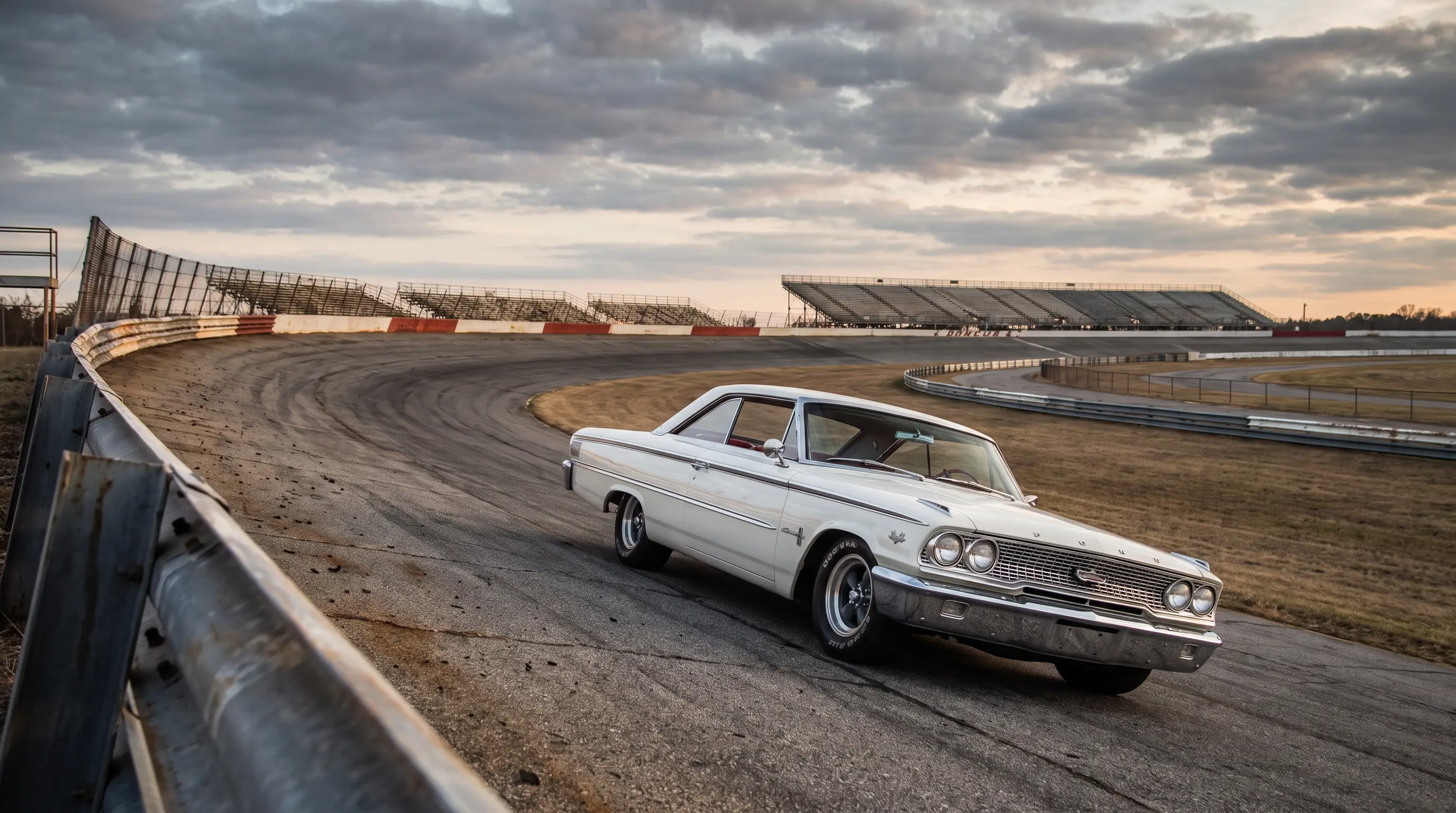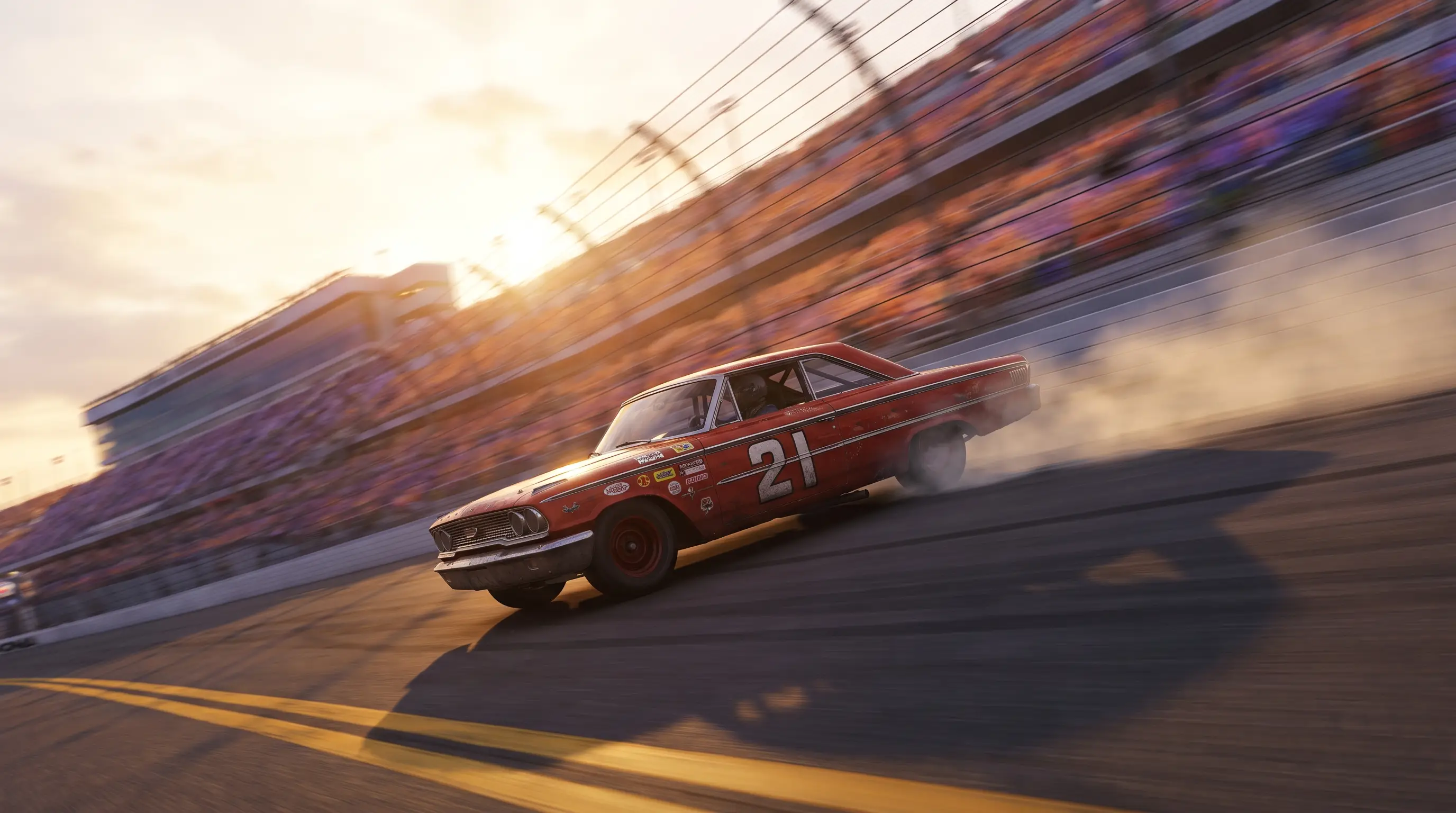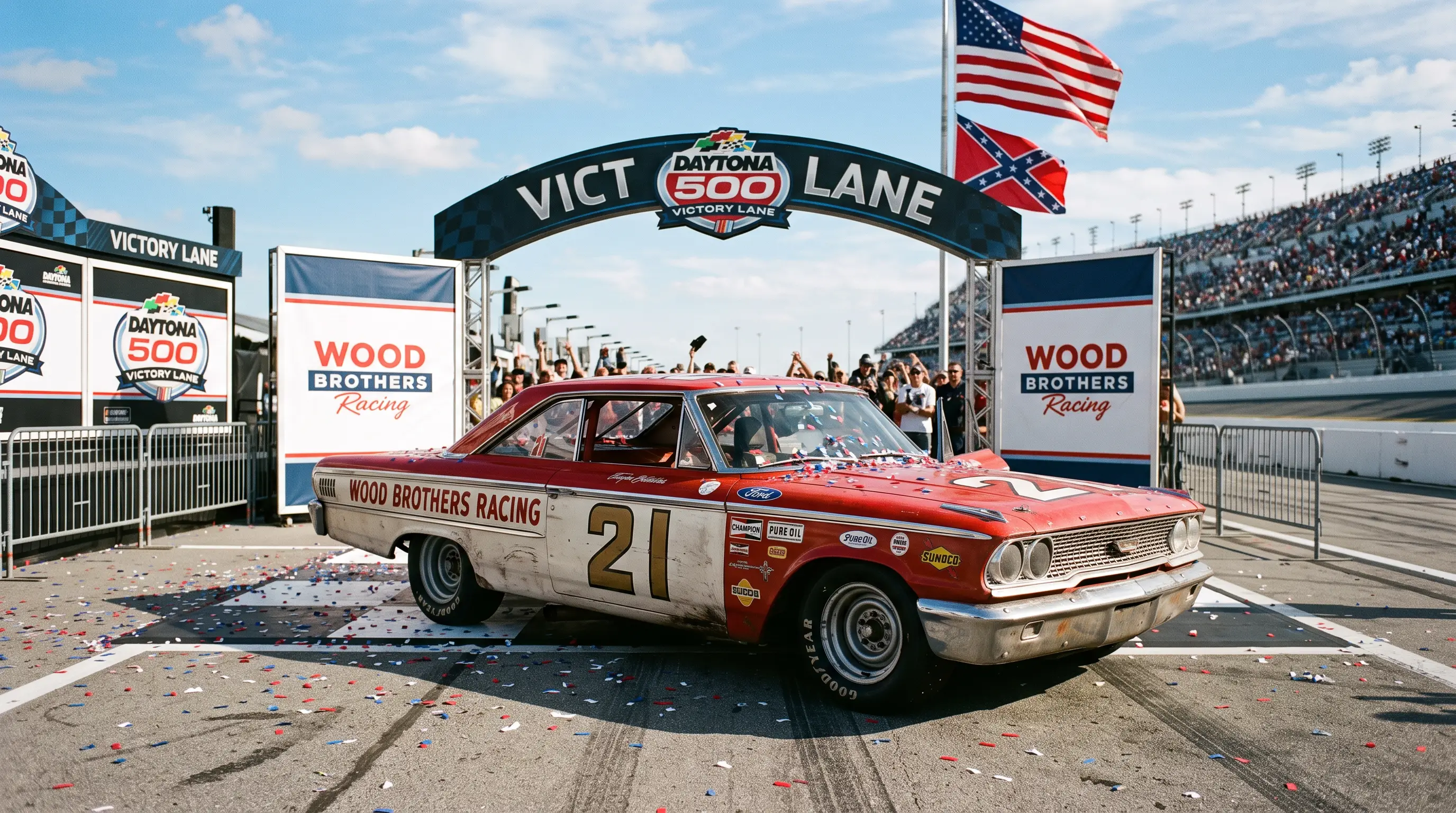
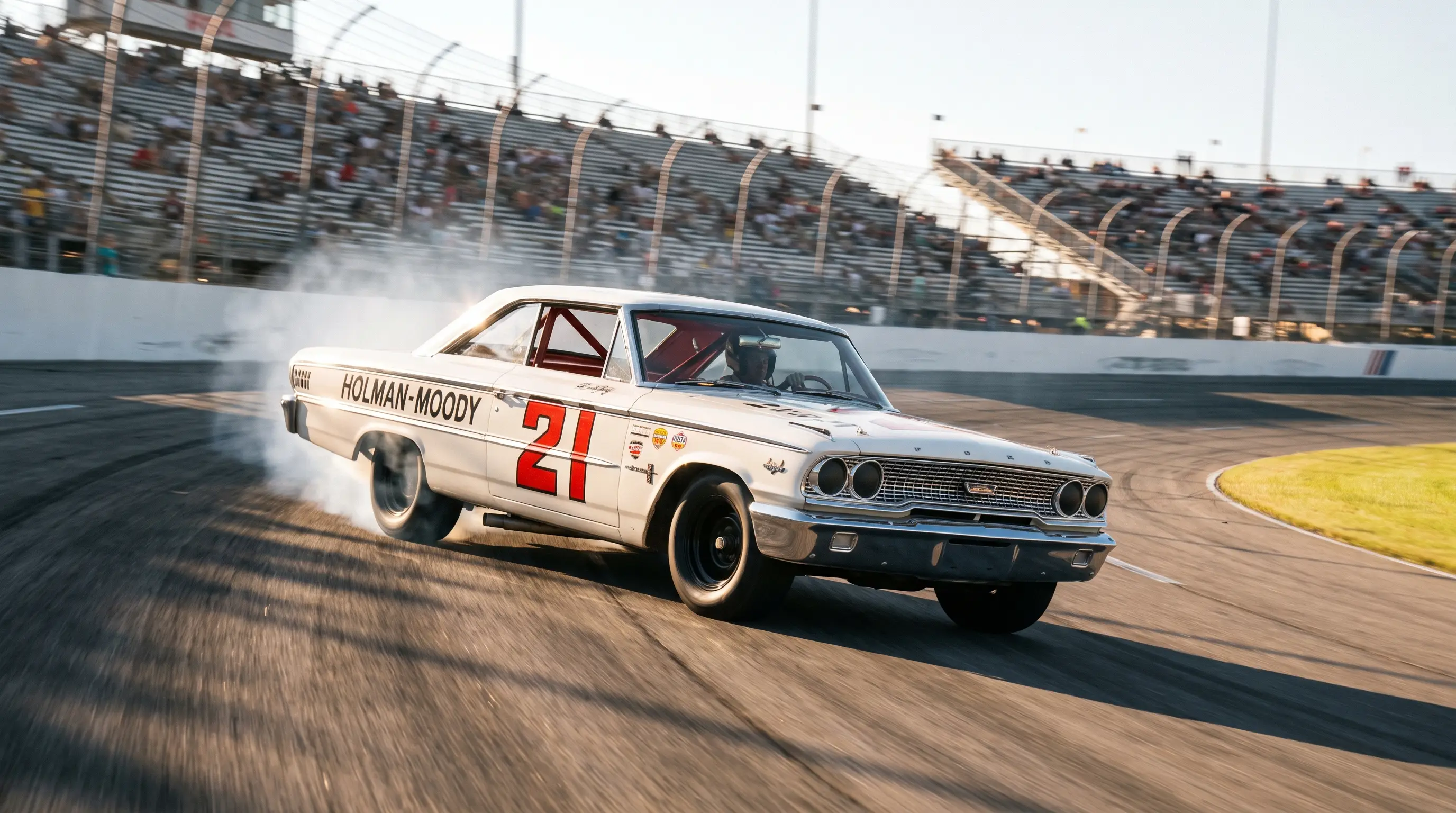
Fred Lorenzen did not look like the men he beat. Stock car racing in the early 1960s was still full of drivers who came up hard, farm hands and garage mechanics with grease under their nails and gravel in their voices. Lorenzen showed up in a sport coat, hair combed, ready for a photograph, and then went out and drove a Ford Galaxie like the car owed him money. The press needed a name for that combination and settled on Golden Boy. By the end of the 1963 season, with a Holman-Moody Galaxie under him, the nickname had stopped sounding like a joke.
The driver behind the nickname
Lorenzen came out of Elmhurst, Illinois, by way of USAC modifieds and short tracks, not the Carolinas pipeline that produced most of NASCAR's early stars. That outsider path mattered. He was polished where his rivals were rough, and he treated the car as an instrument rather than a weapon, setting up corners early and saving the machine for the laps that counted. Holman-Moody, the Ford factory backed operation out of Charlotte, needed exactly that kind of restraint to keep a fragile 427 Galaxie together for five hundred miles, and Lorenzen delivered it race after race.
He was also unusually comfortable with money and cameras for the period, doing endorsement work that most drivers of the era never touched. Reporters loved a clean quote and a clean face, and Lorenzen gave them both, which is part of why the Golden Boy tag stuck even as it undersold how hard he actually drove.
1963 and the Holman-Moody Galaxie
The 1963 season put Lorenzen in one of the strongest combinations NASCAR had seen: a Holman-Moody prepared Ford Galaxie, the 427 side oiler engine fresh into service, and a driver who had already proven he could win on both short tracks and superspeedways. He posted six victories that year, a run that made him one of the top earners in the sport and helped cement the idea that a Galaxie built right, with the right team behind it, could run down anything Chevrolet, Pontiac, or Mopar sent to the same tracks. His approach to the 427 R-code cars was mechanical sympathy over bravado, nursing tires and brakes in the early laps so the car had something left when it mattered.
That patience paid off on the sport's biggest stages. Lorenzen built a reputation for closing races rather than leading them from green to checkers, picking off tiring competitors in the final quarter of a run. It is a driving style that looks unremarkable lap by lap and decisive by the finish, which is exactly how a Golden Boy is supposed to win.
Why the Galaxie fit him
The full-size Galaxie of 1963 was not a light car, and it was not a subtle one, but it was stable at speed and strong enough in the chassis to survive the pounding of a NASCAR season when Holman-Moody got underneath it. Lorenzen's smoothness suited that. A twitchier driver in a car that size could scrub off momentum fighting the wheel through a banked turn; Lorenzen let the Galaxie's weight settle and used it. Engineers on the team noted that his lap times barely dropped off late in a run compared to drivers who drove every lap like a qualifying lap, and that consistency is what a 500 mile race actually rewards.
It also helped that Ford's factory effort in 1963 was aggressive and well funded, part of the Total Performance push that saw the company chase wins everywhere from drag strips to Le Mans. Lorenzen was the most visible face of that effort on the NASCAR side, driving cars that carried real engineering investment rather than a warmed-over showroom engine.
"People remember Lorenzen for the sport coat and the smile, but drivers who raced against him remember a man who never seemed to be trying as hard as he actually was. That's the scary kind of fast."
- Patrick Walsh
Life on the road with Holman-Moody
Racing for a factory-aligned team in 1963 meant more than showing up on Sunday. Holman-Moody ran a tight operation out of Charlotte, and Lorenzen spent long stretches of the season traveling between shop and track, often running a full slate of short-track dates between the bigger superspeedway shows. That grind is easy to forget when you only look at the win column. A Galaxie built for a 500-mile race at Daytona or Atlanta needed a different setup than the same car running a half-mile bullring on a Saturday night, and the team adjusted spring rates, gearing, and even body trim from week to week to keep Lorenzen competitive across wildly different tracks. He rarely complained publicly about the pace, which fit the clean, composed image the nickname implied, but crew members from the era have described a driver who paid close attention to what the car was doing underneath him and pushed hard for changes when something felt off.
That attentiveness extended to how he treated the 427 engine itself. The side oiler motor was powerful but not bulletproof, and several competitors that season lost potential wins to blown engines or overheated brakes from drivers who never let up. Lorenzen's habit of backing off half a beat in traffic, of not fighting for a position that wasn't worth the risk yet, kept his Galaxie intact deep into races where cars around him were falling out. It is a quieter kind of skill than a spectacular pass for the lead, and it is exactly the skill a long season rewards.
The legacy of the Golden Boy years
NASCAR in the early 1960s was also fighting to build a national audience beyond its Southern roots, and a driver like Lorenzen, articulate and camera-ready, helped that effort in ways a shy short-track veteran could not have. Sponsors and Ford's own marketing department leaned into his image, and the sport's growing television and magazine coverage found in him a face that played well outside the traditional fan base. That visibility mattered to Ford as much as any single race win, because the Total Performance campaign was built on the idea that success on Sunday sold cars on Monday, and a recognizable, likeable winner made that message easier to carry.
Lorenzen's career with Holman-Moody Fords through the mid 1960s, anchored by his big 1963 season, set a template other teams tried to copy: a clean-cut, disciplined driver paired with a heavily developed factory car, marketed as much as raced. He retired relatively young for the era, still near his competitive peak, which only added to the mystique. For anyone reading the 1963 Galaxie's racing record today, Lorenzen's name sits near the top of it, proof that the car's reputation on track was built by specific people making specific choices, not just an engine number on a spec sheet. For the fuller picture of that season and the car underneath him, our 1963 ford galaxie retrospective covers the model year in depth, and the Wood Brothers' own piece of that same year makes for a related story worth reading alongside it.
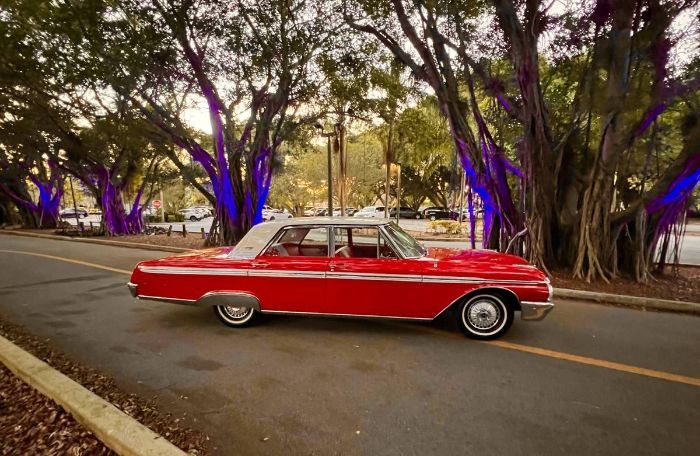
None of that history stays locked in a museum. Cars from this exact era, the ones Lorenzen and his rivals actually raced against on a Sunday afternoon, still turn up for sale in driver condition and restored form, and Galaxies for sale now gives a look at what is currently available for anyone who wants to own a piece of the same year Golden Boy made his name.