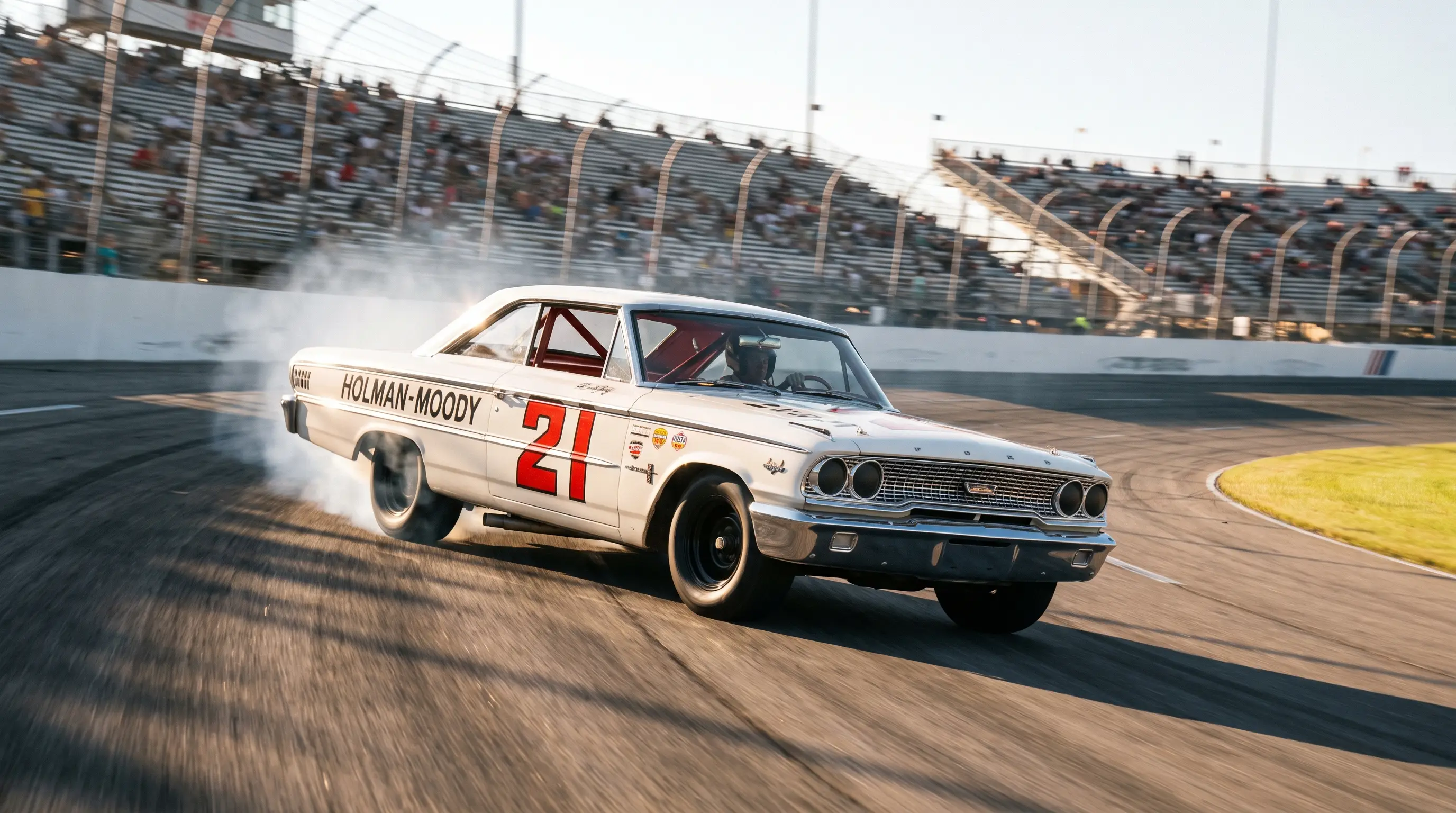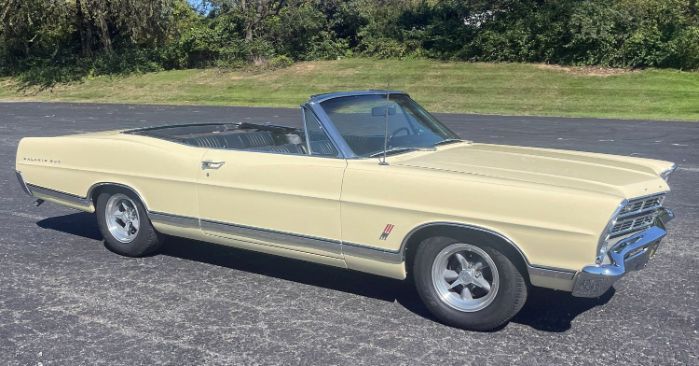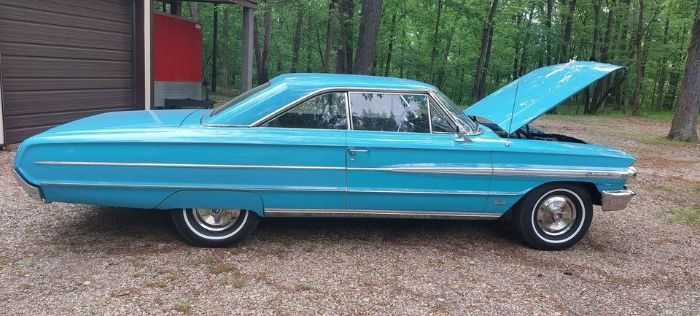
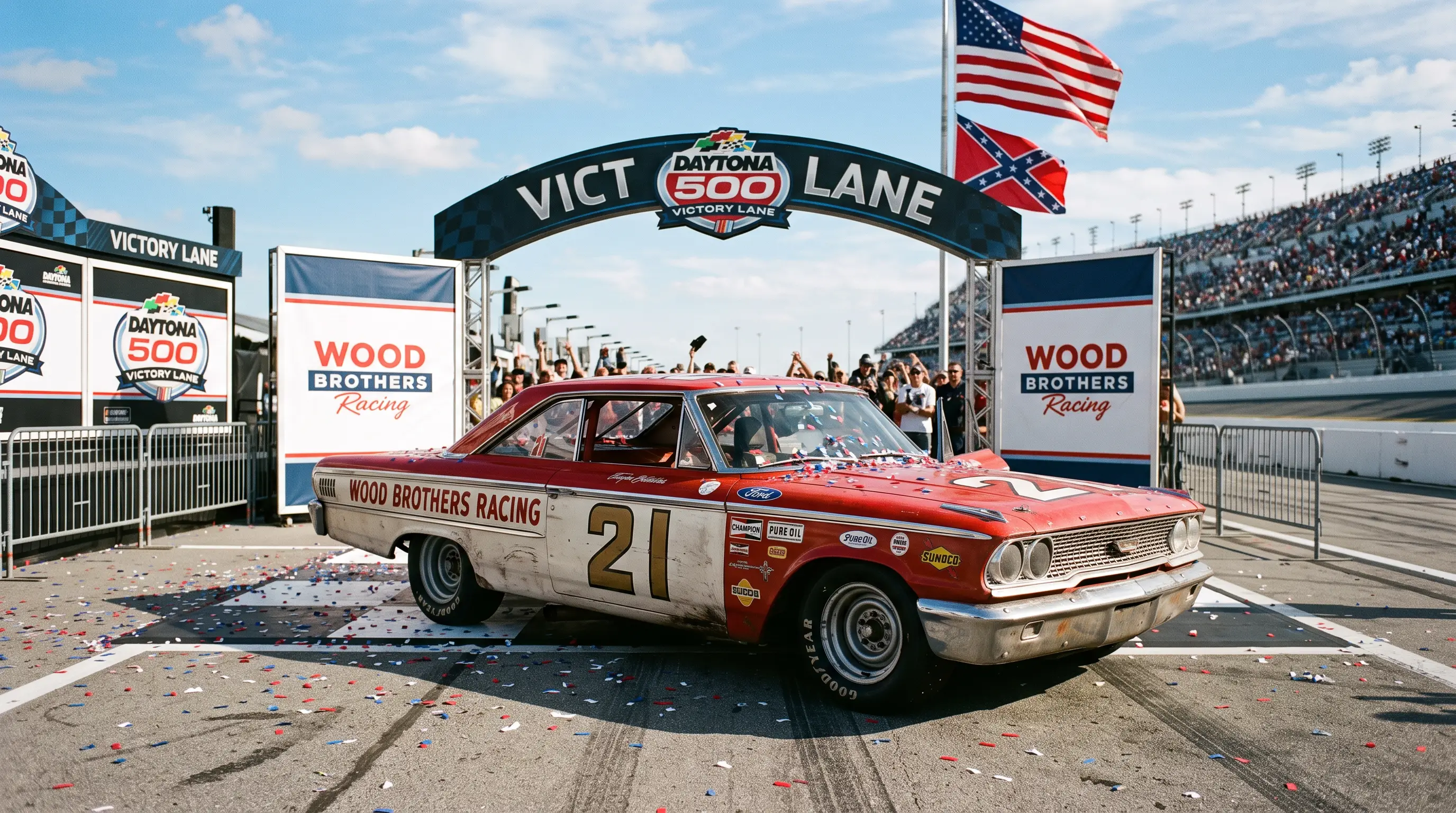
Ask around any old car club long enough and somebody will tell you the story of the 1963 Daytona 500, and they will tell it a little differently every time, but the bones of it never change. A Ford Galaxie built by two brothers out of a small shop in Stuart, Virginia, won the biggest race in stock car racing that year with a driver who was not even supposed to be in the car. That is the kind of story that keeps a car club meeting going an extra hour past when everyone was supposed to head home, and it is the reason the Wood Brothers name still means something to anyone who cares about the Ford Galaxie.
Two brothers and a shop that outworked everyone
Glen and Leonard Wood built their reputation the hard way, running Fords out of a garage that never had the budget of the bigger factory-backed teams but somehow kept beating them anyway. Their trick was not a secret speed part or an inside connection, it was preparation. The Wood Brothers pioneered pit stop technique that other teams were still copying years later, treating every second on pit road like it mattered as much as a second on the track, because it did. By 1963 that discipline had made them one of the most respected outfits in NASCAR, and Ford noticed. A tight, obsessively organized team running Galaxies was exactly what the company's growing racing effort needed.
What made the Woods different from bigger operations was how personal the whole thing stayed. This was a family business built around a shop and a handful of trusted hands, not a corporate racing department, and that closeness showed up in how carefully they prepared each car. Every bolt had a reason. Every setup change came from a conversation, not a memo. Visitors to the shop in Stuart often remarked that it looked less like a race team and more like a family workshop that happened to build cars capable of beating anything Detroit's biggest budgets could field, and that contrast was very much the point.
Marvin Panch, a burning car, and a favor returned
The 1963 Daytona 500 turned on an accident that had nothing to do with the Wood Brothers' own Galaxie. Marvin Panch, set to drive the team's car that year, was seriously burned weeks before the race after crashing a sports car during a test session and being pulled from the wreck by bystanders, including fellow driver Tiny Lund. Panch could not drive Daytona. From his hospital bed, he reportedly asked the Wood Brothers to put Lund in his seat, a way of returning the favor to the man who had helped save his life.
Lund had not even planned to run the full 500 that year, and he stepped into a car he barely knew for the sport's marquee event. What followed became one of NASCAR's most repeated underdog stories: Lund and the Wood Brothers, running a fuel-mileage strategy instead of trying to out-muscle faster cars, stretched their pit stops and their tank and came home the winner in the Galaxie, beating drivers with more raw speed through nothing but smart management of the resources they actually had.
Why the win mattered beyond one Sunday
A Daytona 500 win from a small independent team running a Galaxie sent a message to the rest of the garage: you did not need the deepest pockets to beat Detroit's biggest names, you needed a team that understood the car and the race better than anyone else on the grid. The Wood Brothers built their entire identity on that idea, and 1963 proved it on the largest stage the sport had. Ford's factory effort benefited enormously from the association, because a win built on strategy and preparation rather than sheer engine size made a stronger case for the Galaxie as a genuinely well-sorted race car, not just a big-block brute.
It also cemented the Wood Brothers as a team Ford wanted attached to its cars for years afterward, a relationship that outlasted the 1963 season by decades and that started, in large part, with a driver nobody expected in a car built by two brothers who never stopped believing preparation beat horsepower.
"Every old-timer I've talked to about that race tells the same part with the same look on their face, the part where Lund wins on gas mileage instead of guts alone. That's the Wood Brothers in one sentence."
- Wayne Coburn
A partnership that shaped how Ford raced
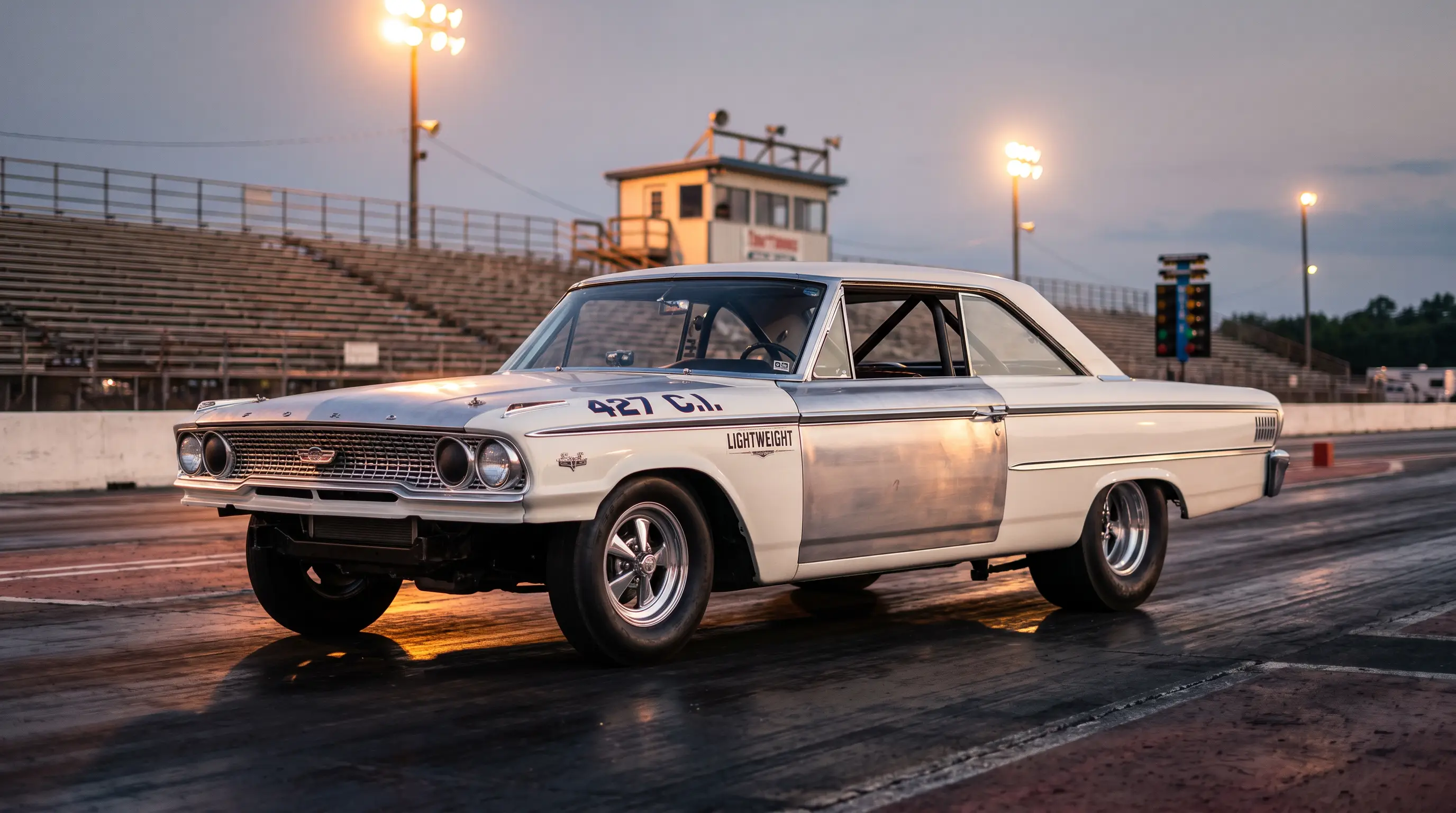
Ford's relationship with the Wood Brothers did not end when the Daytona trophy went home to Virginia. The team continued running Fords through the rest of the 1960s, and their pit crew methods, developed on tight budgets and refined race after race, eventually became close to an industry standard, studied and copied by teams with far larger budgets. That influence traces back in part to seasons like 1963, when a small shop proved it could out-think bigger competitors rather than simply out-spend them. Ford's factory racing program, chasing wins across NASCAR, drag racing, and endurance events under the Total Performance banner, found in the Woods a partner whose results reinforced the brand's broader marketing message even when the team itself stayed modest in size.
The 1963 Daytona win also gave the Wood Brothers something harder to quantify than a trophy: credibility that lasted. Drivers wanted to run for them. Sponsors wanted their name on a Wood Brothers car. None of that happens without a Galaxie built well enough, on a team prepared well enough, to win the sport's biggest race with a driver who had barely had time to learn the car. That is the part of the story that tends to get lost once the Panch and Lund drama has been told a hundred times at a swap meet, but it is the part that actually explains why the partnership mattered.
The Galaxie underneath the story
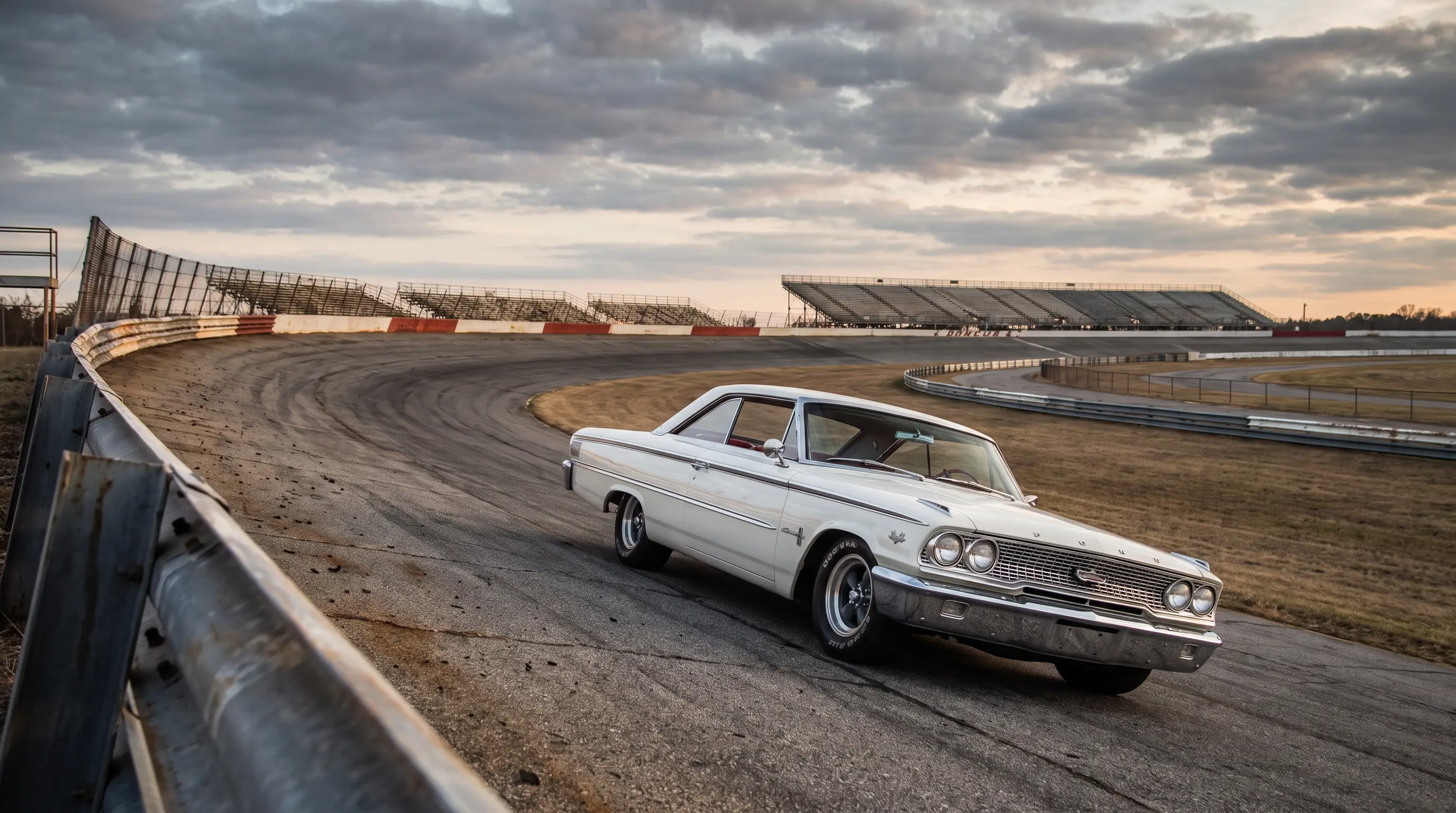
It is easy to let the Panch and Lund drama overshadow the machine itself, but the 1963 Galaxie the Wood Brothers fielded that day was a serious piece of equipment, built to survive 500 miles at Daytona speeds without falling apart under a team that could not afford to replace parts as freely as the bigger operations. That reliability, paired with the Woods' pit strategy, is what actually won the race. Horsepower gets talked about more, but a car that finishes clean is the one that collects the trophy, and the Wood Brothers understood that math better than almost anyone in the garage that year.
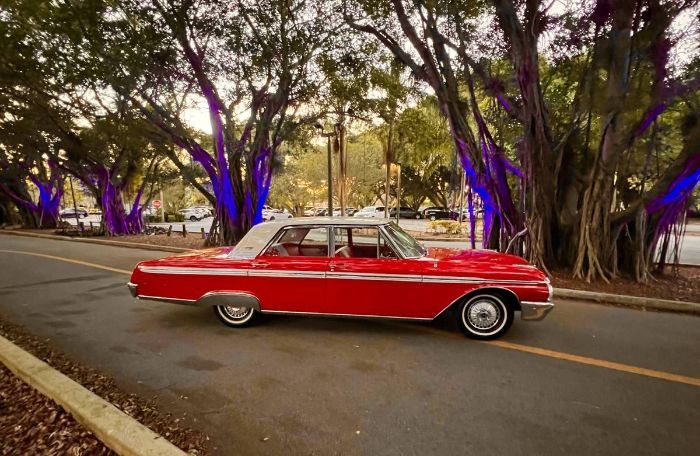
For the fuller context of the 1963 Galaxie's season and the racing program surrounding it, you can read the background on the model year as a whole. And if that story leaves you wanting one of these cars in your own driveway rather than just in a highlight reel, you can find a classic Galaxie currently listed for sale.