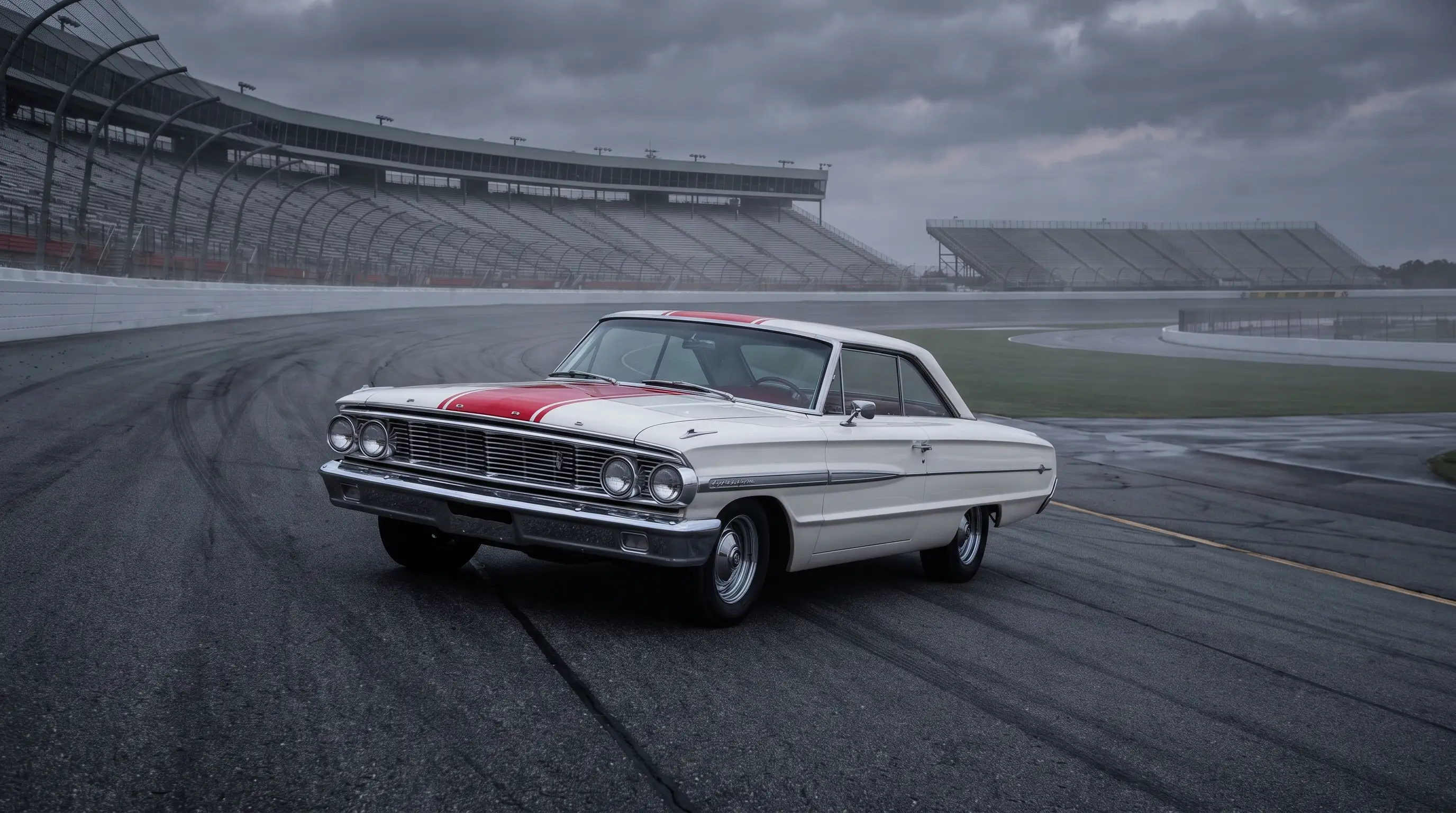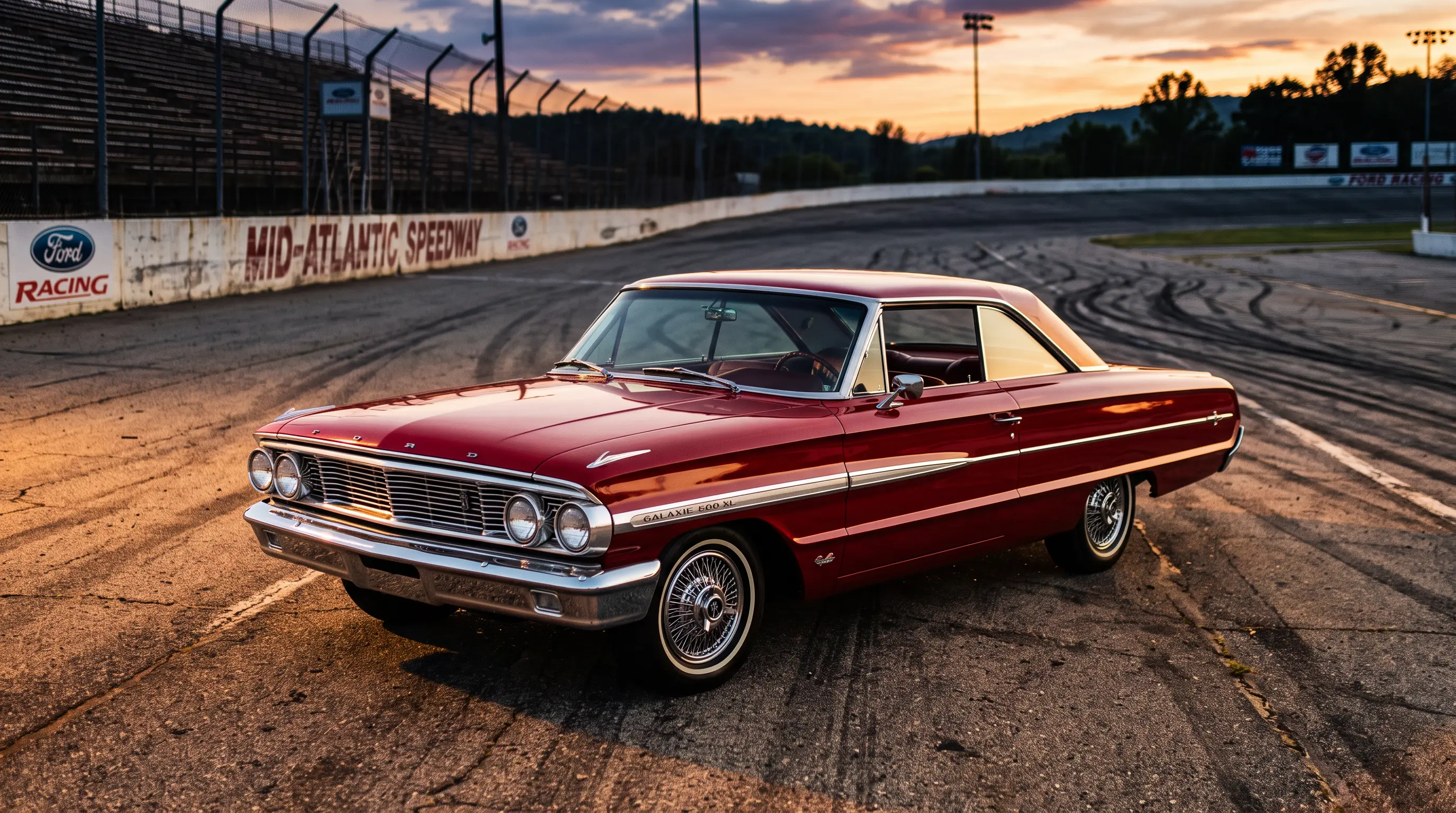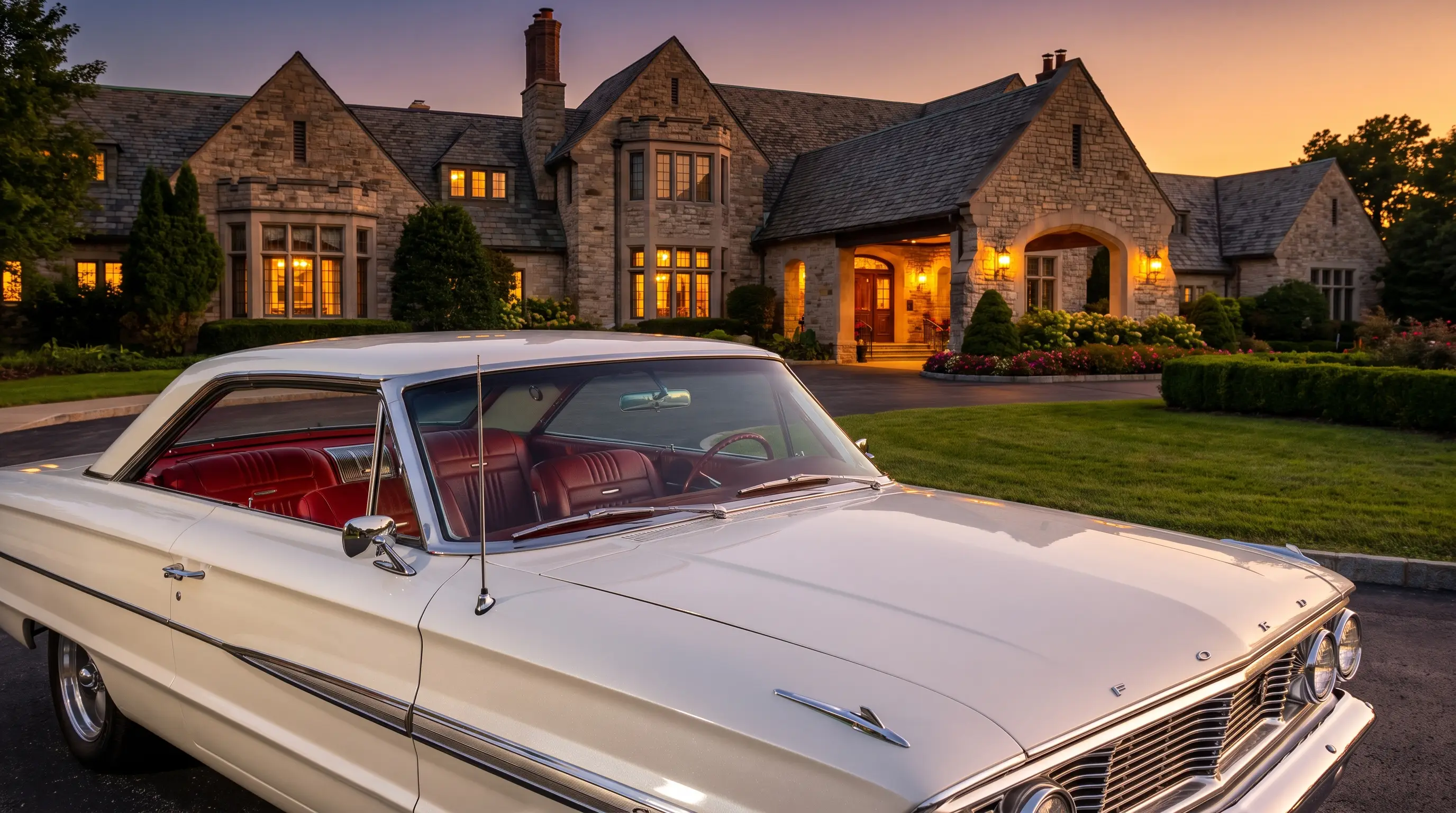
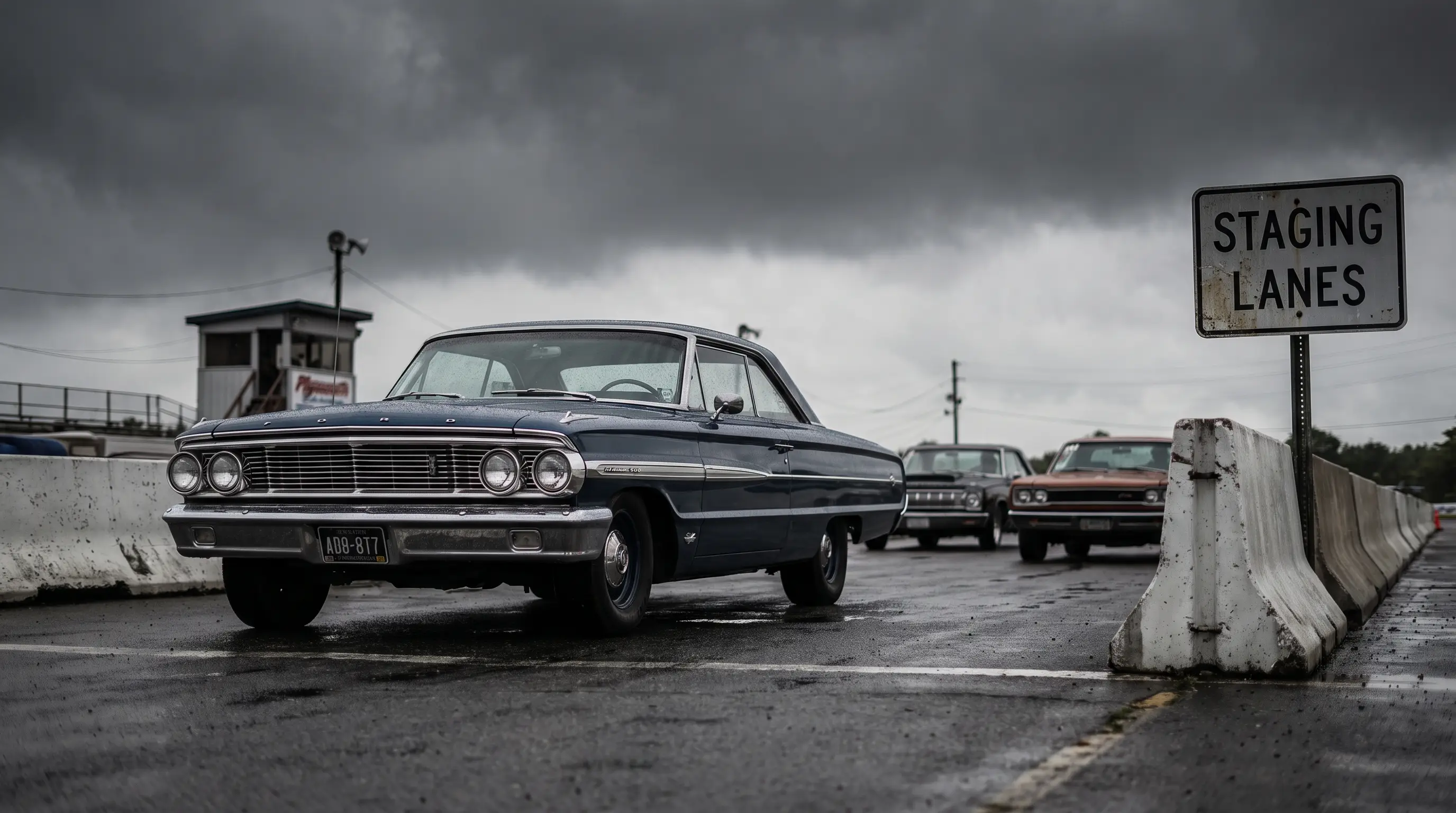
Factory records rarely capture the moment a rivalry actually begins, but for the Ford Galaxie, the 1964 season leaves a clear enough paper trail. Engineering memos, competition department correspondence, and production changes that followed within the next two years all point to the same event: ford galaxie 1964 hemi arrives rivalry describes the exact season Chrysler's new engine forced Ford to admit its own big block had a ceiling, and to start documenting a response almost immediately.
What the records actually show about Daytona 1964
The 1964 Daytona 500 result is well documented and not in dispute: Richard Petty won driving a Plymouth fitted with Chrysler's new 426 Hemi, a purpose-built racing engine with a hemispherical combustion chamber design that gave it a meaningful power advantage over Ford's wedge-head 427 on the high-speed superspeedway. What is less commonly discussed, and what the historical record supports more directly, is how quickly Ford's own internal response took shape afterward. This was not a case of a manufacturer absorbing a loss quietly over a full off-season. What survives from this period, largely through later interviews with the engineers involved rather than dated internal memos, suggests Ford's competition department treated the Hemi's debut as an immediate, credible threat requiring an accelerated answer rather than a wait-and-see approach.
The engine that emerged from that urgency, the single overhead cam 427, commonly called the cammer, began serious development specifically because the standard wedge-head 427 could not close the gap to the Hemi on paper, let alone on the track. That the cammer would not race until the following season, and would then become embroiled in its own homologation dispute with NASCAR, is a separate chapter, but the origin point traces cleanly back to this exact rivalry taking shape in 1964. Where this started covers the broader model year in more depth if you want the fuller context around the car itself.
Correcting a common misconception
A misconception worth addressing directly: the Hemi name itself was not new to Chrysler in 1964. Chrysler had built earlier hemispherical-head engines in the 1950s for its production cars, engines that carried the same basic combustion chamber philosophy though in a very different, heavier form. The 1964 racing Hemi was a distinct, purpose-built design specifically for competition, not a simple revival of the older production engine, and treating the two as the same engine understates how much genuinely new engineering went into the 1964 version. Ford's competition department understood this distinction clearly at the time, which is part of why the response was engineering-driven rather than dismissive.
What the factory did next
The immediate production-year response to the Hemi's arrival was limited, since a mid-cycle engineering answer of that scale does not appear in showroom cars within the same season. What changed instead was internal priority. Engineering resources that might otherwise have gone toward refining the existing 427 wedge got redirected toward the cammer program, and Ford's competition department began treating engine development as a more urgent, better-funded priority than it had been treated the previous year, when the 427 alone had seemed sufficient. That shift in institutional priority is arguably the most important documented consequence of the entire rivalry, more significant historically than any single race result from the 1964 season itself.
It is also worth correcting a related assumption: the rivalry did not end cleanly in Ford's favor once the cammer arrived. NASCAR's subsequent rules changes limited both engines' eligibility in various ways over the following seasons, meaning neither manufacturer got a clean, uncontested answer to the other. The record shows a rivalry that kept evolving through rule changes as much as through engineering, which is a more accurate picture than the simpler story of one engine simply beating the other and the matter ending there.
"People want a clean ending to this rivalry, one engine winning outright. The documentation does not support that. It supports two competition departments and a rules committee all still adjusting to each other well past 1964."
- Tom Ramirez
How the rivalry reads differently up close versus from a distance
From a distance, the story simplifies easily: Chrysler built a better engine, Ford lost the biggest race of the season, and Ford spent the following year building something to catch up. That summary is not wrong, but it flattens a more interesting internal picture. Ford's engineers were not caught entirely off guard by the concept of a hemispherical combustion chamber; the design principle was well understood in the industry by 1964. What caught the competition department off guard was the scale of resources Chrysler committed to making that principle work in a race-ready, reliable package on short notice, and the speed with which it appeared on track fully sorted rather than as a work in progress.
That distinction matters for how historians should read Ford's response. It was not a case of engineers scrambling to understand a new idea. It was a case of an organization recognizing that a competitor had out-executed a known concept faster and more completely than expected, and recalibrating its own internal timeline and budget priorities accordingly. Reading the 1964 rivalry that way, as a story about execution speed rather than raw invention, lines up much better with what the surviving records actually describe than the simpler underdog narrative that gets repeated at car shows.
Why this year anchors the whole rivalry story
Every later chapter of the Ford versus Chrysler engine rivalry through the mid-1960s traces back to this specific season, because 1964 is when the threat became concrete enough that Ford's own records show a change in institutional urgency. Understanding that context matters for anyone studying the full-size Ford's racing history, since it explains engineering decisions in 1965 and beyond that otherwise look sudden or disconnected from what came before. For collectors and researchers alike, this is the season worth anchoring the rest of the story to.
If this history has you interested in the cars that carried this era's engineering forward, classic Galaxie for sale listings are worth reviewing for documented examples from this specific model year.
One last note for researchers working from period sources rather than secondhand summaries: primary documentation from 1964 itself is thinner than most people assume. Competition department records from this exact era survive unevenly across manufacturers, and a fair amount of what gets repeated as established fact about the rivalry's internal timeline is reconstructed from later interviews with engineers and drivers rather than contemporaneous paperwork. That does not make the broad outline wrong, but it is worth treating specific dates and internal decision points with appropriate caution until a primary source can confirm them, rather than repeating secondhand retellings as settled history.