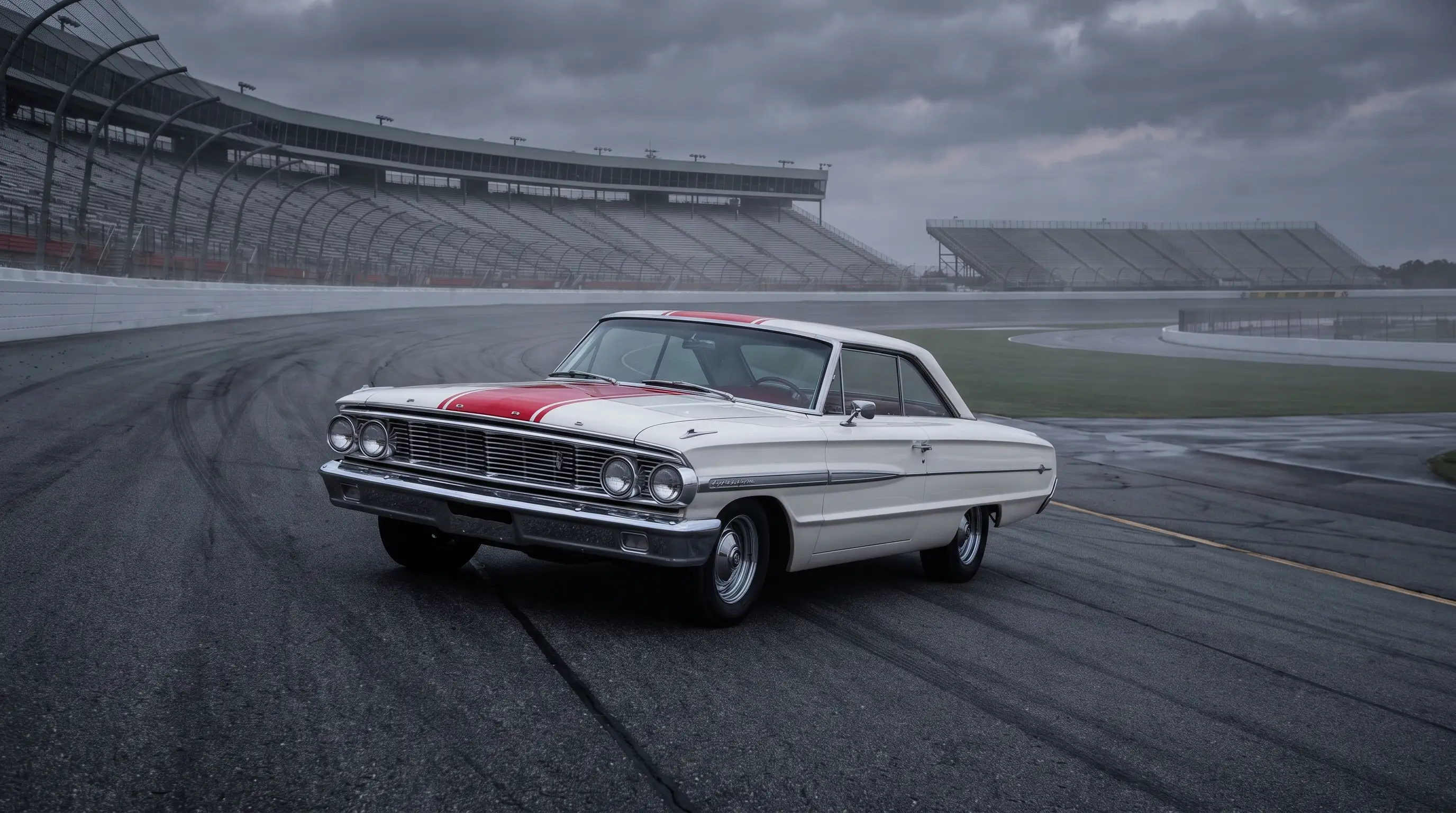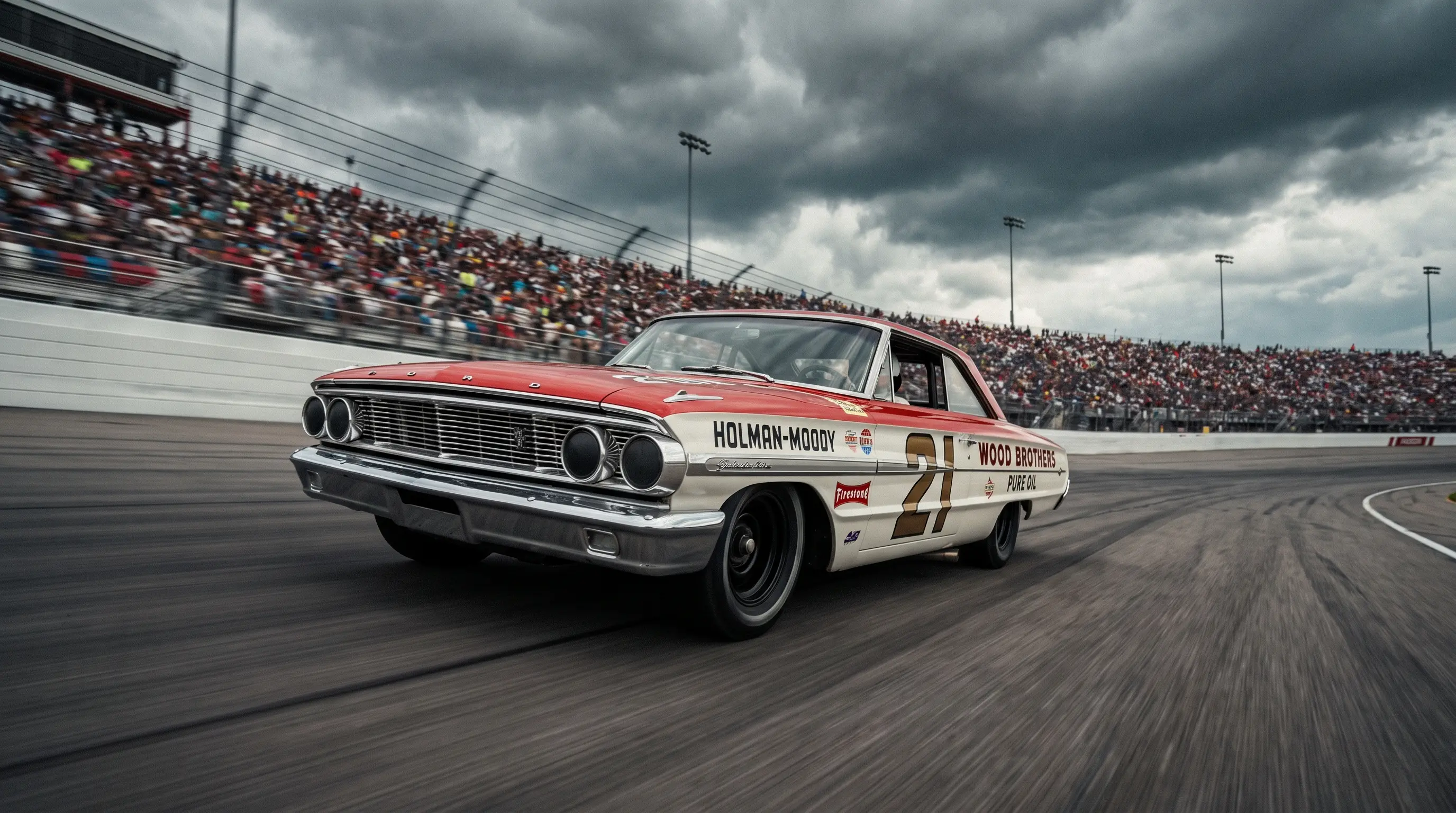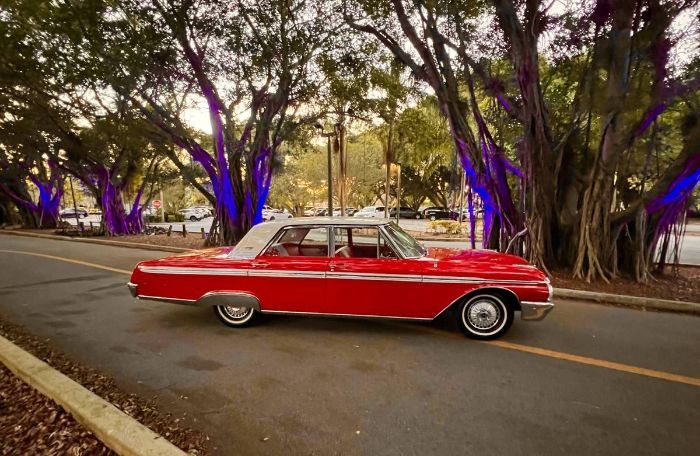
Every car club has one guy who tells the same story every meeting and somehow it never gets old, and at ours it is Frank, who saw Ned Jarrett race a Ford Galaxie at a half-mile track in the Carolinas back when he was a kid sitting on his father's shoulders. He tells it a little differently every time, but the ending is always the same: Jarrett drove smart, not just fast, and that is exactly what the ford galaxie 1964 ned jarrett and fords story is really about.
The driver who did not need to be the fastest
Ned Jarrett built his reputation on consistency rather than raw speed, a trait that mattered enormously during a season when Chrysler's new Hemi engine had the horsepower advantage on the biggest tracks. Jarrett was driving Fords for the Bondy Long team through this era, and 1964 asked something specific of him: keep the car running, keep it out of trouble, and let the other guys' engines blow up or their tempers get the better of them on the shorter, rougher tracks where the Hemi's power advantage mattered less. It is not a flashy strategy to describe, but it is exactly the kind of racing that builds a championship resume over a full season rather than a single headline win.
Our club has an old timer who worked concessions at a couple of these regional races and swears Jarrett's cars always looked cleaner at the finish than anyone else's, less beat up, less overheated. Take that with the grain of salt any concession-stand memory deserves, but it lines up with everything written about how Jarrett actually drove: economical, patient, hard on the field rather than hard on his own equipment.
What made 1964 a hard year to drive through
The Hemi's arrival that season changed the math for every Ford driver, Jarrett included. A car that could not out-muscle the fastest Plymouths on the superspeedways had to make up ground everywhere else, in strategy, in tire management, in simply staying on the track while faster cars pushed too hard and paid for it later in the race. That is a harder brand of racing to romanticize than a pure speed contest, but it is the brand of racing 1964 demanded, and it is why drivers like Jarrett who could manage a race rather than just attack it held their own against a genuinely superior engine package on paper.
The club has argued for years about whether Jarrett's 1964 season gets undersold historically because his championship year came the following season instead, in 1965, after NASCAR had changed the rules around the Hemi. There is something to that argument. A driver's best work does not always land in the year that gets remembered, and 1964 was, by most accounts, the year Jarrett proved he could compete with Ford's equipment against a genuinely faster rival, which set up everything that followed.
"Frank tells it like Jarrett was born patient. I think patient is just what you become after enough seasons of watching faster cars blow themselves up trying to catch you."
- Wayne Coburn
What the car itself demanded from a driver like him
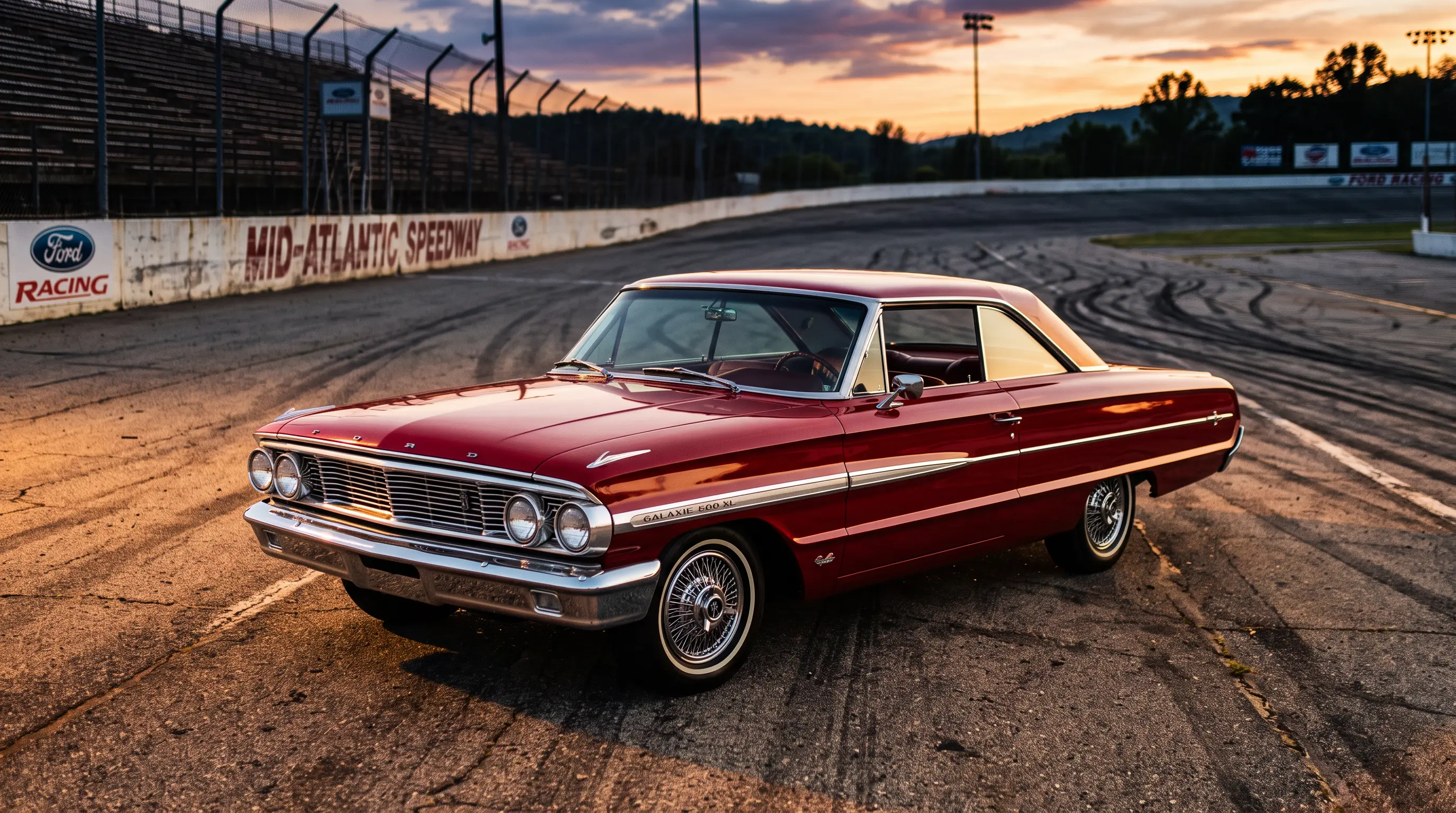
It is worth remembering that the Galaxie Jarrett drove was not a purpose-built race machine in the way later stock cars would be. It shared its basic architecture with the same full-size Ford family sedan a farmer might have bought for hauling kids to school, reinforced and stripped for racing but still recognizably related to the showroom car. Driving a car built on that foundation hard for five hundred miles asked something different of a driver than a modern purpose-built chassis would. Suspension geometry, brake fade over a long run, and tire wear all behaved more like a heavy road car under stress than a dedicated race car, and a driver who understood those limits and drove within them had a real advantage over one who simply mashed the throttle and hoped the equipment held.
That is a big part of why Jarrett's reputation as a smart, mechanically sympathetic driver mattered so much in a season like 1964. The Hemi cars might have had the power advantage, but power does not fix a car that has been driven past what its brakes and suspension can sustain over a long, punishing afternoon. Jarrett's habit of nursing a car home rather than abusing it paid dividends precisely because the equipment on both sides of the rivalry was closer to a road car than people sometimes assume today.
Why this story keeps getting retold at the clubhouse
Part of it is generational. The members who actually saw these races are getting fewer every year, and stories like Frank's are how the rest of us inherit a season we never watched firsthand. Part of it is that Jarrett's approach, patience over horsepower, discipline over bravado, is a lesson that translates to just about anything you do with a classic car today, whether that is racing one or simply keeping it running reliably decade after decade. More on the 1964 ford galaxie fills in the broader picture of the car Jarrett and his contemporaries were driving that season, and where this started covers the fuller arc of the model if you want the whole story from the beginning rather than just this one hard-fought year.
We keep an old photo pinned up at the clubhouse of a Ford stock car from around this era, paint chipped, number faded, nobody entirely sure it is even the right team's car. Doesn't matter. It gets the point across every time someone new joins and asks why we talk about 1964 like it still matters.
New members usually assume we are exaggerating the rivalry, the patience, the whole "gentleman driver against the faster car" framing, until someone digs up an old newspaper clipping or a grainy photo finish and hands it across the table. That is usually the moment the story stops sounding like clubhouse folklore and starts sounding like the history it actually is. Frank still tells it best, shoulders and all, but by the time he gets to the part about Jarrett bringing the car home clean at the end, nobody at the table is doubting him anymore.
Where the story lands today
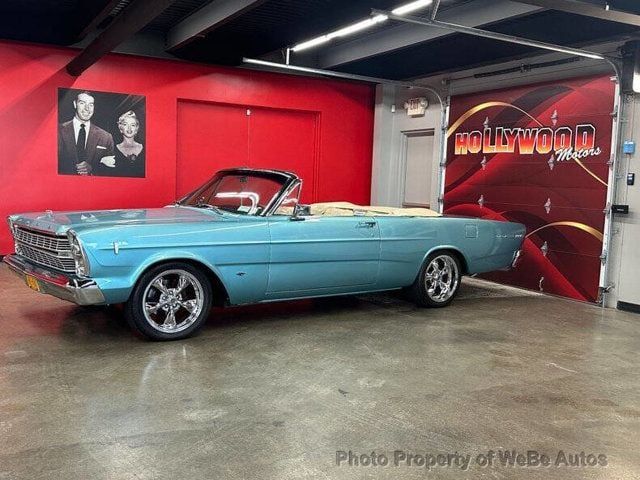
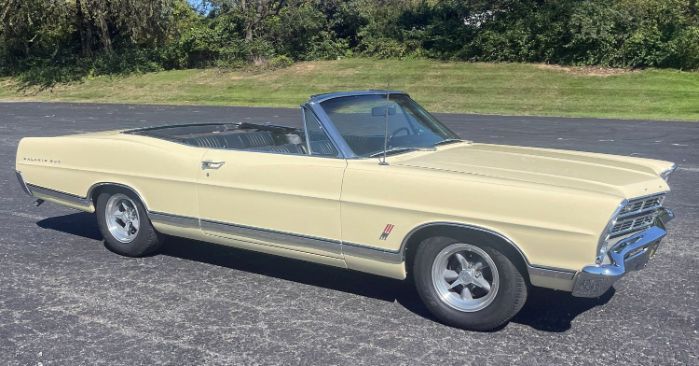
Jarrett's 1964 season is a reminder that championships get decided over an entire year, not a single headline race, and that a driver willing to play the long game can hold his own against a faster car more often than the record books suggest at first glance. If that kind of history has you wanting to see the actual metal from this era up close, there are classic Galaxies on the market right now that carry the same body and era Jarrett raced through that season, patient cars for patient owners.