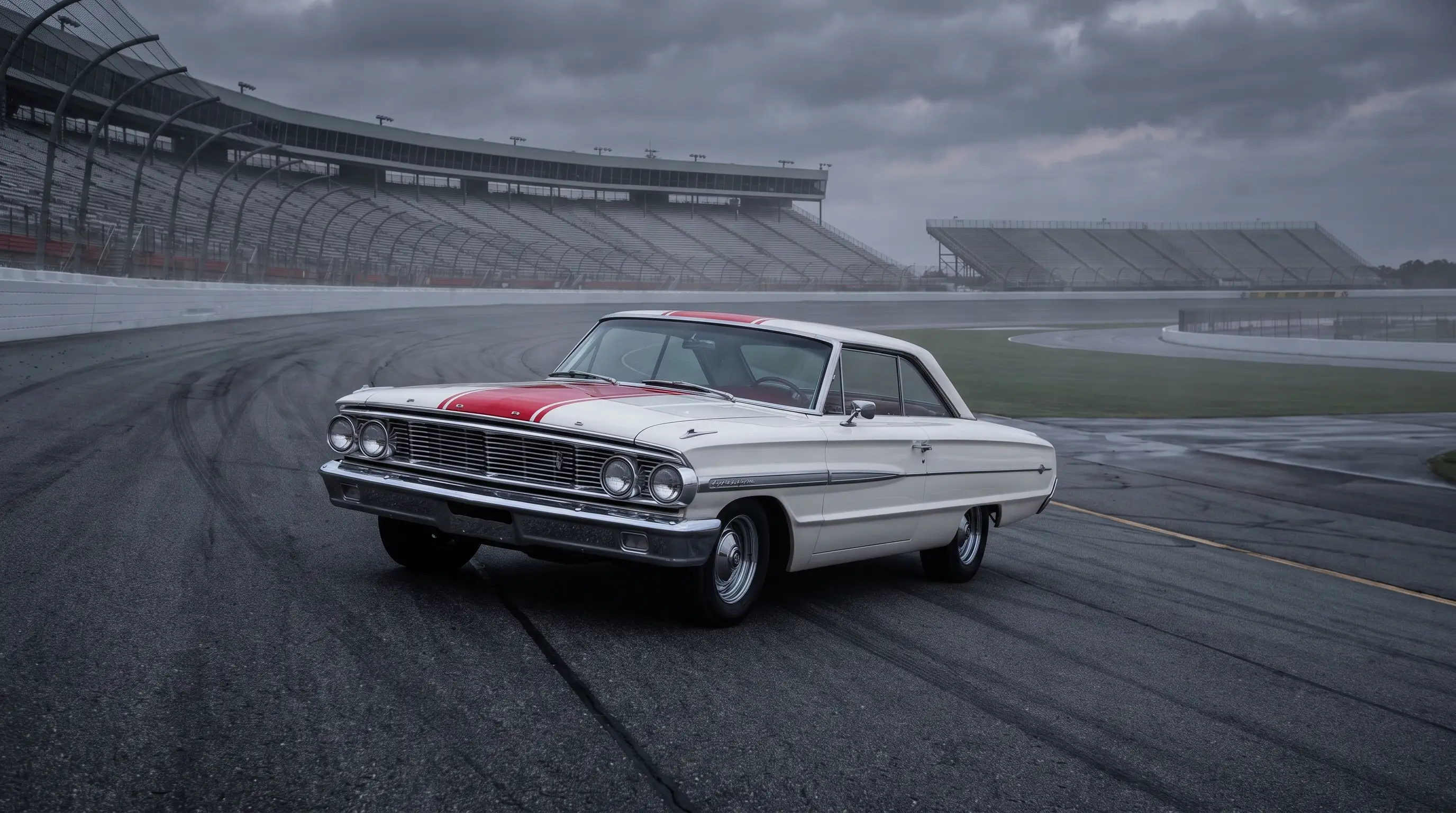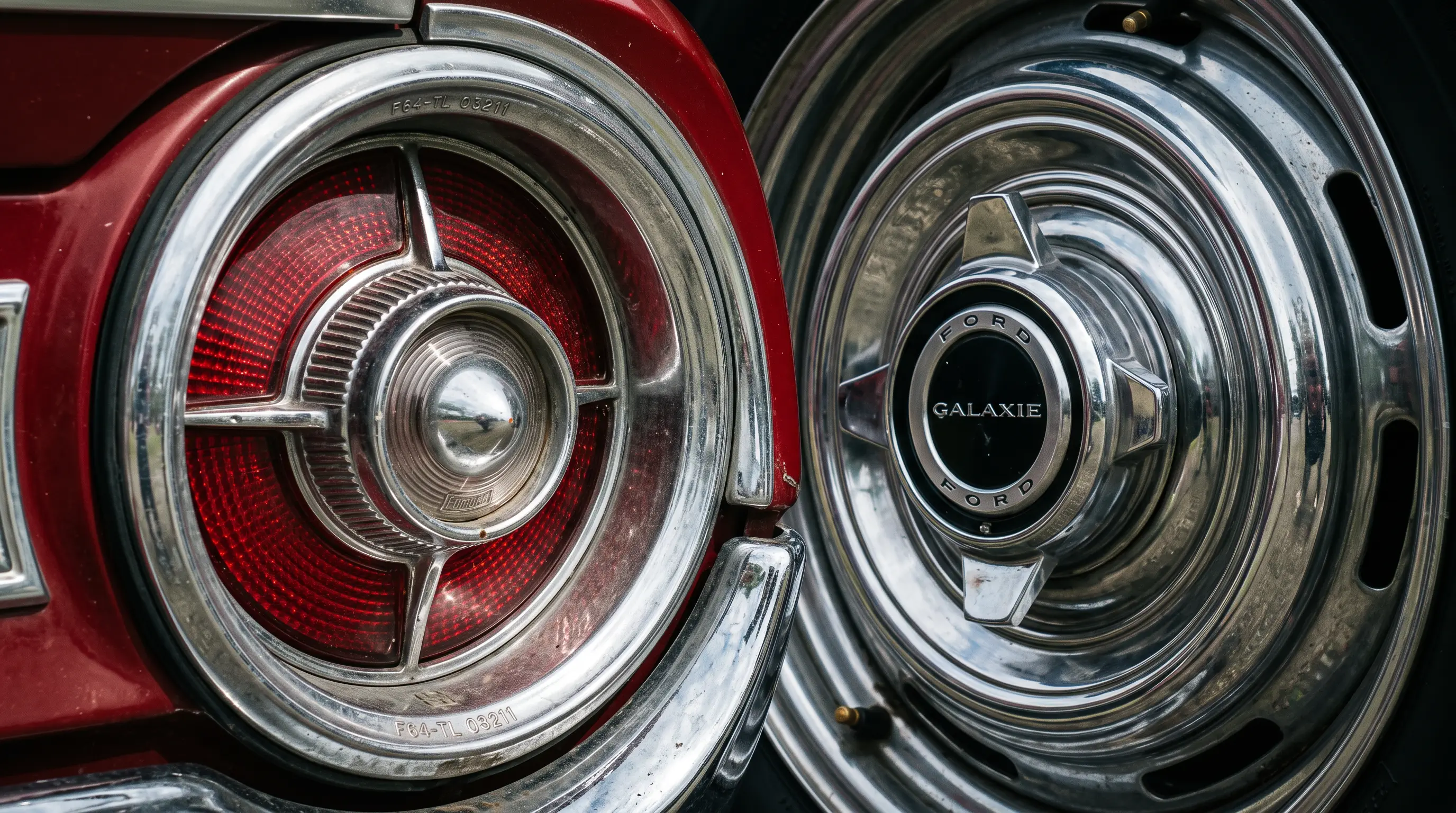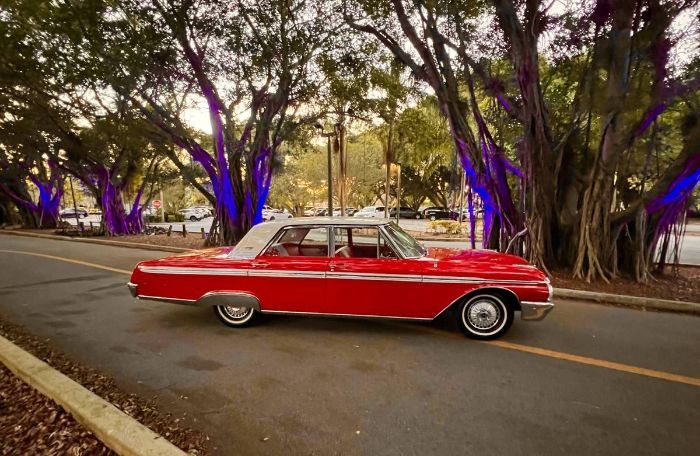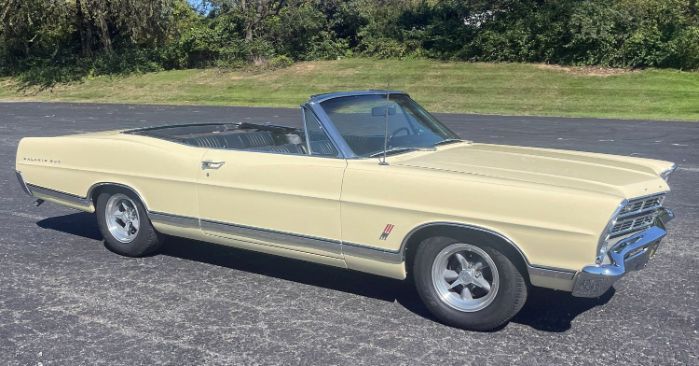
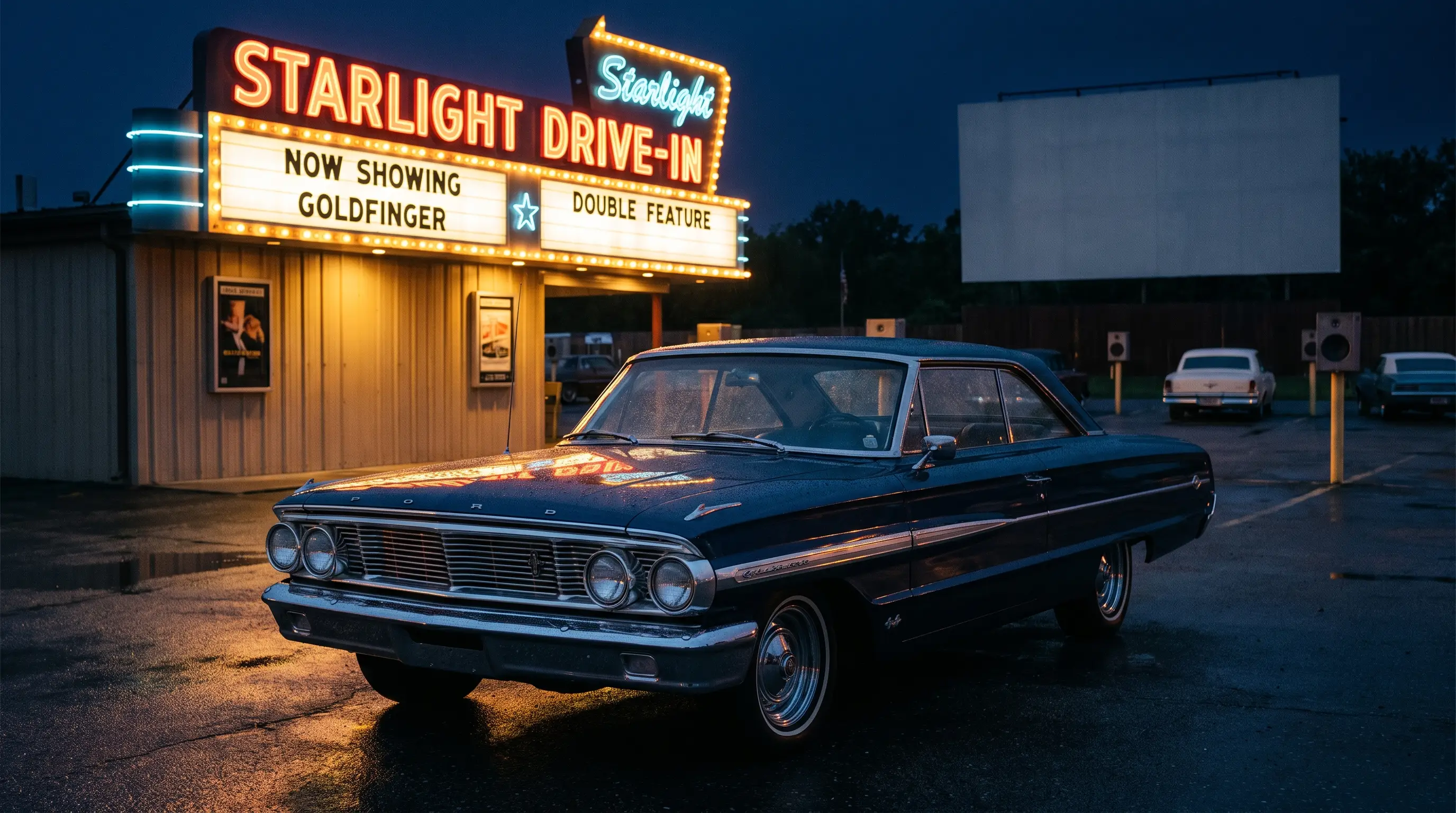
A teenager in 1964 did not need to walk onto a Ford lot to know what a Galaxie looked like. It was already on the screen at the drive-in, parked in the background of a television scene, or rolling past in the opening shot of a film that had nothing to do with cars at all. The story of ford galaxie 1964 in movies and music is really a story about how deeply this one full-size Ford worked its way into the visual language of mid-1960s American life, often without anyone involved in making the film or the record intending it that way.
A background presence in the era's films
Full-size Fords of this generation show up repeatedly in films and television shows shot during the mid-1960s, not because directors chose them for symbolic weight but because they were simply everywhere. Police departments, taxi fleets, and ordinary families across the country were driving Galaxies, and any production filming on location in an American city in 1964 or 1965 was going to catch one in frame sooner or later, parked at a curb or rolling through an intersection behind the actual scene.
That ubiquity is part of what gives these appearances their quiet power decades later. A Galaxie glimpsed in the background of an otherwise unrelated film functions almost like a time stamp, telling an attentive viewer exactly what year they are watching without a single line of dialogue confirming it.
The car as a symbol of a particular kind of household
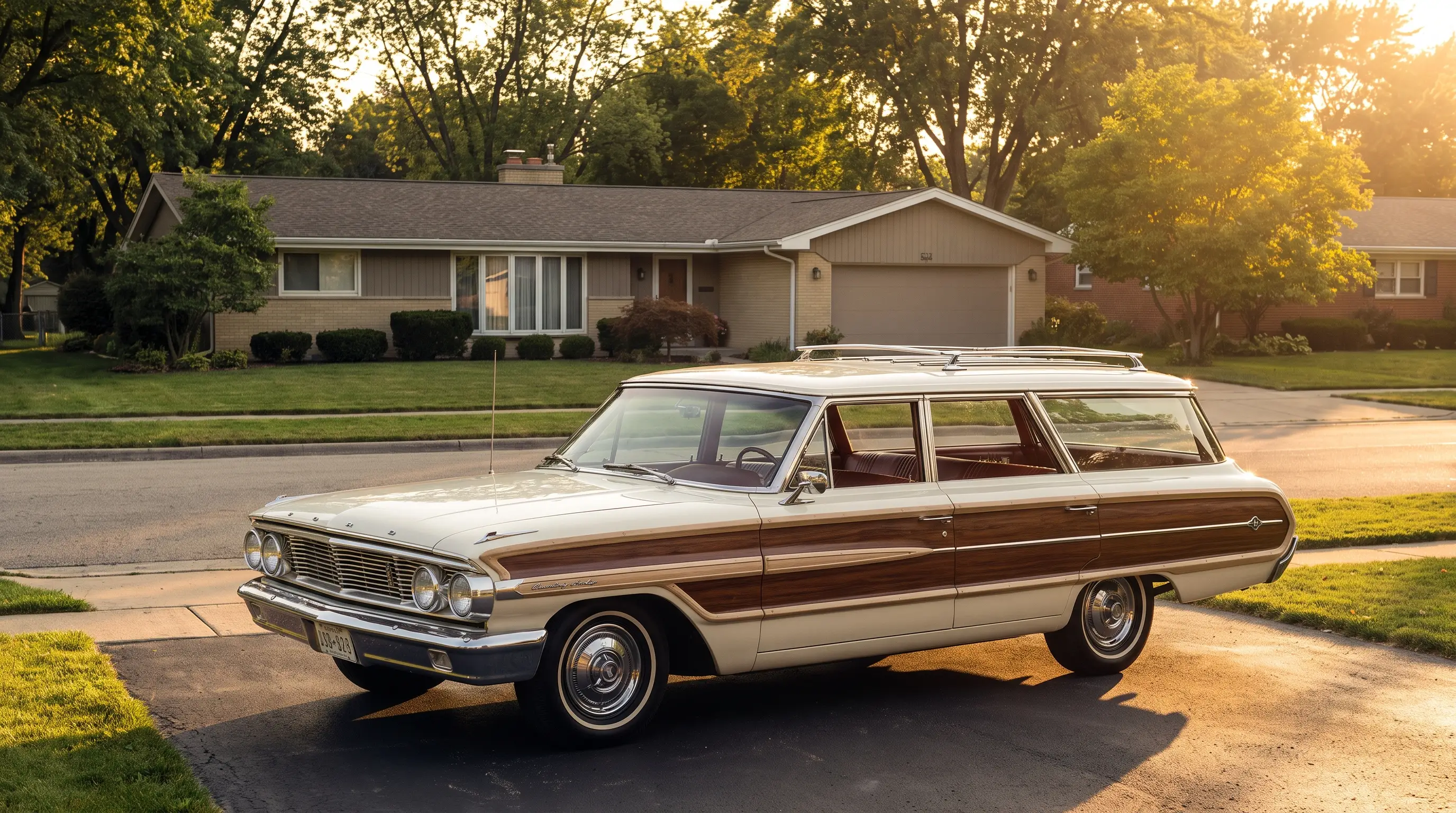
Beyond incidental appearances, the Galaxie carried a specific cultural weight in how mid-1960s film and television portrayed middle-class American families. A full-size Ford sedan or wagon in a driveway signaled stability and a certain kind of aspiration without being flashy about it, the automotive equivalent of a well-kept lawn. Writers and set decorators reached for that visual shorthand often enough that the association between big Fords and a specific slice of American domestic life became almost reflexive by the middle of the decade.
That symbolism was never really about the Galaxie specifically. It was about what a full-size, mainstream American car represented in a culture that read automobiles as social signals long before anyone used the phrase status symbol casually. The Galaxie simply happened to be one of the most common vehicles filling that role at the time.
Music, radio, and the sound of a big American car
Where the 409 caught a famous musical spotlight for Chevrolet, the Galaxie's presence in popular music is quieter and more diffuse, showing up less as the subject of a specific hit song and more as part of the general soundtrack of cruising culture that defined how a generation of teenagers experienced their first cars, their first dates, and their first long drives with the radio on. Regional AM stations of the period were full of car-adjacent lyrics and imagery, and a full-size Ford cruising a main street on a Friday night was as much a part of that scene as any specific make mentioned in a chart-topping single.
That is a smaller kind of cultural footprint than a namesake hit song, but it may be a more honest one. The Galaxie was not chasing a spotlight moment. It was simply present, night after night, in the background of a soundtrack that a lot of people who lived through that era still associate with their own memories rather than with any particular recording.
"Nobody wrote a hit single about the Galaxie, and I think that is exactly right. Some cars get a song. This one just got to be everywhere, quietly, which might be the better kind of remembered."
- Nora Beckett
Why the memory persists for people who never owned one
Ask someone who grew up in the mid-1960s about the Galaxie and you often get a story that has nothing to do with the car's specifications. A father's company car. A ride to a first job interview. A backseat memory from a family trip that has nothing to do with the 427 or the model year's sales figures at all. Those small, personal recollections are their own kind of cultural record, less documented than a chart position or a box office receipt but just as real to the people carrying them.
That is part of why this particular Ford still generates warm recognition from people who could not tell you a single spec off the top of their head. It was there, reliably, during a specific stretch of American life, and that presence turned into memory in a way that outlasts most of the advertising campaigns that originally put the car in front of buyers. For readers curious about the broader model year that produced this quiet cultural footprint, 1964 ford galaxie history covers the full lineup in detail, and a related story looks specifically at the wagon variant that filled so many of those family driveways.
If the sedan and the 500 XL carried the aspirational weight in these background appearances, the Country Sedan wagon carried the domestic one. Set decorators reaching for a shot of a busy suburban household reached for the wagon more often than any other body style, since a loaded roof rack or a back seat full of children read instantly as family life without a word of dialogue required. That visual shorthand shows up across enough film and television work from the period that it starts to feel less like coincidence and more like an unwritten rule of mid-1960s set decoration.
It helps that the Country Sedan was genuinely everywhere in real driveways too, which is exactly why it worked so well as background dressing. Productions were not manufacturing an image of American family life so much as reflecting one that already existed on nearly every block in the country, and the wagon happened to be the most visible symbol of it.
None of this required a single line of studio direction calling for a Galaxie specifically. It simply required a location scout parking near a typical American street and pointing a camera at what was already there, which by 1964 meant a very high chance of catching a full-size Ford somewhere in the frame.
Finding your own piece of that memory
For some people, reading about this era is enough. For others, it sparks something closer to a search, a desire to sit behind the wheel of the same car that shows up in an old family photograph or a half-remembered film. Anyone in that second group can look at Galaxies for sale now and see what pieces of that specific American moment are still out there waiting for a new owner.
The Galaxie's role in movies and music was never loud. It did not need a hit record or a starring role to matter. It simply showed up, again and again, in the background of a decade that a lot of people still think about fondly, and that quiet consistency turned out to be its own kind of legacy.