Auction descriptions for full-size 1964 Fords tend to lead with engine codes and horsepower figures, and for good reason since that data drives most of the bidding. But after tracking enough sales, a pattern emerges: cars with well-preserved small design details consistently bring stronger money than cars with equivalent mechanical specs and worn or replaced trim. Understanding the ford galaxie 1964 design details worth noticing is not a styling exercise. It is a practical guide to what separates a strong sale from an average one.
The taillight signature and why it matters to buyers
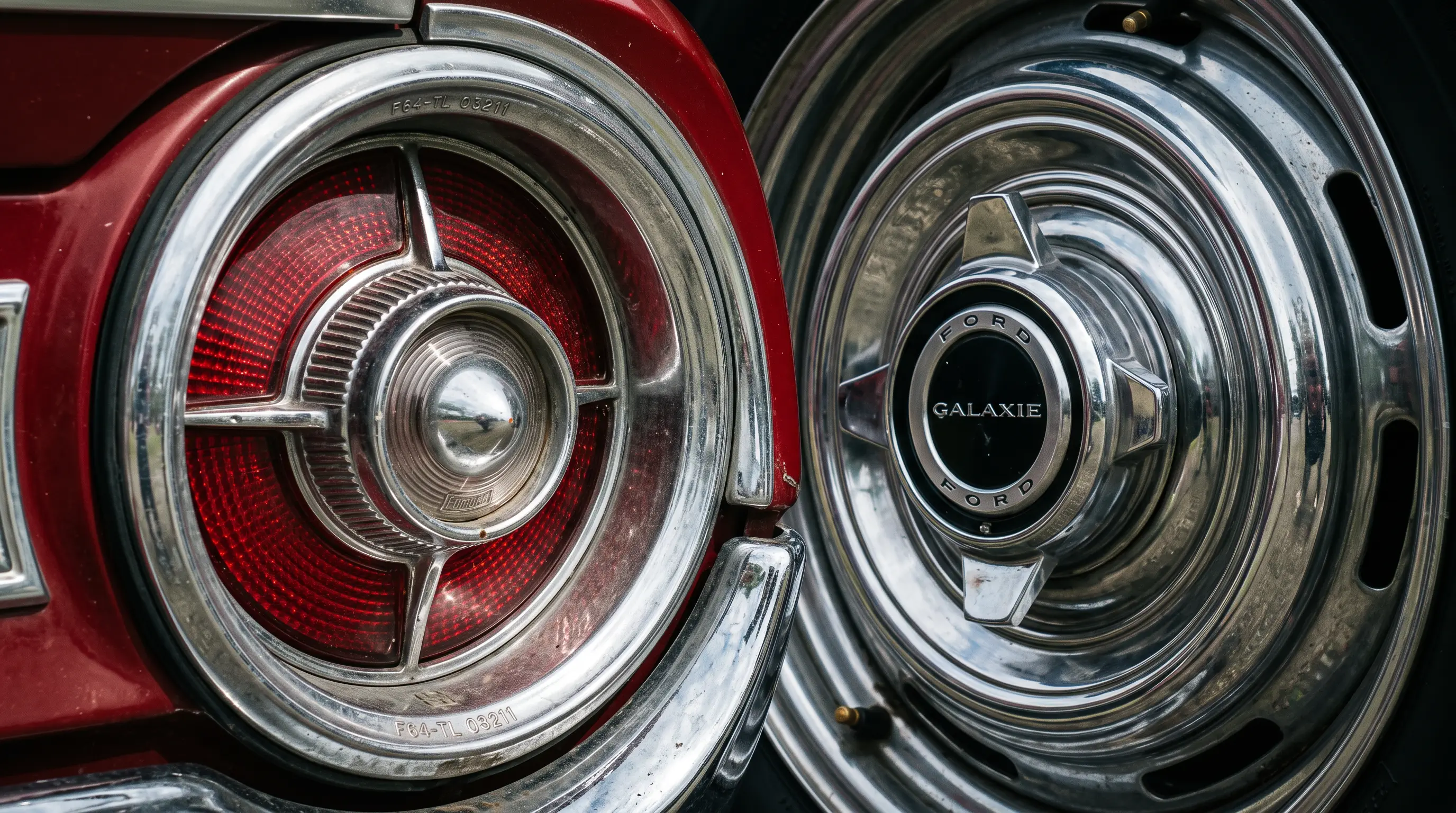
The 1964 Galaxie's stacked round taillights are the single most recognizable design element of the car, and they are also one of the most commonly damaged or incorrectly replaced parts on surviving examples. Original lenses in good condition, with correct lens coloring and no cracking, carry real weight in a buyer's assessment even before the car is started. I have seen mechanically comparable cars separated by several thousand dollars at auction largely because one had crisp original lenses and the other had cloudy reproduction units with visibly different color tone.
That is a data point worth internalizing. Buyers scanning listing photos zero in on the rear of the car almost as quickly as they check the engine bay, and sellers who invest in proper NOS or correctly reproduced lenses tend to recoup that cost in the final sale price.
Grille and front fascia condition
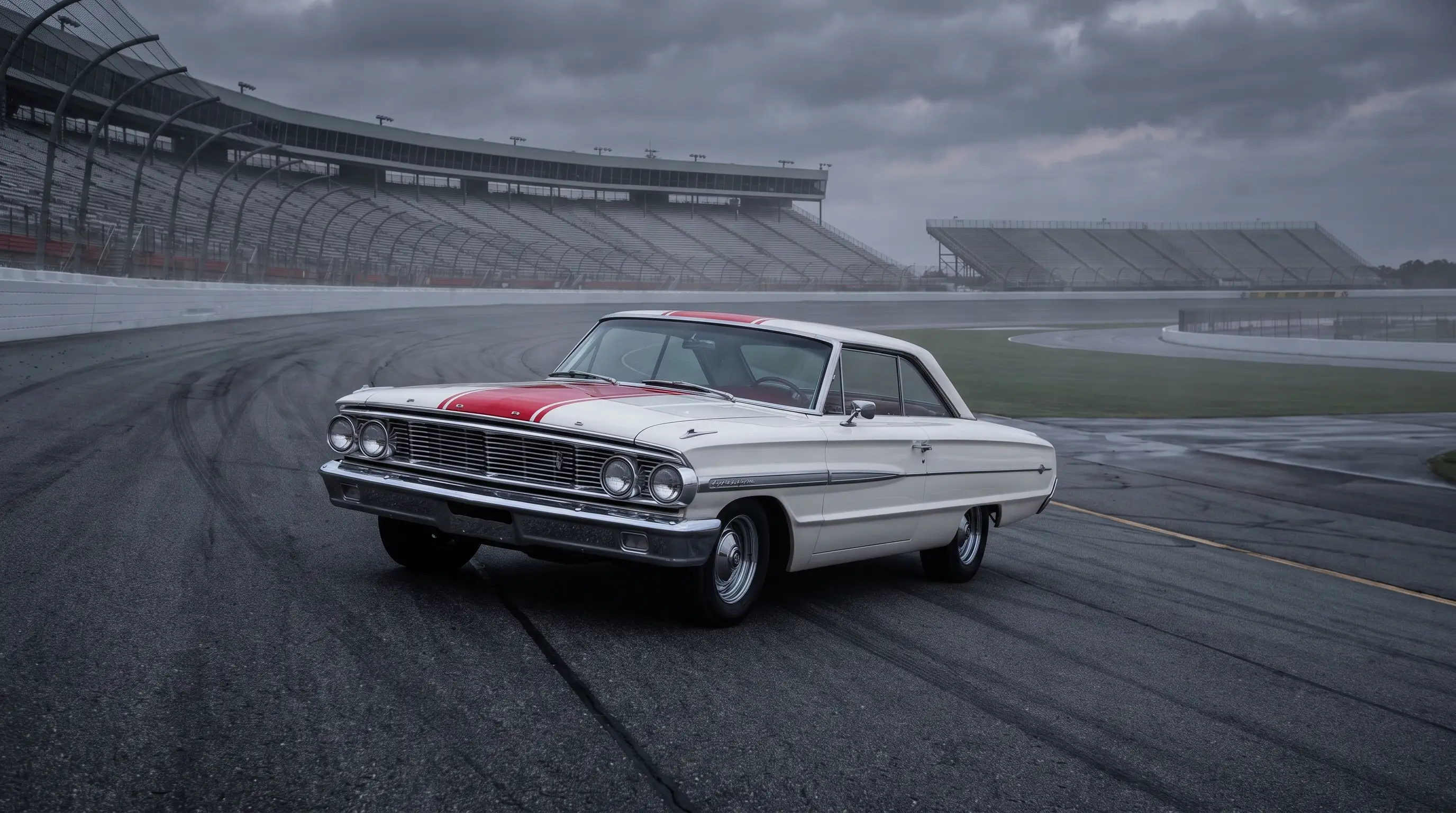
Ford simplified the Galaxie's grille for 1964 relative to the more ornate 1963 design, and that simpler grille is unforgiving of damage or incorrect chrome work. A straight, properly re-chromed grille reads as a well cared for car from ten feet away, while a wavy or pitted one signals deferred maintenance even if the mechanical side of the car is sound. In my review of recent sale results, front-end presentation correlates strongly with overall hammer price, more strongly than some sellers expect given how much attention gets paid to drivetrain numbers instead.
Interior trim details that separate strong sales from average ones
Inside the car, the 500 XL's bucket seat and console arrangement is a detail worth checking carefully, since the correct console, shifter, and gauge cluster configuration for XL trim differs from the standard bench seat interior in ways that are easy to fake with aftermarket parts but difficult to fake convincingly. Buyers who know what to look for will check stitching patterns, correct emblem placement, and whether the console matches factory tooling before taking a seller's word on originality.
Dashboard condition tells its own story about how a car was used and stored. Cracked dash pads are common enough on surviving 1964 Galaxies that a genuinely intact original pad has become a meaningful value point on its own, separate from paint or drivetrain condition entirely.
"I do not pay for a nice paint job on a car with a cracked dash and cloudy taillights. Those small details tell me more about how a car was actually kept than the paint ever will."
- David Mercer
Correct badging placement and hardware, down to the specific fasteners Ford used to mount emblems in 1964, has become a genuine area of scrutiny among serious buyers comparing multiple cars for sale. XL badges, crossed-flag emblems, and trim-specific script all follow patterns that experienced eyes recognize instantly, and inconsistencies in these small areas are often the first sign that a car has had bodywork or panel replacement that a seller has not fully disclosed.
None of this is a reason to walk away from a car automatically. It is a reason to ask more questions and to weigh a lower asking price against the cost of sourcing correct parts down the line. Readers who want the fuller model year context behind these details, including how the XL trim developed and where it sat in Ford's 1964 lineup, can review our complete history of the car.
Wheel covers, side trim, and the details buyers photograph last
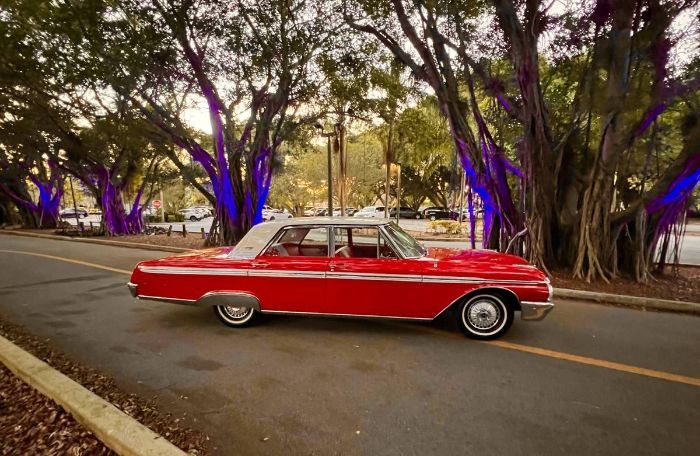
Wheel covers are another area where I see real price separation between otherwise similar cars. The 1964 Galaxie's factory wheel covers have a distinct pattern that differs from both earlier and later years, and correct covers in good condition read as a small but noticeable signal of an unmolested car. Reproduction covers exist and are generally fine substitutes, but mismatched or incorrect period covers from a different model year are an easy thing for an inattentive seller to overlook and an easy thing for a careful buyer to catch.
Side trim spears, the long chrome strips running along the body's beltline, take a surprising amount of abuse over sixty years and are rarely replaced correctly when damaged. Pitting, waviness, or mismatched brightness between panels usually indicates either accident repair or a lower-budget respray that did not account for reinstalling trim to factory tolerance. None of these issues are dealbreakers on their own, but stacked together across several small areas of a car, they paint a reliable picture of how much attention a car has actually received relative to how it has been marketed.
I track these smaller line items specifically because they are cheap for a seller to get right and expensive for a buyer to fix after the fact. A car with strong original wheel covers, straight trim, and clean lenses is telling me something honest about its history, and I weight that information more heavily than most buyers give it credit for.
My buy or pass take on design condition
If I am choosing between two mechanically similar 1964 Galaxies, I take the one with intact original small details over the one with a fresher paint job every time. Paint is the easiest and most commonly refreshed element on any classic car. Correct lenses, an uncracked dash, and properly fitted trim are harder to fake and tell a more honest story about a car's history. That is where I put my money, and it is where I would advise any serious buyer to focus attention before falling for a glossy exterior photo.
For anyone shopping the current market with these details in mind, it is worth taking the time to browse classic Galaxie listings and compare how sellers present these small but telling elements across multiple cars before committing to one.
| Detail | What to check | Value impact |
|---|---|---|
| Taillight lenses | Color, clarity, cracking | High |
| Front grille | Straightness, chrome quality | High |
| Dash pad | Cracking, original vs replaced | Moderate to high |
| XL badging and hardware | Placement, fastener type | Moderate |
The numbers on a spec sheet get most of the attention in any 1964 Galaxie sale, but the details that actually separate a strong result from an average one are usually smaller, cheaper to overlook, and far easier for a seller to hide in a well-lit photograph than a buyer might assume.