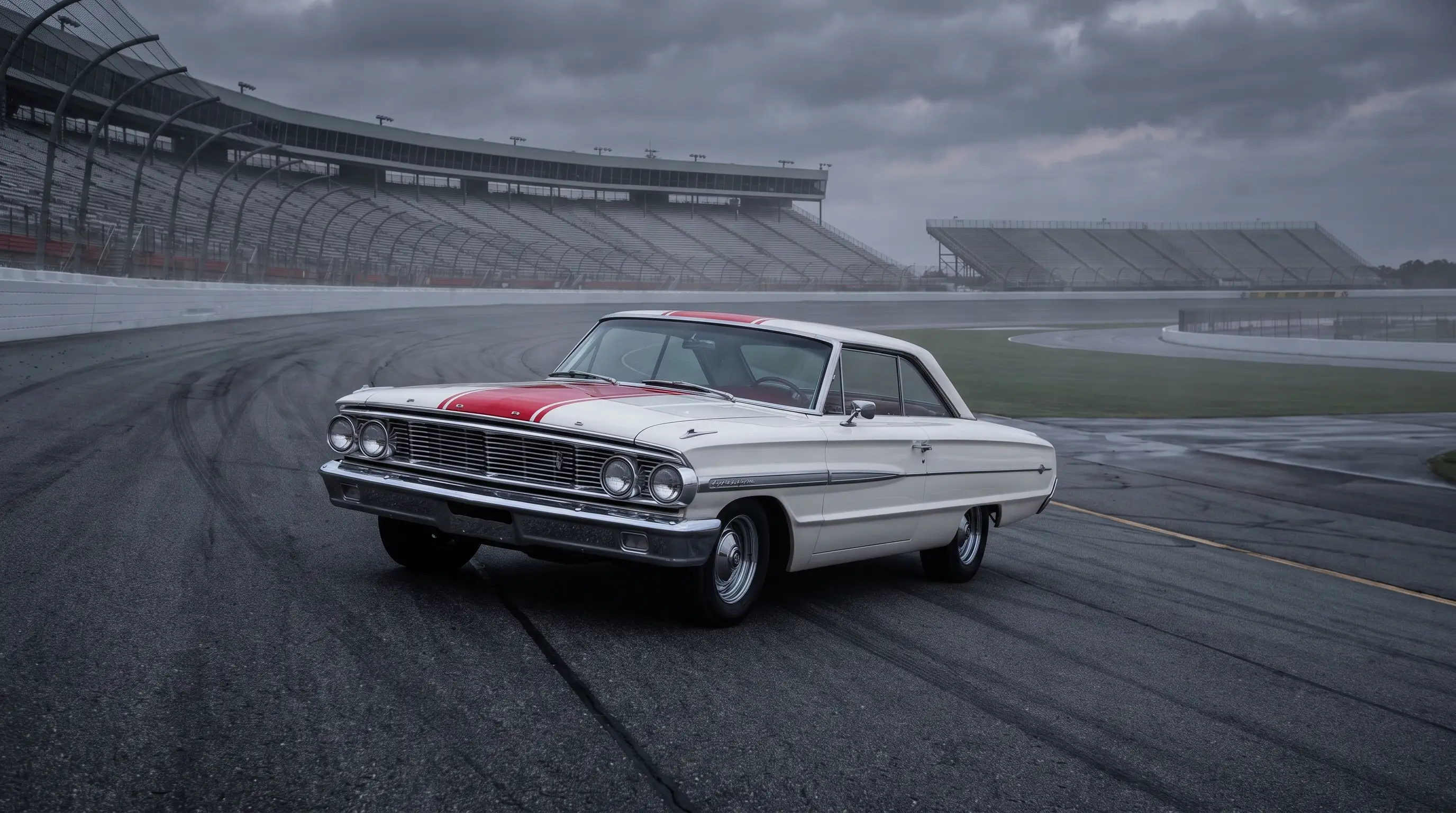
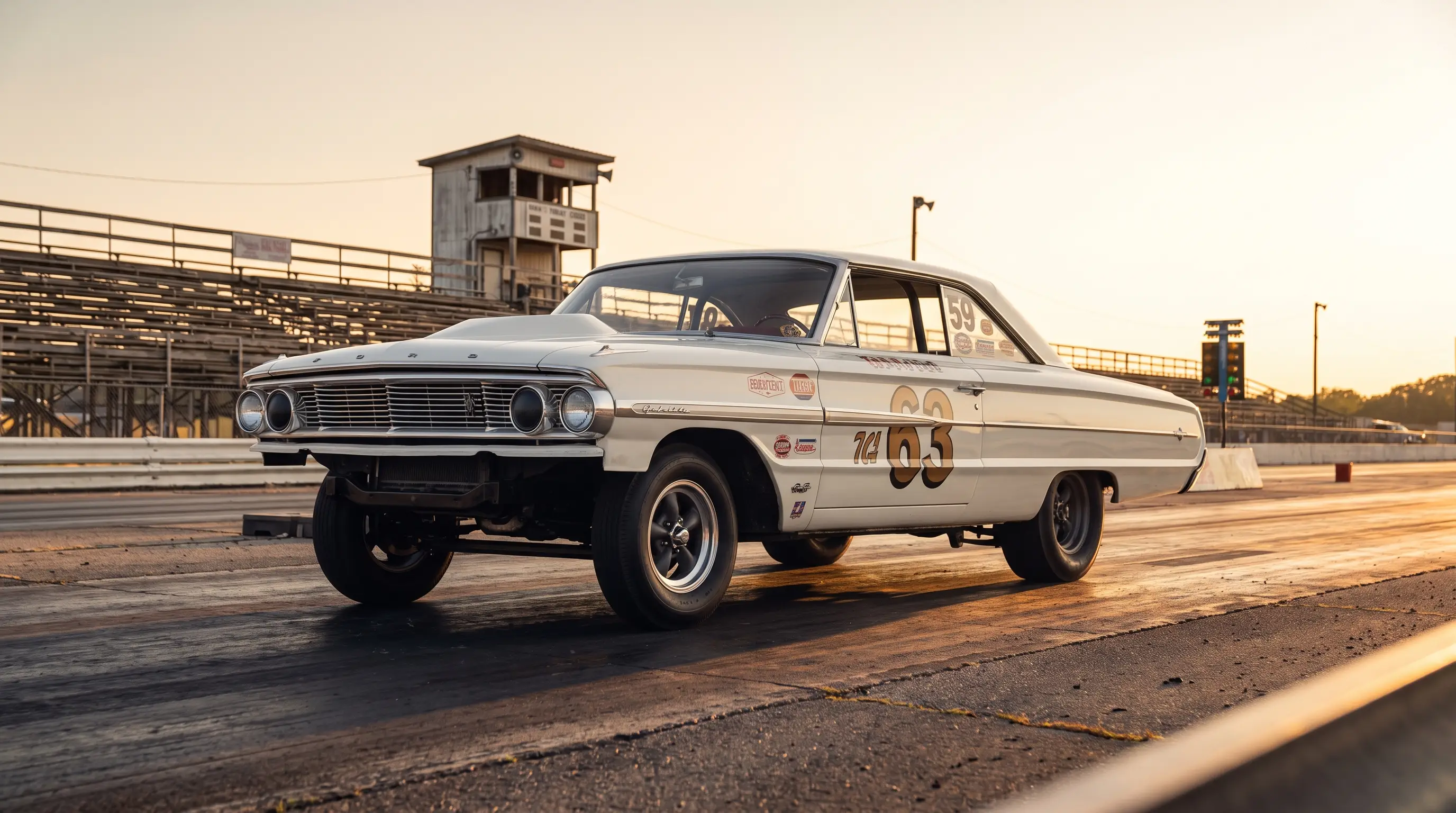
Picture a Ford dealer's back lot in early 1964, a handful of Galaxies sitting apart from the regular inventory with no rear bumper brackets, no sound deadener, and fiberglass front fenders that a mechanic could lift with one hand. These were not showroom cars in the ordinary sense. They were built for one purpose, and that purpose was winning at the drag strip on a Saturday night. The story of ford galaxie 1964 lightweight drag cars is really the story of a factory deciding, for one final season, to stop pretending that a full-size sedan needed to be practical at all.
Why Ford built them
By 1964, the drag racing landscape had shifted decisively toward smaller, lighter cars, and Ford knew its full-size Galaxie was fighting a losing battle on raw weight against the Mopar and Pontiac lightweight programs already underway. Rather than concede the class, Ford's engineering department pulled every ounce it reasonably could from a small run of Galaxies destined for factory-backed and independent drag teams. Aluminum bumpers, fiberglass hoods and front fenders, thinner glass, and deleted sound insulation combined to shave hundreds of pounds off an already potent 427 R-code car, turning a street legal full-size sedan into something closer to a purpose-built race car wearing a production body.
This was Ford's last serious attempt to keep the full-size body style relevant in top drag racing categories before the sport moved decisively toward intermediate and compact platforms. Within a couple of seasons, the factory's own attention had shifted to the Fairlane thunderbolt program and beyond, making the 1964 Galaxie lightweights something of a closing chapter for big Fords at the strip.
What made these cars different from a standard 427
A standard 427 R-code Galaxie was already a serious performance car by 1964 standards, with cross-bolted mains and forged internals built to survive sustained high RPM use. The lightweight package went further, targeting the areas where weight could be removed without touching the drivetrain itself. Front fenders, hood, and in some cases the front bumper were swapped for fiberglass or aluminum equivalents. Sound deadening material was deleted wholesale. Even smaller details, like thinner door glass and reduced trim, added up across the car.
The result was a Galaxie that could run dramatically quicker quarter-mile times than its standard steel-bodied counterpart while retaining the same basic 427 architecture underneath. Ford is generally credited with building around 50 of these lightweight Galaxies for 1964, split roughly evenly between four-speed and automatic cars, though precise factory paperwork for a run this small has always been harder to pin down than mainstream production data.
The drivers who campaigned them
Independent racers and factory-supported teams alike picked up these cars through 1964, running them in NHRA's Factory Experimental and Super Stock classes against a field that included the very Mopar and Pontiac lightweights that had prompted Ford's response in the first place. The competition was fierce and the margins were thin, with tenths of a second separating cars that all shared the same basic strategy of stripping weight from an otherwise stock body.
What set the era apart, and what still draws enthusiasts to research these cars today, was how public the whole exercise was. These were not secret prototypes. They ran at match races and NHRA national events in front of paying spectators, and the results made it into racing publications within days. A kid at a local strip in the summer of 1964 could watch a lightweight Galaxie make a pass and read about a nearly identical car's factory specification the following week.
"You can read every spec sheet Ford ever printed on the 427, but nothing tells you what these cars were really about like watching one leave the line next to a Plymouth lightweight and hearing which one got there first."
- Patrick Walsh
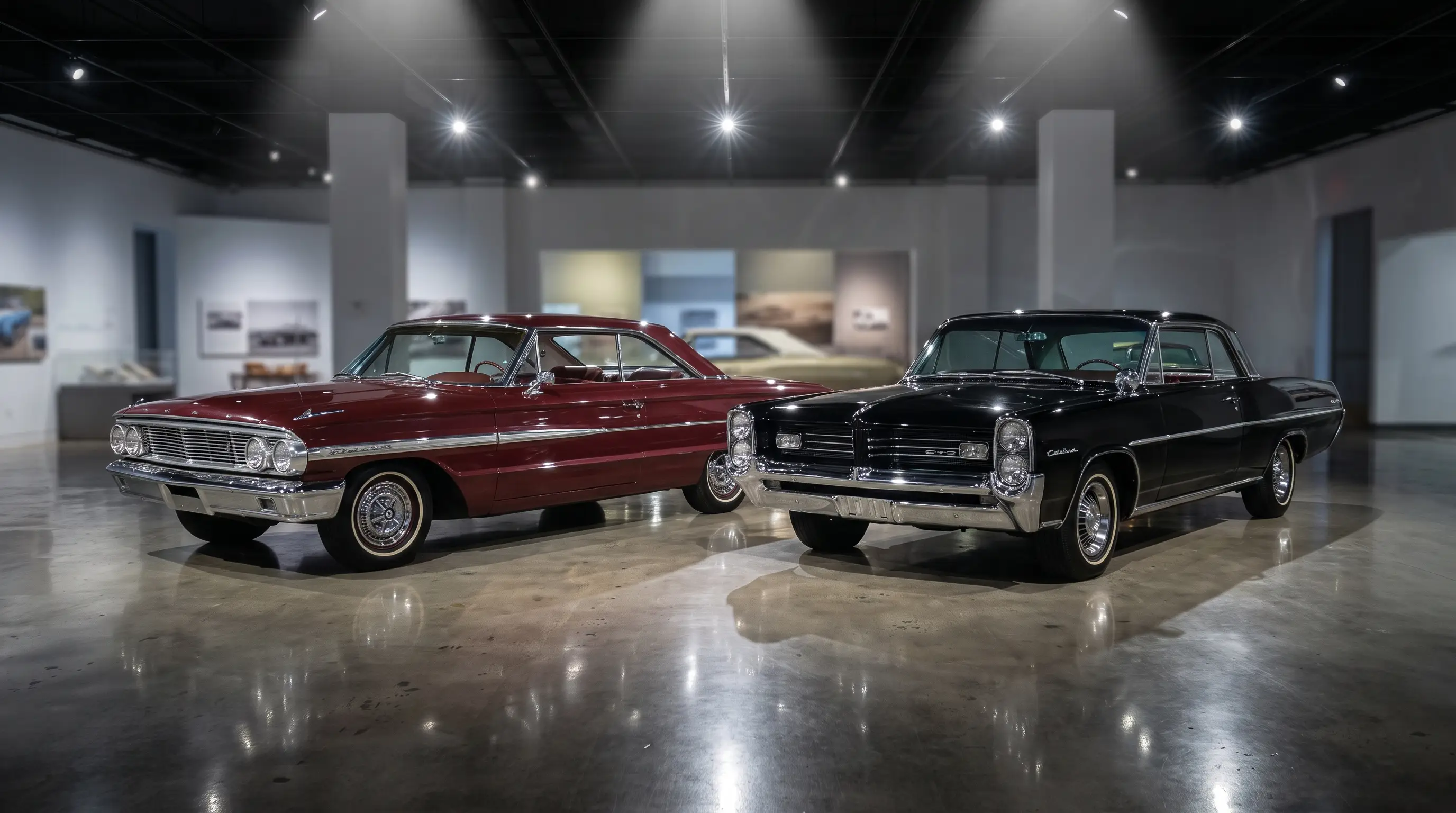
Genuine 1964 lightweight Galaxies are exceptionally rare survivors, and their scarcity has made them a specialized corner of the broader Galaxie collector world rather than a mainstream entry point. Most enthusiasts encounter the story through documentation and photographs rather than through owning one outright, which has not stopped the cars from developing an outsized reputation relative to how few were actually built.
For readers who want the broader context behind the 1964 model year that produced this brief but memorable chapter, the full story covers how the standard lineup, the R-code performance option, and this rarer lightweight program all fit together. And for anyone chasing a more attainable piece of 1964 Galaxie history rather than a genuine lightweight, there is always classic Galaxie for sale to browse what current sellers have on offer.
Identifying a genuine survivor
Anyone researching a claimed 1964 lightweight Galaxie today faces the same challenge that surrounds most rare factory race cars from this era, which is separating documented originals from later tribute builds constructed to look the part using standard steel-bodied donor cars. Fiberglass panels alone prove nothing, since reproduction pieces have circulated in the hobby for decades and can be fitted to any 427 Galaxie by a patient builder. What actually matters is a documented chain of ownership tracing back toward the original build, along with any surviving factory paperwork, period racing records, or magazine coverage that ties a specific vehicle identification number to a specific lightweight build.
Because so few of these cars were built and fewer still survive with full documentation, the market for genuine examples operates almost entirely on reputation and provenance rather than any standardized valuation guide. A car with a thin paper trail, however visually convincing, sits in a completely different category from one with contemporary race entries and period photographs to back it up. Buyers who treat the two as equivalent because they look similar in a listing photo are setting themselves up for a disappointing appraisal down the line.
That verification burden has, if anything, deepened interest in the cars among serious researchers, since each surviving example represents a small historical puzzle rather than a simple transaction. Piecing together which chassis went where, which team campaigned which car, and how a given example survived the decades between its racing career and its current ownership has become its own small corner of Galaxie scholarship.
A short but influential window
The lightweight Galaxie program lasted only a season or two before the sport moved on, but it captured something real about Ford's willingness to chase a class it was structurally disadvantaged in rather than simply cede the ground. That stubbornness, more than any single quarter-mile time, is what keeps this small chapter of the 1964 Galaxie story alive in conversations among people who were never anywhere near a drag strip that summer but still find the whole episode worth telling.