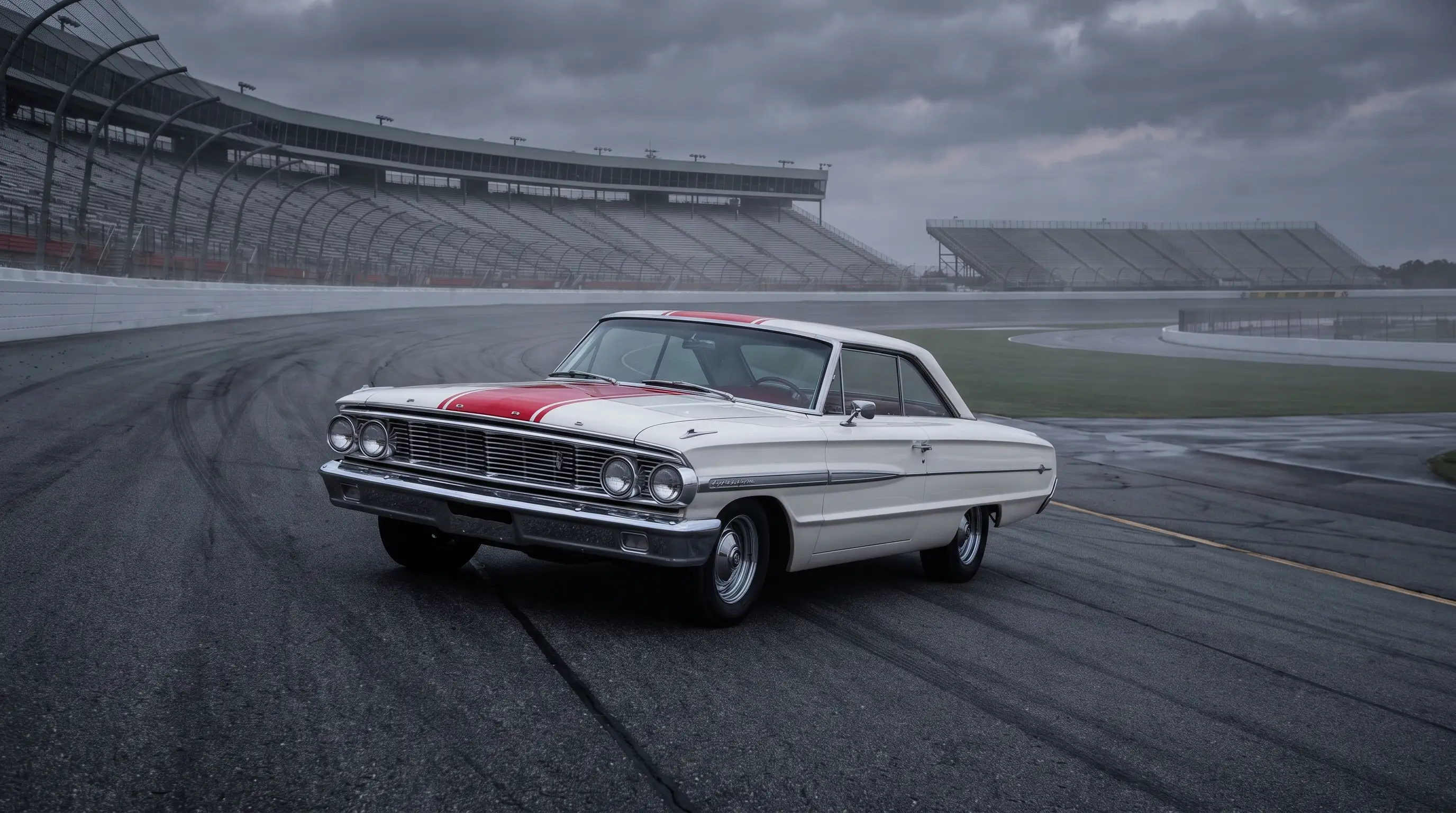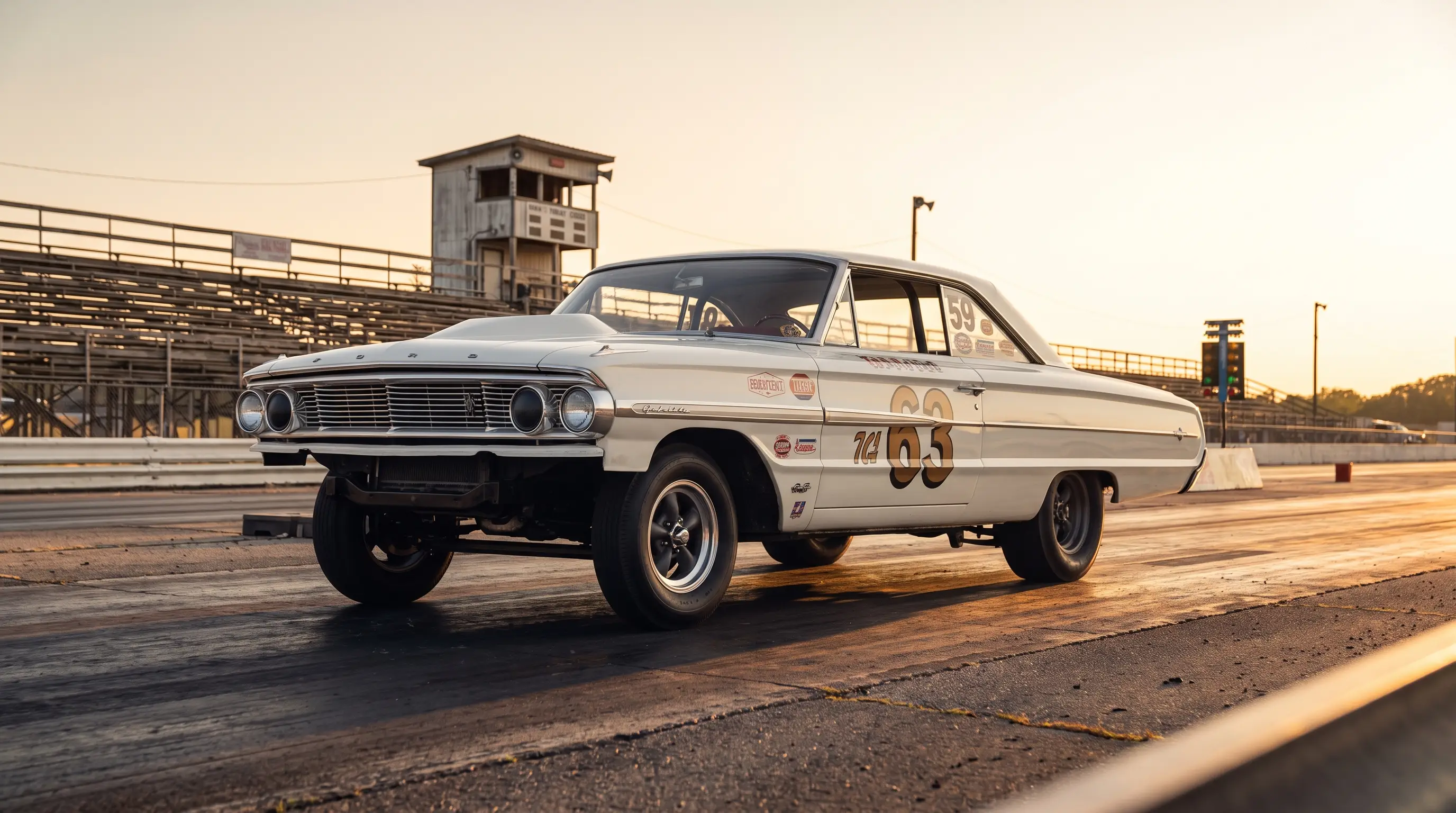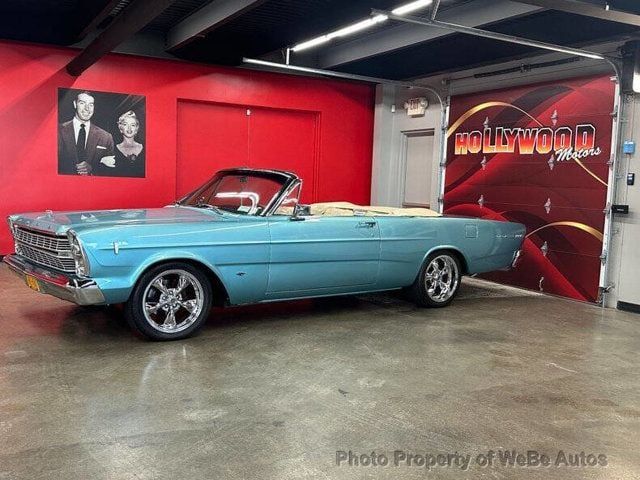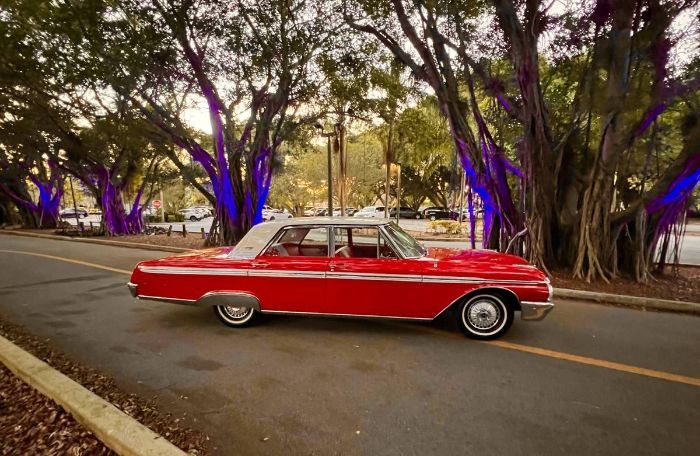
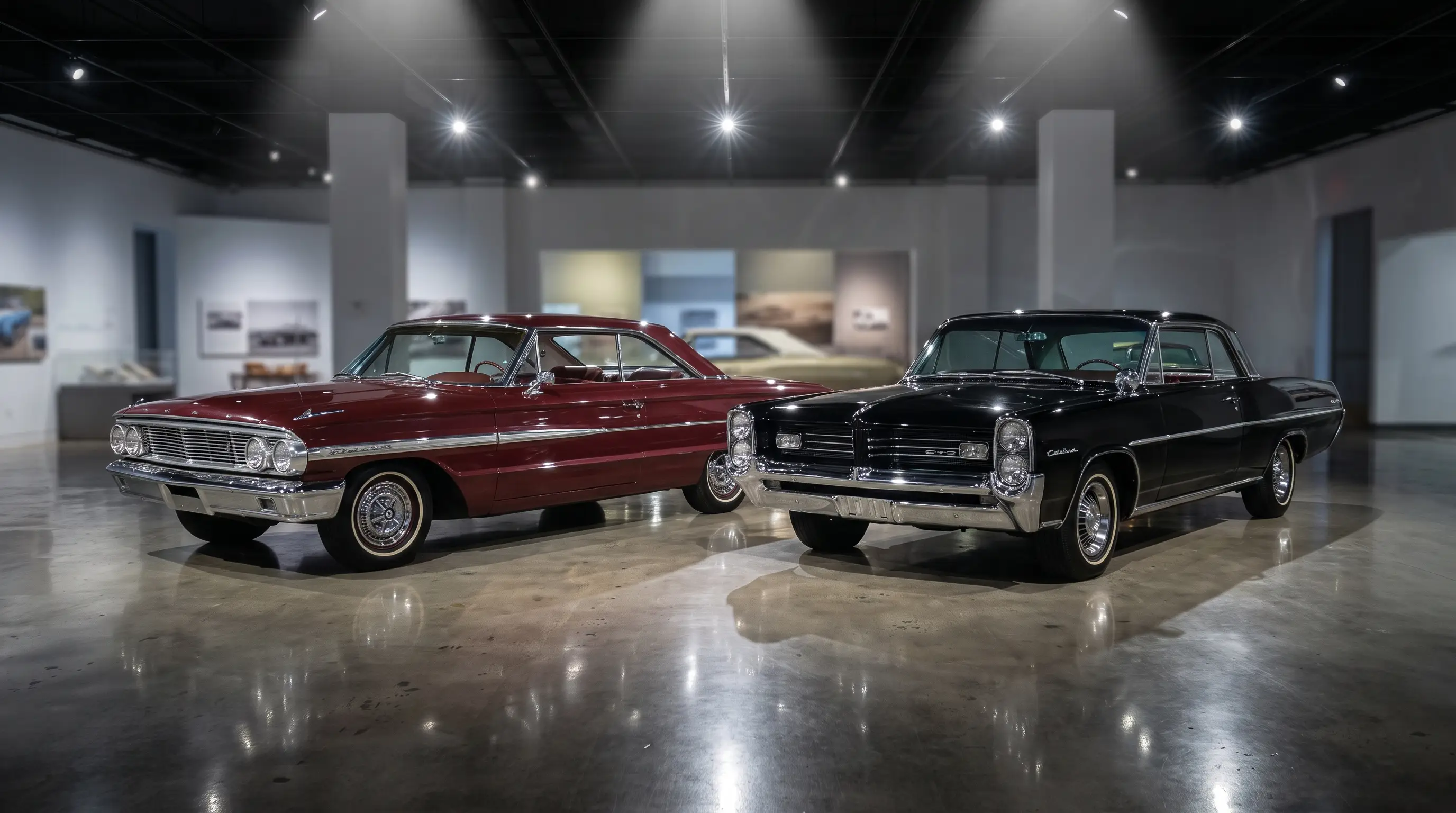
Pontiac's Catalina 2 plus 2 arrived in 1964 as a mid-year answer to a question Ford and Chevrolet had already been asking for years: how do you make a full-size car feel like it belongs on a race track rather than a church parking lot. Set against Ford's own big car, the ford galaxie 1964 vs 1964 catalina 2plus2 comparison is a study in two very different corporate personalities, one methodical and historically documented, the other brash and built around a single option package meant to steal headlines.
Origins of the 2 plus 2 package
The Catalina 2 plus 2 began life as a trim option rather than a distinct model, bolted onto the existing Catalina body to create something that looked and drove like a factory hot rod without requiring Pontiac to engineer an entirely new car. It borrowed heavily from the parts bin, most notably Pontiac's 421 cubic inch V8 in various states of tune, and it wrapped that engine in bucket seats, a console, and exterior badging meant to signal serious intent to anyone paying attention on a Friday night. Ford's approach with the Galaxie 500 XL that same year was more evolutionary. The XL trim had existed since 1962, and by 1964 it represented a mature, well understood formula of bucket seats and available big block power rather than a hastily assembled response to a competitor.
That distinction in provenance matters to anyone documenting these cars today. The Galaxie's performance trim has a clean, traceable lineage across three model years by 1964. The Catalina 2 plus 2 has a shorter, more improvised history, which is part of why period paperwork on genuine examples commands such careful scrutiny from researchers and buyers alike.
Engine choices and documented output
Pontiac offered the 421 in several states of tune for 1964, with the top Tri-Power version rated at 370 horsepower, a figure that undersold the engine's real capability in the way most manufacturer ratings did during the era. Ford countered with the 427 in single four barrel and dual quad configurations, the latter rated at 425 horsepower and aimed squarely at NASCAR homologation as much as showroom bragging rights.
Neither company was shy about using motorsport to sell these engines. Pontiac's connection ran through NHRA drag racing and its long standing performance image built through the late 1950s. Ford's connection ran through NASCAR superspeedways, where the 427 R-code cars were winning races that made the evening news. Both strategies worked, though they targeted slightly different audiences within the same broad performance-buyer demographic.
Documentation and how originality is verified
Anyone researching a genuine 2 plus 2 or a genuine Galaxie 500 XL from 1964 runs into the same core challenge, which is that trim packages built from options rather than distinct VIN sequences require careful cross-referencing of build sheets, dealer invoices, and factory broadcast sheets to confirm authenticity. Reproduction badging exists for both cars, and a body style alone tells a researcher very little without supporting paperwork.
Ford's documentation trail from 1964 is generally considered more complete than Pontiac's for cars of this type, largely a function of how each company's records survived the following decades rather than any real difference in how carefully the cars were built. That asymmetry is worth knowing before paying a premium for a car marketed as numbers matching, since the burden of proof sits with the seller in either case. For readers wanting the fuller context on how the Galaxie's 1964 range came together, the 1964 ford galaxie story lays out the model year in detail, and the full story traces the nameplate across its entire run.
"I have seen more disputed 2 plus 2 badges than genuine ones. The paperwork is not optional, it is the entire basis of the car's identity."
- Sarah Whitfield
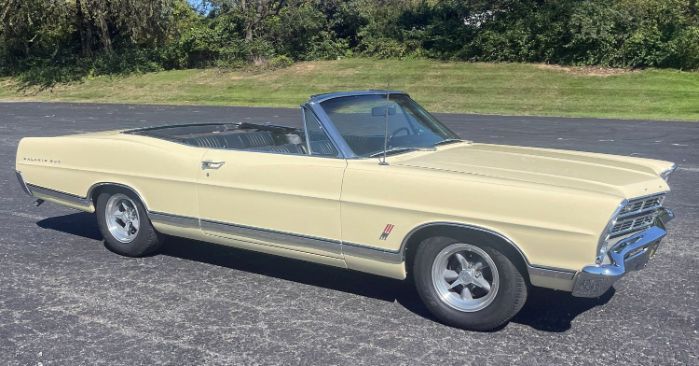
Visually, the Catalina 2 plus 2 carried Pontiac's split grille and canted headlights, a look that had already become a division signature by 1964 and that separated it instantly from anything wearing a Ford badge. The Galaxie's cleaner, more restrained lines put the emphasis on proportion rather than ornamentation, with the stacked round taillights doing most of the visual signaling that Ford wanted a performance customer to notice.
Both cars used badging and subtle exterior cues rather than dramatic body modifications to separate the performance trims from their more sedate stablemates, a common approach across Detroit in this period since retooling sheet metal for a low volume option package rarely made financial sense.
Production numbers and why they diverged
Ford's overall Galaxie output for 1964 dwarfed Pontiac's Catalina 2 plus 2 volume by a wide margin, though that comparison is somewhat misleading since it measures an entire model line against a single trim package layered onto one body style. A more honest comparison sets the Galaxie 500 XL specifically against the 2 plus 2, and even there Ford's numbers came in well ahead, a reflection of Ford's larger dealer network and broader national reach rather than any inherent superiority in the product itself.
Surviving population tells a somewhat different story than original production did. Because the 2 plus 2 required a buyer to actively choose a performance oriented option package rather than simply order a well equipped sedan, a higher proportion of the cars that left dealer lots ended up in the hands of owners who valued them enough to keep them running rather than trading them in a few years later for whatever came next. That selection effect has helped the surviving population of genuine 2 plus 2 cars punch above its original production numbers in terms of collector visibility today, even though the raw count remains small next to the Galaxie's.
Researchers cataloguing surviving examples of either car face the same basic problem of separating originally optioned cars from later re-creations built to look the part. Broadcast sheets, when they survive, remain the single most reliable form of verification for both nameplates, and their absence should always lower a buyer's confidence regardless of how convincing the badging and trim otherwise appear.
Where the collector market stands
Genuine, documented 2 plus 2 cars from 1964 occupy a narrower and in some ways more specialized market than 427 Galaxies, partly because fewer were built and partly because the paperwork requirements scare off casual buyers. That scarcity has kept prices firm for well-documented examples even as broader interest in full-size 1964 performance cars has fluctuated. Anyone weighing a Galaxie against this rarer Pontiac alternative can look at classic Galaxies on the market to compare what is currently available and how completely each car's history has been preserved.
| Category | 1964 Galaxie 500 XL | 1964 Catalina 2 plus 2 |
|---|---|---|
| Top V8 option | 427 cid, up to 425 hp | 421 cid Tri-Power, up to 370 hp |
| Package origin | Established trim since 1962 | New option package for 1964 |
| Signature styling | Stacked round taillights | Split grille, canted headlights |
| Documentation depth | Generally more complete | Requires careful verification |
Both cars represent 1964's full-size performance moment from different starting points, one a mature formula refined over several years and the other a quick, confident answer built to keep Pontiac's reputation intact. Understanding that origin story is the difference between buying a car and buying a documented piece of the year's competitive landscape.
Sources and notes
- 1964-1967 Pontiac Catalina 2+2 - HowStuffWorks
- When 2+2 Equals a Pontiac That Deserves More Recognition - Hagerty
- 1964 Catalina Ventura 421 HO Tri-Power - autoevolution
- Ford Galaxie - Wikipedia
- 1964 Ford Galaxie Factory R-Code 427 Dual Quad - David's Classic Cars
- Pontiac Catalina 2+2 Year-by-Year - Muscle Car Club