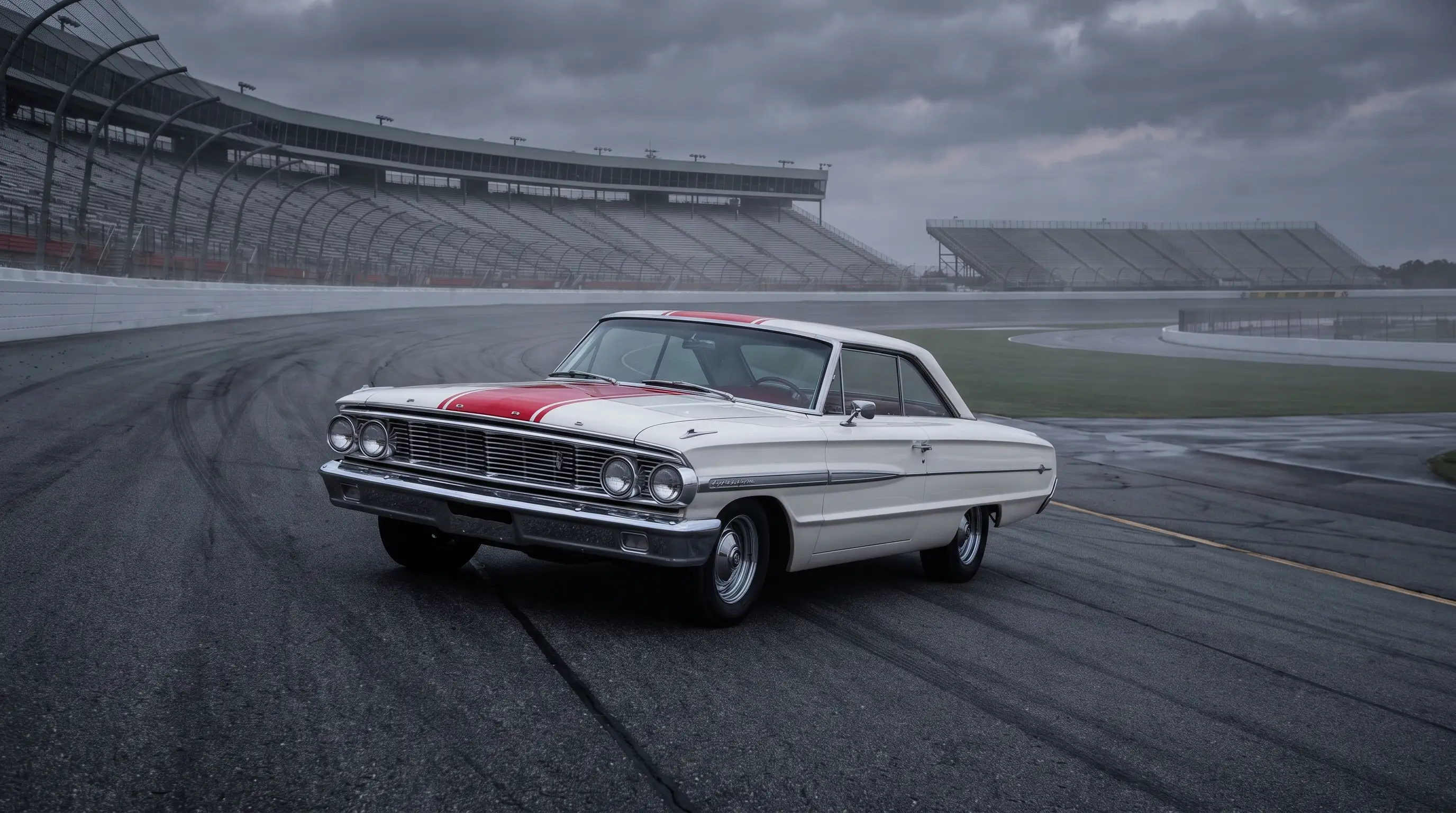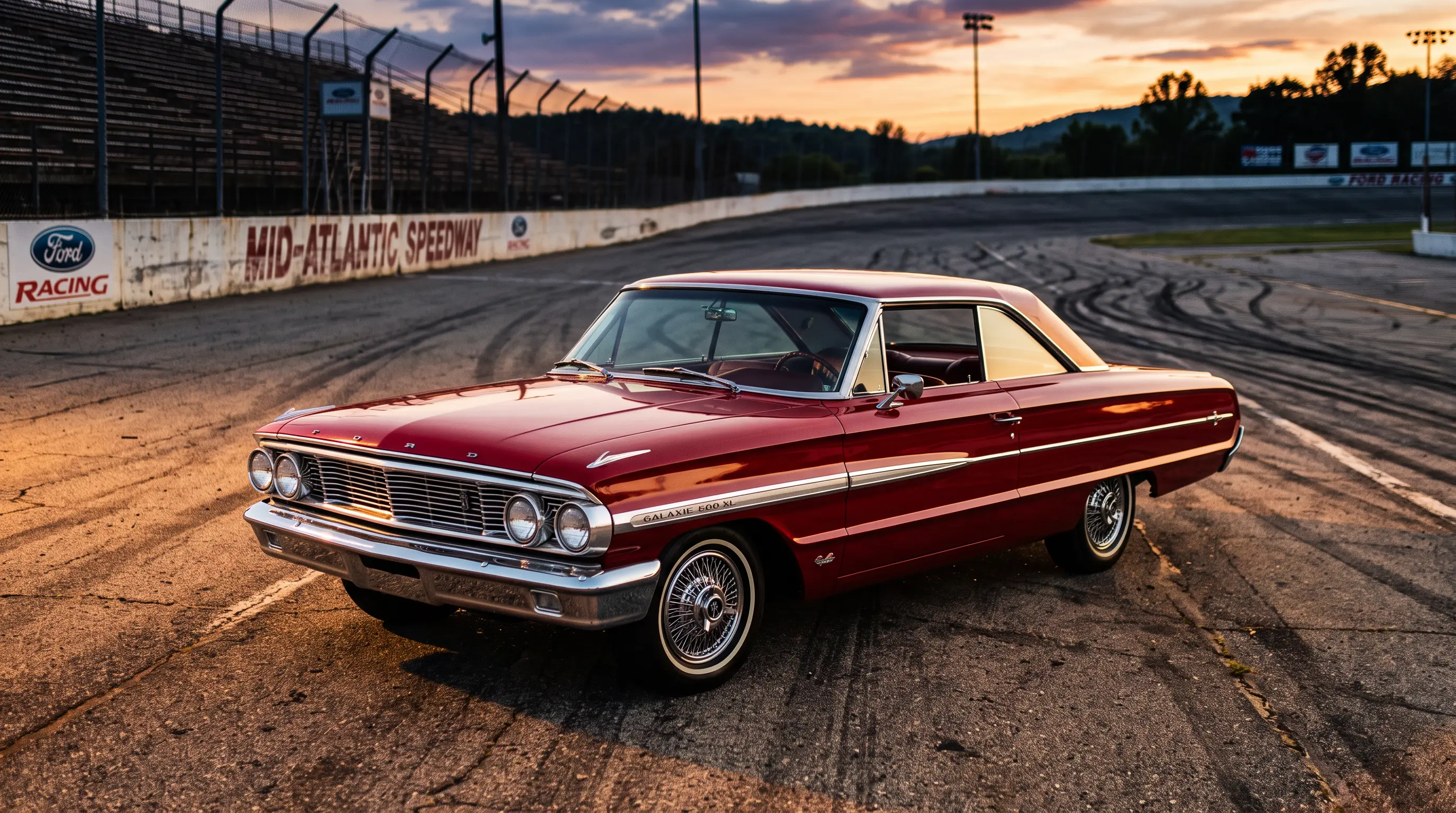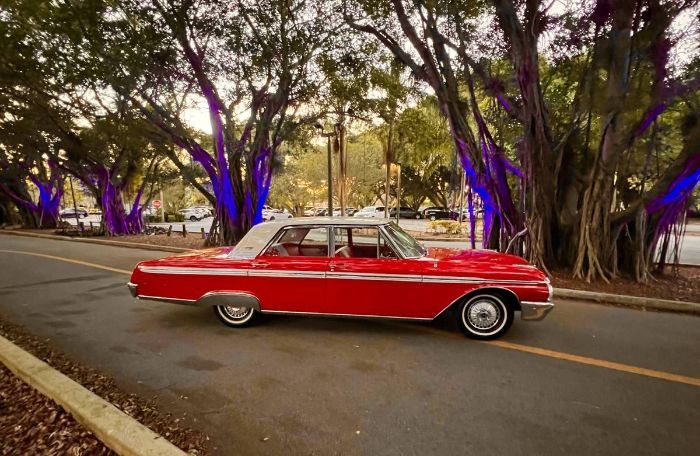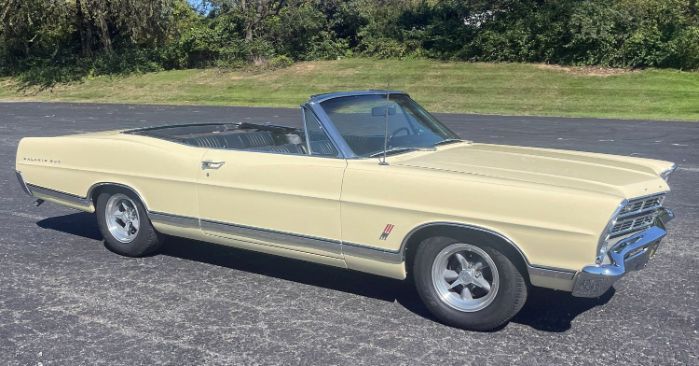
Picture a Daytona garage in February 1964, mechanics wiping their hands on rags that were already black by nine in the morning, and a rumor moving down the row faster than any of the cars on the banking outside. Chrysler had brought something new. By the time practice ended that week, every Ford man in the building knew the ford galaxie 1964 nascar season recap would not read the way anyone at Dearborn had planned it back in the fall.
The season opens with a shock
The 1964 Daytona 500 belonged to Richard Petty and Plymouth's new 426 Hemi, a result that landed on Ford's program like a bucket of cold water. The Galaxie had come into the season as the car to beat on the big tracks, riding momentum from a strong 1963. Instead, the season opened with Chrysler's hemispherical-head engine simply out-muscling the Ford wedge on the straights, and Ford's competition department spent the rest of the winter recalibrating what "winning" was going to require. Read the background on how the Galaxie itself was built that year if you want the fuller picture behind the cars that took the green flag at Daytona.
What made the defeat sting was not just the scoreboard. It was watching a rival show up with a purpose-built racing engine that Ford had not fully anticipated, in a series where Ford had spent real money establishing itself as the performance brand. Total Performance was not just an advertising slogan by 1964; it was a promise, and promises made on Daytona's banking get tested in public.
Ford regroups on the shorter tracks
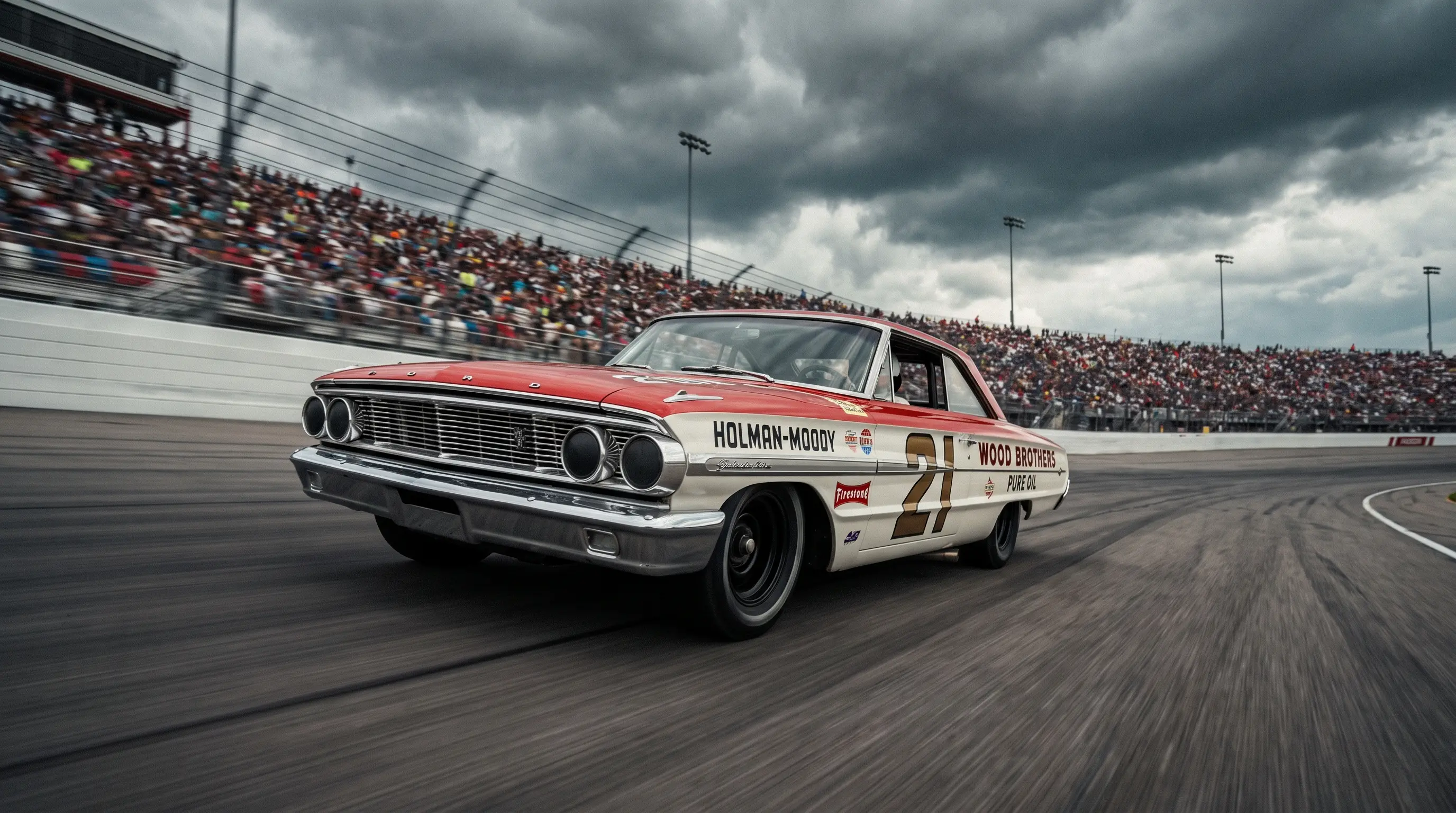
NASCAR's 1964 calendar was not just superspeedways, and this is where the Galaxie clawed back credibility. On the shorter, more technical tracks, where handling and consistency mattered as much as top-end horsepower, Ford's cars and drivers found more of an even fight. The Galaxie's chassis had been sorted over several seasons of racing by this point, and that experience showed up in results even during a season where the marquee headline belonged to Chrysler. Ford teams picked up wins across the year, with Fred Lorenzen alone taking eight races for the Holman-Moody team, including a five-race winning streak that followed Daytona, enough to keep the manufacturer's championship conversation alive even as the individual driver's title slipped away from a Ford pilot.
Behind the wheel, this was a season of drivers earning their reputations the hard way, adjusting setups race to race rather than simply outrunning the field on raw power. That kind of racing does not always make the highlight reels the way a Daytona win does, but it built the case for the Galaxie as a genuinely capable racing chassis, independent of whichever engine happened to have the upper hand that particular Sunday.
What the crews were actually fighting with
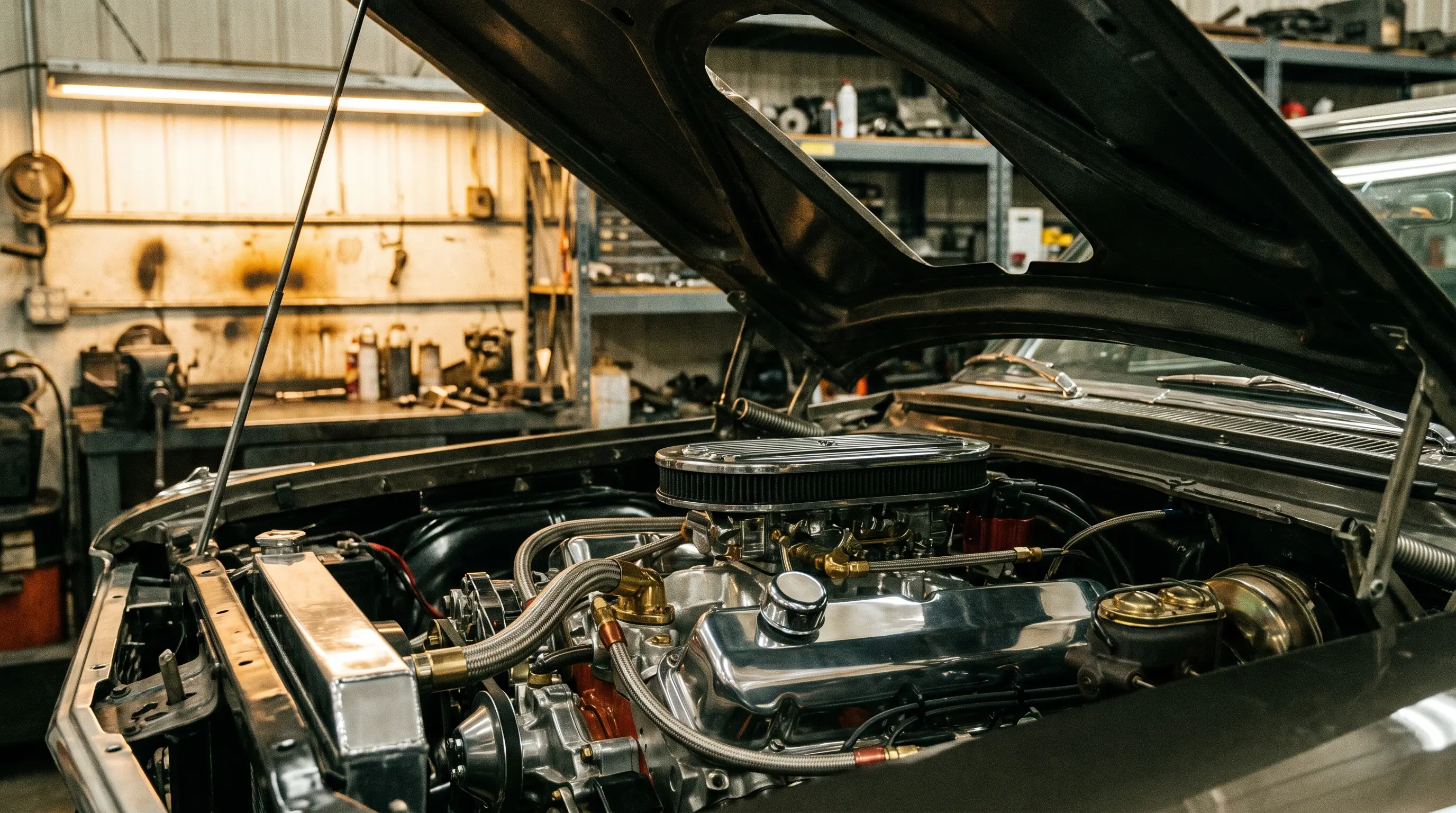
Talk to anyone who wrenched on a Ford stock car that season and the conversation eventually lands on carburetion and gearing, not just engine displacement. A wedge-head 427 making strong numbers on a dyno still had to get that power to the pavement through a chassis and rear end combination that had been developed over several seasons, and crew chiefs spent 1964 chasing every advantage they could find within the rules as written. Spring rates, shock valving, and rear gear selection all got tuned race to race in a way that never shows up in a final finishing order but mattered enormously to whether a Galaxie was competitive on a given Saturday night short track versus a Sunday superspeedway. This is the unglamorous, unrecorded labor that actually decided most of the season's non-headline races, far more than any single engine spec.
Pit strategy also mattered more in 1964 than fans watching from the stands typically appreciated. Tire wear on the rougher short tracks punished cars that were set up purely for top speed, and teams that balanced handling against outright horsepower often outlasted faster cars that faded in the closing laps. Ford's short track results that season owed at least as much to this kind of patient setup work as to anything happening under the hood.
The story that mattered more than the trophy
What made 1964 a pivotal season for the Galaxie was not that it won or lost any single race. It was that the season forced Ford to accelerate work already underway on a new racing engine, the single overhead cam 427, specifically because the wedge-head 427 was not enough of an answer to the Hemi. That engine would not race until 1965, and it would then get tangled in its own homologation dispute, but the seed of that whole saga was planted during this exact season, watching Petty's Plymouth pull away at Daytona in February.
There is also the human side of this story worth remembering, and it runs through worth a look too, a companion piece covering how one of Ford's own drivers navigated a season where the equipment fight overshadowed a lot of genuinely good driving.
"Nobody remembers the manufacturer's points battle from a season like this. They remember the sound of a Hemi pulling away on the backstretch, and everything Ford did afterward was a response to that one sound."
- Patrick Walsh
Fans in 1964 did not need a competition department memo to know something had shifted. You could hear it. A Hemi pulling away down the backstretch had a distinct, deeper note under load that a wedge-head Ford did not quite match, and drivers on both sides of that rivalry have talked for decades since about how audible the difference was from trackside. That kind of detail rarely makes it into a results sheet, but it is exactly the sort of thing that stuck with the people who were actually there, and it is part of why this particular season still gets retold at car shows and swap meets rather than fading into a line of statistics. A season decided purely on paper is easy to forget. A season you could hear happening in real time tends to stay with people.
Why this season still gets talked about
Seasons where the underdog wins everything make for tidy stories. Seasons where the favorite gets beaten and has to rebuild make for better ones, because you get to watch the response unfold in real time across the following year. That is the 1964 NASCAR season from Ford's side of the garage: a genuine setback at the biggest race of the year, a scrappy recovery on the shorter tracks, and an engineering commitment that would not pay off until the next season, if it paid off at all given how NASCAR eventually handled the cammer. None of that makes for a simple highlight reel, but it makes for a season that explains an enormous amount about where Ford's racing program went next.
If you want to see what survives from this era in person, shop classic Galaxie listings and look for the same full-size body that ran those short tracks in 1964, still turning up at shows and cruise-ins more than sixty years later.