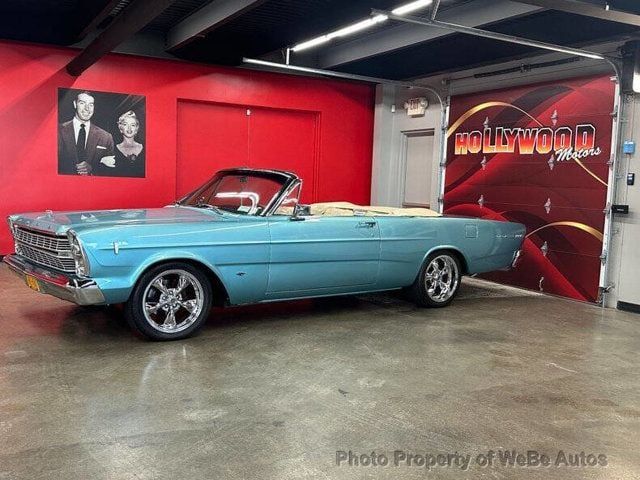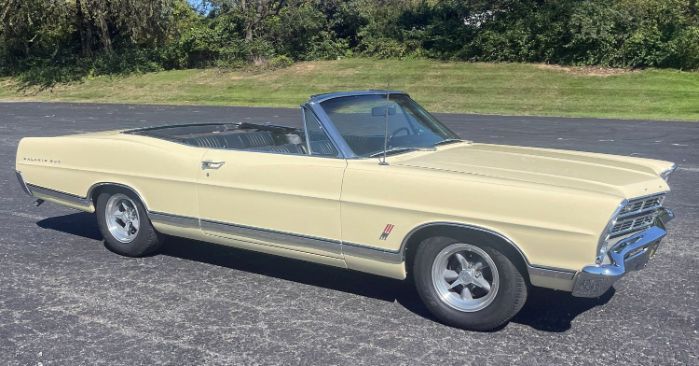
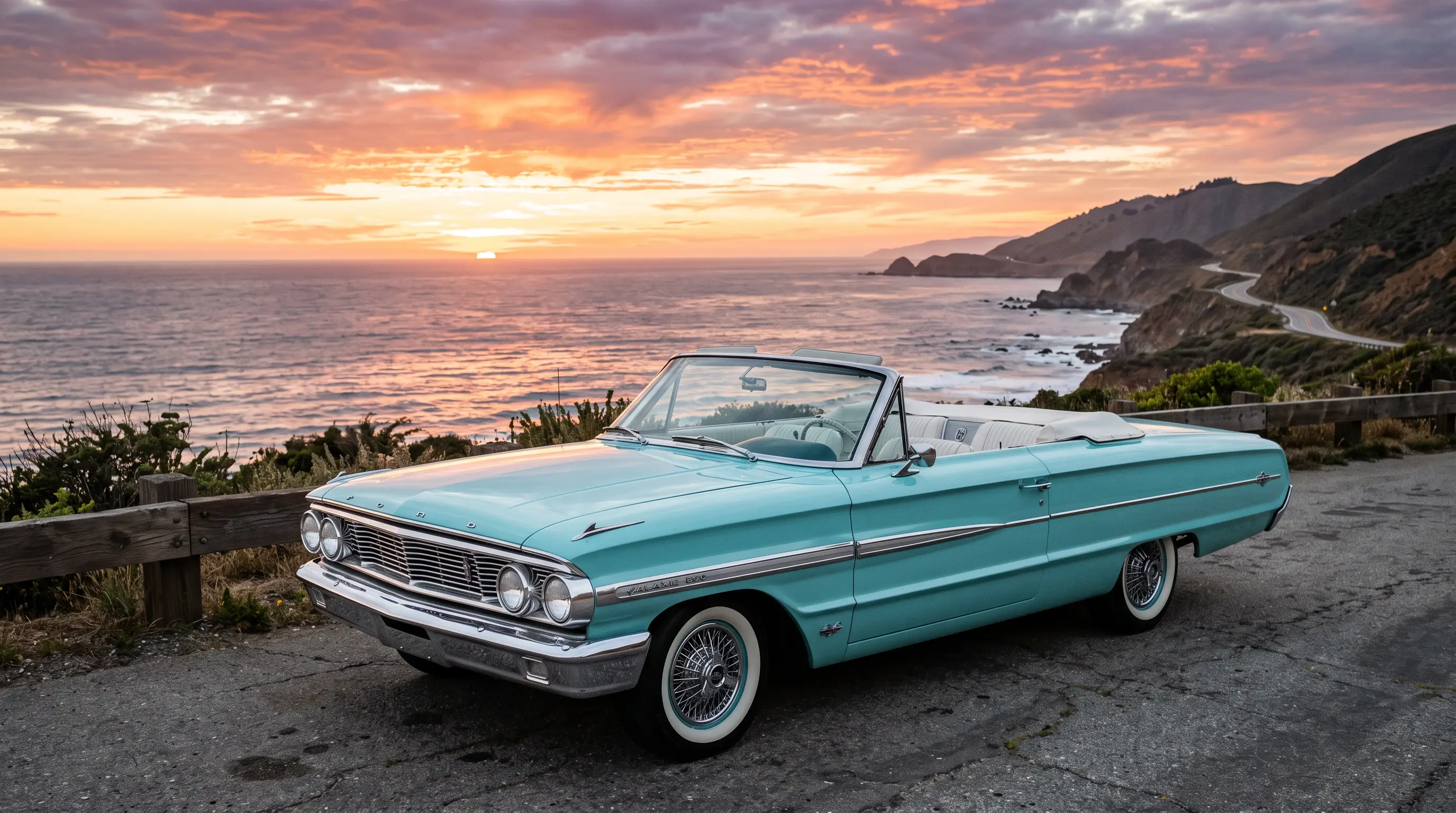
Nameplates have a way of outliving the paperwork that officially retires them, and the full-size Ford convertible is a good example. Enthusiasts still call the open-top Galaxie of this era a Sunliner, and for 1964 that is not just a nickname: Sunliner remained Ford's factory name for the Galaxie 500 convertible that year, its last season in use before the all-new 1965 Galaxie dropped the designation entirely, and the ford galaxie 1964 sunliner convertible feature is worth untangling carefully rather than repeating the nickname without context.
Where the Sunliner name actually came from
Sunliner had been Ford's name for its full-size convertible dating back to the 1950s, carried forward as the body style evolved through successive full-size redesigns. By the early 1960s, Ford's naming conventions across the lineup had consolidated considerably, with many previously distinct model names folded into trim-level designations under the broader Galaxie umbrella. Period brochures and factory literature confirm the Sunliner name was still current for the 1964 Galaxie 500 convertible, alongside the more heavily trimmed Galaxie 500 XL Sunliner convertible. What is not in dispute is that the car itself, the full-size Ford convertible body style, continued essentially unbroken through this period, right up until the name itself disappeared with the following year's redesign.
This kind of naming ambiguity is more common in Ford's history than people expect. Model names shifted, merged, and got dropped across the lineup through the early 1960s as Ford simplified its marketing structure, and enthusiasts inheriting these cars decades later often default to whichever name feels most evocative rather than whichever name was technically correct for their specific model year.
What made the convertible a genuinely different ownership experience
Beyond the naming question, the convertible variant of the full-size Galaxie offered a meaningfully different experience from the hardtop and sedan versions built on the same platform. The power top mechanism, reinforced structure to compensate for the lack of a fixed roof, and the specific interior detailing that accompanied a convertible order all represented a distinct factory build rather than simply a hardtop with the roof removed. Buyers ordering this body style in 1964 were paying a premium over the closed-roof cars, and that premium reflected genuine engineering differences, not just a styling preference.
The convertible top mechanism itself, largely unchanged in basic operation from earlier years in this body generation, remained a well-proven system by 1964, having been refined across several preceding model years of full-size Ford convertible production. That maturity matters for anyone evaluating a surviving example today, since a well-maintained example of this era's top mechanism tends to be a known quantity rather than an unresolved engineering problem.
"Half the collectors who call this car a Sunliner have never checked whether Ford still used that name in 1964. The car deserves better than a nickname nobody has verified."
- Tom Ramirez
How the convertible fit into Ford's broader 1964 lineup
The convertible body style was available across more than one trim level within the Galaxie range that year, meaning a buyer could order the open-top body on a standard Galaxie 500 configuration or step up to the more heavily trimmed 500 XL equivalent, with bucket seats and console carried over into the convertible body style just as they were offered on the hardtop. This layering of body style and trim level meant the convertible was never a single, fixed product but a range of configurations at different price points, which is worth remembering when comparing surviving examples today. Two convertibles from the same model year can represent meaningfully different original specifications, and treating them as interchangeable ignores real differences in how each car was actually built and equipped when new.
Color choice also mattered more for convertibles than for closed cars, since the top itself, often available in a contrasting shade to the body, became a visible design element in a way that a hardtop's fixed roof never was. Buyers ordering this body style in 1964 were making a more deliberate styling statement than someone ordering a sedan in a similar color, and that is part of why convertibles from this era still photograph so distinctly at shows, independent of engine or trim level underneath.
Why the convertible still draws attention today
Setting the naming question aside, the appeal of the full-size Ford convertible from this era is straightforward: open-top touring in a genuinely large, comfortable American car, built during a period when full-size convertibles were already becoming a shrinking share of overall production. That declining production trend across the industry, combined with the wear that decades of sun and weather exposure typically inflict on convertible tops and their supporting structure, has left fewer well-preserved examples surviving today than the original production numbers alone would suggest. Our 1964 ford galaxie retrospective covers the broader model year context these convertibles were built within, and a related story looks at the closed-roof hardtop built on the same platform for comparison.
For collectors specifically hunting this body style, the research priority should still be confirming the Sunliner designation and correct trim against period documentation for this specific model year, rather than relying purely on decades of informal nickname usage. Original window stickers, dealer invoices, and factory brochures from the actual model year carry more weight here than any restoration club's modern reference guide, however well-intentioned, since those secondary sources occasionally blur naming across adjacent model years.
Where to see the real thing
Documentation questions aside, nothing settles the appeal of this body style like seeing one in person with the top down. If this history has you curious about the actual cars, Galaxies for sale now occasionally include surviving convertible examples from this exact model year, worth a careful look at both the top mechanism and the underlying factory paperwork before buying.
A last piece of practical guidance for anyone actually inspecting one of these cars in person: check the top boot, frame bows, and rear quarter structure closely before anything else. Convertibles from this era were engineered to compensate for the missing roof, but decades of flexing and weather exposure test that reinforcement in ways a hardtop never experiences, and hidden rust in the lower rear quarters or floor pans shows up more often on open cars of this vintage than on their closed counterparts. A correct nameplate and a period-correct color combination mean little if the structure underneath has been quietly compromised by fifty years of moisture finding its way past an aging top seal.