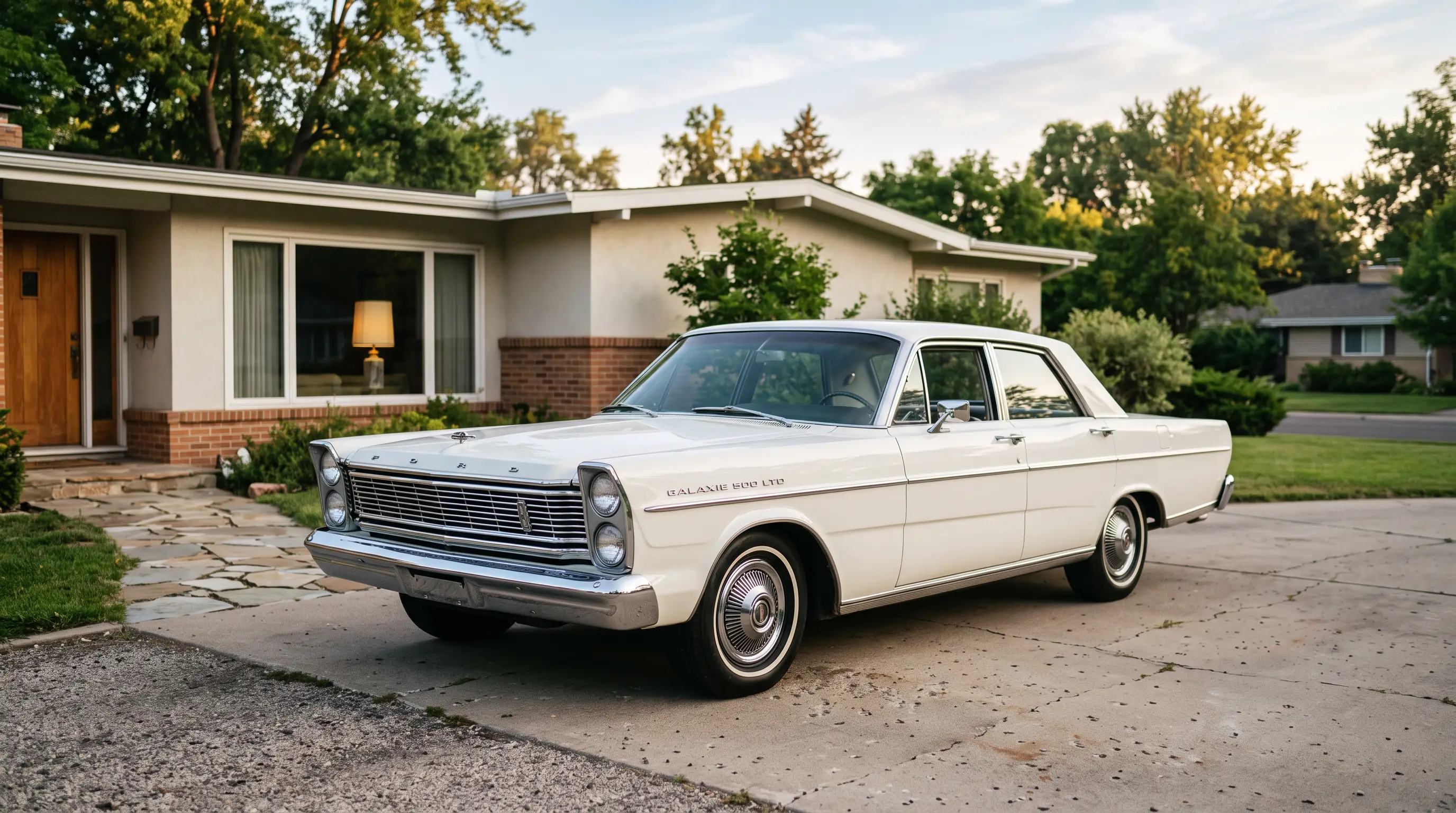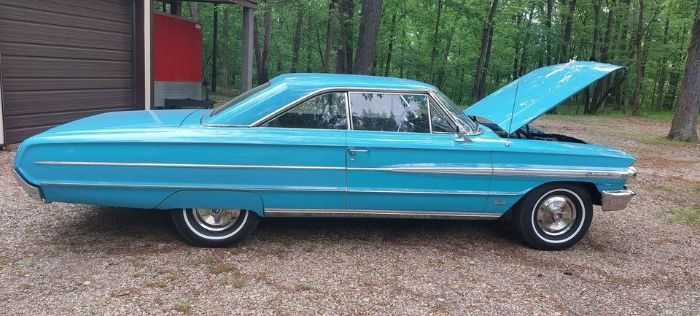
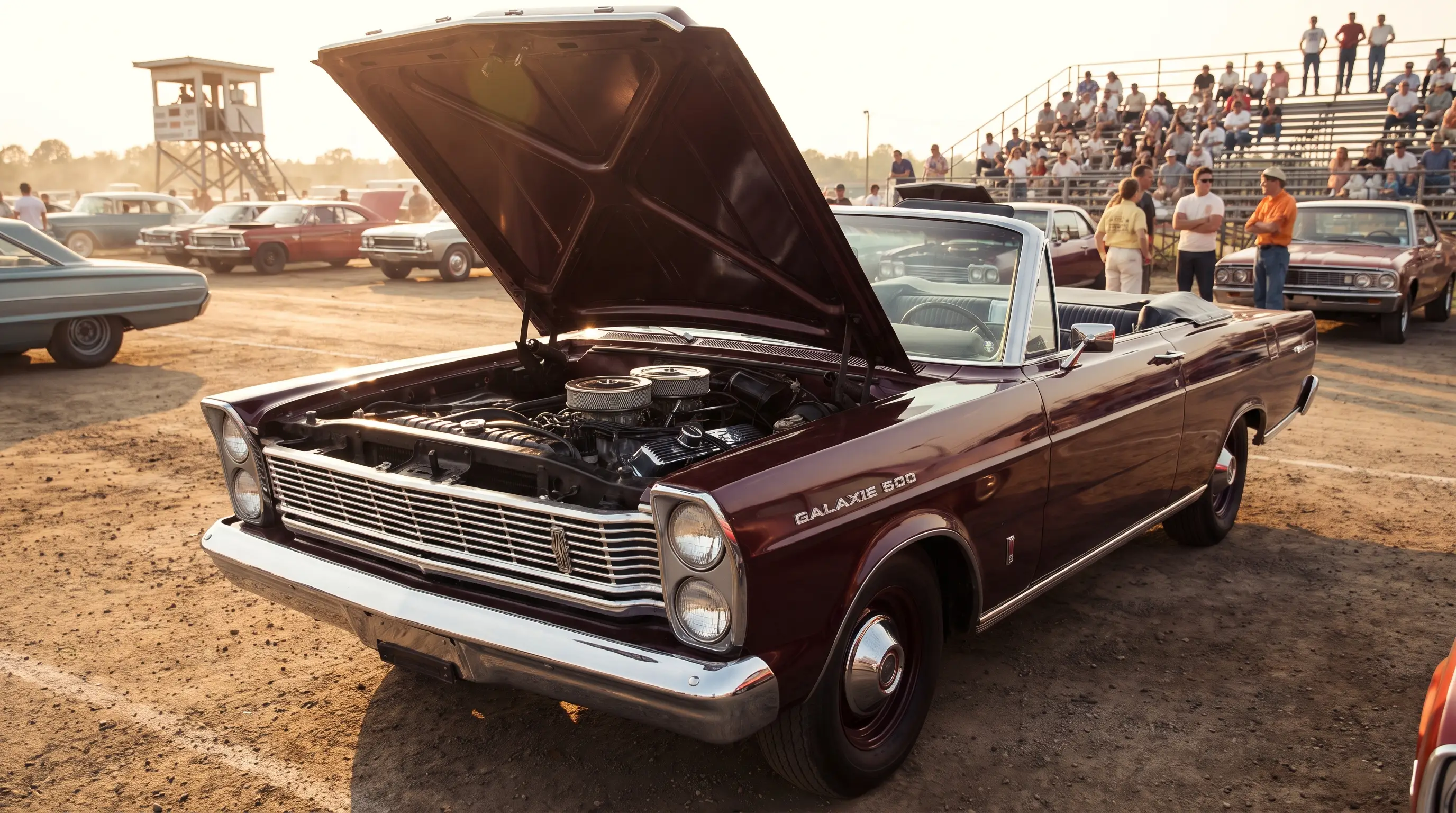
Order the right box on a 1965 Ford Galaxie options sheet and you could walk out of the dealership with a 427 cubic inch V8 sitting under a hood that, from the outside, looked like it belonged to your neighbor's family sedan. That contrast, a genuinely serious NASCAR-derived engine wearing the same stacked-headlight sheet metal as a six-cylinder Galaxie 500, is the whole appeal of the 1965 427 Galaxie, and it is worth working through the numbers to understand exactly what a buyer got.
Where the 427 came from
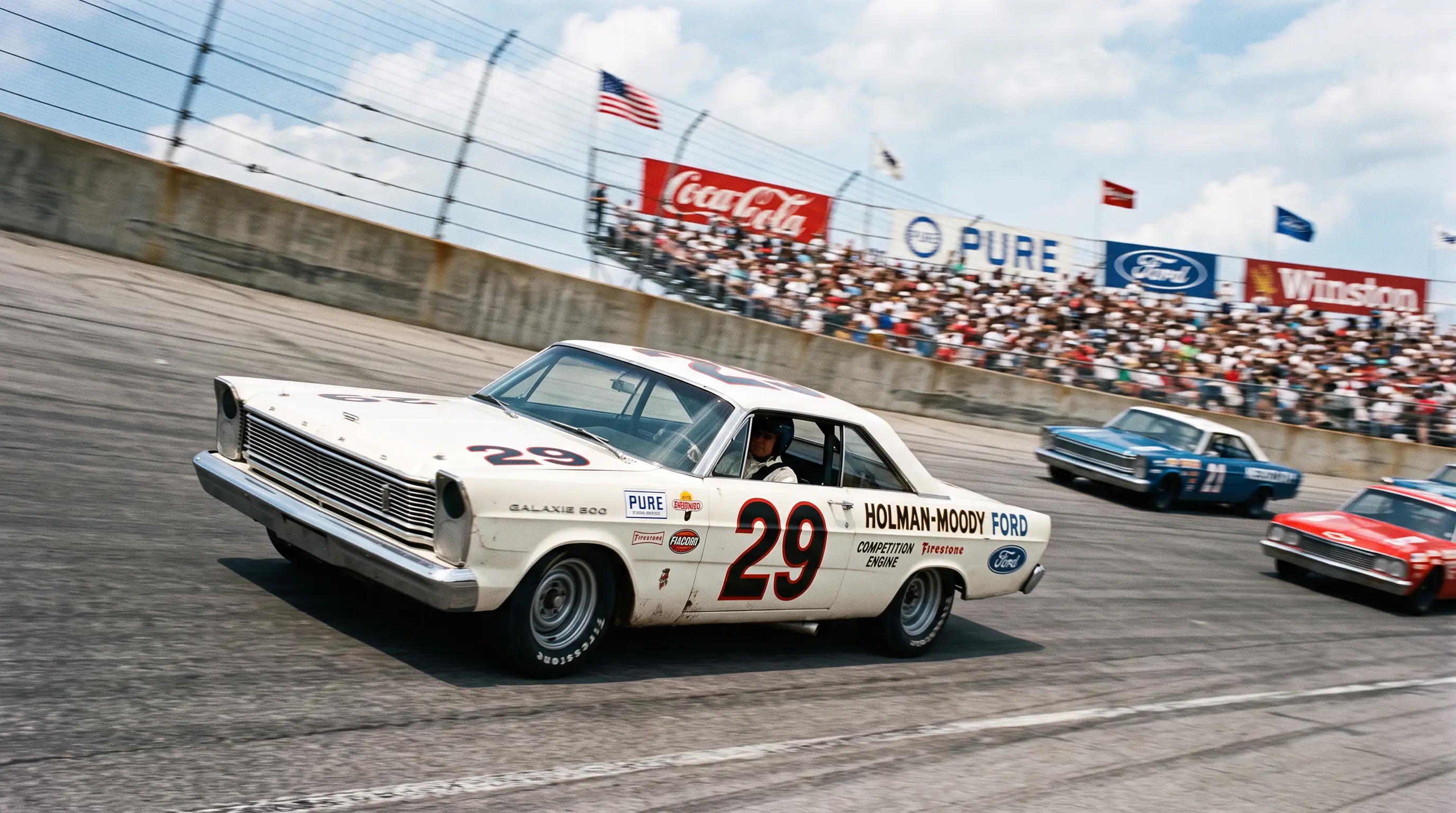
The 427 in the 1965 Galaxie was not developed for street use first and adapted for racing later. It traces its lineage directly to Ford's NASCAR program, where the automaker needed a big-inch V8 capable of surviving sustained high RPM running at speeds most street engines of the era were never asked to hold for more than a few seconds at a time. That racing pedigree shows up in the engine's internals: a forged bottom end, high-flow cylinder heads, and, in the top-spec dual-quad configuration, a genuinely aggressive state of tune that made no apologies for being difficult to live with as a daily driver.
Ford offered the 427 in the full-size Galaxie line through the mid-1960s in more than one state of tune, and the differences between them matter enough to lay out plainly rather than gloss over.
| Configuration | Induction | Approximate output | Character |
|---|---|---|---|
| 427 single four-barrel (Q-code) | One four-barrel carburetor | Advertised at 410 hp at 5,600 rpm, 476 lb-ft of torque at 3,400 rpm | Strong, more street-tolerant tune |
| 427 dual four-barrel (R-code) | Two four-barrel carburetors | Advertised at 425 hp at 6,000 rpm, 480 lb-ft of torque at 3,700 rpm | Race-oriented, aggressive cam, less forgiving at low RPM |
The dual-quad car in particular was not a subtle piece of engineering. It ran a solid-lifter camshaft that demanded regular valve adjustment, and its full power came in higher in the rev range than most full-size car buyers of the era were accustomed to using. Ordering it into a Galaxie meant accepting a car that idled rough, ran hot in traffic, and generally behaved like the race engine it fundamentally was, wrapped in a body designed to carry a family in comfort.
Compare that to the single four-barrel version and the picture becomes clearer. The single-quad 427 traded some of the top-end aggression for a broader, more usable powerband, a genuine attempt to give buyers who wanted big-inch performance without the dual-quad car's rough manners at low speed. It still hit harder than anything most full-size car shoppers had experienced from a factory option, but it did so without demanding the same tolerance for daily inconvenience that the race-oriented dual-quad setup required.
The honest tradeoffs of a factory hot rod
It is easy, decades later, to romanticize the 427 Galaxie without being honest about what owning one actually meant in period. A solid-lifter big-block in a full-size car is a compromise machine by design, and the compromises were real. Fuel economy was poor even by the standards of the day. The stiffer suspension and quicker steering ratios Ford sometimes paired with the 427 option firmed up the ride noticeably compared to a standard Galaxie 500, trading away some of the comfort the rest of the lineup was busy improving that same model year. And a dual-quad 427 in city traffic was, by most period accounts, a genuinely difficult car to drive smoothly at low speed, since the cam and carburetion were tuned for a very different kind of running than stop-and-go commuting.
None of that made the car a bad idea. It made it an honest one, a car built for buyers who understood exactly what they were ordering and why. Ford was not hiding the tradeoffs. The 427 option existed specifically for buyers who wanted a full-size Ford that could genuinely perform, and the engine's uncompromising nature was the whole point rather than an unintended side effect.
Dealers who sold these cars in period reportedly steered casual shoppers away from the dual-quad option unless the buyer clearly knew what they were asking for, since a customer expecting an ordinary smooth-idling full-size Ford could be genuinely unhappy with what a solid-lifter 427 actually delivered day to day. That kind of honest gatekeeping at the sales counter is not something modern marketing tends to practice, but it reflects how seriously the engine's uncompromising character was treated even before the car left the lot.
Rarity and what survives today
427-equipped full-size Fords from this era were never a high-volume order, since the engine's tradeoffs and cost naturally filtered out most mainstream buyers who simply wanted reliable transportation. Exact production figures broken out specifically by engine code within the 1965 Galaxie lineup are not consistently documented in a single accessible source, and much of what collectors rely on today comes from surviving build sheets, Marti Reports, and cross-referencing known engine codes against surviving cars rather than one clean factory tally.
What is not in dispute is that surviving, documented 427 Galaxies from 1965 are scarce relative to the broader production run, and authenticity matters enormously to value. A numbers-matching 427 car with verifiable documentation is a meaningfully different proposition from a Galaxie that has had a 427 installed later, even if the two look identical from the outside. Anyone evaluating a claimed 427 car should expect to see supporting paperwork, not just an engine stamp, before treating the claim as settled.
The scarcity is compounded by how few of these cars were kept in their original tune of state over the following decades. A dual-quad 427 that gave its owner trouble in daily use was, more often than most enthusiasts like to admit, quietly swapped for a milder engine at some point in the car's working life, long before anyone thought of it as a future collectible. That history means a genuinely original, unmolested 427 survivor represents both good luck and, frequently, an owner along the way who valued originality over convenience.
"A dual-quad 427 in a full-size car isn't subtle and it isn't easy to live with, and that's exactly why it's interesting. It's a race engine that somebody decided to sell across a dealership counter."
- Emily Chen
Why the combination still resonates
The appeal of the 427 Galaxie has never really been about outright numbers, since plenty of later muscle cars posted comparable or better figures on paper. It is about the contrast, a big, comfortable, stacked-headlight full-size sedan hiding a genuinely serious NASCAR-derived engine that most onlookers would never suspect from the outside. That contrast is covered in more detail as part of the full story of the 1965 model year, where the 427 option sits alongside the new LTD trim and the redesigned body as one more example of how many different cars Ford was quietly building under one nameplate that year.
For buyers who want to browse classic Galaxie listings today with a 427 specifically in mind, patience and documentation matter more than almost anything else in the search. These are not common cars, and the ones worth having are the ones that can prove exactly what left the factory under that hood.