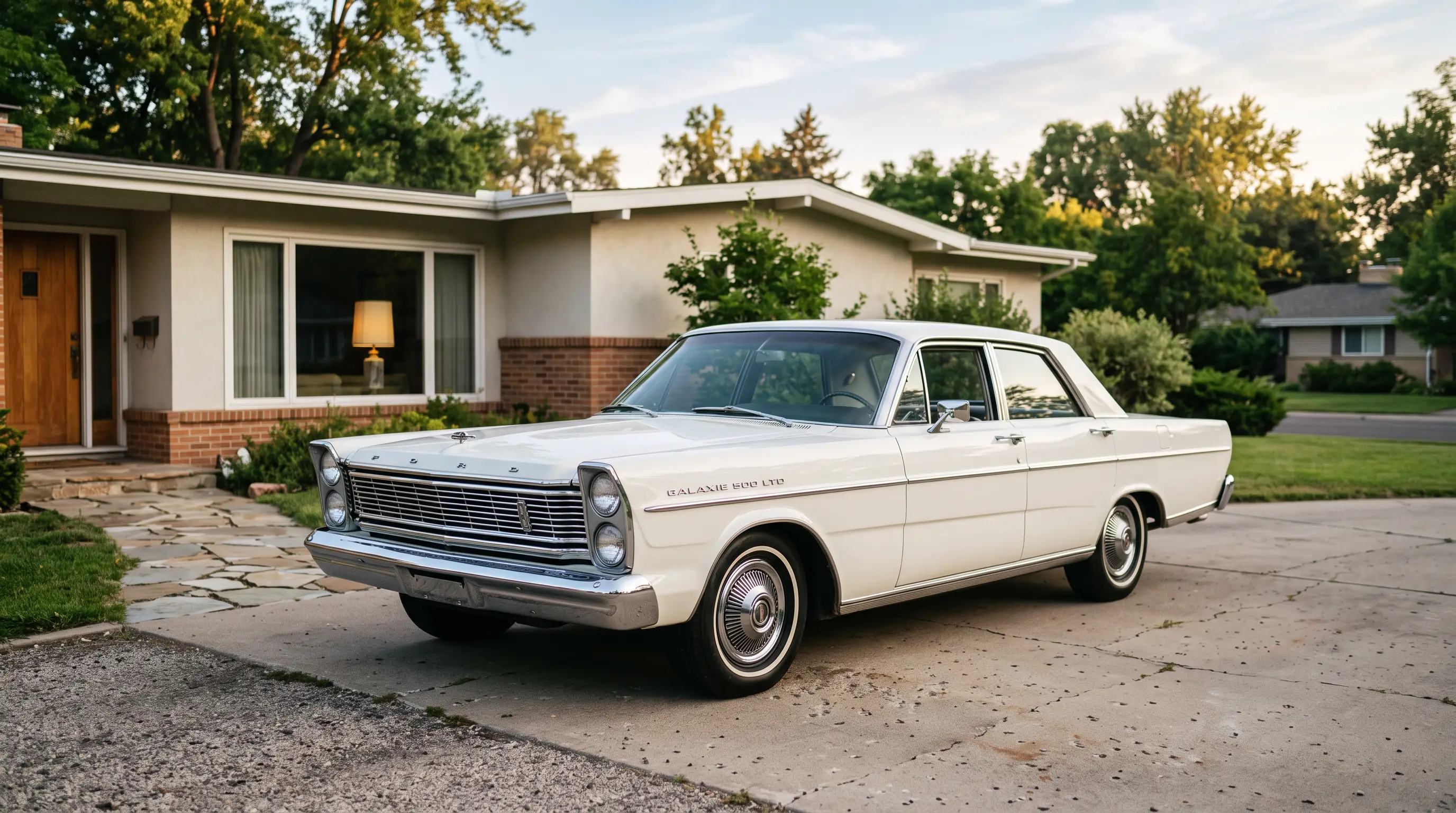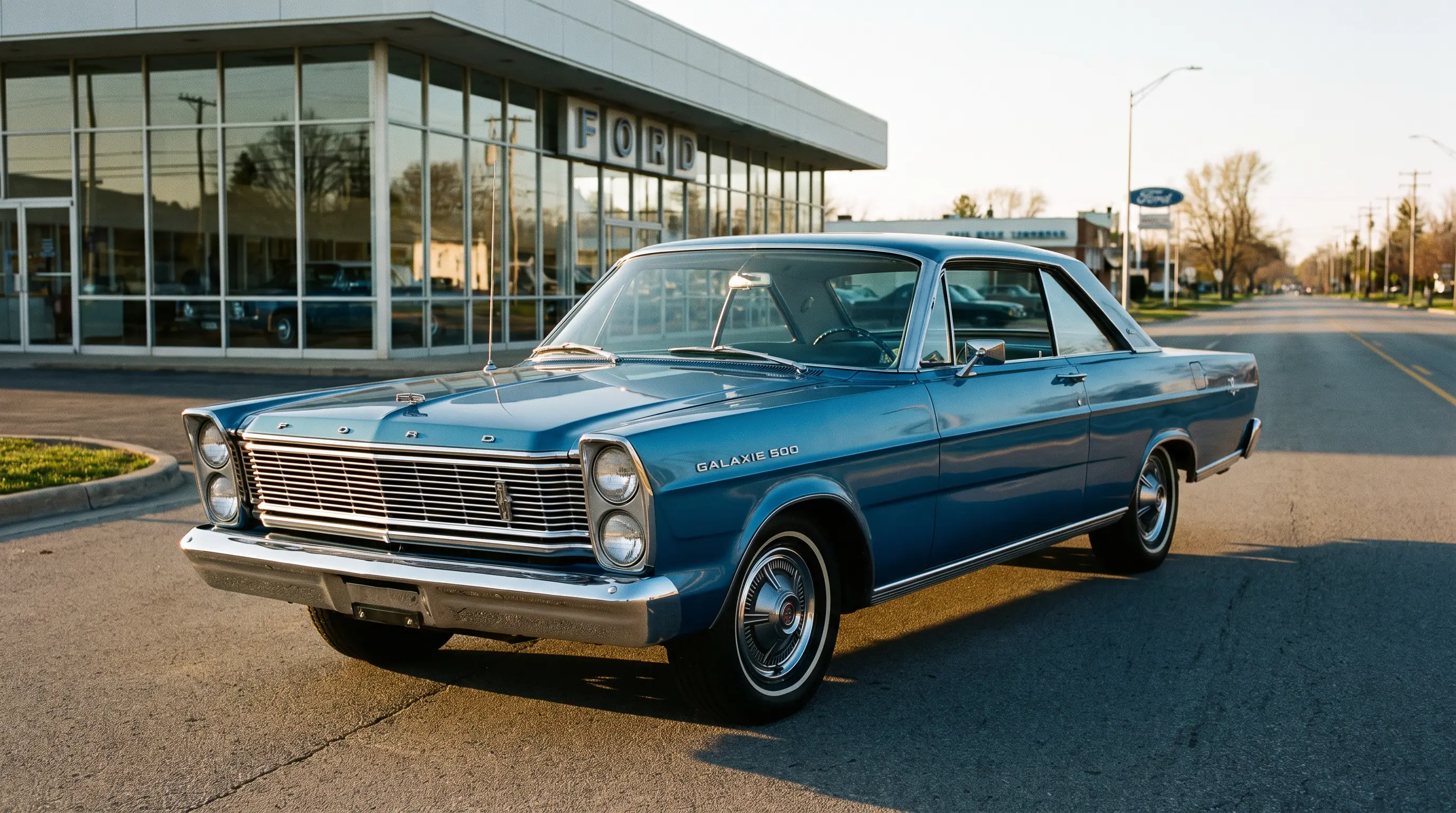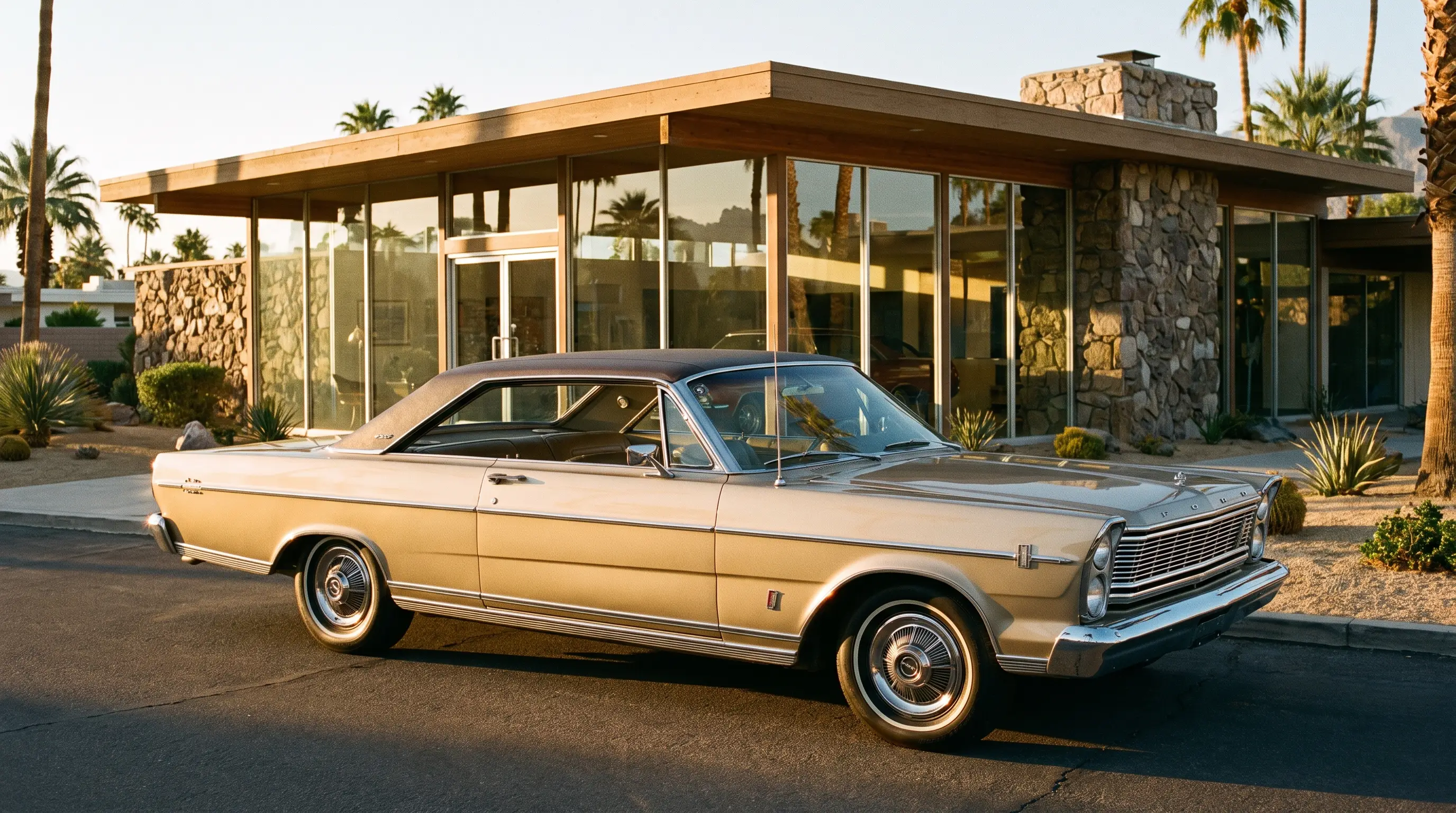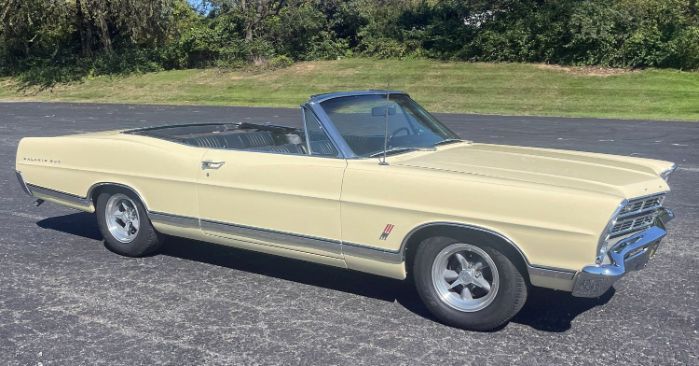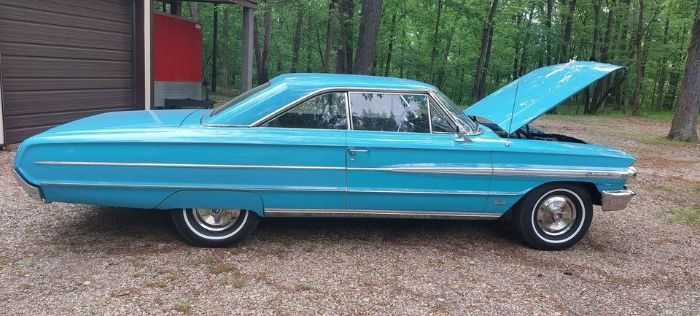
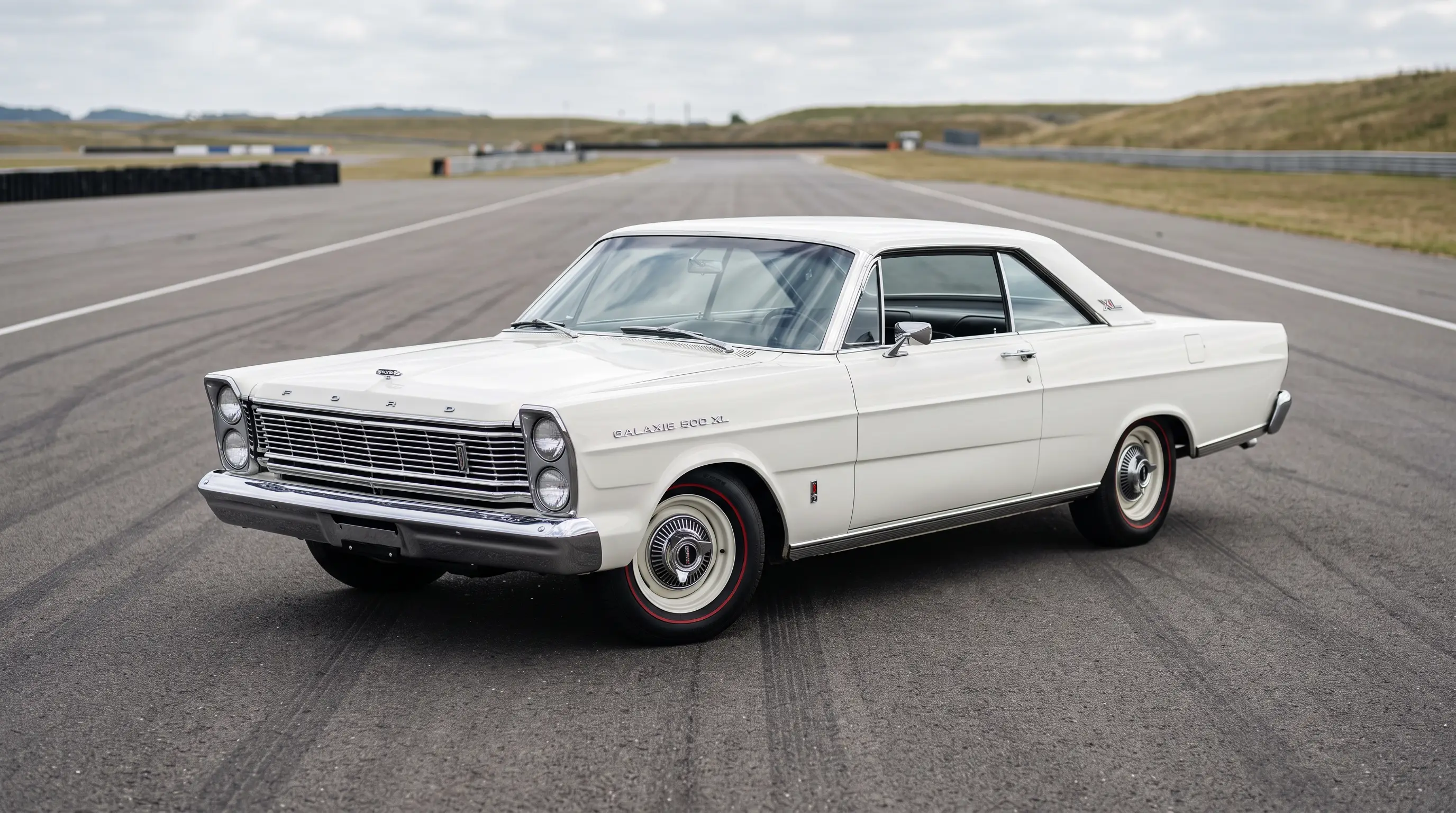
A Ford dealer in the fall of 1964 remembered the moment a regular customer walked around a new 1965 Galaxie on the showroom floor twice before saying a word. She had traded in a 1963 Galaxie eighteen months earlier and had been driving something smaller since, and she stood there running a hand along the new car's flank like she was trying to place a face she half recognized. "It's not the same car," she finally said, and she was right. The 1965 Ford Galaxie was not a facelift dressed up as news. It was, underneath the paint, close to an entirely new automobile.
A body built on a different frame
The story of the 1965 redesign starts below the sheet metal, where most buyers never looked but every engineer at Ford spent the better part of two years arguing over. Ford moved the full-size line to a new perimeter frame for 1965, a departure from the unit-body construction the Galaxie had used through the early 1960s. The new frame sat the body lower and let engineers tune ride and noise isolation in ways the old structure could not match. It was a significant, expensive change to make for what looked to the average shopper like an evolution rather than a revolution, and it says something about how seriously Ford was taking the full-size market in 1965 that they were willing to spend the money underneath a car most people would only ever judge by its silhouette.
Riding on that new frame was a body shell that shared almost nothing with its 1964 predecessor. The roofline was lower, the beltline was cleaner, and the whole car read as wider even though its actual dimensions grew only modestly. Ford's stylists had clearly been watching what General Motors was doing with its own full-size cars, and the 1965 Galaxie answered with crisper lines, a longer hood-to-cowl relationship, and sheet metal that curved in ways the boxier early 1960s Fords never attempted.
The engineers who signed off on that new frame were solving a problem that had nothing to do with fashion. A perimeter frame lets a body sit lower without sacrificing interior room, since the floor pan can dip between the frame rails rather than sitting entirely on top of them. That lower stance fed directly into the styling department's goals, giving them a starting point that already looked sleeker before a single crease was drawn into the sheet metal. It is one of those cases where the engineering decision and the styling decision reinforced each other so completely that it becomes difficult, looking back, to say which one led and which one followed.
Riding on coils instead of leaves
Perhaps the most consequential change buried in the 1965 redesign had nothing to do with how the car looked and everything to do with how it felt from behind the wheel. Ford switched the full-size line to coil springs at all four corners, replacing the leaf springs that had carried the rear end of full-size Fords for years. The change smoothed out the ride in a way period road testers noticed immediately, and it is a subject covered in more depth elsewhere on this site for readers who want the engineering detail. What matters here is the human effect of that change: a big American sedan that used to jounce and float over bad pavement suddenly rode with a composure that made it feel like a genuinely more expensive car, without Ford having to charge for it that way.
That kind of change rarely gets its own headline in the brochures. Ford's 1965 advertising leaned on words like "quiet" and "smooth," language chosen to describe a feeling rather than a specification, because the coil-spring rear end was not something a shopper could point to on the options sheet. It showed up instead in the drive around the block, in the moment a salesman let a customer take the wheel over the same rough stretch of road they always used to demonstrate a car's manners.
The showroom moment
Back on that dealer's floor, the customer running her hand along the fender was reacting to something real. The 1965 Galaxie looked lower because it was lower. It looked wider because the beltline and the new stacked-lamp front end drew the eye horizontally in ways the older car never did. And it felt, when she finally sat in it, like a car built by people who had gone back and reconsidered every assumption rather than simply moving the trim around. That is the quiet, underappreciated story of a redesign year like 1965: the changes that mattered most to the people actually buying the cars were often the ones that never made it onto a spec sheet at all, the ride quality, the hush inside the cabin, the sense that a familiar shape had been quietly made better.
Dealers who lived through that model year change often describe it less as a sales pitch and more as a demonstration. You did not need to argue a customer into liking the new Galaxie. You let them walk around it, sit in it, and drive it over the same rough road as their old car, and the car did the rest of the talking.
There was also a quieter cost to all of this ambition. A ground-up redesign meant new tooling, new stamping dies, and a production changeover that carried real risk if anything did not fit together the way the engineering drawings promised. Ford's willingness to absorb that risk in a single model year, rather than phase the changes in gradually the way some competitors preferred, says something about how much confidence the company had in its own engineering by the mid-1960s. It was a bet that paid off, but it was a bet all the same, made at a scale most car buyers walking the showroom floor never stopped to consider.
"People think a redesign is about the sheet metal, but the ones that actually change how a customer feels about the car happen underneath, where nobody's looking until they're sitting in the seat."
- Nora Beckett
What the redesign meant for the years that followed
The 1965 platform did not exist in isolation. It became the foundation the full-size Ford line built on for the rest of the decade, refined and reworked but never abandoned the way the 1965 change had abandoned what came before it. That makes 1965 something of a hinge year in the Galaxie's story, the point where the car stopped being a bigger, more chrome-laden version of a 1950s Ford and started being its own modern thing, riding on its own frame, wearing its own face, carrying its own name into the LTD era and beyond. Readers looking for our complete history of the 1965 model year will find the redesign sitting at the center of nearly every other change that happened that year, because so much of what made 1965 distinctive traces back to that new frame and that new body.
For anyone shopping today, the appeal of a 1965 Galaxie often comes down to exactly this: it is old enough to carry real presence and history, but it rides and handles like Ford meant it to be driven, not just displayed. Buyers who want to find a classic Galaxie from this specific model year are, whether they realize it or not, shopping for the payoff of two years of engineering arguments that never made it into a single advertisement, but that changed how the car felt every single time someone turned the key.