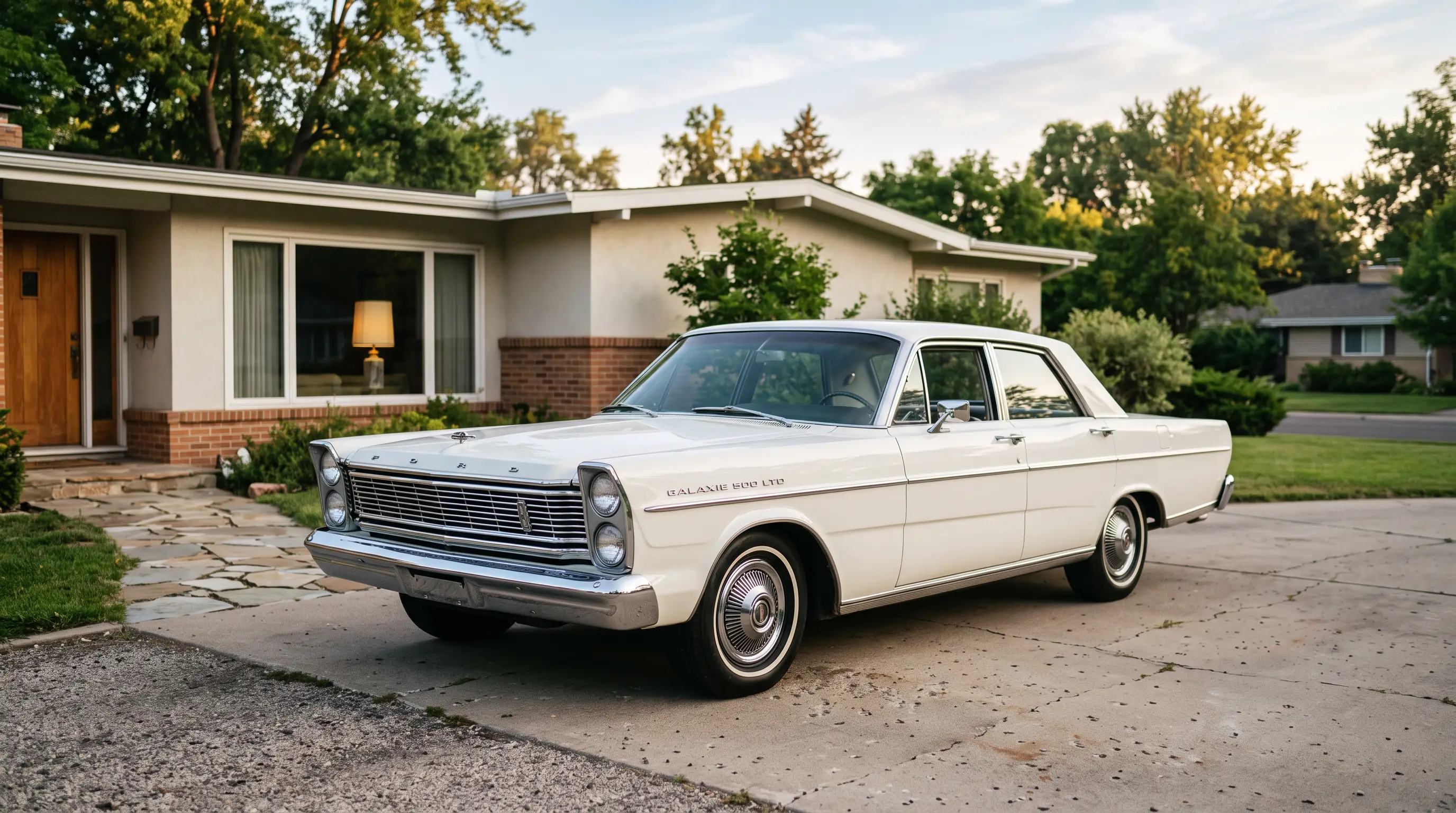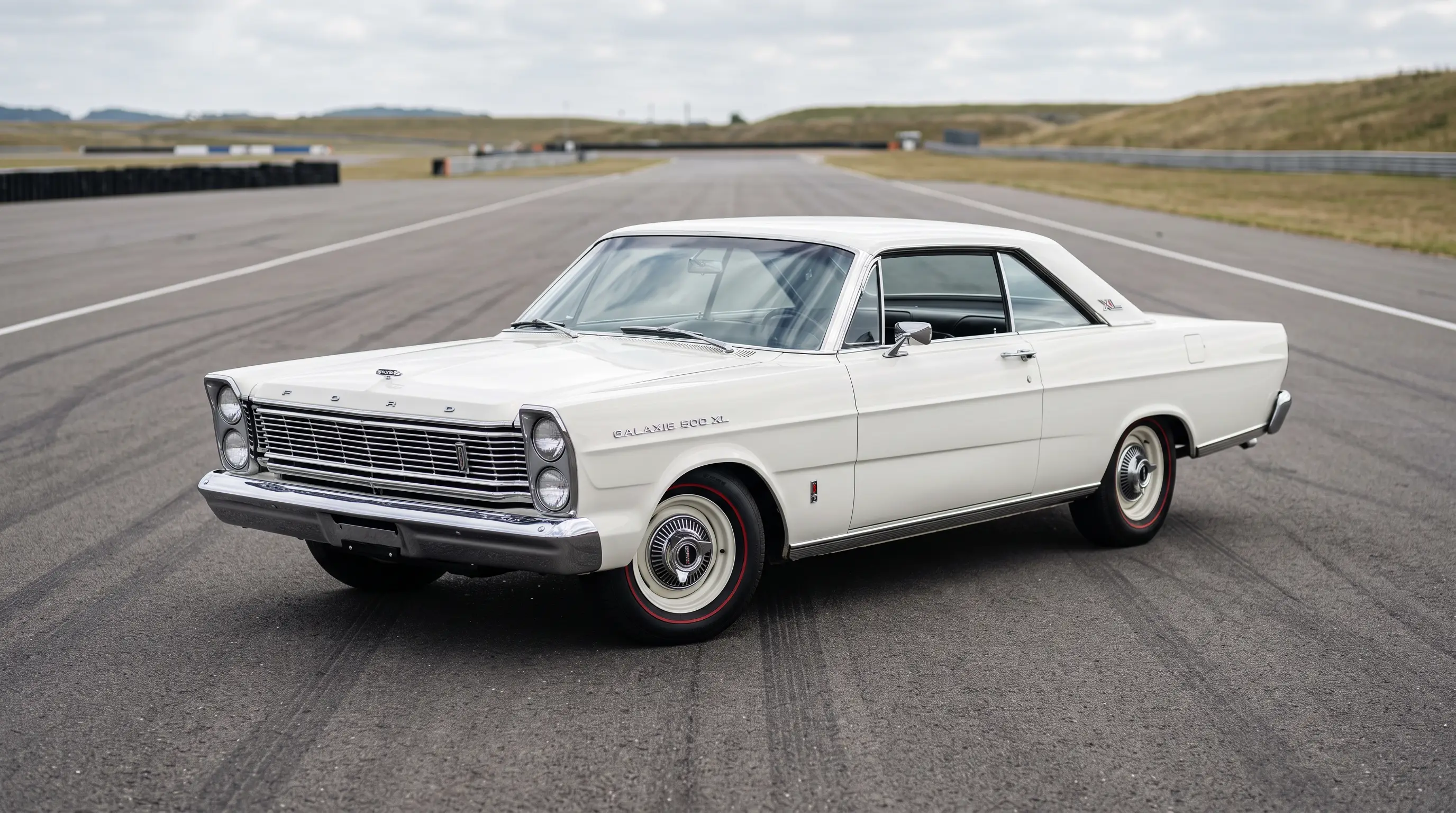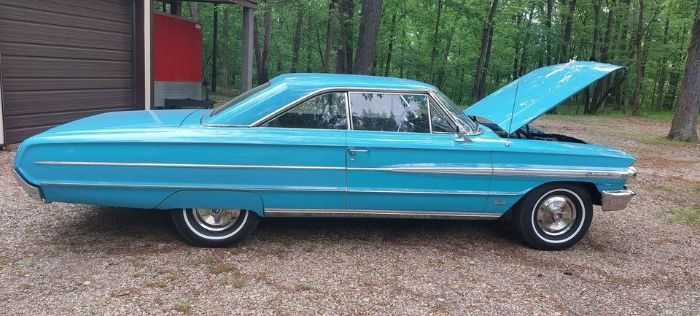
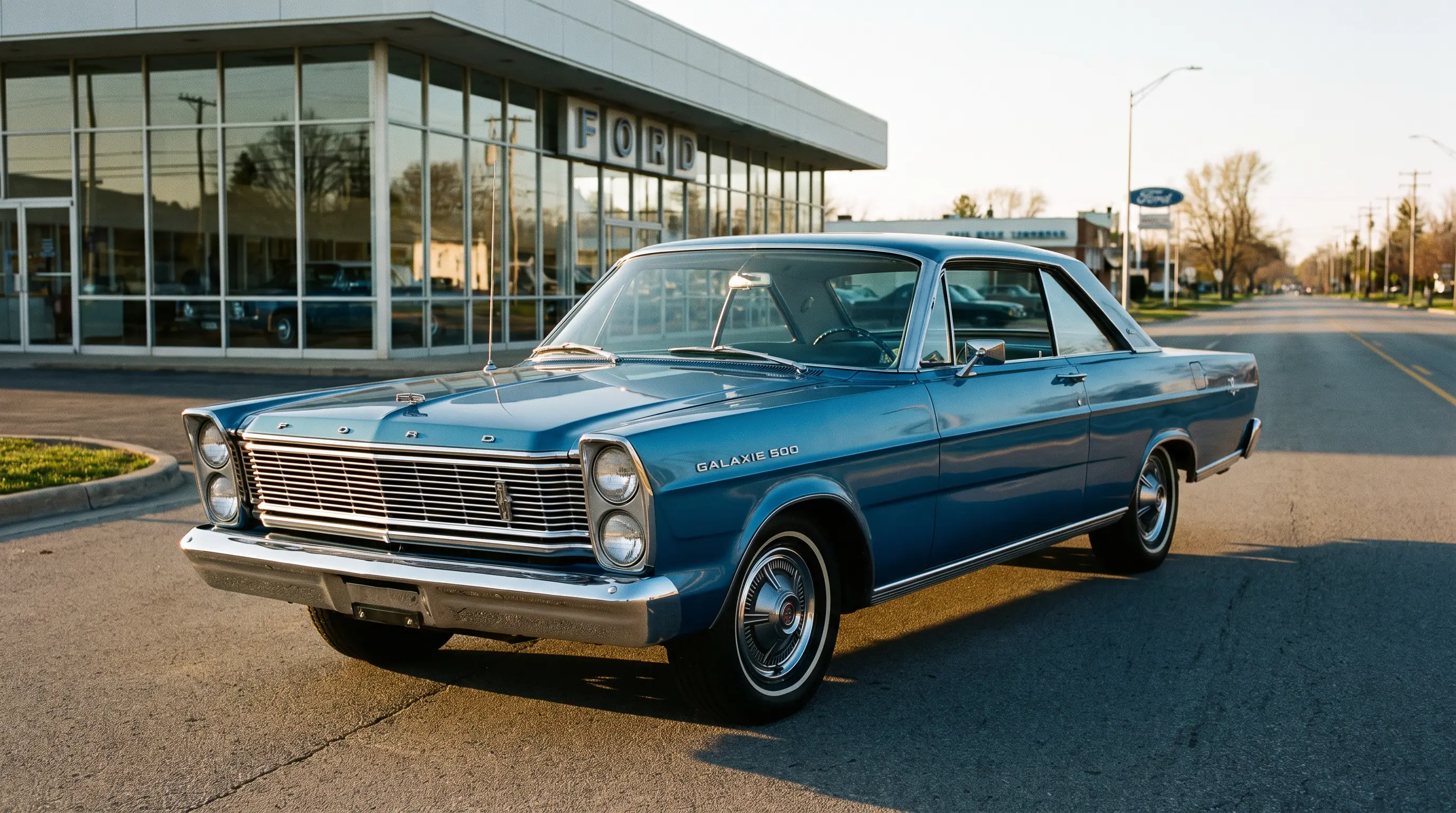
The 1965 Ford Galaxie changed the way a full-size Ford looked at oncoming traffic, literally. For the first time on a Ford passenger car, the headlights stacked vertically inside a pair of squared-off bezels, and that single decision reshaped the entire face of the car. It is a small detail by the standards of a from-the-ground-up redesign, but it is the detail most people reach for first when they describe the 1965 Galaxie, and it deserves its own accounting.
Why Ford stacked the lamps in 1965
Ford's stylists were not chasing a fad in isolation. Pontiac had already proven that stacked headlights could look expensive rather than gimmicky, and General Motors full-size cars were leaning hard into vertical lamp clusters through the early 1960s. Ford's design studios, competing directly for the same customer walking into a Chevrolet or Pontiac showroom, needed a face that read as new from thirty feet away, not just from the fender line back. Stacking the lamps let the designers narrow the visual width of the grille opening while keeping the overall car wide and low, and it gave the front clip a formal, almost architectural symmetry that the outgoing single-lamp Galaxie never had.
There is also a practical case buried in the stylistic one. A vertical pair of sealed beams occupies less horizontal space than a side-by-side pair, which freed up room in the grille opening for a wider, more elaborate concave grille texture. Ford's designers used that freed-up real estate to build a grille that looked like one continuous piece rather than a shape interrupted by round lamps on either end. For more on how that whole redesign came together, a related story traces the sheet metal changes that made the stacked face possible in the first place, but the short version is that the headlight decision and the body decision were made together, not separately.
How the stacked face read on the road
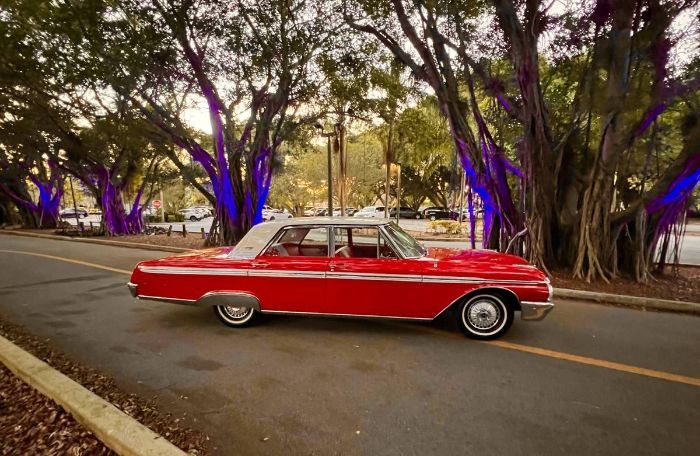
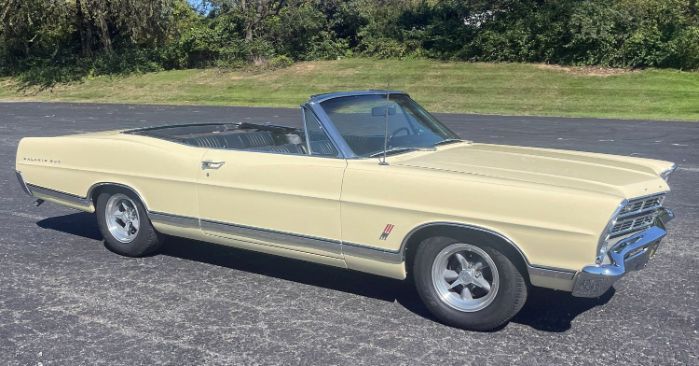
Parked next to a 1964 Galaxie, the 1965 model looks like it belongs to a different generation entirely, and in the showroom that was exactly the intent. The horizontal grille bar, the recessed lamp bezels, and the crisp character line running the length of the fender all worked together so the car looked lower and wider than it actually was. Ford's own sales materials leaned on words like "formal" and "important," which was period marketing shorthand for saying the car looked like it cost more than it did. Buyers cross-shopping a Galaxie 500 against an Impala or a Catalina noticed the front end first, and Ford knew it.
The stacked lamps also gave the 1965 Galaxie a face that photographed well from a three-quarter angle, which mattered more than modern audiences might assume. Print advertising in 1965 relied heavily on angled studio shots, and a front end with strong vertical elements held up better under that kind of lighting than a flatter, wider grille would have. Whether that was a deliberate consideration in the studio or a happy byproduct of the styling direction is not something Ford's designers left behind a clear record of, but the effect on period print ads is easy to see just by flipping through a stack of 1965 magazine spreads.
Trim differences behind the same face
Every full-size Ford for 1965 wore the stacked headlights, from the base Custom sedans up through the Galaxie 500 and the new LTD, but the surrounding brightwork changed by trim level in ways that are easy to miss unless you are looking for them. Base cars ran simpler, painted bezels with minimal chrome accenting, while Galaxie 500 and LTD models added more brightwork around the lamp housings and a more heavily detailed grille insert. The visual family resemblance held across the lineup, which was smart brand building since a base Custom sedan and a loaded Galaxie 500 XL still looked like they belonged to the same car family from the front, even though the trim and equipment underneath diverged sharply.
Buyers who wanted the top of that ladder found the Galaxie 500 XL and its bucket-seat interior sitting behind the same stacked-lamp face as the family sedan, a deliberate move by Ford to make the sportier models feel like a natural extension of the lineup rather than a separate product. Collectors today sometimes assume the stacked headlight treatment was reserved for upper trims, which is not correct. The face was consistent across the range; it was the details around it, and everything behind the firewall, that told the trim levels apart.
Look closely at surviving cars and the grille inserts alone tell a story. Base Custom models used a simpler horizontal bar pattern with fewer individual segments, finished mostly in dull anodized aluminum rather than polished chrome. Step up to a Galaxie 500 and the insert gained a more detailed crosshatch texture along with brighter finishing around the lamp bezels themselves. The LTD, arriving mid-year as the new luxury flagship, added yet another layer of brightwork around the same basic opening, enough that a knowledgeable eye can often identify the trim level of a 1965 full-size Ford from the grille texture alone, without needing to check a single badge on the car.
Restoring and buying with the face in mind
For collectors and buyers today, the stacked-headlight front clip is one of the more vulnerable areas on a 1965 Galaxie. The bezels, the header panel, and the grille insert are all trim pieces that can be scarce depending on condition and trim level, and a car missing its correct grille texture or bezels loses a meaningful share of its visual identity even if the rest of the car is solid. Anyone shopping Galaxies for sale now should look closely at the condition of the front clip trim before anything else, since replacing missing or heavily pitted chrome in this specific area can be one of the more frustrating parts of a restoration given how model-year-specific the pieces are.
The good news is that because the stacked face only ran a handful of years, parts specialists who focus on mid-1960s Fords tend to know exactly which pieces are Galaxie-specific and which interchange with other full-size Fords of the era. That familiarity among specialists makes sourcing easier than the rarity of the parts alone would suggest, though it does not make the pieces cheap.
It is also worth checking whether a car's bezels and header panel are original to the correct trim level, since a Custom sedan's simpler grille pieces have occasionally been swapped onto a Galaxie 500 during a previous, less careful repair, or the reverse, a more heavily chromed insert fitted where a plainer piece belongs. Neither swap is difficult to spot once you know the trim-specific details, but it is exactly the kind of quiet inconsistency that can knock value off a car being sold as a numbers-correct example when it is not.
"You can tell a well-kept 1965 Galaxie from across a parking lot just by how straight and complete that front clip is. The stacked lamps either look sharp and intentional or they look tired, there is not much middle ground."
- Tom Ramirez
Why the design still matters to the story
It would be easy to file the stacked headlights away as a cosmetic footnote, but the decision says something larger about where Ford was positioning the full-size Galaxie in 1965. This was the year the LTD arrived to chase a more upscale buyer, the year the body shell itself was thoroughly reworked, and the year Ford wanted every full-size car on the lot to look like a fresh answer to General Motors rather than a running change on an old theme. The stacked lamps were the most visible signal of that ambition, the part of the car a shopper registered before they ever opened a door or looked at an options sheet. Read the full context of 1965 ford galaxie history to see how the front-end redesign fit into everything else Ford changed that year, from the frame to the interior to the badge on the trunk lid.
Small design choices rarely get remembered on their own merits, but the stacked headlights of the 1965 Galaxie earned their spot in the car's identity precisely because they did their job so well. They made an already large car look purposeful rather than bloated, and more than half a century later they are still the fastest way to identify a 1965 model from across a car show field.