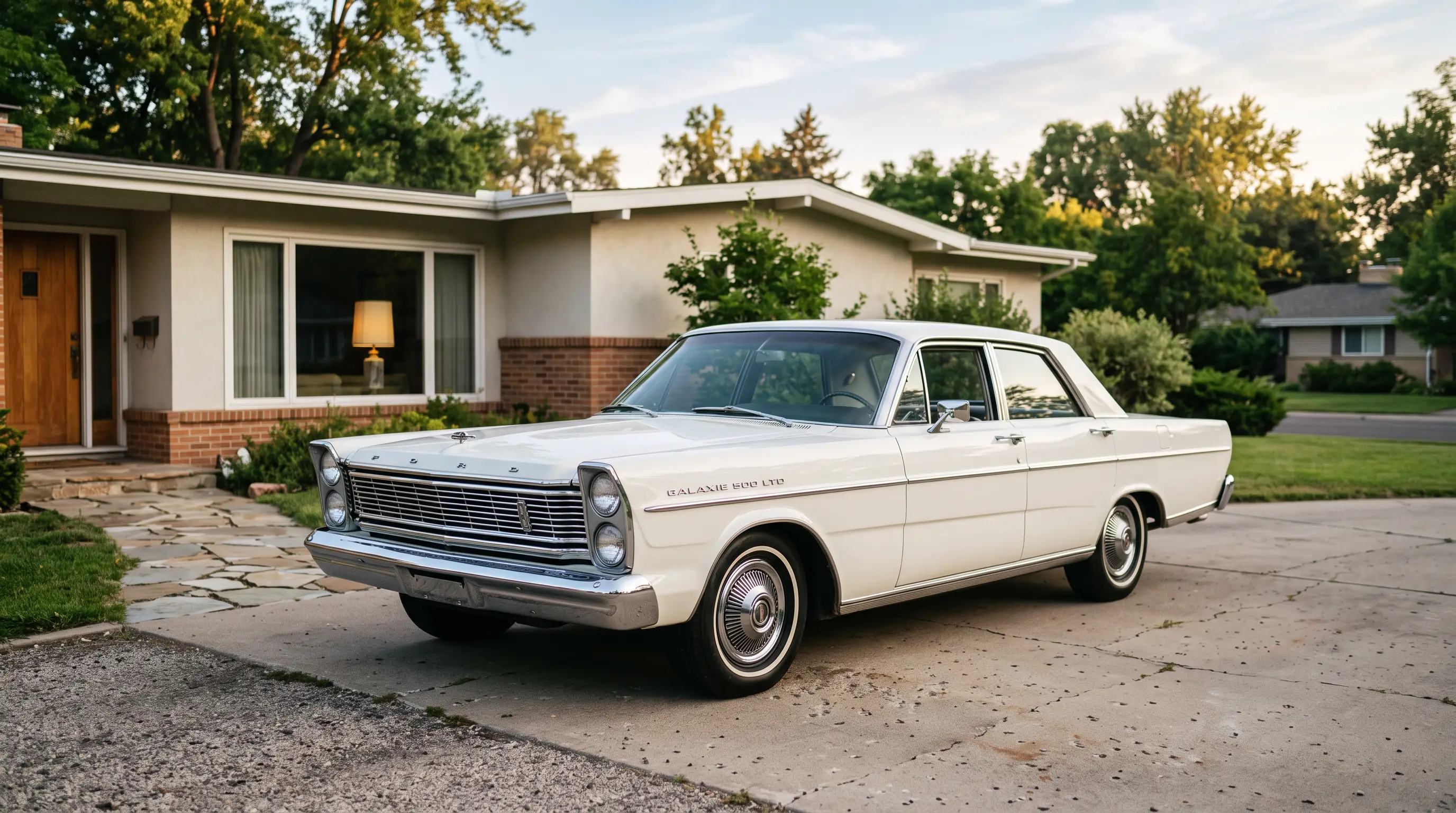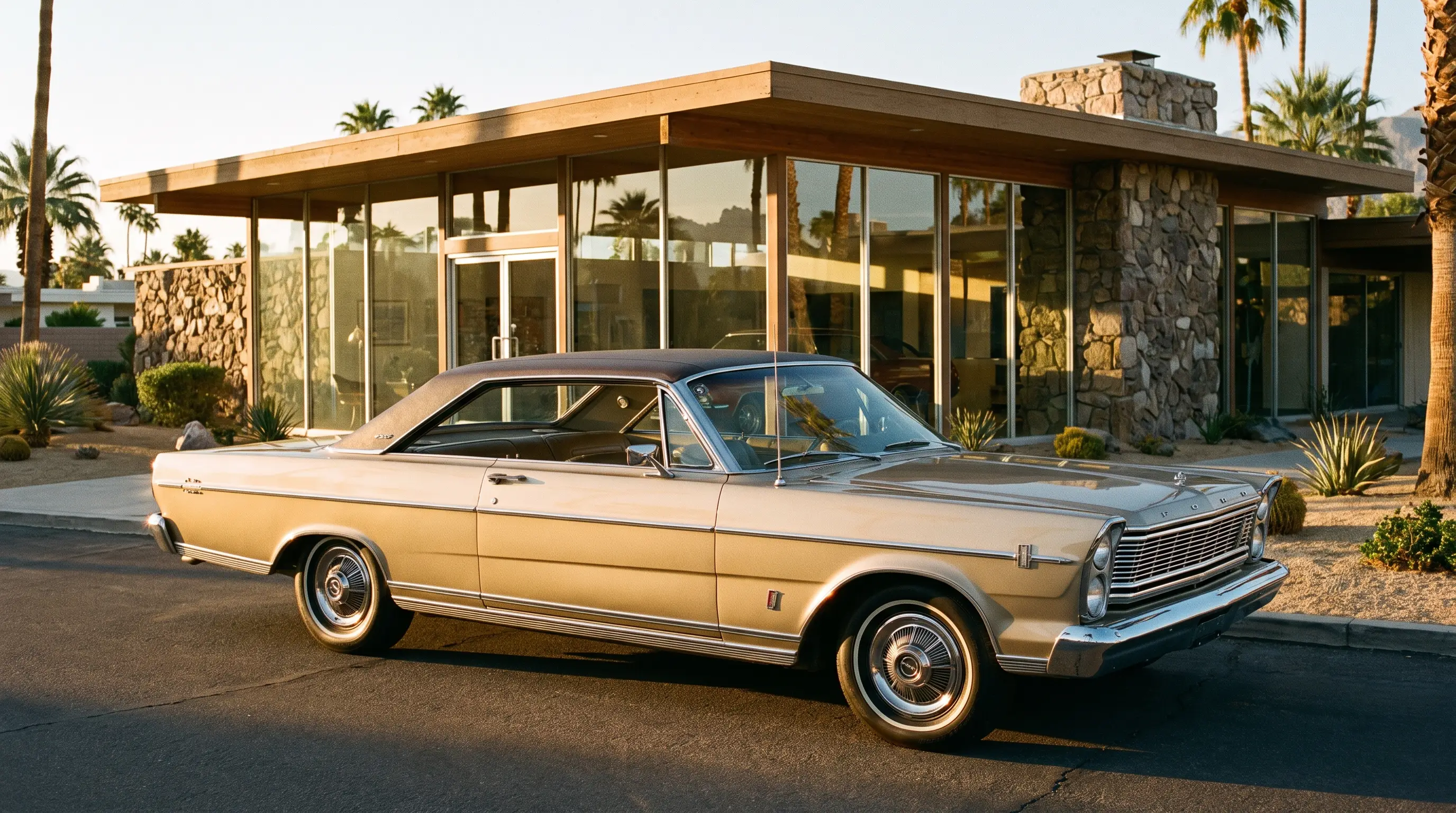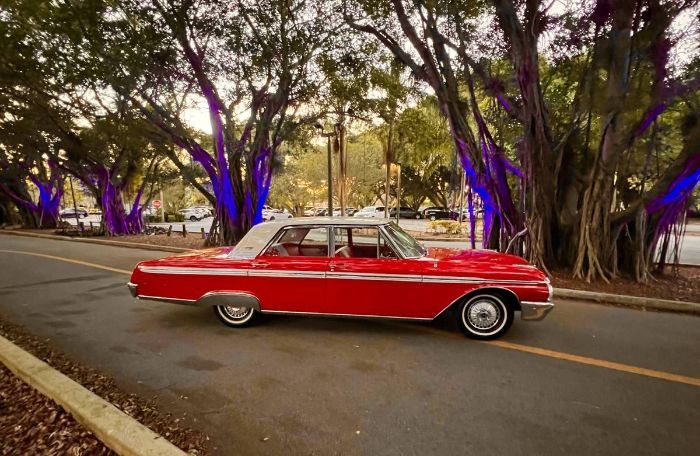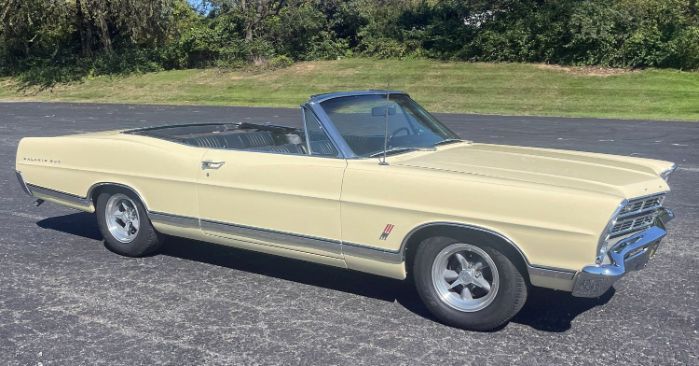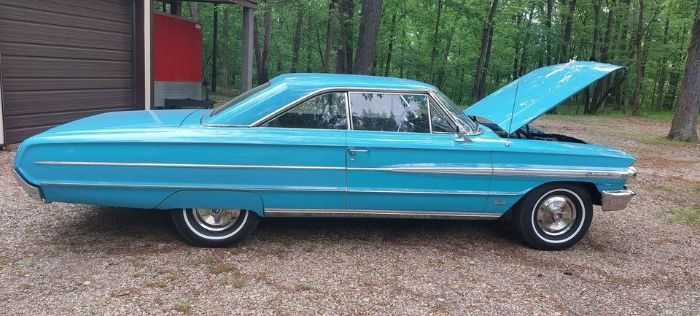
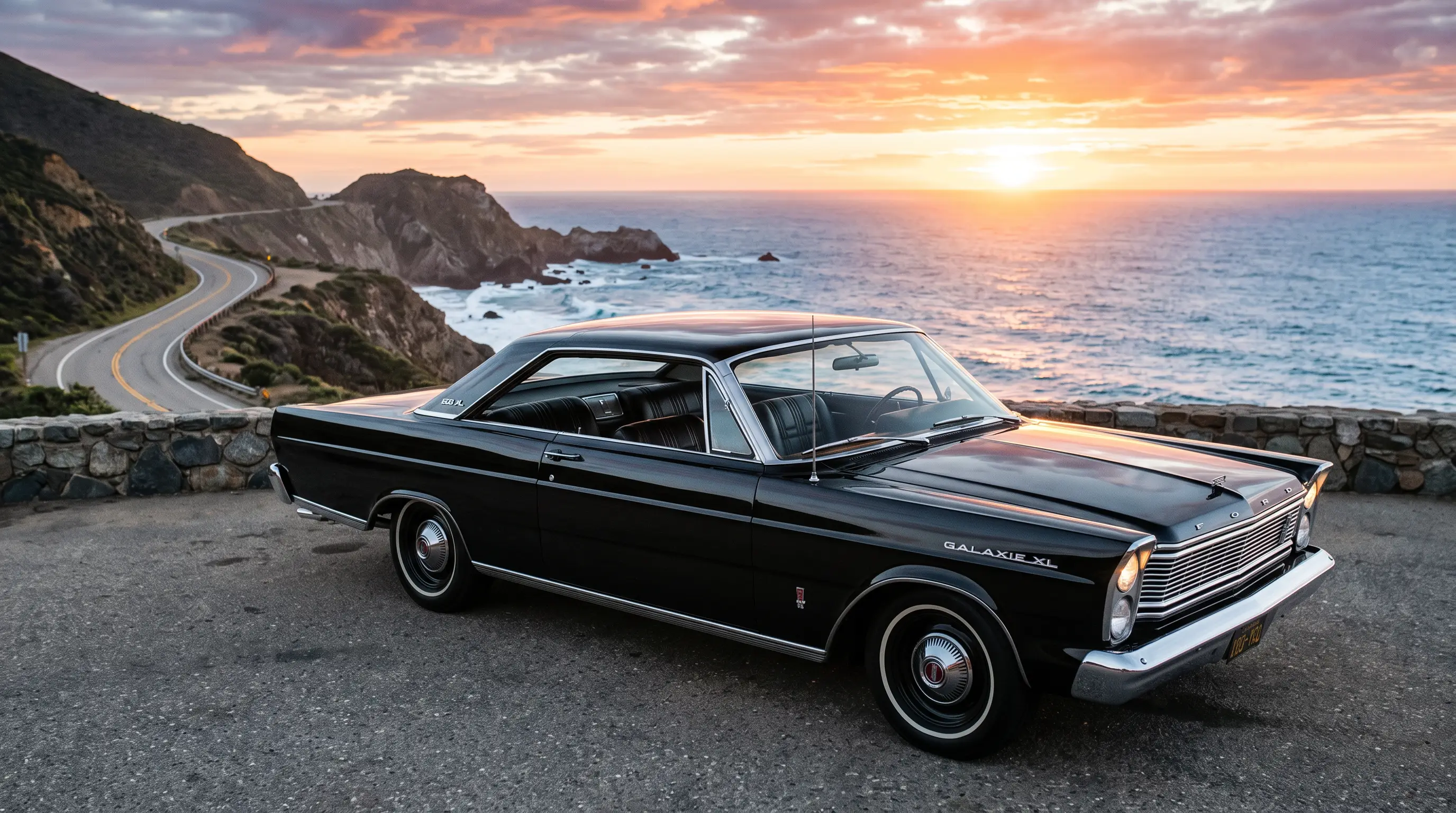
The Galaxie 500 XL occupied an unusual position in Ford's 1965 lineup, a full-size car dressed and equipped to feel sporty at a time when Ford was simultaneously building the new LTD to chase the opposite instinct entirely. Where the LTD added hush and plush, the 500 XL kept its focus on bucket seats, a console, and the option sheet that let a buyer build something closer to a personal car than a family sedan, even while riding on the same redesigned full-size platform as everything else in the 1965 range.
A distinct identity within the 1965 lineup
Ford had introduced the XL designation a few years earlier as the sporting variant of the Galaxie 500, and by 1965 the formula was well established. Standard equipment on the XL included bucket seats and a floor-mounted shifter arrangement when paired with the right transmission, along with brightwork and badging that separated it visually from a standard Galaxie 500 sedan. The car was still, structurally, a full-size Ford built on the same all-new frame and body as every other 1965 Galaxie, but the details Ford layered onto the XL told a buyer this was the version built for someone who wanted to feel like they were driving something a little more special than the family car in the next driveway.
That positioning mattered more in 1965 than in years prior because of what else Ford was doing with the lineup at the same time. With the LTD arriving as a genuinely plush alternative, the 500 XL needed a clearer identity of its own to avoid getting squeezed out in the middle. Ford answered by keeping the XL's character firmly on the sporting side of the ledger, which is documented in more detail in the site's broader coverage of the model year for readers who want more on the 1965 ford galaxie lineup as a whole.
The showroom logic behind keeping both trims alive was straightforward once you consider who was actually walking through the door. A younger buyer, or a buyer who wanted their full-size car to feel a little livelier from behind the wheel, gravitated toward the XL's bucket seats and console. A buyer prioritizing a hushed, comfortable ride for family duty gravitated toward the new LTD. Both buyers wanted a full-size Ford. Neither wanted the same full-size Ford, and 1965 was the year Ford finally built distinct enough versions of the same basic car to satisfy both without compromise on either end.
What set the XL apart on paper
The specification differences between a standard Galaxie 500 and the 500 XL were real, not just cosmetic, and they are worth laying out plainly for anyone trying to identify a genuine XL today.
| Feature | Galaxie 500 | Galaxie 500 XL |
|---|---|---|
| Seating | Bench seat standard | Bucket seats standard |
| Console | Not standard | Center console with available floor shift |
| Exterior badging | Galaxie 500 script | XL-specific badging and brightwork |
| Engine range | Six-cylinder through V8 options | Same range, with performance V8 options popular |
| Market position | Mainstream full-size Ford | Sporting flagship of the Galaxie range |
None of these differences required a buyer to sacrifice the practicality of a full-size car. That was the appeal of the XL formula from the start: a genuinely large, comfortable sedan or hardtop that still let a buyer feel like they had chosen the enthusiast's option rather than the default one.
Engines and how buyers actually optioned the car
Ford offered the 500 XL across the same engine range available on other Galaxie 500 models, from six-cylinder economy up through the larger V8 options, and it was common for XL buyers to check the box for one of the bigger V8s available that year, since a car already positioned as the sporting flagship of the range tended to attract exactly the kind of buyer who wanted the performance to match the image. Documentation on exact production splits by engine choice within the XL specifically is thinner than most collectors would like, and much of what is known comes from surviving build sheets and dealer order guides rather than a single consolidated factory report.
What is clear from surviving cars and period literature is that the XL was marketed and cross-shopped as the performance-image trim, not the outright drag-strip special that some later muscle car nameplates would become. It offered the look and feel of a sporting full-size car with the option, but not the requirement, of genuine performance underneath.
That flexibility was part of the appeal. A buyer could option a 500 XL with a modest V8 and enjoy the bucket seats and sporting image without committing to the tradeoffs of the biggest engines on the sheet, or they could push the order form toward genuine performance if that was what they wanted. Few competing nameplates in the full-size class offered that same range within a single trim, which is part of why the XL badge retained loyal buyers across multiple model years rather than fading after its first season.
Judging authenticity today
For anyone researching or shopping a 1965 Galaxie 500 XL, the details matter more than the general shape of the car, since a standard Galaxie 500 can be dressed up cosmetically to look similar at a glance. Genuine bucket seats, the correct console, and XL-specific exterior badging are the starting points for verifying a car's identity, and matching those details against known factory documentation is the kind of work that separates a confirmed original XL from a well-presented clone. This is a car whose story begins well before 1965, and readers who want the fuller arc of how the nameplate developed can find where this started useful background on how the Galaxie name and its sportier variants evolved across the model's entire run.
Collectors who value documentation over assumption tend to treat the 500 XL the way a museum treats any artifact: the object itself only tells part of the story, and the paperwork, the build sheet, the dealer invoice, fills in the rest. A 1965 XL with its original console, bucket seats, and matching documentation is a meaningfully more significant find than a car that merely looks the part.
"A bucket seat can be swapped into any Galaxie in an afternoon. What can't be faked easily is the paperwork trail that says the car left the factory that way."
- Sarah Whitfield
Where the 500 XL fits in the bigger picture
Placed alongside the 1965 LTD's arrival, the Galaxie 500 XL's continued presence in the lineup makes clear that Ford was not choosing between sport and luxury that year. It was building both, side by side, on the same platform, betting that the full-size market had room for a buyer who wanted comfort and hush and a separate buyer who wanted bucket seats and a console. That the XL held its own identity through a year when Ford introduced an entirely new top trim says something about how well established the sporting Galaxie had already become by 1965. Shoppers today looking for classic Galaxies on the market from this era should expect to find both personalities represented, sometimes even within the same seller's inventory, a reminder that 1965 was a year Ford tried to be several different cars at once and largely succeeded at each one.