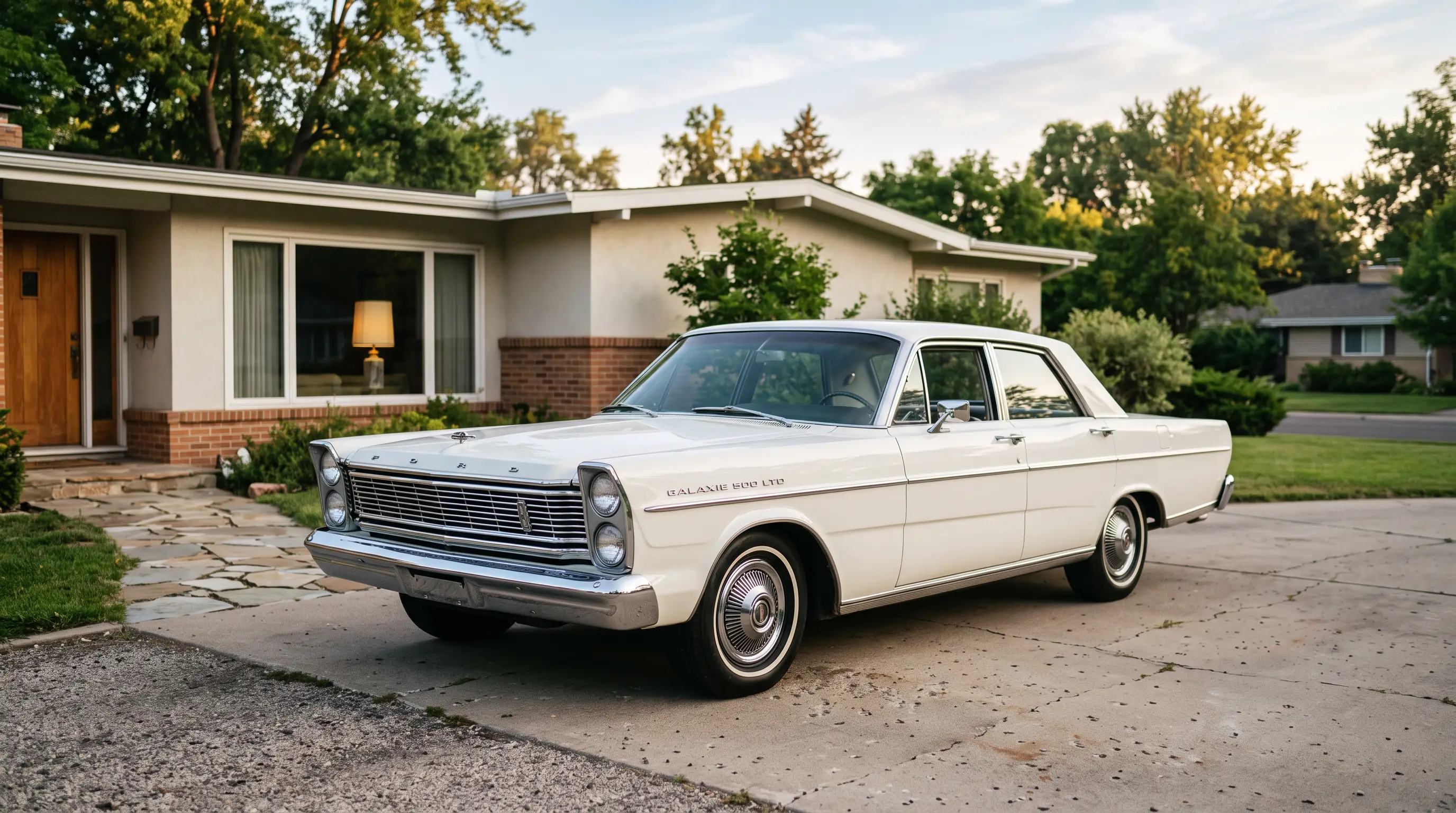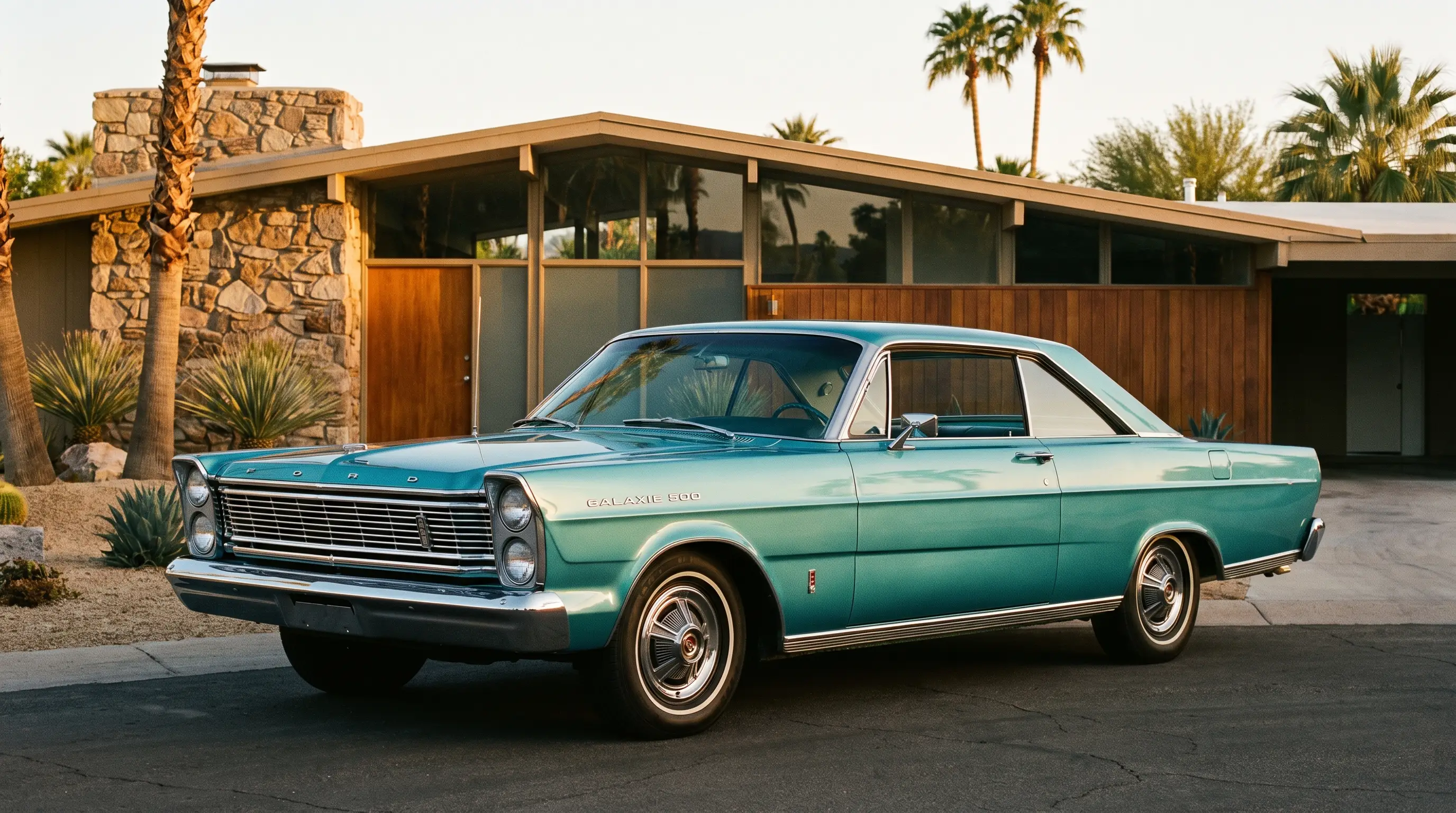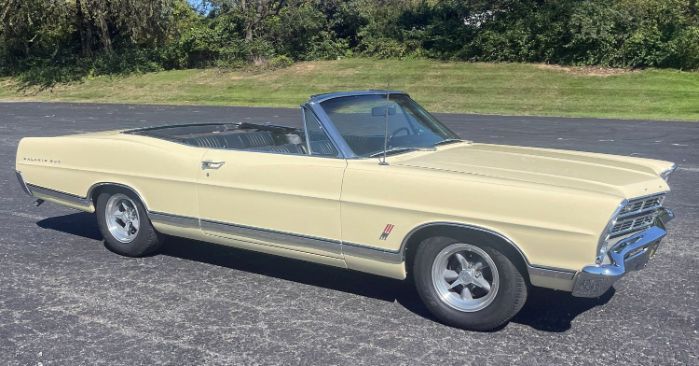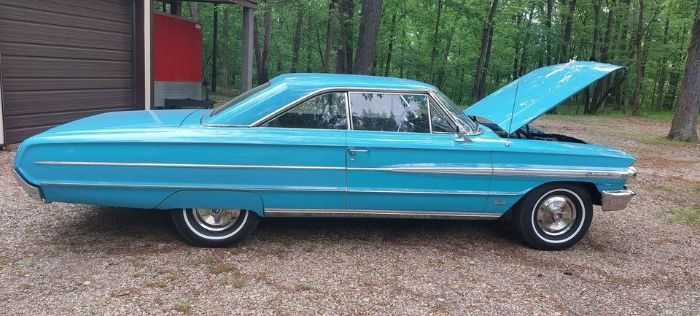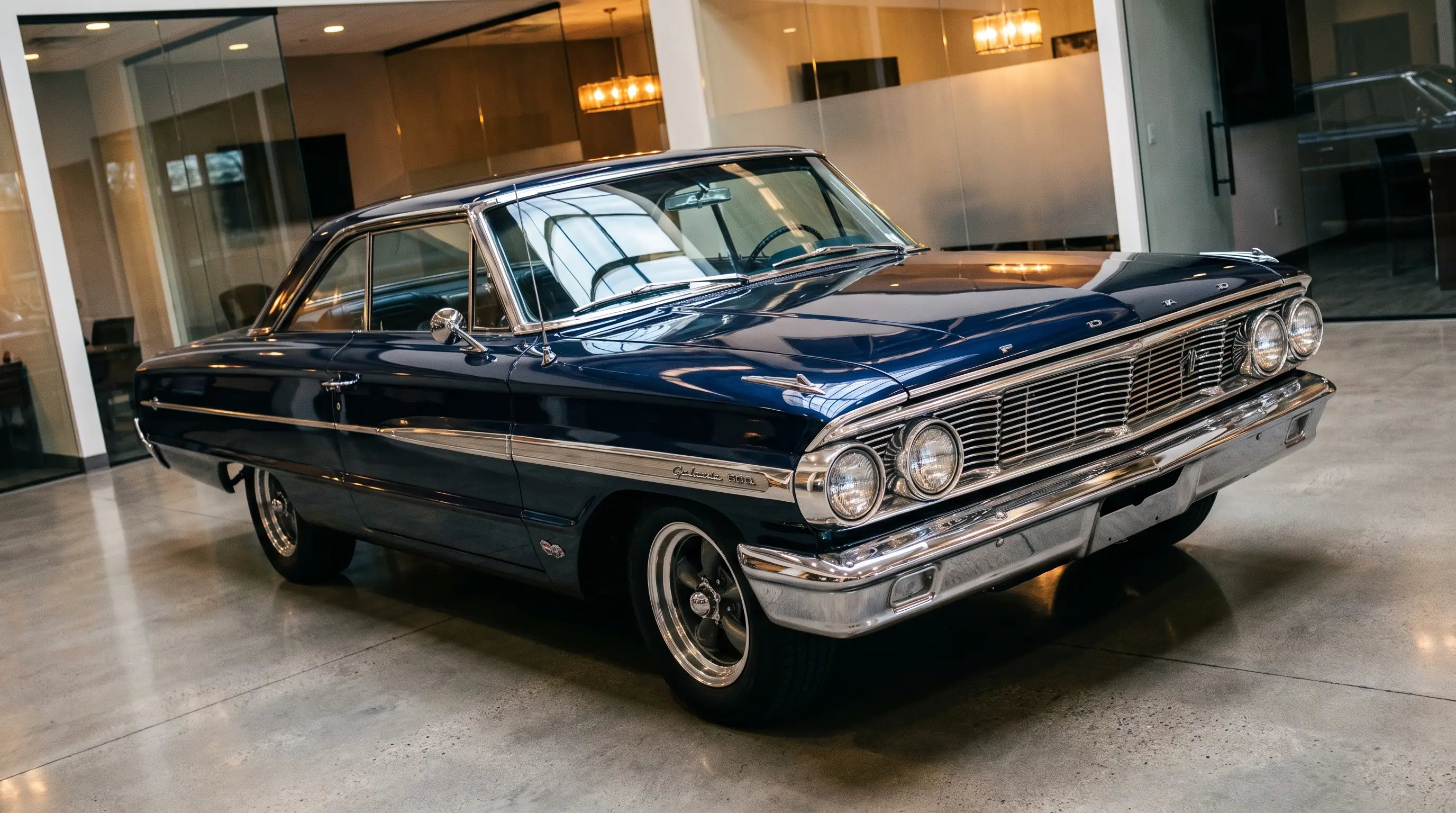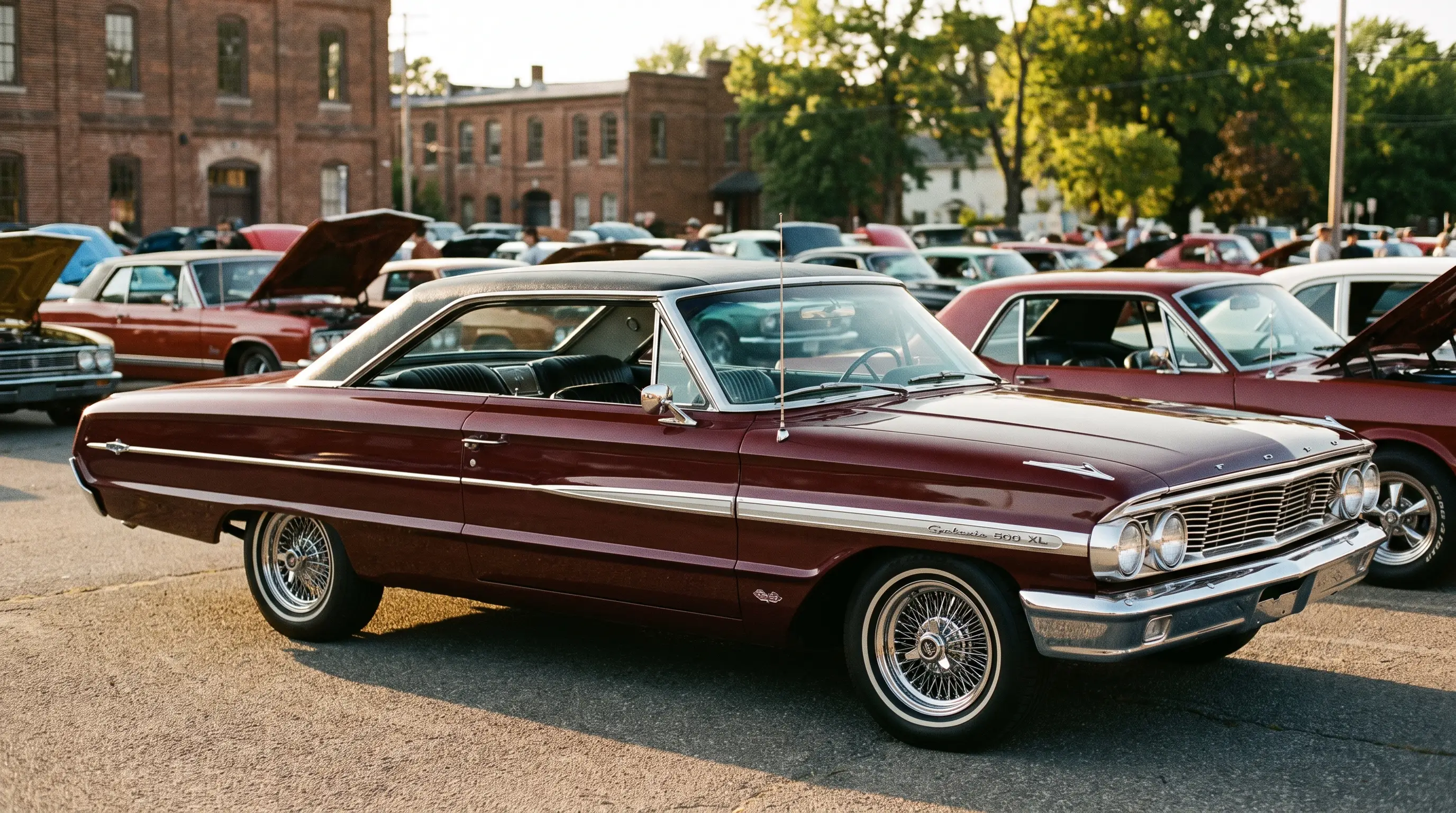
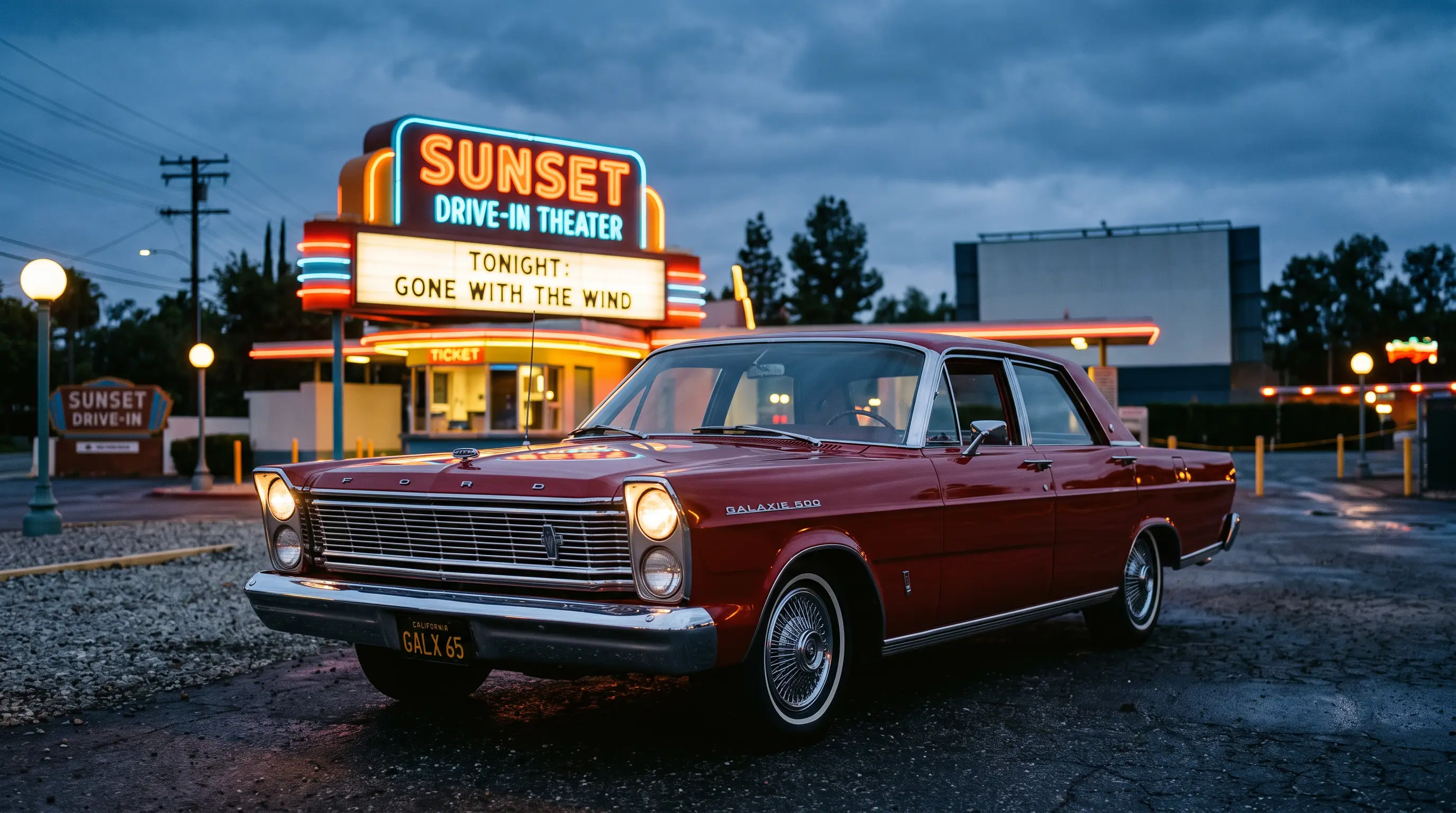
Watch enough mid-1960s American film and television and you start noticing a particular silhouette parked outside diners, idling at curbs, and rolling through backgrounds that nobody on set was thinking twice about. The ford galaxie 1965 in pop culture story is not one of a car built for movie stardom the way a Mustang or a Charger later became. It is the story of a car so thoroughly ordinary to its era that it became the default backdrop of American life on screen, which is its own kind of cultural footprint.
The car nobody cast on purpose
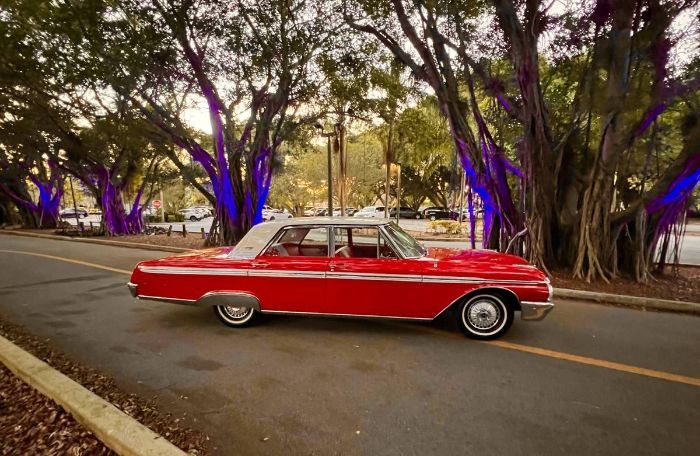
Production designers in the mid-1960s did not have to search for a 1965 Galaxie to put in a scene. It was simply everywhere, parked outside the police station, sitting in a suburban driveway, waiting at a stoplight behind the actual hero car getting the close-up. That ubiquity means the Galaxie shows up constantly in period footage without ever being the point of the shot, which paradoxically makes it one of the more historically honest artifacts from the decade. Nobody dressed the set with a Galaxie to make a statement. It was there because that is what America was actually driving.
Law enforcement fleets leaned on full-size Fords heavily during this era too, and cars from the Galaxie's generation show up as background cruisers in period crime dramas and news footage, without any single production casting the car for its own sake. That connection between the Galaxie and municipal fleets gave the car a specific visual association in the public imagination, the reliable, unglamorous workhorse rather than the flashy star.
A family car in a decade obsessed with rebellion
There is something almost ironic about the 1965 Galaxie's screen presence when you consider the decade it belonged to. This was the era of counterculture, of youth rebellion narratives dominating popular entertainment, and the Galaxie was decidedly not that car. It was the car parents drove to pick up the rebellious teenager from wherever the plot required them to be. Its screen role, more often than not, was to represent stability, convention, the world the story's younger characters were pushing against.
That contrast is worth sitting with. The Galaxie's cultural role on screen was rarely about the car itself. It was about what the car signified, responsible adulthood, suburban comfort, a life that a story's protagonist might be trying to escape or, just as often, trying to return to by the final act.
Racing footage gave it a different kind of fame
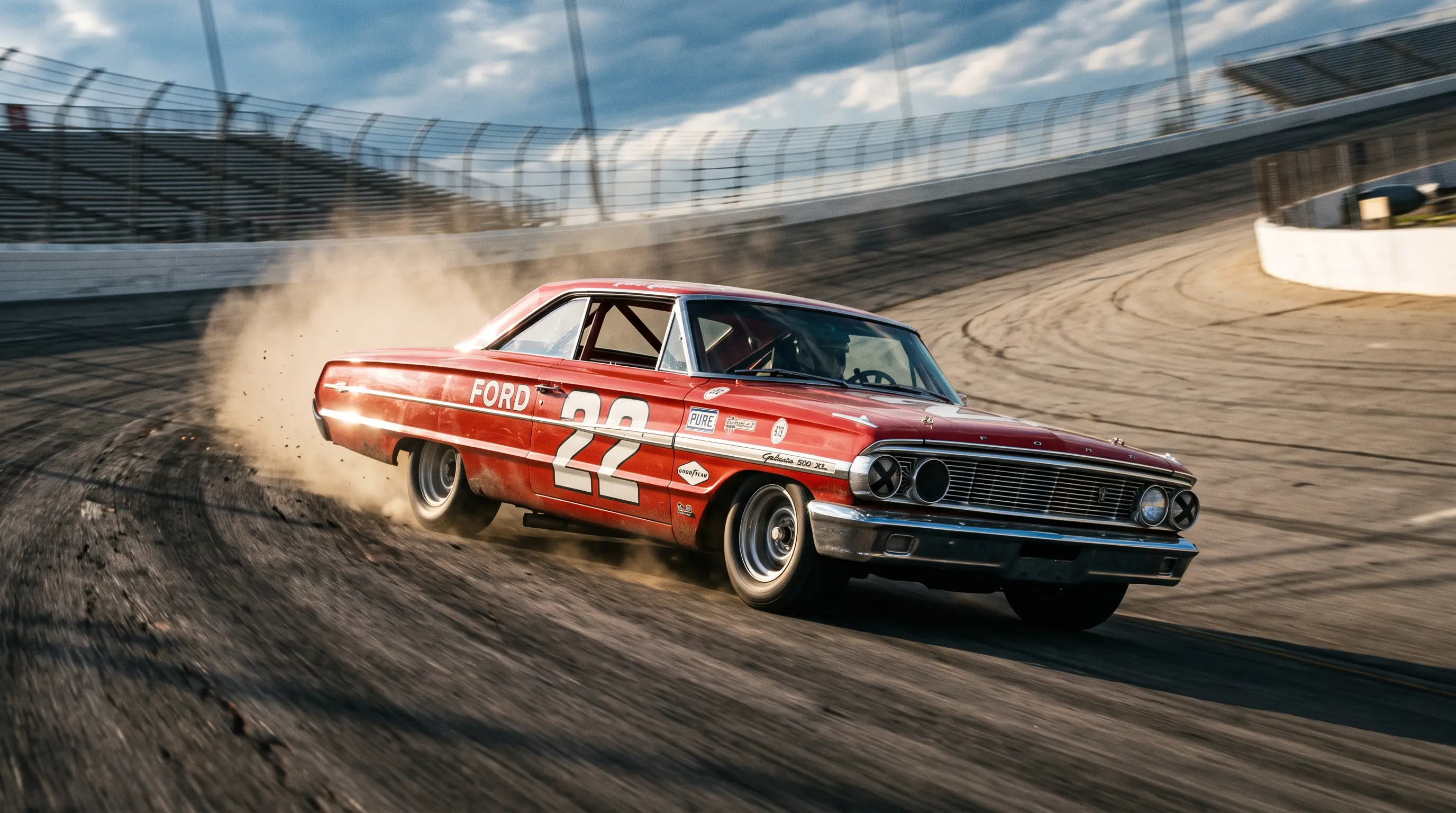
Away from scripted drama, the 1965 Galaxie found genuine on-screen glory in motorsport coverage. Ford's Total Performance push meant NASCAR broadcasts and newsreels of the period featured the Galaxie prominently, and that footage gave the car a different cultural identity entirely, fast, competitive, and central to the story rather than background scenery. The whole picture of the Galaxie's 1965 racing success helps explain why period audiences saw two very different versions of the same car depending on whether they were watching a family drama or a Sunday afternoon race broadcast.
That split identity, dependable family sedan in one context and genuine racing machine in another, is fairly unique among full-size cars of the era. Few nameplates managed to be both the responsible parent's car and a legitimate NASCAR contender within the same model year, and that duality is part of what makes the Galaxie's pop culture footprint more interesting than a simple tally of screen appearances would suggest.
"Nobody remembers the 1965 Galaxie the way they remember a Mustang from the same showroom floor. But watch enough old footage and you realize it was everywhere, quietly being the most common car in America while nobody bothered to point a camera at it on purpose."
- Patrick Walsh
The advertising version versus the background version
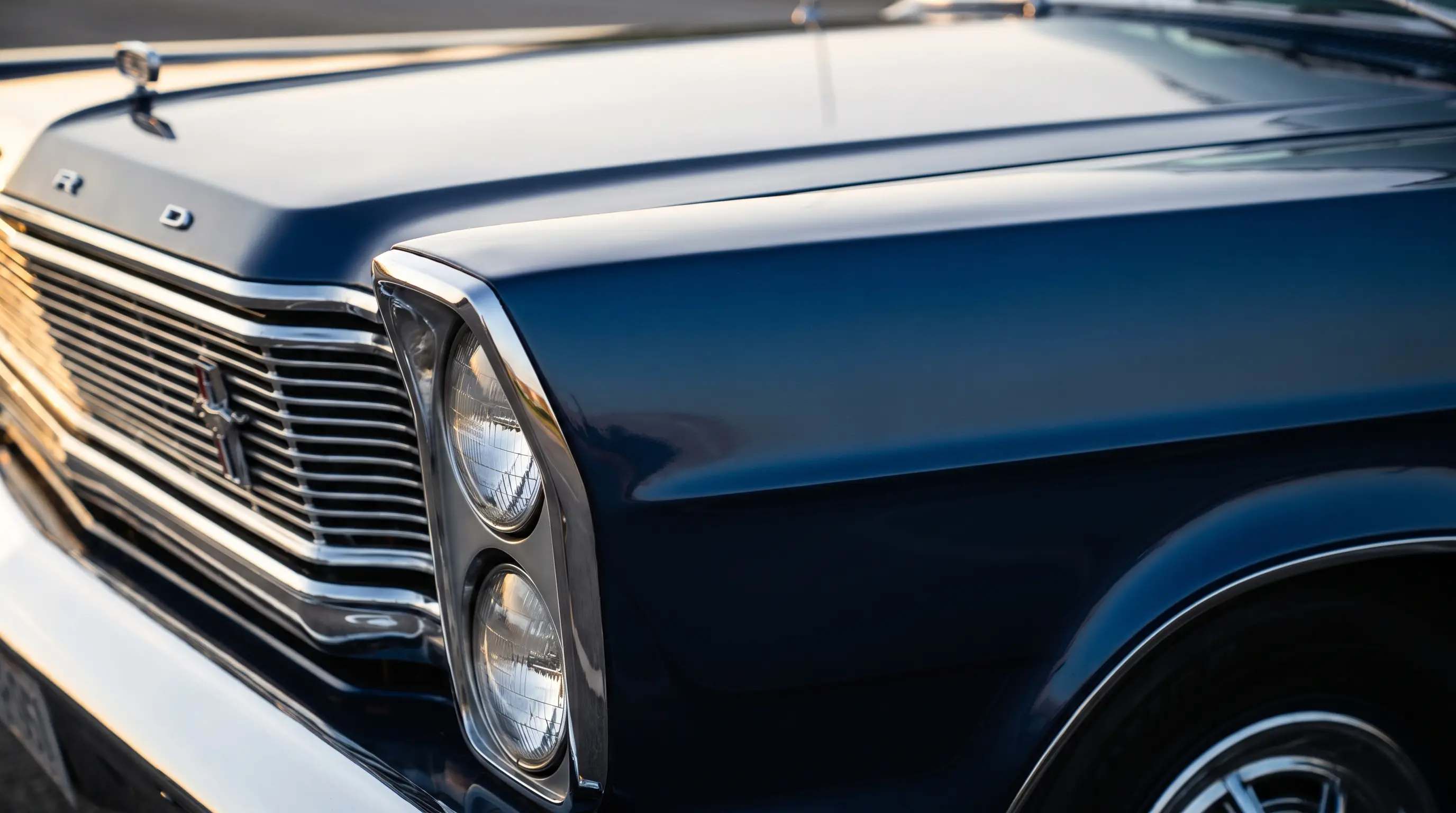
It is worth separating two very different versions of the 1965 Galaxie that existed in the public imagination during that era. Ford's own advertising presented an aspirational version of the car, gleaming, freshly detailed, photographed from flattering angles that emphasized the new stacked headlights and the clean body crease running down its flank. That was the Galaxie Ford wanted people to imagine themselves driving. The background version that shows up in film and television footage tells a different, more honest story, dusty, sun-faded, parked crooked outside a diner, doing the unglamorous work of actually being someone's daily car.
Both versions matter to understanding the car's real cultural footprint. The advertising version explains why people bought a Galaxie in the first place, the promise of a quieter ride and a more modern face than the previous generation offered. The background version explains what actually happened to that promise once the car left the showroom and became part of ordinary life, still recognizable, still doing its job, no longer the star of anyone's attention.
What period audiences actually noticed
It is easy for modern audiences, watching restored or remastered footage decades later, to fixate on the Galaxie's styling details in a way period viewers simply did not. In 1965, this was not a nostalgia object being studied for its design language. It was just a car, one of millions on American roads, no more remarkable to a contemporary audience than any other full-size sedan idling in the background of a news segment or a dramatic scene. The car's current status as a subject of serious historical and design appreciation is almost entirely a retrospective phenomenon, built by collectors and historians decades after the fact rather than by anyone paying attention to the Galaxie specifically while it was still a common sight on the road.
That retrospective quality is not a weakness. It is actually part of what makes the car's pop culture footprint so genuine. Nothing about its screen presence was staged for effect. It simply existed, constantly, in the visual record of an entire decade, and that unstaged honesty is worth more to a historian than any single deliberate cameo could be.
Why the quiet ubiquity still matters
Cars that become deliberate movie stars often get remembered for a single iconic scene, frozen in one moment of cultural significance. The Galaxie's fame, if you can call it that, works differently. It is scattered across hundreds of forgettable background shots, each one a small, honest record of what ordinary American life actually looked like in 1965. That accumulation, rather than any single starring role, is the real pop culture legacy of this car.
For collectors and enthusiasts today, that quiet ubiquity adds a layer of appreciation beyond the car's engineering and styling merits. Owning a well-preserved 1965 Galaxie means owning a piece of the actual visual texture of mid-1960s America, not a movie prop dressed up for a single dramatic scene. If that kind of authentic period presence appeals to you, it is worth taking time to find a classic Galaxie and see how many originally equipped examples remain on the market today.