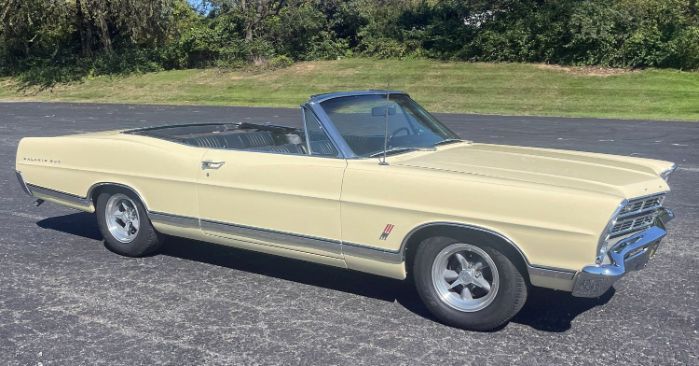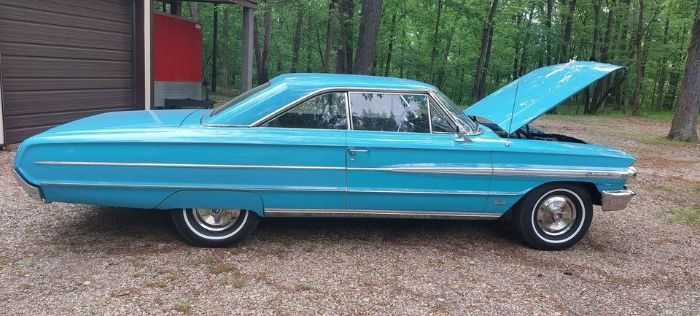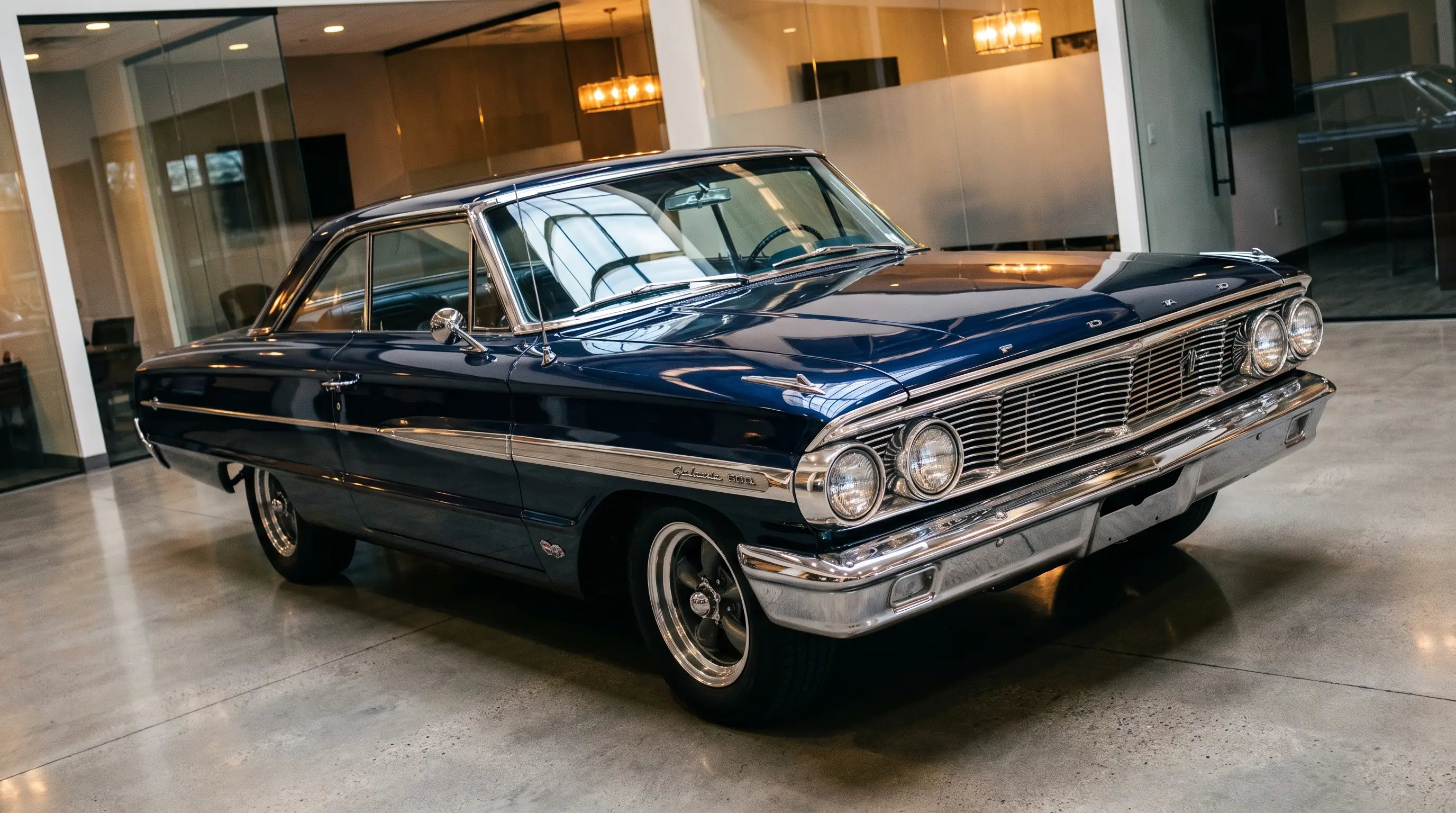

I have had my hands inside enough Galaxie sheet metal over the years to know that most people look at a 1965 full-size Ford and see one shape. They do not see the dozen small decisions that make that shape work. A ford galaxie 1965 design details close up is really an argument about restraint, about a design team that knew when to add a line and, more importantly, when to leave the metal alone.
Stacked headlights, and why they mattered more than people think
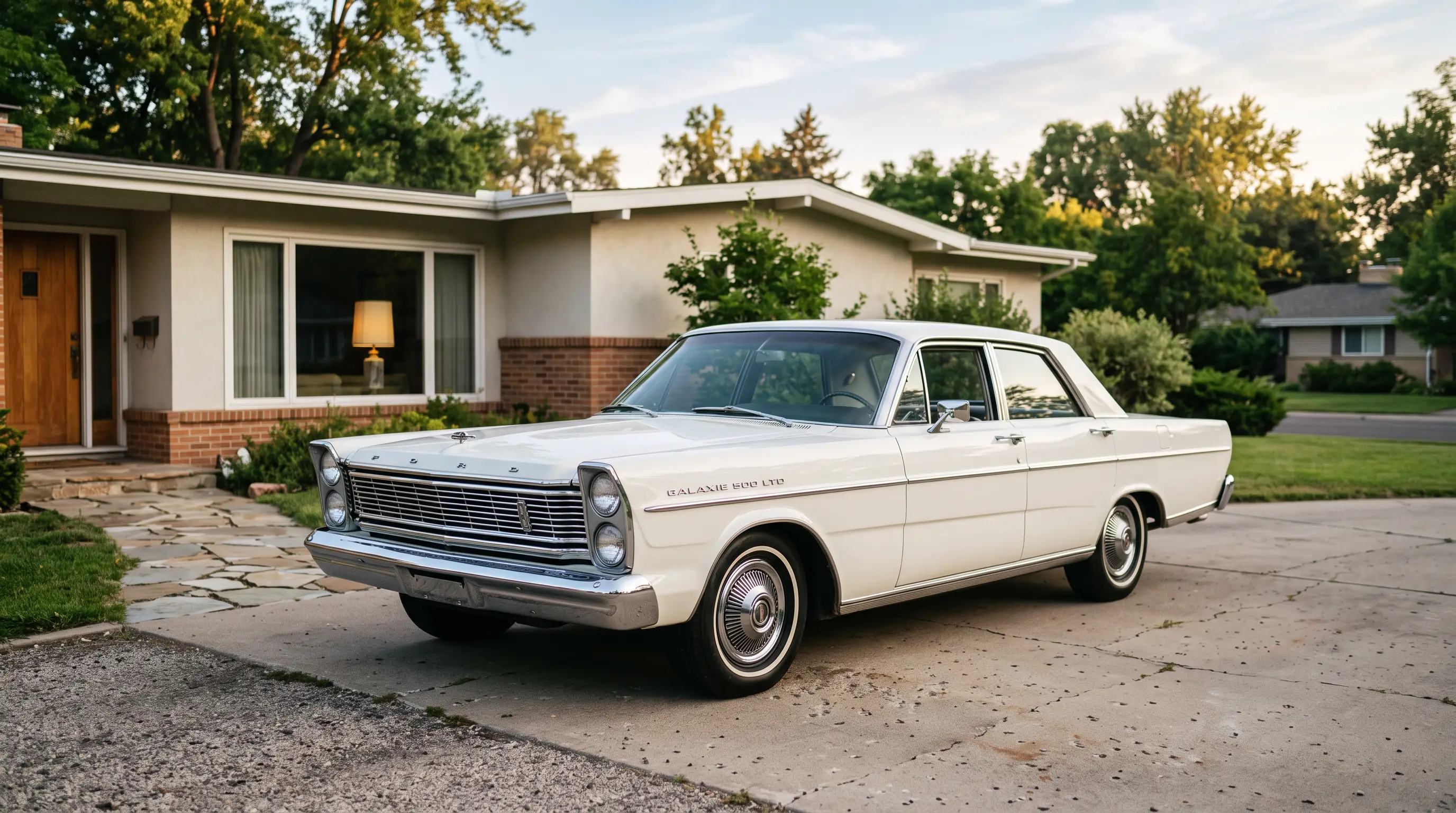
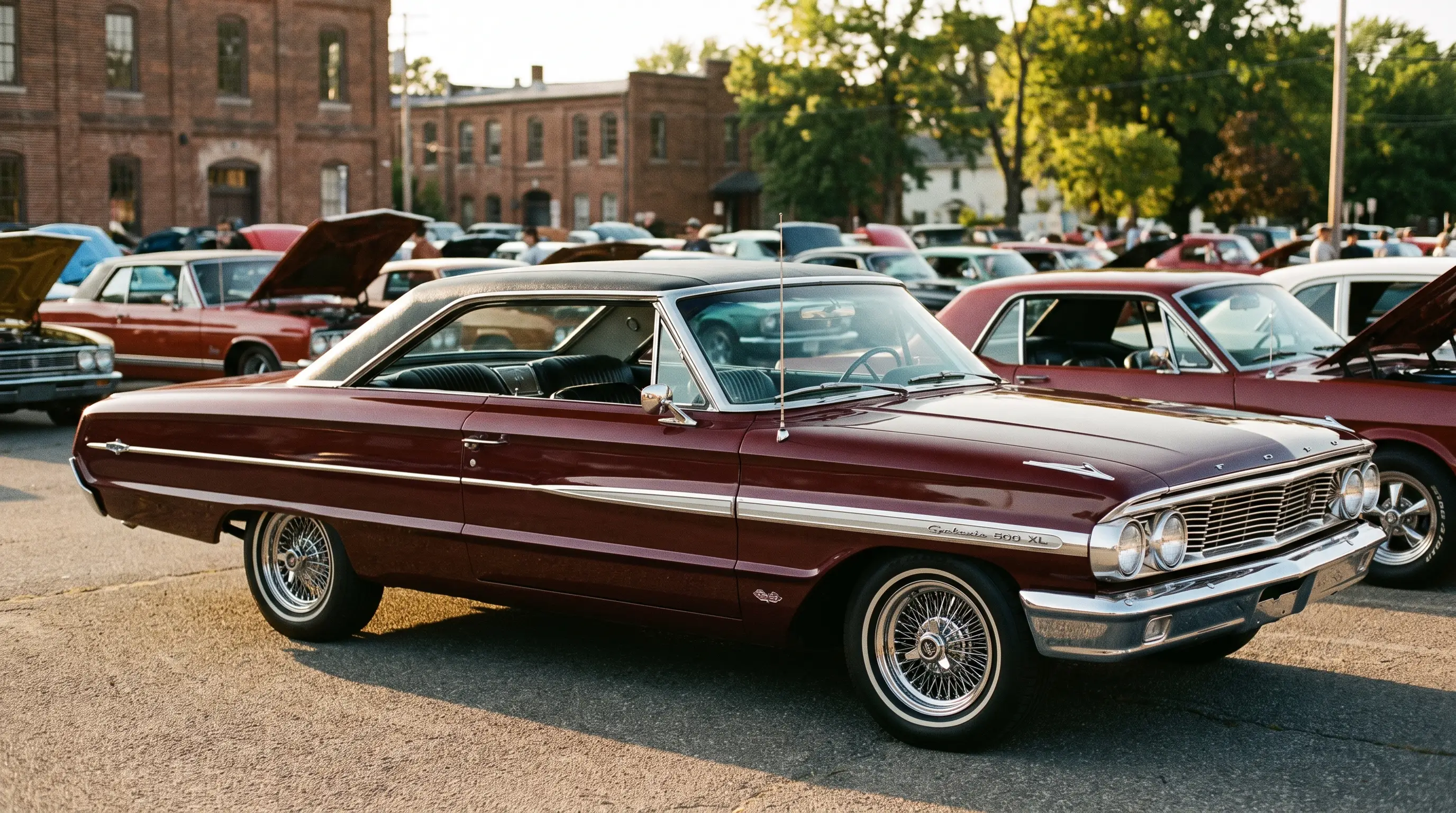
The stacked quad headlight arrangement Ford introduced on the 1965 Galaxie gets treated like a footnote in most histories, a styling flourish and nothing more. That undersells it. Stacking the lights vertically instead of horizontally changed the entire front fascia's proportions, narrowing the visual width of the nose and giving the car a taller, more formal face than the previous generation's spread-out layout. It is the kind of change that looks obvious in hindsight and was not obvious at all when Ford's designers first sketched it.
Anyone who has actually worked on restoring a front clip from this era knows the stacked arrangement also changed how the grille, bumper, and fender lines had to be engineered to meet cleanly. It was not just a cosmetic swap bolted onto an existing structure. The whole front end was reworked around that new light placement, and getting the panel gaps right on a period-correct restoration today still requires understanding why Ford's engineers made those choices in the first place.
The body line that separates a real one from a re-skin
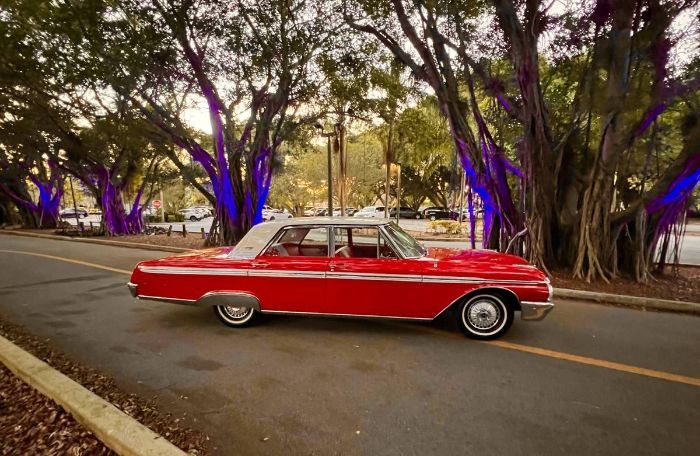
Every Galaxie generation has a signature body crease, and the 1965 car's runs cleaner and straighter along the flank than either the year before or the year after. That single line does more work than people give it credit for. It visually lengthens the car's profile without adding an inch of actual sheet metal, and it catches light differently depending on the angle you are viewing the car from, which is exactly the kind of detail that separates a factory panel from a poorly matched reproduction fender.
I have seen too many "restored" 1965 Galaxies where a replacement quarter panel does not quite carry that crease at the correct depth or angle. It is subtle enough that a casual buyer at a show will not notice. It is glaring enough that anyone who has spent real time under these cars will spot it in about four seconds. If you are shopping for a genuine, well-preserved example, that body line is one of the fastest tells you have.
Interior details that get overlooked at shows
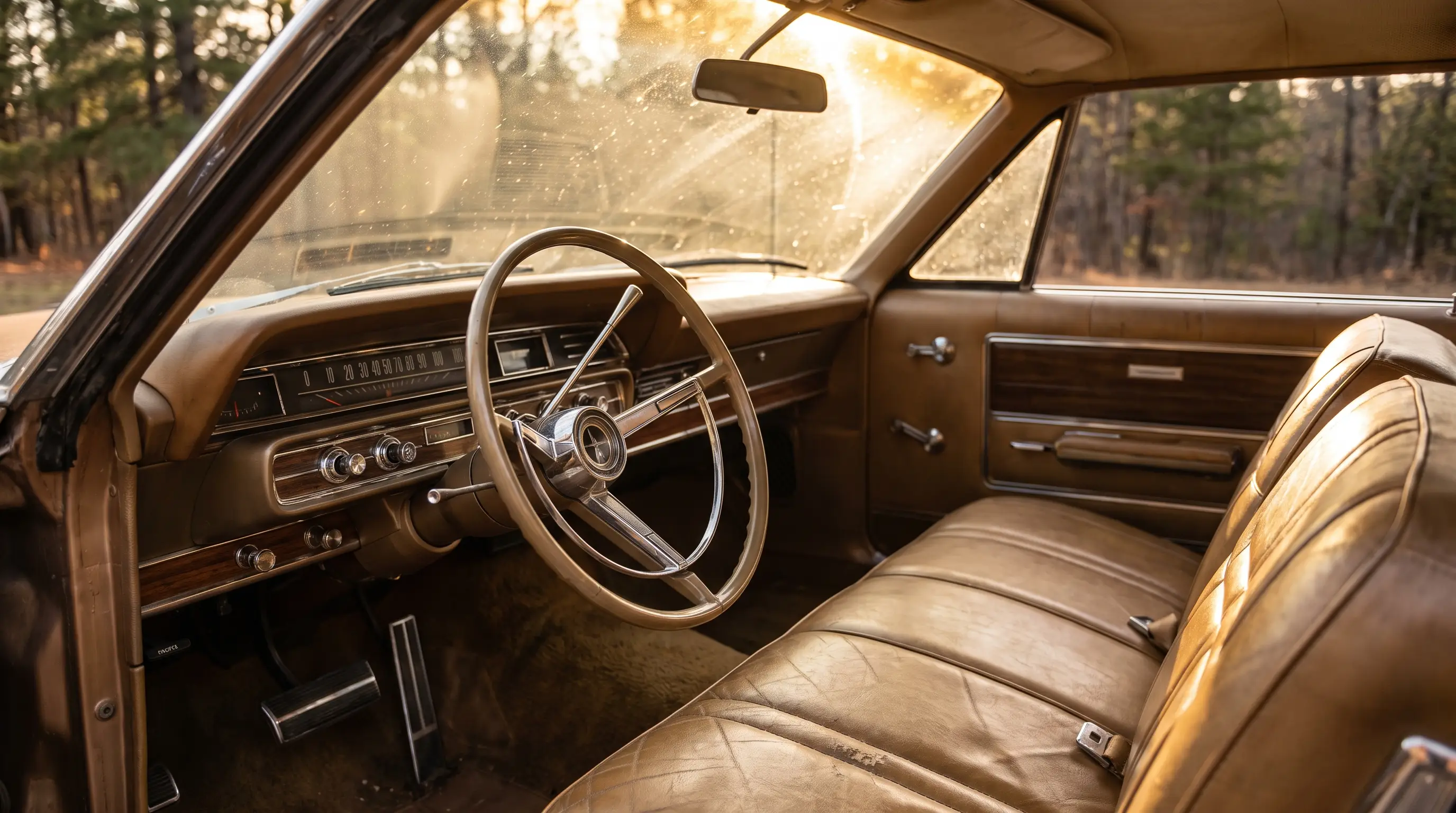
Judges and casual admirers alike tend to fixate on paint and chrome, but the 1965 Galaxie's dashboard layout deserves more attention than it gets. The instrument cluster placement and the way the dash trim wraps into the door panels shows a level of coordination between interior and exterior design teams that a lot of full-size cars from this era simply did not bother with. 1965 ford galaxie history covers the broader context of why Ford invested so heavily in this generation, and the dashboard is one of the clearest physical results of that investment.
I bring this up because it is another area where reproduction parts and re-trimmed interiors often miss the mark. Getting the dash pad texture and the exact trim ring finish correct matters to anyone doing a real period-correct build, even though it is invisible to someone glancing at a car from across a parking lot.
"Anybody can slap new paint on a Galaxie and call it restored. Getting the body lines, the panel gaps, and the trim details actually correct is a different job entirely, and it is the job that separates a real restoration from a poseur car."
- Jim Vasquez
Trim levels tell their own story in the details
Walk down the side of a 1965 Galaxie and the trim level announces itself in small ways that go beyond badging. A base Galaxie carries thinner brightwork along the beltline compared to a 500 or LTD, and the rocker panel trim varies enough between trims that an experienced eye can identify which version of the car it started life as before checking a single badge. That matters more than it sounds like it should, because badges get swapped, stolen, or simply lost over sixty years, while the underlying trim placement and brightwork detailing generally do not lie in the same way.
Wheel covers are another detail people underestimate. Ford offered several distinct wheel cover designs across the trim range in 1965, and the difference between a base cover and the fancier full-wheel-cover options fitted to XL and LTD models is not just decorative flourish. It reflects the same top-to-bottom design philosophy that shaped the stacked headlights and the body crease, a coordinated effort across every visible surface of the car rather than a single flashy feature bolted onto an otherwise plain design.
What a builder actually looks for under the paint
When I evaluate a 1965 Galaxie for a serious build, paint is the last thing I judge, not the first. Paint can be redone perfectly and still sit on top of a car with the wrong panel gaps or a poorly repaired quarter. What I actually check first is whether the factory stamped lines in the metal read cleanly under raking light, since that tells you immediately whether you are looking at original steel or a patched section that will eventually telegraph through even the best paint job. A car can look flawless in photographs and still fail that basic test in person.
This is the kind of judgment that only comes from spending real time with these cars, not from reading a spec sheet or a sales listing. It is also exactly why the design details covered here matter beyond simple appreciation. They are diagnostic tools as much as they are aesthetic accomplishments, and knowing them changes how you shop, how you judge a restoration, and ultimately how much you should be willing to pay for a given car.
Why these details still matter to buyers
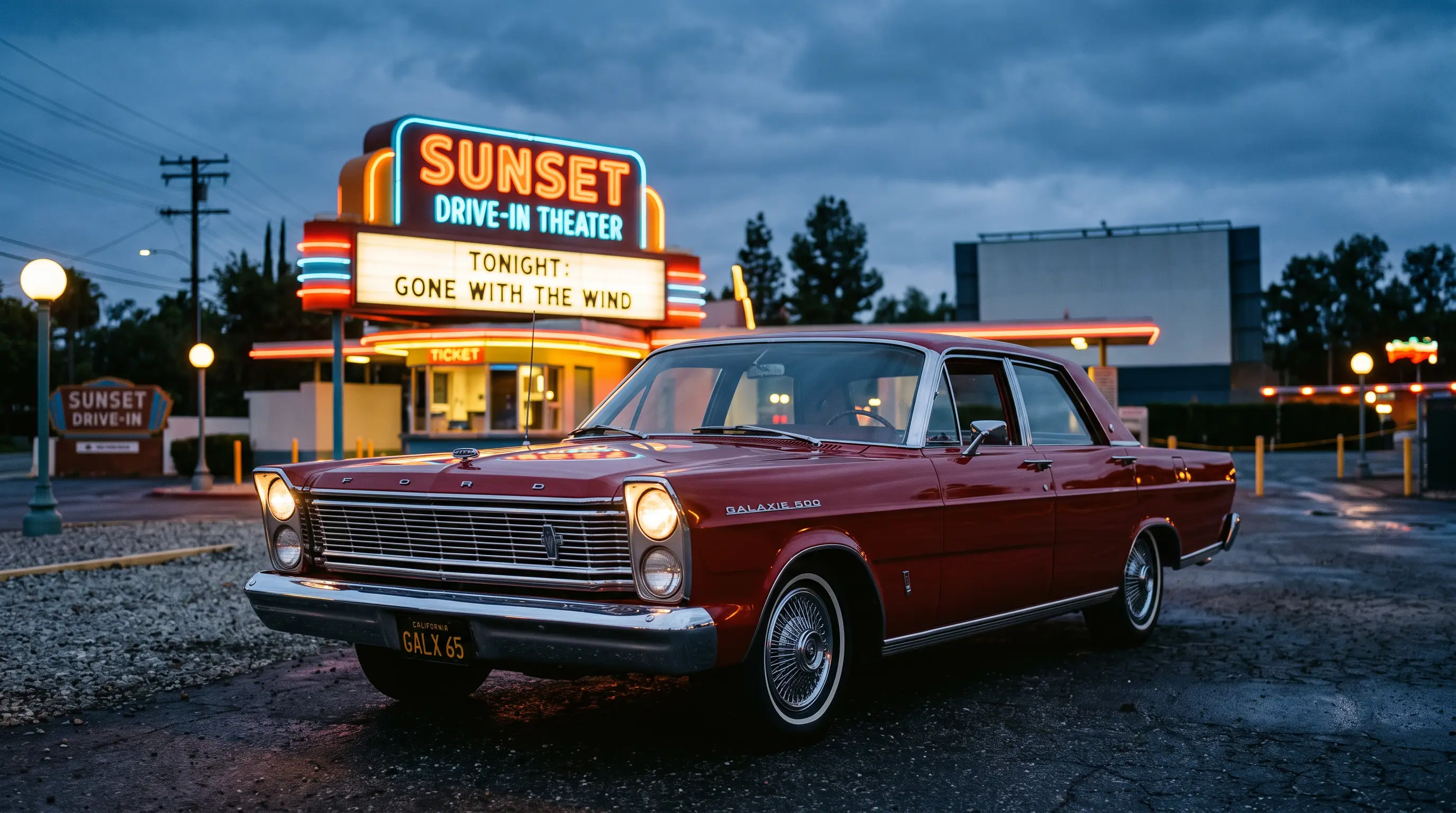
None of this is trivia for its own sake. A buyer who understands what correct 1965 Galaxie design details actually look like is far less likely to overpay for a car with mismatched reproduction panels or an incorrectly finished interior. These details also connect to the broader cultural footprint the car built during this period. If you want a related story on how the 1965 Galaxie's distinctive look ended up on screen, it is worth reading alongside this closer look at the panel work itself.
Design details are not just aesthetic trivia to people who actually work on these cars. They are the difference between a genuine piece of 1965 Ford engineering history and a car that merely resembles one from ten feet away. If you are in the market and want to see how these details hold up on real, surviving examples, Galaxies for sale now is a good place to start looking with a more educated eye than most buyers bring to the table.